
The conventional narrative of ancient America often paints a picture of scattered tribes and nascent societies, a world far removed from the complex civilizations of the Old World. However, a growing body of archaeological evidence and re-examinations of existing data are challenging this perception, suggesting that civilizations in the Americas were far more advanced and sophisticated than previously believed. This article will delve into various aspects of ancient American societies, exploring their achievements in engineering, astronomy, agriculture, urban planning, and sophisticated social and political structures, presenting a compelling case for their advanced nature.
The sheer scale and ingenuity of ancient American monumental architecture stand as testaments to their advanced engineering capabilities. Across the vast expanse of the Americas, from the towering pyramids of Mesoamerica to the intricate earthworks of North America and the impressive stone cities of the Andes, evidence of sophisticated construction techniques and a profound understanding of physics and geometry abounds. These structures were not merely decorative; they served crucial astronomical, religious, and societal functions, requiring meticulous planning and execution.
The Precision of Pyramids and Temples
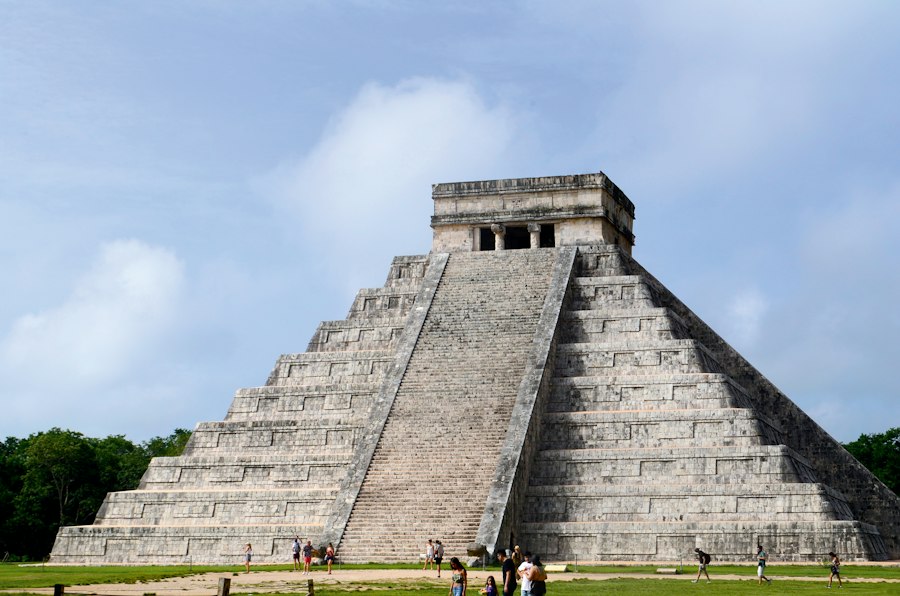
In Mesoamerica, the Maya, Aztecs, and other cultures constructed pyramids that rivaled or surpassed their Egyptian counterparts in complexity and purpose. The Great Pyramid of Cholula in Mexico, for instance, is the largest pyramid by volume in the world, built in stages over centuries, demonstrating an incredible feat of labor coordination and architectural evolution. The precise alignment of many temples and pyramids to celestial events, such as solstices and equinoxes, highlights an advanced understanding of astronomy and its integration into their worldview. The construction itself often involved the quarrying, transportation, and lifting of massive stone blocks with remarkable precision, all achieved without the use of the wheel for heavy labor or draft animals, as commonly understood. Methods of lifting and setting stones, the precise fitting of massive blocks with minimal or no mortar, and the sheer longevity of these structures speak to a profound grasp of materials science and structural integrity.
Sophisticated Water Management Systems
Beyond the iconic pyramids, ancient Americans developed elaborate water management systems that facilitated the growth of large populations and sustained complex societies. The Moche civilization of the northern Peruvian coast, for example, engineered extensive irrigation canals, aqueducts, and reservoirs that channeled water from the Andes mountains to their arid coastal plains. These systems, some of which are still in use today, demonstrate an intricate understanding of hydrology, fluid dynamics, and landscape engineering. The Inca, renowned for their vast empire, also developed sophisticated terracing systems in the Andes, not only for agriculture but also to manage water runoff and prevent erosion. These terraces, carved into steep mountainsides, are a marvel of agricultural engineering and ecological adaptation.
The Enigma of Earthworks and Geometrics
In North America, the Adena and Hopewell cultures constructed monumental earthworks, including vast effigy mounds and elaborate geometric enclosures. The Serpent Mound in Ohio, a massive serpentine effigy stretching over a quarter of a mile, is a remarkable example of landscape art and potentially astronomical observation. The precision of the geometric shapes in many of these earthworks, such as circles, squares, and octagons, suggests a sophisticated understanding of surveying and measurement. The sheer scale of labor required to move millions of cubic yards of earth with primitive tools points to a highly organized society with effective leadership and resource management. The purpose of these earthworks remains a subject of ongoing research, but their complexity and scale leave no doubt about the engineering prowess of their creators.
Recent research has shed light on the advanced civilizations of ancient America, challenging long-held beliefs about their technological and cultural capabilities. An intriguing article titled “The Strategic Importance of the Moon” explores how ancient American societies may have utilized lunar cycles for agricultural planning and navigation, highlighting their sophisticated understanding of astronomy. This evidence suggests that these civilizations were not only advanced in their architectural and societal structures but also possessed a deep connection to celestial phenomena. For more insights, you can read the article here: The Strategic Importance of the Moon.
Astronomical Acumen: Calendars and Cosmic Understanding
The understanding of celestial cycles and their integration into daily life and belief systems was a hallmark of many ancient American civilizations. Their astronomical observations were not merely for curiosity; they formed the basis of sophisticated calendrical systems that regulated agricultural practices, religious ceremonies, and the very rhythm of their societies.
The Maya Calendar: A Symphony of Time
The Maya civilization is particularly renowned for its complex and accurate calendrical system. The Long Count calendar, capable of tracking vast epochs of time, demonstrates a sophisticated mathematical understanding and a deep, long-term perspective. This system, combined with the Tzolk’in (260-day sacred calendar) and the Haab’ (365-day solar calendar), created a cyclical reckoning of time that was intricately interwoven with their cosmology and prophecy. The precision with which they charted planetary movements, eclipses, and other celestial phenomena, often without the aid of telescopes, is astonishing. Their astronomical observations were meticulously recorded on stelae, codices, and within the architecture of their observatories, providing invaluable insights into their scientific knowledge.
Andean Astronomy and the Cosmos
Similarly, the Inca and their predecessors in the Andes developed sophisticated astronomical traditions. The Intihuatana stones, found at sites like Machu Picchu, are believed to have served as astronomical observatories or sundials, precisely aligning with solstices and equinoxes. The Inca also tracked the movements of the Pleiades and other star clusters, which held significant agricultural and religious importance. Their understanding of celestial cycles guided their agricultural planning, ensuring successful harvests in challenging mountainous terrain. The observation of the sun’s path across the sky, and its relationship to significant landmarks, speaks to a profound connection between the earthly and celestial realms.
Predicting the Unpredictable
The ability of these ancient cultures to predict celestial events like eclipses, a feat that challenged astronomers for centuries in the Old World, points to a rigorous methodology of observation and calculation. This predictive power likely instilled a sense of order and predictability in their world, reinforcing their religious beliefs and societal structures. The sophistication of their astronomical knowledge underscores a scientific approach to understanding the universe, driven by observation, pattern recognition, and mathematical principles.
Agricultural Innovation: Sustaining Civilizations
The ability to cultivate diverse crops and develop ingenious agricultural techniques was fundamental to the rise and sustenance of complex societies in ancient America. Faced with varied and often challenging environments, these cultures developed innovative methods that allowed them to produce surplus food, supporting large populations and specialized labor.
The Domestication Revolution
The Americas are the origin of some of the world’s most important staple crops, including maize (corn), potatoes, beans, squash, tomatoes, and chili peppers. The process of domestication, which began thousands of years ago, involved careful selection and cultivation of wild plants, transforming them into the high-yield crops that formed the foundation of Mesoamerican and Andean civilizations. This agricultural revolution was a slow, deliberate process that required a deep understanding of plant genetics and breeding principles.
Terracing and Irrigation: Adapting to the Landscape
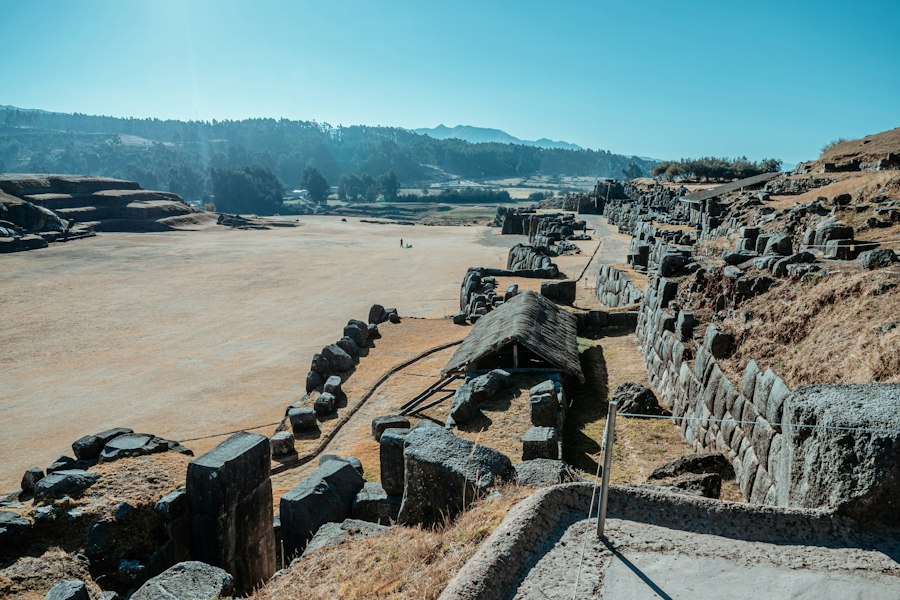
In the Andes, the Inca perfected the art of terracing, creating arable land on steep mountain slopes. These terraces, known as andenes, were ingeniously designed to prevent soil erosion, conserve water, and create microclimates suitable for different crops. Coupled with sophisticated irrigation systems, these terraces allowed for the cultivation of a wide range of crops, from potatoes and quinoa at higher altitudes to maize and beans at lower elevations. The sheer scale of this agricultural engineering transformed the Andean landscape and supported a dense population.
Chinampas: Floating Gardens of Ingenuity
In Mesoamerica, the Aztecs developed the chinampa system, often referred to as “floating gardens.” These artificial islands, constructed by layering mud and vegetation in shallow lakebeds, were incredibly fertile and allowed for multiple harvests per year. The chinampas were an ingenious solution to the challenges of urban agriculture, providing a sustainable and highly productive food source for the sprawling city of Tenochtitlan. This system demonstrates a sophisticated understanding of hydraulics, soil science, and sustainable resource management within an urban context.
Crop Rotation and Polyculture
Beyond specific techniques, ancient American farmers often practiced sophisticated crop rotation and polyculture, planting multiple crops together in the same field. This practice enriched the soil, controlled pests naturally, and ensured a more resilient food supply. The understanding of ecological relationships and the symbiotic benefits of different plants was advanced, contributing to the long-term sustainability of their agricultural systems.
Urban Planning and Social Organization: Cities of Sophistication
The development of large, well-organized cities across ancient America points to advanced urban planning, sophisticated governance, and complex social structures that facilitated communal living and societal progress. These were not haphazard settlements but carefully designed metropolises with intricate infrastructure and clear social hierarchies.
Teotihuacan: A Planned Metropolis
Teotihuacan, a massive city in the Basin of Mexico that flourished from approximately 100 BCE to 550 CE, is a prime example of advanced urban planning. Its grid-like street plan, dominated by the imposing Avenue of the Dead and the monumental Pyramids of the Sun and Moon, suggests a deliberate and organized approach to city design. The city was home to tens of thousands of people and featured sophisticated drainage systems, apartment compounds, and public plazas. The scale and organization of Teotihuacan indicate a highly centralized authority capable of mobilizing labor and resources for large-scale construction and urban development.
Tenochtitlan: A Venice of the New World
The Aztec capital of Tenochtitlan, built on an island in Lake Texcoco, was a marvel of engineering and urban planning. Its network of canals, causeways, aqueducts, and chinampas created a vibrant and functional city that supported a population of hundreds of thousands. The city was divided into well-defined districts, with a clear distinction between residential, ceremonial, and market areas. The intricate organization of its daily life, from waste management to the distribution of goods, speaks to a highly efficient administrative system and a deep understanding of urban logistics.
Andean Urbanism and Hierarchy
In the Andes, cities like Cusco, the Inca capital, were also meticulously planned. Cusco’s orthogonal street plan, the division of the city into Hanan (upper) and Hurin (lower) quarters, and the construction of the impressive fortress of Sacsayhuamán, all demonstrate advanced urban design principles and a hierarchical social structure. The Inca empire was characterized by its efficient administration and ability to integrate diverse regions into a cohesive political and economic system, which was reflected in the organization of its urban centers.
Social Stratification and Governance
The presence of monumental architecture, elaborate public works, and large urban populations implies sophisticated forms of governance and social organization. Evidence suggests clear social stratification, with ruling elites, priests, skilled artisans, and commoners. The ability to mobilize labor for massive construction projects, maintain extensive trade networks, and administer complex societies points to effective leadership and administrative structures that were far from primitive.
Recent discoveries have led researchers to conclude that ancient America was far more advanced than previously believed, challenging long-held perceptions of pre-Columbian societies. For instance, evidence suggests that complex urban planning and sophisticated agricultural techniques were prevalent among indigenous cultures. This notion is further explored in an intriguing article that discusses the implications of historical maps and their interpretations. You can read more about this fascinating topic in the article debunking the Piri Reis map, which provides a scientific rebuttal to misconceptions surrounding ancient navigational skills.
Knowledge Systems and Communication: Beyond Oral Tradition
| Metrics | Data |
|---|---|
| Architectural Achievements | Advanced city planning, complex irrigation systems, and monumental structures like pyramids and temples. |
| Scientific Knowledge | Understanding of astronomy, mathematics, and medicine, as evidenced by sophisticated calendars and surgical practices. |
| Artistic and Cultural Development | Elaborate artwork, intricate pottery, and diverse religious beliefs and rituals. |
| Technological Advancements | Innovations in metallurgy, textile production, and agriculture, including the use of advanced tools and techniques. |
While often characterized by a reliance on oral traditions, many ancient American civilizations developed sophisticated systems of knowledge preservation and communication, including intricate writing systems, record-keeping techniques, and advanced artistic and symbolic languages.
The Maya Script: A Fully Developed Writing System
The Maya developed one of the most sophisticated writing systems in the ancient world, a complex hieroglyphic script that could record spoken language. Their codices, carved stelae, and painted pottery are filled with inscriptions that detail history, mythology, astronomy, and genealogies. This writing system allowed for the transmission of complex knowledge across generations and across vast distances, a hallmark of advanced civilization. Deciphering Maya glyphs has unlocked a wealth of information about their history, beliefs, and scientific achievements.
The Quipu: An Andean Knot of Information
In the Andes, the Inca developed the quipu, a system of knotted strings used for record-keeping and communication. While not a written language in the traditional sense, the quipu could encode a vast amount of numerical data, including census information, tribute records, and historical events. The complexity of the knotting patterns and the use of different colored strings suggest a sophisticated system of information storage and retrieval that was vital for administering their vast empire. The ability to record and manage such complex data without a phonetic script is a testament to their ingenuity.
Artistic and Symbolic Languages
Beyond formal writing systems, ancient American cultures utilized rich artistic and symbolic languages to convey meaning and preserve knowledge. The intricate iconography found on pottery, textiles, and murals often carries deep symbolic meaning, conveying religious beliefs, historical narratives, and social status. These visual languages were as integral to their communication as written texts are to modern societies. The deliberate placement and design of artwork within their cities and ceremonial centers further underscores its importance in shaping their understanding of the world.
Mathematical Concepts
The Maya, in particular, developed a sophisticated mathematical system that included the concept of zero, a significant intellectual achievement that predates its widespread adoption in the Old World. Their vigesimal (base-20) numeral system was essential for their astronomical calculations and calendrical systems. This advanced mathematical understanding underpinned many of their other achievements in engineering, astronomy, and urban planning.
In conclusion, the evidence for advanced civilizations in ancient America is compelling and continues to grow. The monumental architecture, sophisticated astronomical observations, ingenious agricultural techniques, well-planned cities, and complex knowledge systems all point to societies that were far from primitive. Acknowledging these achievements not only enriches our understanding of human history but also challenges our preconceived notions of what constitutes advanced civilization, reminding us that ingenuity and innovation have flourished in diverse forms across the globe. The story of ancient America is a testament to the remarkable capacity of humankind to adapt, create, and thrive, leaving behind a legacy of profound accomplishment that continues to inspire awe and wonder.

A City Bigger Than London Once Stood in America. Then It Vanished.
FAQs
What evidence suggests that ancient America was more advanced than previously believed?
There is evidence of advanced architectural and engineering feats in ancient America, such as the construction of complex cities like Teotihuacan and Cahokia, as well as the development of sophisticated irrigation systems and agricultural practices.
What technological advancements did ancient Americans develop?
Ancient Americans developed advanced metallurgy techniques, including the production of intricate gold and silver artifacts. They also created complex astronomical calendars and had a deep understanding of mathematics and geometry.
How did ancient American societies organize themselves politically and socially?
Ancient American societies had complex political and social structures, with some civilizations, such as the Maya and the Aztecs, establishing powerful city-states and empires. They also had elaborate systems of governance, trade, and religious practices.
What impact did ancient American civilizations have on the environment?
Ancient American civilizations had a significant impact on the environment, as evidenced by the construction of extensive agricultural terraces, irrigation systems, and the manipulation of landscapes for urban development. They also had a deep understanding of sustainable farming practices.
How does the recognition of ancient America’s advancements change our understanding of history?
Recognizing the advanced achievements of ancient American civilizations challenges the traditional Eurocentric view of history and highlights the contributions of indigenous peoples to human progress. It also emphasizes the need to reevaluate and appreciate the rich cultural and technological heritage of ancient America.