The ancient brown trout, Salmo trutta, stands as a cornerstone of Norway’s freshwater ecosystems, a species whose presence and distribution have been intricately woven into the nation’s natural history and cultural heritage for millennia. Understanding its ancient distribution requires delving into geological epochs, prehistoric human activity, and the gradual shaping of the landscape by both natural forces and early inhabitants. This historical overview seeks to illuminate how the brown trout, in its various forms, came to populate the vast network of Norwegian rivers, lakes, and coastal waters, setting the stage for its enduring significance.
Glacial Legacy and Initial Colonization
The story of ancient brown trout distribution in Norway is inextricably linked to the last glacial period. As Scandinavia was entombed under massive ice sheets, the landmass that would become Norway was largely devoid of life, including fish. The retreat of these glaciers, a process that began approximately 20,000 years ago and continued for thousands of years, is the primary driver of the initial colonization of Norwegian freshwaters.
The Scouring and Reseeding of the Landscape
The immense weight and movement of glacial ice acted as a colossal sculptor of the Norwegian terrain. As the ice retreated, it carved out fjords, valleys, and countless depressions that would eventually fill with meltwater, forming the lakes and rivers we see today. This glacial scouring also had a profound impact on existing river systems, often damming them with moraine deposits or diverting their courses. The freshly exposed bedrock and sediment offered a blank canvas for the recolonization of life.
The question of how fish populations, including the brown trout, repopulated these newly deglaciated areas is a topic of considerable scientific interest. The prevailing theory is that recolonization occurred from ice-free refugia, areas that remained largely untouched by glaciation, or through the upstream migration of individuals from the North Atlantic Ocean. Norway’s coastline, with its extensive fjord system, provided numerous entry points for anadromous forms of brown trout, often referred to as sea trout. These migratory individuals, capable of surviving in both freshwater and saltwater, would have been among the first fish to venture into the newly formed river systems.
The Role of Land Bridges and Connections
During and immediately after the glacial retreat, land bridges and temporary connections between Norway and other landmasses, particularly the European continent, played a crucial role in facilitating the dispersal of freshwater species. While direct freshwater connections might have been limited and transient, the ability of anadromous and freshwater-resident forms of brown trout to navigate and utilize available waterways would have been paramount. The gradual uplift of land following the removal of glacial ice also influenced the connectivity of water bodies, opening and closing pathways for dispersal over time. Early lakes, often ephemeral and subject to changes in drainage patterns, would have served as temporary stepping stones, allowing trout populations to gradually expand their range upstream.
The distribution of ancient brown trout in Norway has been a subject of extensive research, shedding light on the ecological and evolutionary factors that have influenced their habitats over time. For a deeper understanding of how environmental changes impact species distribution, you might find it interesting to explore the article on the economic value of lunar helium-3, which discusses broader themes of resource distribution and environmental sustainability. You can read more about it here: Economic Value of Lunar Helium-3.
Prehistoric Human Influence and Dispersal
The arrival and expansion of early human populations in Norway, beginning around 10,000 years ago, also significantly impacted the distribution of brown trout, albeit in ways that were likely unintentional at first and became more deliberate over time. Hunter-gatherer societies relied heavily on natural resources, and fish were a vital component of their diet.
Early Hunter-Gatherer Interactions
Archaeological evidence suggests that fish, including trout, were a significant food source for Norway’s earliest inhabitants. While direct evidence of large-scale intentional stocking by these early peoples is scarce, their movements and settlement patterns would have inadvertently contributed to trout dispersal. For instance, fishing at the mouth of a river and then consuming or transporting fish upstream to a settlement in a higher-altitude lake could have led to the introduction of trout into previously fishless waters. Similarly, the practice of moving between coastal and inland fishing grounds would have created opportunities for accidental introductions. The primary mechanism for dispersal by early humans was likely through the movement of individuals or eggs attached to fishing gear or through the consumption and discarding of fish in new locations.
The Emergence of Fishing Traditions
As human societies became more sedentary and developed more sophisticated fishing techniques, their influence on trout distribution likely intensified. The development of specialized fishing gear, such as nets and hooks, would have allowed for more efficient exploitation of trout populations. While not necessarily driven by conservation or management goals, these fishing practices could have concentrated human activity in areas with abundant trout, indirectly influencing their localized abundance and potentially leading to further dispersal through human activity. It is plausible that early attempts at managing or enhancing fish stocks, even in a rudimentary form, began to emerge as communities recognized the importance of this resource. The knowledge of where and when to find trout would have been passed down through generations, shaping human settlement patterns and their relationship with the aquatic environment.
Environmental Adaptations and Divergence
Norway’s diverse geography, with its dramatic variations in altitude, temperature, and water chemistry, has fostered the evolution of different ecotypes and life histories within the brown trout species. These adaptations played a crucial role in the species’ ability to colonize and thrive in a wide range of Norwegian freshwater environments.
Freshwater-Resident Forms: The “Humløya” and Other Inland Trout
In landlocked lakes and upper river systems, isolated from the sea, populations of brown trout evolved into entirely freshwater-resident forms. These populations, often referred to by local names such as “humløya” in some regions, are genetically distinct from their migratory counterparts and have adapted to the specific conditions of their inland habitats. Their life cycles are confined to freshwater, with spawning occurring in tributaries and growth taking place within the lake or river system. The isolation of these populations, often due to waterfalls or distance from the coast, allowed for localized adaptations to occur, including variations in size, color, and spawning times, tailored to the unique ecological niches they occupied.
Anadromous Forms: The Sea Trout and Coastal River Systems
The anadromous form, the sea trout, is an iconic component of Norway’s coastal and fjordic ecosystems. These fish migrate to the ocean to feed and grow, returning to their natal rivers to spawn. Their ability to exploit both marine and freshwater environments allowed them to colonize a vast array of coastal river systems, from short streams emptying into fjords to larger rivers flowing into the Skagerrak. The abundance of food resources in the North Atlantic, coupled with the availability of suitable spawning grounds in Norwegian rivers, made this life history strategy highly successful. The historical distribution of sea trout would have been closely tied to the extent and accessibility of these coastal river systems, which provided essential freshwater habitats for reproduction.
Influence of Water Chemistry and Temperature
The geological substrate of Norway, predominantly hard, igneous rocks, generally results in soft, acidic waters in many of its lakes and rivers. While brown trout are relatively tolerant of such conditions, extreme acidity can limit their distribution and reproductive success. However, areas with more alkaline bedrock, often found in specific geological formations, would have supported more productive waters and potentially larger, more robust trout populations. Similarly, water temperature played a significant role. Glacial meltwater, especially in high-altitude regions, can be extremely cold, influencing trout growth rates and activity periods. In contrast, lower-altitude rivers and lakes with more direct solar exposure would have offered warmer conditions, potentially supporting larger populations and faster growth. The historical mosaic of water chemistry and temperature across Norway thus created a complex pattern of trout distribution, with certain regions being more conducive to their establishment and persistence than others.
Challenges to Ancient Distribution: Natural and Anthropogenic Factors
While natural processes and early human activities shaped the initial distribution of brown trout, a range of factors, both ancient and more recent, have presented challenges and altered their historical range. Understanding these influences provides a more complete picture of the species’ long-term ecological dynamics.
Natural Barriers and Environmental Shifts
Natural barriers have always played a significant role in fragmenting and shaping trout populations. Waterfalls, impassable rapids, and the natural drying up of tributaries during prolonged droughts would have prevented the upstream migration of trout, isolating populations and leading to divergence. Changes in river courses due to erosion, landslides, or glacial rebound could also have altered connectivity and accessibility. Furthermore, periods of significant climatic change, even within the Holocene epoch, would have influenced water temperatures, flow regimes, and the availability of prey species, impacting trout distribution. For instance, warmer interglacial periods might have allowed trout to colonize higher-altitude lakes previously inaccessible due to ice, while colder periods could have restricted their range.
The Advent of Modern Exploitation and Habitat Alteration
As human societies industrialized and their populations grew, the impact on trout populations became more pronounced. While early exploitation was largely subsistence-based, modern fishing practices, including commercial fishing in coastal waters and the widespread use of angling, placed increased pressure on trout stocks. Habitat alteration, driven by agricultural expansion, forestry, and hydroelectric development, has also significantly impacted brown trout. The damming of rivers has created impassable barriers to migration, fragmented river systems, and altered flow regimes and water temperatures. Deforestation can lead to increased erosion and sedimentation, degrading spawning grounds and reducing water quality. These anthropogenic pressures, which intensified from the 19th century onwards, began to alter the historical patterns of trout distribution, leading to declines in some areas and the need for conservation efforts.
Recent studies have shed light on the ancient brown trout distribution in Norway, revealing fascinating insights into their historical habitats and migration patterns. Researchers have discovered that these fish have adapted to various environmental changes over centuries, which has implications for current conservation efforts. For those interested in exploring related topics, an insightful article discussing the broader impacts of environmental factors on species distribution can be found here. This connection highlights the importance of understanding ecological dynamics in preserving Norway’s rich aquatic biodiversity.
Legacy and Modern Understanding of Ancient Trout Distribution
| Region | Estimated Ancient Brown Trout Population | Primary Habitat Type | Water Temperature Range (°C) | Conservation Status | Notes |
|---|---|---|---|---|---|
| Southern Norway (Telemark, Agder) | 15,000 – 20,000 | Rivers and Lakes | 4 – 15 | Stable | Populations in ancient river systems, some genetic distinctiveness |
| Western Norway (Hordaland, Sogn og Fjordane) | 10,000 – 12,000 | Coastal Rivers | 5 – 14 | Vulnerable | Impacted by hydropower development and habitat fragmentation |
| Central Norway (Trøndelag) | 8,000 – 10,000 | Freshwater Lakes and Streams | 3 – 13 | Stable | Ancient populations with some isolated genetic lineages |
| Northern Norway (Nordland, Troms) | 5,000 – 7,000 | Cold Mountain Streams | 2 – 10 | Near Threatened | Populations limited by colder climate and shorter growing seasons |
| Eastern Norway (Østlandet) | 12,000 – 15,000 | Rivers and Lakes | 4 – 16 | Stable | Some ancient populations mixed with introduced strains |
The study of ancient brown trout distribution in Norway is not merely an academic exercise; it provides a crucial baseline for understanding the species’ ecological resilience, its evolutionary history, and the impact of human activities on natural ecosystems. Modern research, combining historical data with genetic and ecological analyses, continues to refine our understanding.
Genetic Signatures of Past Colonization Events
Modern genetic techniques have provided powerful tools for tracing the historical movements and colonization routes of brown trout. By analyzing DNA from ancient and modern populations, researchers can identify genetic signatures that reveal connections between geographically distinct populations and infer past dispersal events. This research can confirm or challenge earlier hypotheses about colonization pathways and highlight the role of specific geographical features or historical events in shaping trout distribution. For example, genetic studies can reveal whether isolated populations in inland lakes originated from anadromous sea trout that ascended rivers or from freshwater migrants from other connected systems.
Informing Conservation and Management Strategies
Understanding the historical distribution of brown trout is essential for effective conservation and management. By identifying areas that historically supported robust trout populations, conservationists can prioritize these areas for protection and restoration. Knowledge of the natural barriers and dispersal routes that influenced ancient distributions can inform strategies for reintroducing trout to degraded habitats or for ensuring connectivity between fragmented populations. Furthermore, understanding the ecological requirements of different brown trout ecotypes, honed over millennia of adaptation, is crucial for developing management plans that cater to their specific needs. This historical perspective provides a vital context for modern efforts to ensure the long-term survival of this iconic species in Norway’s diverse freshwater environments. The challenges faced by ancient trout populations, both natural and anthropogenically influenced, serve as a powerful reminder of the dynamic nature of ecosystems and the importance of considering historical ecological processes in our stewardship of the natural world.
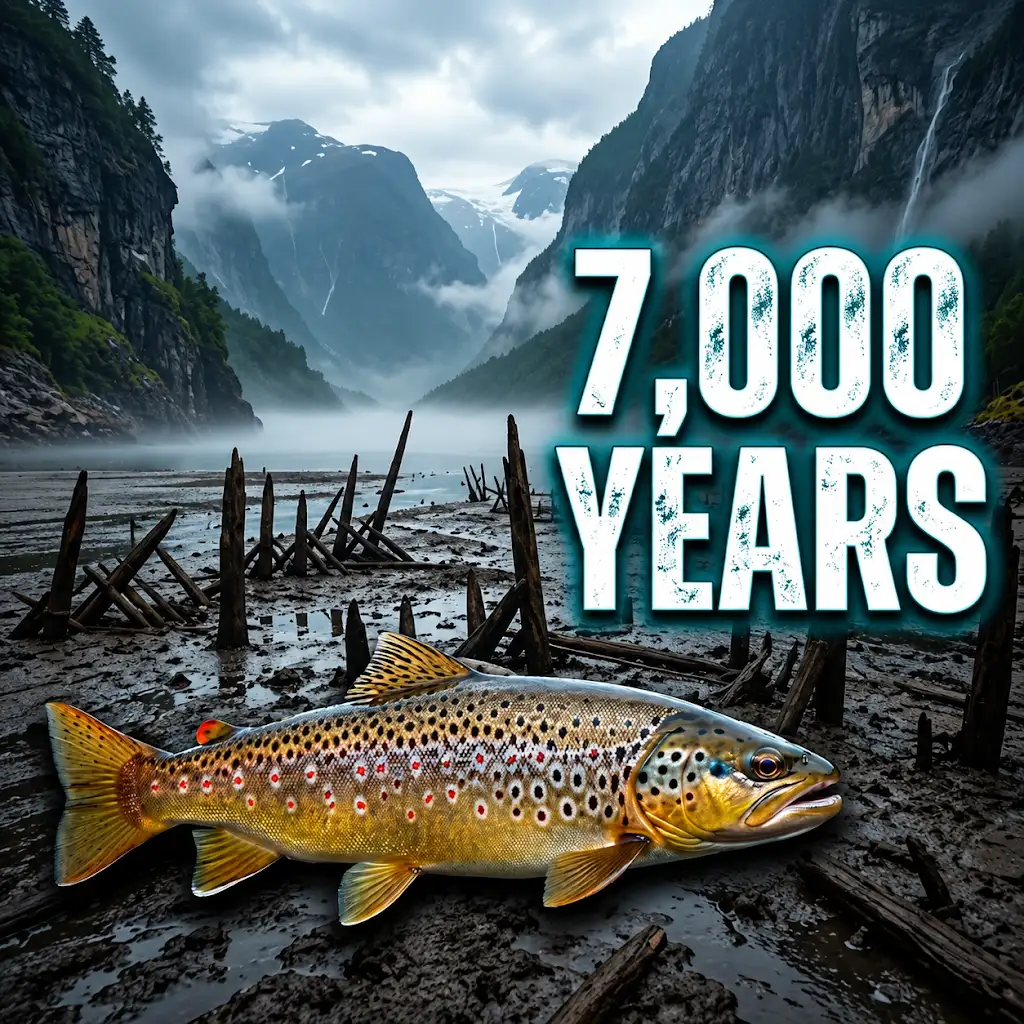
The 7,000-Year-Old Secret Hidden Under a Lake
FAQs
1. Where were ancient brown trout distributed in Norway?
Ancient brown trout were distributed throughout various rivers and lakes in Norway, including the Glomma, Numedalslågen, and Orkla rivers, as well as Lake Mjøsa and Lake Femund.
2. What is the significance of the distribution of ancient brown trout in Norway?
The distribution of ancient brown trout in Norway is significant as it provides insights into the historical range and habitat preferences of this species, contributing to our understanding of its evolution and adaptation to different environments.
3. How has the distribution of ancient brown trout in Norway changed over time?
Over time, the distribution of ancient brown trout in Norway has been influenced by various factors such as climate change, human activities, and habitat alterations, leading to changes in their presence in certain rivers and lakes.
4. Are there conservation efforts in place to protect ancient brown trout in Norway?
Yes, there are conservation efforts in place to protect ancient brown trout in Norway, including habitat restoration projects, fishing regulations, and monitoring programs to ensure the sustainability of their populations.
5. What can the distribution of ancient brown trout in Norway tell us about the health of freshwater ecosystems?
The distribution of ancient brown trout in Norway can serve as an indicator of the health of freshwater ecosystems, as their presence and abundance reflect the quality of water bodies, habitat conditions, and overall ecosystem functioning.