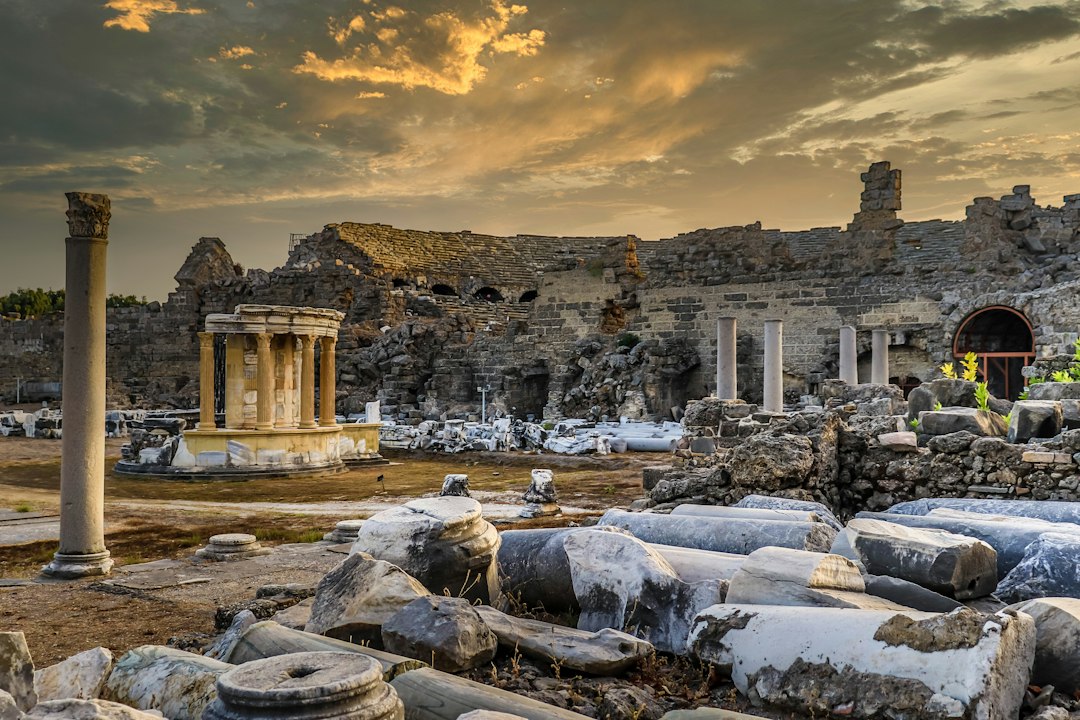
The whispers of forgotten empires often carry echoes of struggles that resonate disturbingly with our present. Among the most persistent and profound of these echoes are those concerning humanity’s long and complex relationship with climate change. Long before the advent of industrialization and greenhouse gas emissions, ancient civilizations faced environmental shifts that tested their resilience, shaped their development, and in some cases, contributed to their decline. Examining these historical encounters offers invaluable lessons, not as direct blueprints for our current challenges, but as cautionary tales and sources of inspiration for adaptation and sustainable coexistence with our planet.
The Fragile Balance of Early Agrarian Societies
The rise of the first great civilizations was inextricably linked to the development of agriculture, a practice inherently dependent on predictable climate patterns. Early farmers learned to harness the rhythms of rainfall, temperature, and sunlight to cultivate crops and sustain growing populations. This reliance, however, also made them acutely vulnerable to even minor climatic deviations.
Dependence on Predictable Monsoons and River Systems
The cradles of civilization, such as Mesopotamia, the Indus Valley, and dynastic Egypt, flourished due to their proximity to major river systems and reliable monsoon cycles. The Tigris and Euphrates in Mesopotamia, the Indus River, and the Nile all provided fertile alluvial plains, crucial for surplus food production. This surplus, in turn, allowed for the specialization of labor, the growth of cities, and the development of complex social structures. However, these lifeblood rivers and the rains that fed them were not immutable. Paleoclimatic evidence suggests that periods of drought and flood could be devastating. For instance, the Akkadian Empire, a powerful Mesopotamian state, is thought by some scholars to have collapsed around 2200 BCE due to a severe and prolonged drought, disrupting agricultural output and leading to societal breakdown. Similarly, fluctuations in the Nile’s annual flood, while sometimes beneficial, could also be catastrophic if too low (leading to famine) or too high (causing widespread destruction). The ability of these early societies to manage water resources, through irrigation and canal systems, represented a significant adaptation, but their fundamental dependence on the natural climate remained a persistent vulnerability.
The Impact of Gradual Climatic Shifts
While sudden catastrophic events like droughts or floods were devastating, gradual climatic shifts also played a significant role in shaping ancient societies. Changes in average temperatures or rainfall patterns, even if seemingly small by modern standards, could over generations alter the viability of certain crops, affect water availability, and influence migratory patterns of game. The collapse of the Maya civilization in Mesoamerica, for example, is often linked to a prolonged period of severe drought during the Classic Maya period (roughly 250-900 CE). Sophisticated water management systems, including reservoirs and canals, likely provided some buffer, but the intensity and duration of the droughts may have overwhelmed these defenses. This gradual drying of the region would have strained agricultural production, potentially leading to resource competition, social unrest, and the eventual abandonment of major urban centers. The lessons here are about the slow, insidious nature of climate change and the importance of long-term environmental foresight.
The impact of climate change on ancient civilizations is a fascinating topic that sheds light on how environmental factors can shape human history. For instance, the decline of the Maya civilization has been linked to prolonged droughts, which significantly affected their agricultural practices and societal structure. To explore how modern treaties, like the Outer Space Treaty, may still hold relevance in addressing global challenges such as climate change, you can read more in this insightful article: Is the Outer Space Treaty Still Relevant?.
Adaptation and Resilience in the Face of Environmental Stress

Not all ancient civilizations succumbed to environmental pressures. Many demonstrated remarkable ingenuity and adaptability in the face of changing climates, developing strategies that allowed them to not only survive but thrive for centuries. These adaptations often involved technological innovation, social organization, and a deep understanding of their local environments.
Innovative Agricultural Techniques and Water Management
When faced with changing rainfall patterns or increased aridity, ancient peoples developed sophisticated techniques to conserve water and maximize agricultural output. In arid regions, this included the construction of elaborate terrace farming systems, such as those found in the Andes, which prevented soil erosion and retained moisture. The Romans, renowned for their engineering prowess, developed advanced aqueducts and sophisticated irrigation systems that allowed them to sustain large populations in often challenging environments, demonstrating a mastery of water management that allowed for a degree of climate resilience. The Nabataeans, a nomadic Arab people who built the city of Petra, were masters of desert survival, developing intricate systems of cisterns and channels to capture and store precious rainwater in an extremely arid landscape. These examples highlight the power of human ingenuity in mitigating the impacts of climate variability.
Shifting Settlements and Resource Diversification
In some cases, the most effective adaptation was mobility. Nomadic or semi-nomadic peoples, by their very nature, were better equipped to move in response to environmental changes. However, even settled societies sometimes demonstrated flexibility. The abandonment of certain settlements and the relocation of populations to more favorable regions, while often a sign of stress, could also be a successful adaptive strategy. Furthermore, diversifying their economies and food sources could provide a buffer against climate-related failures in single crops or resources. A society that relied solely on one type of grain would be devastated by its failure, but one that cultivated multiple crops, relied on fishing, hunting, and gathered foods, would be more resilient to the failure of any single component. This concept of diversification and flexibility is a crucial takeaway for modern societies facing systemic risks.
The Role of Climate in the Demise of Empires

While adaptation was common, the confluence of environmental stress, social instability, and other factors often led to the decline or collapse of powerful ancient civilizations. Climate change, acting as a significant stressor, could exacerbate existing social tensions, weaken economies, and ultimately contribute to the unraveling of complex political systems.
Recent studies have shown that ancient civilizations were significantly impacted by climate change, which influenced their agricultural practices and societal structures. For instance, the decline of the Maya civilization has been linked to prolonged droughts that affected their water supply and crop yields. To explore how modern societies can learn from these historical events, you can read more about the implications of climate change on economies and industries in this article on maximizing benefits through nearshoring for US companies. Understanding these connections can provide valuable insights into how we might adapt to current environmental challenges. You can find the article here: maximizing benefits through nearshoring.
The Bronze Age Collapse and its Environmental Connections
The Late Bronze Age collapse, a period of widespread societal disruption and decline across the Eastern Mediterranean and Near East around the 1200 BCE, is a prime example where climate change is considered a significant contributing factor. Archaeological and paleoclimatic data suggest that this period was marked by prolonged droughts and possibly seismic activity. The disruption of trade routes, the collapse of centralized states, and the widespread destruction of cities all point to a system under immense strain. The inability of established Bronze Age powers, such as the Mycenaeans and the Hittites, to cope with these environmental challenges, coupled with internal strife and possibly migrations of peoples, contributed to their downfall. This period underscores how interconnected environmental, economic, and political systems can be, and how a significant climatic shock can trigger cascading failures.
The Han Dynasty and the ‘Mandate of Heaven’
In China, the Han Dynasty (206 BCE – 220 CE), a period of remarkable prosperity and expansion, eventually succumbed to a combination of internal rebellions, corruption, and environmental challenges. Historical records indicate periods of drought, flooding, and locust infestations that severely impacted agricultural production, leading to widespread famine and peasant unrest. The traditional Chinese concept of the ‘Mandate of Heaven’ held that rulers were divinely appointed, but their right to rule was contingent on their ability to govern justly and ensure prosperity for their people. Natural disasters, interpreted as signs of Heaven’s displeasure, could therefore be seen as evidence of a ruler’s failure to maintain cosmic harmony, thus undermining their legitimacy. While not solely a climate-driven collapse, the environmental hardships faced by the Han Dynasty undoubtedly contributed to the social and political instability that ultimately led to its fragmentation. This highlights the interplay between environmental conditions, public perception, and political stability.
Lessons for Today’s World
The study of ancient civilizations and their encounters with climate change offers a rich tapestry of insights relevant to our current global predicament. While the scale and drivers of modern climate change are distinct, the underlying principles of vulnerability, adaptation, and societal response remain remarkably consistent.
The Importance of Sustainable Resource Management
A recurring theme across the ancient world is the danger of overexploitation of natural resources. Deforestation, soil degradation, and water depletion, often driven by population growth and unsustainable agricultural practices, made societies more vulnerable to climatic shifts. Civilizations that managed their resources wisely, often through careful regulation and traditional ecological knowledge, tended to be more resilient. This serves as a stark reminder that our current economic models, which often prioritize short-term growth over long-term sustainability, are inherently risky. The concept of a circular economy, mimicking natural cycles, and investing in renewable resources are modern manifestations of this ancient wisdom.
The Interconnectedness of Environmental and Social Systems
Ancient history demonstrates that environmental challenges rarely exist in isolation. Climate change can act as a threat multiplier, exacerbating existing social inequalities, fueling conflict, and undermining political stability. The collapse of civilizations was rarely due to a single cause, but rather a complex interplay of factors where environmental stress played a significant role. For contemporary societies, this emphasizes the need for integrated approaches to climate change, addressing not only emissions but also issues of social justice, economic equity, and international cooperation. Ignoring the social dimensions of climate change will inevitably lead to more intractable problems.
The Power of Adaptation and Innovation
Despite the cautionary tales, the history of ancient civilizations also showcases humanity’s remarkable capacity for adaptation and innovation. From sophisticated irrigation systems to resilient agricultural techniques, ancient peoples found ways to cope with environmental challenges. This historical record provides a foundation of hope, demonstrating that with foresight, ingenuity, and collective action, societies can develop strategies to navigate a changing world. The challenge for today is to foster a similar spirit of innovation and cooperation on a global scale, learning from the successes and failures of those who came before us. The lessons from the past are not prophecies of doom, but rather invaluable guides for building a more sustainable and resilient future.
Your 401(k) Withdrawal Can Make More of Your Social Security Taxable
FAQs
What evidence suggests that ancient civilizations were impacted by climate change?
Archaeological findings, such as abandoned settlements, changes in agricultural practices, and written records documenting extreme weather events, indicate that ancient civilizations were affected by shifts in climate.
How did climate change contribute to the decline of certain ancient civilizations?
Climate change could lead to droughts, floods, or other extreme weather conditions that disrupted food production, caused resource scarcity, and ultimately contributed to the collapse of civilizations like the Mayans, Akkadians, and Ancestral Puebloans.
Were ancient civilizations aware of climate change and its impacts?
Ancient civilizations did not have the scientific understanding of climate change that we have today, but they did observe and adapt to changes in their environment, developing strategies like water management systems and crop diversification to cope with shifting climate patterns.
Can studying how ancient civilizations dealt with climate change provide insights for modern society?
Studying how ancient civilizations adapted to climate change can offer valuable lessons for modern society in terms of sustainable resource management, resilience building, and the importance of long-term planning in the face of environmental challenges.
What role did climate change play in the rise and fall of the Roman Empire?
Climate change, including periods of cooling and drought, is believed to have played a role in the decline of the Roman Empire by contributing to food shortages, economic instability, and social unrest, which weakened the empire’s ability to govern effectively.