Whispers from a Scorched Past
A groundbreaking documentary, “Echoes of the Abyss,” is pulling back the curtain on Earth’s ancient climate disasters, revealing a history far more turbulent and cataclysmic than commonly understood. For millennia, humanity has grappled with environmental shifts, but this film argues that our current concerns, while significant, pale in comparison to the planet’s past upheavals. Through cutting-edge CGI, expert interviews, and a narrative that artfully weaves scientific data with evocative storytelling, “Echoes of the Abyss” immerses viewers in epochs of extreme environmental stress, forcing a reevaluation of our place in geological time and the fragility of our planet’s delicate balance. The documentary doesn’t shy away from the terrifying scope of these events, detailing periods where the very habitability of Earth was thrown into question by forces beyond comprehension. It serves as a stark reminder that our familiar climate is not a constant, but rather a fleeting state in a long and often violent planetary saga.
Unveiling the Ice Age’s Fury
One of the most compelling segments of the documentary focuses on the planet’s glacial cycles, presenting them not as gradual shifts but as periods of dramatic and devastating change. “Echoes of the Abyss” meticulously reconstructs the formation and retreat of continental ice sheets, illustrating how these massive frozen expanses reshaped landscapes and triggered rapid, widespread environmental consequences. The film employs sophisticated visualizations to depict the sheer scale of these ice ages, showing glaciers miles thick carving out fjords, grinding mountains into dust, and dramatically altering coastlines.
The Great Flood’s Shadow
The documentary highlights the profound impact of glacial meltwater. As temperatures rose during interglacial periods, these colossal ice sheets began to disintegrate, releasing unimaginable volumes of water. “Echoes of the Abyss” visualizes these meltwater pulses as cataclysmic deluges, reshaping continents and creating vast inland seas. The film suggests that many of the flood myths prevalent in human cultures worldwide may find their origins in the collective memory of these ancient, planet-altering inundations. It paints a vivid picture of coastal regions being submerged, fertile plains becoming temporary oceans, and the very geography of the planet being redrawn in a matter of centuries, if not decades. This isn’t a gentle inundation; it’s a violent rearrangement of the Earth’s surface driven by the sheer power of melting ice. The documentary argues that our understanding of these ancient floods needs to move beyond mere folklore and be recognized as geological events of immense power, capable of influencing human migration and societal development for millennia.
The Perils of a Warming Planet
Beyond the ice, “Echoes of the Abyss” delves into periods of extreme global warming, demonstrating that a scorching Earth can be just as perilous as a frozen one. The documentary explores the Paleocene-Eocene Thermal Maximum (PETM), a period approximately 56 million years ago when global temperatures spiked by 5-8 degrees Celsius. Using detailed climate models, the film illustrates the devastating effects of this rapid warming: widespread ocean acidification, mass extinctions of marine life, and drastic shifts in terrestrial ecosystems. Viewers witness the transformation of lush forests into arid deserts and the struggle of species to adapt to rapidly changing conditions. The film emphasizes that the PETM serves as a chilling analogue for potential future warming scenarios, underscoring the catastrophic consequences of unchecked greenhouse gas emissions. The documentary highlights that this event wasn’t a slow, creeping change but a relatively rapid jump in global temperature, with profound and lasting impacts. It shows how entire ecosystems collapsed under the strain, demonstrating the interconnectedness of Earth’s systems and the cascading effects of drastic climate shifts.
In exploring the impacts of ancient climate disasters, one can draw parallels to modern economic strategies, such as nearshoring, which aims to enhance resilience in supply chains. For a deeper understanding of how contemporary businesses are adapting to global challenges, the article on maximizing benefits through nearshoring for U.S. companies provides valuable insights. You can read it here: Maximizing Benefits of Nearshoring for U.S. Companies.
The Age of Oxygen Depletion
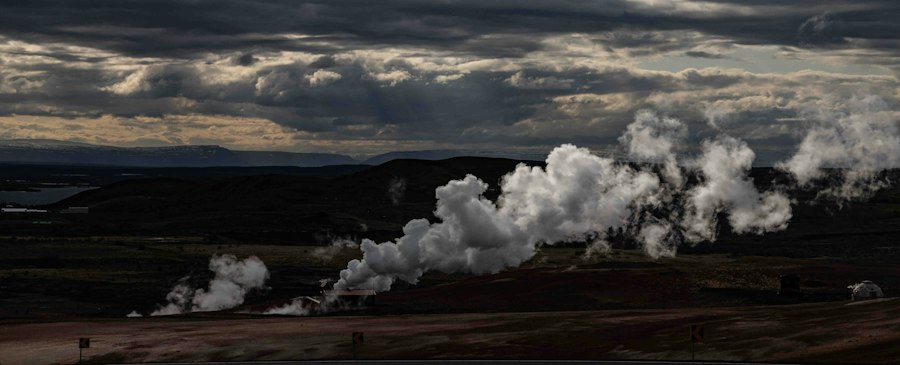
Perhaps the most unsettling revelation in “Echoes of the Abyss” concerns periods of severe oxygen depletion in Earth’s oceans, events that fundamentally altered the planet’s chemistry and led to widespread life extinction. The documentary meticulously explains the mechanisms behind these anoxic events, often linked to massive volcanic activity and subsequent climate shifts that disrupted ocean circulation and productivity.
Ocean’s Breathless Decline
The film employs sophisticated animations to depict the ocean’s gradual descent into an oxygen-starved state. Viewers see how the normal exchange of gases between the atmosphere and the ocean falters, leading to the proliferation of anaerobic bacteria that consume what little oxygen remains. This creates vast “dead zones” where most marine life cannot survive. The documentary connects these events to mass extinction episodes, particularly the end-Permian extinction, often referred to as the “Great Dying,” which wiped out an estimated 96% of marine species. The visuals are stark, showing vibrant coral reefs and teeming schools of fish giving way to barren, lifeless depths. The narrative emphasizes that this wasn’t a localized phenomenon but a global oceanic crisis, impacting ecosystems across the planet and reshaping the course of evolution. The documentary stresses the importance of oceanic oxygen for the survival of a vast majority of life on Earth, making these anoxic periods particularly devastating.
The Rise of Toxic Seas
“Echoes of the Abyss” further explores the consequences of oxygen depletion, revealing how these periods often coincided with the release of toxic gases, such as hydrogen sulfide, from the ocean depths. The documentary presents chilling CGI sequences of the ocean surface becoming poisoned, with toxic plumes rising to affect coastal regions and potentially impacting atmospheric composition. This adds another layer of catastrophe, demonstrating how these ancient climate disasters were not confined to specific environments but had far-reaching and devastating consequences for the entire planet. The film posits that such events could have made large swathes of the planet uninhabitable, even for terrestrial life, due to atmospheric contamination. The scientific explanations are made accessible, detailing the chemical processes that lead to the buildup and release of these deadly gases, painting a terrifying picture of an ocean turned weapon.
Volcanic Fury and Atmospheric Upheaval
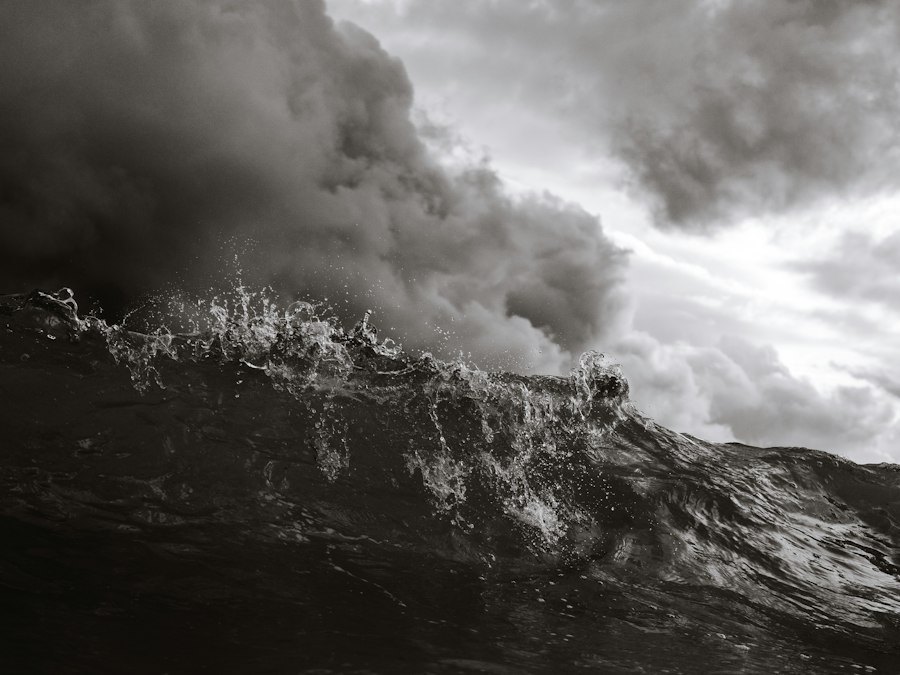
The documentary dedicates significant attention to the role of massive volcanic eruptions in triggering and exacerbating ancient climate disasters. It argues that the sheer scale of these geological events dwarfed any individual volcanic activity seen in recorded human history, leading to profound and rapid global changes.
Siberian Traps and the Great Dying
“Echoes of the Abyss” focuses on the Siberian Traps, a vast region of volcanic rock formed by massive outpourings of lava approximately 252 million years ago. The film uses detailed geological data and compelling visualizations to illustrate the immense scale of this eruptive event, showing how it released colossal amounts of greenhouse gases, such as carbon dioxide and methane, into the atmosphere. This triggered a rapid and extreme warming event, leading to the aforementioned end-Permian extinction. The documentary explains the chain reaction: increased volcanic activity led to rising temperatures, which in turn caused ocean acidification and deoxygenation, ultimately decimating life on Earth. The visualizations are visceral, depicting molten rock engulfing continents and the atmosphere becoming thick with volcanic ash and gases.
The Deccan Traps and Their Lingering Shadow
The film also examines the Deccan Traps in India, another massive volcanic province linked to significant climate disruptions, including the Cretaceous-Paleogene extinction event that famously wiped out the non-avian dinosaurs. While the asteroid impact is the more popularly known cause of this extinction, “Echoes of the Abyss” argues that the Deccan Traps played a crucial, synergistic role. It suggests that the sustained volcanic activity weakened ecosystems and altered the climate over a long period, making the planet more vulnerable to the catastrophic impact of the asteroid. The documentary presents scientific evidence linking atmospheric changes and climate fluctuations to the Deccan Traps eruptions, demonstrating that these events were not isolated incidents but part of a complex interplay of geological and climatic forces. The film highlights how the impact of the asteroid might have been amplified by the pre-existing stresses on the global environment caused by the volcanic activity.
The Sun’s Erratic Dance
While human activity and geological events are primary focus, “Echoes of the Abyss” also explores the impact of solar activity on Earth’s climate in deep time. The documentary delves into periods when changes in the sun’s output, though subtle by modern standards, could have had significant climatic consequences on a planet with a less resilient atmosphere.
Solar Cycles and Ancient Shifts
The film presents scientific hypotheses regarding fluctuations in solar luminosity over geological timescales. It illustrates how even minor variations in the sun’s energy output, amplified by feedback mechanisms within Earth’s climate system, could have contributed to glacial and interglacial periods, or exacerbated warming events. The documentary uses data from ice cores and other geological records to support these claims, showing correlations between solar activity proxies and past climatic conditions. The visualizations depict the sun as a dynamic entity, its intensity subtly waxing and waning, influencing the delicate energy balance of the young Earth.
The Role of Geomagnetic Field Shifts
Furthermore, “Echoes of the Abyss” touches upon the interplay between solar activity and Earth’s magnetic field. The documentary explains that a weaker magnetic field would have allowed more solar radiation to reach the planet’s atmosphere, potentially leading to greater atmospheric heating and alterations in atmospheric chemistry. While not a direct climate driver in the same way as greenhouse gases, the film suggests that these shifts in Earth’s protective shield could have been a contributing factor in some of the planet’s ancient climatic extremes, especially in conjunction with other powerful forcing mechanisms. The documentary emphasizes that our understanding of these solar influences is still evolving, but the evidence suggests a complex relationship that has shaped Earth’s climate throughout its history.
In exploring the impacts of ancient climate disasters, one can gain a deeper understanding of how past events shape our current environmental challenges. A fascinating article that delves into the complexities of governance in the context of space and its implications for our planet can be found here: space governance. This connection highlights the importance of learning from history as we navigate the future of our world.
Lessons for a Modern World
| Metric | Value | Description |
|---|---|---|
| Documentary Title | Ancient Climate Catastrophes | Name of the documentary |
| Duration | 90 minutes | Total runtime of the documentary |
| Release Year | 2023 | Year the documentary was released |
| Focus Period | Last 500 million years | Time span covered regarding ancient climate events |
| Key Climate Events Covered | Permian Extinction, Ice Ages, Paleocene-Eocene Thermal Maximum | Main ancient climate disasters discussed |
| Scientific Experts Featured | 12 | Number of climate scientists interviewed |
| Viewership | 1.5 million | Number of viewers in the first year |
| IMDB Rating | 8.2/10 | Audience rating on IMDB |
| Production Budget | 3 million | Estimated production cost in USD |
The ultimate message of “Echoes of the Abyss” is not one of despair, but of profound and urgent caution. By revealing the sheer power and scale of Earth’s ancient climate disasters, the documentary aims to foster a deeper appreciation for the planet’s climatic volatility and the potential consequences of human-induced environmental change.
The Unseen Vulnerability
The film masterfully conveys the concept of planetary vulnerability. It demonstrates that the Earth’s systems, while robust, are not invincible. Periods of extreme warmth, frigid cold, oxygen depletion, and atmospheric upheaval have repeatedly pushed life to the brink. The documentary argues that our current trajectory, driven by rapid greenhouse gas emissions and ecosystem degradation, mirrors some of the early warning signs of these ancient catastrophes. The visualizations of extinct ecosystems and the stark statistics of mass extinctions serve as a powerful testament to the fragility of life on Earth when faced with rapid and drastic environmental change. The film emphasizes that our current technological advancement might offer some resilience, but it does not grant immunity from the fundamental laws of planetary science.
A Call to Understand and Act
“Echoes of the Abyss” concludes with a compelling call to action. It implores viewers to learn from Earth’s forgotten past and to recognize the interconnectedness of all life and the environment. The documentary highlights that understanding these ancient disasters is not merely an academic exercise; it is a crucial step in safeguarding our future. By acknowledging the planet’s capacity for extreme climatic events, humanity can be better equipped to mitigate the risks of our current environmental challenges. The film advocates for increased investment in climate research, sustainable practices, and international cooperation to address the looming threat of climate change. It leaves the audience with a sobering yet empowering message: the future of our planet, and ourselves, depends on our ability to understand and respect its powerful and often unforgiving natural forces. The documentary serves as a potent reminder that history, even geological history, can and should inform our present and guide our future decisions.
Your 401(k) Withdrawal Can Make More of Your Social Security Taxable
FAQs
What is the ancient climate disaster documentary about?
The ancient climate disaster documentary explores catastrophic events in Earth’s history that have significantly impacted the planet’s climate and ecosystems.
When did these ancient climate disasters occur?
These ancient climate disasters occurred millions of years ago, shaping the Earth’s environment and leading to mass extinctions of various species.
What evidence supports the occurrence of ancient climate disasters?
Evidence such as geological records, fossil findings, and scientific research on ancient climate conditions provide substantial proof of the occurrence of these catastrophic events.
How do ancient climate disasters compare to modern climate change?
Ancient climate disasters were natural events that occurred over long periods, while modern climate change is largely driven by human activities and is happening at a much faster pace, posing a different set of challenges.
What can we learn from studying ancient climate disasters?
Studying ancient climate disasters can help us understand the long-term impacts of environmental changes, the resilience of ecosystems, and the importance of taking proactive measures to mitigate the effects of climate change today.