
Echoes in the Sand: Morocco’s Ancient Earthworks
Morocco, a land where the Atlas Mountains cradle ancient traditions and the Sahara whispers tales of forgotten empires, holds within its diverse landscapes a wealth of enigmatic archaeological treasures. Beyond the bustling souks and the grandeur of imperial cities, a more ancient narrative is etched into the very earth: the story of Morocco’s ancient earthworks. These monumental constructions, often overlooked in favor of more visible ruins, offer a profound glimpse into the lives, beliefs, and technological prowess of civilizations that thrived millennia ago. From sprawling agricultural systems that tamed arid lands to defensive fortifications that stood sentinel against the passage of time, these earthworks are silent witnesses to a rich and complex past, awaiting their stories to be fully unveiled.
Ancient earthworks in Morocco have captured the attention of archaeologists and historians alike, as they provide valuable insights into the region’s prehistoric cultures and their interactions with the environment. These monumental structures, often associated with ancient agricultural practices, highlight the ingenuity of early societies in adapting to their surroundings. For those interested in exploring the broader implications of such historical sites on contemporary issues, a related article can be found at Fragile States: The Global Challenge, which discusses how understanding our past can inform current global challenges.
The Foundations of Civilization: Early Agricultural Systems
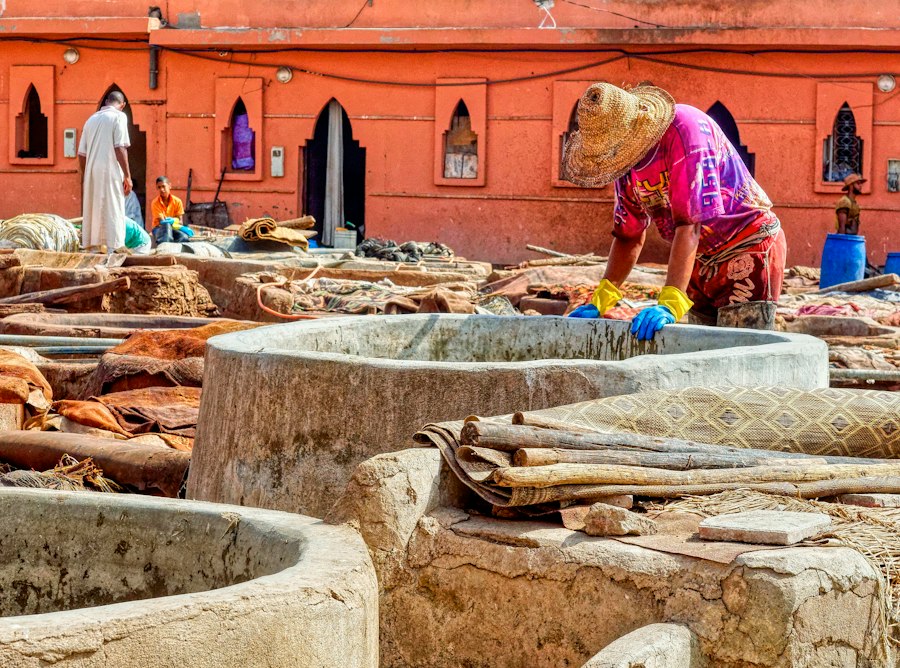
The earliest human endeavors in North Africa were intrinsically linked to the land and the mastery of its resources. Long before the advent of stone architecture or sophisticated metalworking, our ancestors were shaping the environment to sustain their growing populations. Morocco’s earthworks reveal a remarkable understanding of hydrology and soil management, crucial for survival in regions where water was, and remains, a precious commodity. These early agricultural systems were not mere ditches and mounds; they represented a profound commitment to settled life and the cultivation of the land, laying the groundwork for future societal development.
Taming the Rivers: Ancient Irrigation Networks
Perhaps the most striking examples of early Moroccan earthworks are the remnants of extensive irrigation systems. These were not rudimentary channels but complex networks designed to capture, store, and distribute water over vast distances. In areas prone to drought, the ingenuity of these ancient engineers was paramount. They understood the natural flow of water, the principles of gravity, and the properties of the earth itself to create sustainable agricultural landscapes.
The construction of these systems would have involved immense collective effort, requiring the mobilization of significant labor forces. They would have dug countless kilometers of canals, built diversion dams, and constructed reservoirs, often using simple tools made from wood, bone, or stone. The scale of these undertakings speaks volumes about the social organization and the shared purpose of the communities that built them. These were not isolated projects but integral components of a larger vision for sustenance and prosperity. The careful siting of these channels often followed natural contours of the land, minimizing the energy required for water flow and maximizing efficiency. Evidence suggests the use of permeable and impermeable materials to control water loss, a testament to their practical knowledge of earth sciences. The legacy of these ancient water managers can still be seen in some of the traditional irrigation techniques practiced in rural Morocco today, a living link to a distant past.
Contour Farming and Terracing: Sculpting the Slopes
In the hilly and mountainous regions of Morocco, the earthworks took on a different, yet equally impressive, form. To combat soil erosion and maximize arable land on steep slopes, ancient populations developed sophisticated techniques of contour farming and terracing. These methods involved the careful sculpting of the landscape into a series of level platforms or stepped slopes, designed to follow the natural contours of the land.
Terracing served multiple crucial purposes. It created flat surfaces for cultivation, preventing rainwater from simply running off and carrying valuable topsoil with it. The terraces themselves acted as miniature dams, slowing water flow and allowing it to percolate into the soil, providing much-needed moisture to crops. Furthermore, the construction of these terraces would have stabilized hillsides, reducing the risk of landslides. The materials used for the retaining walls of these terraces varied depending on local availability, often employing stones, compacted earth, or even woven branches. The meticulous planning required to lay out these terraces, ensuring consistent gradient and optimal water management, showcases a deep understanding of landscape engineering. These agricultural landscapes, sculpted over centuries, not only fed the populations but also transformed the visual character of the Moroccan countryside, creating iconic patterns that endure to this day.
Sentinels of the Past: Defensive Fortifications and Settlements

Beyond sustenance, the ancient peoples of Morocco also faced the perennial challenges of security and defense. The strategic location of Morocco, bridging Africa and Europe and controlling vital trade routes, made it a target for conflict and a desirable territory to control. Consequently, earthworks were extensively employed in the construction of fortifications, settlements, and strategic watchpoints, designed to protect communities and project power. These structures, often built on elevated terrain for a tactical advantage, represent a significant investment in communal safety and highlight the prevailing geopolitical realities of their times.
Hilltop Fortifications: Strategic Redoubts
Across the Moroccan landscape, particularly in the more rugged and mountainous areas, numerous hilltop fortifications stand as testament to the defensive strategies of ancient peoples. These sites were deliberately chosen for their natural advantages, offering commanding views of the surrounding terrain and making them difficult to assault. The earthworks associated with these fortifications often involved the construction of massive ramparts, ditches, and palisades, designed to create formidable obstacles for any attacking force.
The construction of these earthworks was a monumental task, involving the excavation of deep trenches and the piling of vast quantities of soil and stone to form defensive walls. The scale of these undertakings suggests a high degree of social organization and the ability to mobilize a substantial workforce. These were not ad-hoc defenses but carefully planned and strategically located strongholds, serving as centers of refuge and control. The placement of these fortifications often followed natural defensive features, such as cliffs or steep slopes, which were then augmented by human-made earthworks. The meticulous positioning of these sites allowed defenders to observe approaching threats from a distance, providing valuable time to prepare and organize their defenses. Some of these fortifications may have also served as centers of administration and trade, their defensive capabilities ensuring the safety of these vital activities. The sheer labor involved in moving and shaping such large quantities of earth and stone points to a sophisticated understanding of engineering and resource management.
Settlement Mounds and Enclosures: Early Community Life
In more open plains and valleys, the evidence of early settlements often takes the form of distinctive mounds and enclosures created through the accumulation of human activity and the deliberate construction of earthworks. These sites, known as tells or settlements, represent the gradual growth and evolution of communities over extended periods. The earthworks here are less about grand fortification and more about the creation of defined living spaces, often incorporating defensive elements.
These settlement mounds are essentially artificial hills built up layer by layer through the continuous occupation and rebuilding of structures over generations. As houses and other buildings were constructed, collapsed, and rebuilt, the debris accumulated, gradually raising the ground level. Surrounding these mounds, one often finds evidence of earthworks designed to delineate the settlement boundaries, provide a degree of protection, or manage internal resources. These might include ditches, low ramparts, or even palisaded enclosures. The organization of these settlements, with their clearly defined spaces for living, working, and potentially communal activities, provides insights into the social structures and daily lives of their inhabitants. The process of mound formation itself was a continuous form of earthworks, a slow but steady reshaping of the landscape by human hands. Excavations at these sites have revealed hearths, storage pits, and the remains of domestic structures, all embedded within these earth-built environments. These settlement mounds offer a unique archaeological perspective, allowing researchers to study the long-term development and cultural changes of communities through the analysis of successive occupation layers.
Mysteries Beneath the Surface: Ritual and Symbolic Landscapes
While many of Morocco’s earthworks served clear practical purposes related to agriculture and defense, a significant number also bear the hallmarks of ritualistic or symbolic intent. These enigmatic constructions, often found in prominent locations or arranged in specific patterns, suggest a profound connection between the ancient inhabitants and the spiritual or cosmological forces they perceived in their world. The study of these earthworks opens a window into the belief systems and ceremonial practices of peoples whose voices have long since faded into silence.
Astronomical Alignments and Sacred Geometry
Certain earthworks across Morocco exhibit intriguing alignments with celestial bodies, suggesting a sophisticated understanding of astronomy and its integration into their worldview. These alignments might manifest as avenues directed towards solstices or equinoxes, or structures carefully positioned to mark the rising or setting of specific stars. Such findings indicate that these constructions were not solely utilitarian but also served as calendars, observatories, or sites for astronomical ceremonies.
The precision with which some of these alignments are achieved, using only rudimentary tools, is remarkable. It implies a deep and sustained observation of the night sky over generations. The creation of these aligned earthworks would have required careful surveying and a profound understanding of the cycles of the sun, moon, and stars. The geometric arrangements of certain earthworks also hint at a symbolic language, where shapes and patterns held specific meanings. This might have been related to representations of the cosmos, the natural world, or abstract spiritual concepts. The deliberate manipulation of the landscape to reflect celestial movements underscores the integral role that astronomy played in the religious and cultural lives of these ancient societies. These sites served as tangible connections between the earthly realm and the heavens, a constant reminder of humanity’s place within the grand cosmic order.
Ceremonial Platforms and Gathering Spaces
Evidence suggests that some earthworks were specifically constructed or modified for ceremonial purposes, serving as gathering spaces for rituals, feasts, or important community events. These might include raised platforms, circular enclosures, or specially prepared areas designed to accommodate large numbers of people for communal activities. The deliberate construction of these spaces, often in accessible yet significant locations, points to their importance in the social and spiritual fabric of ancient Moroccan societies.
These ceremonial earthworks were likely the focal points for important rituals that marked key moments in the agricultural calendar, celebrated significant life events, or appeased deities. The preparation of these sites may have involved extensive leveling of the ground, the construction of seating areas, or the creation of central features around which ceremonies would take place. The precise nature of these rituals remains largely unknown, but the presence of these dedicated spaces offers a tantalizing glimpse into their collective practices. Archaeological findings at such sites can include evidence of feasting, such as large quantities of animal bones and pottery, or the presence of unique artifacts that may have been used in ceremonies. These earthworks acted as physical anchors for collective identity and spiritual expression, reinforcing social bonds and transmitting cultural knowledge across generations.
Ancient earthworks in Morocco have long intrigued archaeologists and historians, as they provide valuable insights into the region’s prehistoric cultures and their interactions. These structures, often associated with ceremonial or agricultural purposes, reflect the complexity of ancient societies. For those interested in understanding the broader context of ancient civilizations and their trade networks, a related article discusses the impact of the collapse of Bronze Age trade networks on various cultures. You can read more about this fascinating topic in the article here.
The Unfinished Tapestry: Challenges and Future Discoveries
| Site Name | Location | Estimated Age | Type of Earthwork | Dimensions | Purpose |
|---|---|---|---|---|---|
| Djebel Irhoud Earthworks | Near Sidi Moktar, Morocco | Approx. 300,000 years | Stone and earth mounds | Varies, up to 10 meters high | Habitation and tool-making site |
| Volubilis Terraces | Near Meknes, Morocco | 2nd century BCE – 3rd century CE | Terraced agricultural earthworks | Several hectares | Agricultural cultivation |
| Ancient Berber Defensive Walls | Atlas Mountains region | Approx. 1,000 – 2,000 years | Stone and earth ramparts | Up to 5 meters high, several kilometers long | Defense and territorial boundaries |
| Tazina Earthworks | Southeastern Morocco | Approx. 1,500 years | Stone enclosures and mounds | Up to 3 meters high | Ritual and burial purposes |
Despite centuries of exploration and archaeological investigation, Morocco’s ancient earthworks remain largely an unfinished tapestry, their stories far from fully revealed. Numerous sites are still undiscovered, hidden by the shifting sands of the Sahara or buried beneath the surface of agricultural fields. The challenges in preserving and studying these ephemeral constructions are significant, requiring innovative approaches and sustained commitment from researchers and authorities alike.
Preservation and the Ravages of Time
The very nature of earthworks makes them particularly vulnerable to the forces of nature and human alteration. Wind erosion, water runoff, and agricultural practices can gradually degrade or obliterate these ancient constructions. The passage of millennia, coupled with the unpredictable forces of climate change, poses a constant threat to their continued existence. Identifying and mapping these sites is the first crucial step in their preservation, but this is a monumental task in a country with such diverse and expansive terrain.
Furthermore, the lack of substantial, visible stone structures can sometimes lead to these earthworks being overlooked or undervalued. Without the dramatic appeal of crumbling temples or grand palaces, they may not attract the same level of public attention or governmental protection. However, their scientific and historical significance is immense, offering a unique perspective on the development of human societies in North Africa. Initiatives for their conservation require careful planning, often involving measures to stabilize slopes, manage water flow, and educate local communities about their heritage. The challenge lies in balancing the need for preservation with the ongoing human activities that shape the landscape.
The Promise of New Technologies and Ongoing Research
Despite the challenges, the future of unearthing Morocco’s ancient earthworks is bright, thanks to advancements in archaeological technology and the dedication of ongoing research. Remote sensing techniques, such as aerial photography, satellite imagery, and LiDAR (Light Detection and Ranging), are revolutionizing the way archaeologists can survey vast and inaccessible areas. These technologies can penetrate vegetation cover and detect subtle topographical anomalies that would be invisible to the naked eye, allowing for the identification of previously unknown sites.
Ground-penetrating radar (GPR) and magnetometry are also invaluable tools for non-invasively investigating the subsurface of potential earthwork sites, providing detailed maps of buried features without the need for extensive excavation. DNA analysis and paleobotany are offering new ways to understand the diet, migration patterns, and agricultural practices of the people who built these earthworks. Ongoing excavations, often conducted in collaboration with Moroccan archaeologists and institutions, continue to reveal new information about the scale, purpose, and inhabitants of these ancient constructions. Each unearthed artifact, each meticulously mapped feature, adds another thread to the rich and complex tapestry of Morocco’s ancient past, ensuring that these silent sentinels of the earth will continue to speak their stories for generations to come. The ongoing research promises to unlock further mysteries, deepening our understanding of the ingenuity, resilience, and cultural richness of the ancient peoples who shaped the Moroccan landscape.

They Found a 4,000-Year-Old Defense Line in Morocco
FAQs
What are ancient earthworks in Morocco?
Ancient earthworks in Morocco are man-made structures built by ancient civilizations using earth, stones, and other natural materials. These structures served various purposes such as defense, religious ceremonies, or marking boundaries.
Where are the ancient earthworks located in Morocco?
Ancient earthworks can be found throughout Morocco, with some of the most well-known sites located in regions such as the High Atlas Mountains, the Sahara Desert, and along the Atlantic coast.
Who built the ancient earthworks in Morocco?
The ancient earthworks in Morocco were built by various civilizations that inhabited the region throughout history, including the Berbers, Phoenicians, Romans, and Arabs. Each civilization contributed to the construction of these structures for different purposes.
What is the significance of ancient earthworks in Morocco?
Ancient earthworks in Morocco hold significant historical and cultural value as they provide insights into the lives, beliefs, and practices of the ancient civilizations that once inhabited the region. They also serve as important archaeological sites for researchers and historians.
Can visitors explore the ancient earthworks in Morocco?
Yes, many of the ancient earthworks in Morocco are open to visitors who are interested in exploring these historical sites. However, it is important to respect the sites and follow any guidelines or restrictions in place to preserve these ancient structures for future generations.