The primal spark, the flickering flame, the warmth that banished the encroaching darkness – fire has been an indispensable ally to humankind for millennia. Its mastery represented a monumental leap in our species’ development, enabling cooking, protection from predators, and the ability to thrive in colder climates. This article delves into the fascinating world of ancient fire-making, exploring the primitive tools and ingenious techniques that allowed our ancestors to harness this powerful force. From the rudimentary rubbing of wood to the more sophisticated use of stone and tinder, the journey of fire creation is a testament to human ingenuity and adaptation.
The Dawn of the Flame: Early Evidence and Significance
The earliest conclusive evidence for the controlled use of fire dates back to at least 400,000 years ago, with some archaeological sites suggesting even earlier, more ephemeral use. This revolutionary capability transformed early human existence. Before fire, sustenance was limited to raw foods, often difficult to digest and lacking in essential nutrients. Fire allowed for cooking, making food more palatable, digestible, and safer by killing pathogens. This dietary shift may have contributed to the development of larger brains and more complex societies. Furthermore, fire provided crucial protection against nocturnal predators, allowing early humans to settle in more vulnerable environments and extend their active hours into the night. It also served as a vital source of heat, enabling migration into colder regions previously inaccessible. The psychological impact of fire, a symbol of safety and community, cannot be overstated, fostering social cohesion around its comforting glow.
Archaeological Clues: Unearthing the Past
Archaeological sites offer tantalizing glimpses into the early mastery of fire. Hearths, characterized by clusters of ash, charcoal, and burned stones, provide direct evidence of fire’s use. The presence of specific types of burned materials can indicate the kinds of fuel used, offering clues about the surrounding environment and the resources available to early humans. Tools found in association with these hearths, such as stone implements that might have been used for striking sparks or preparing tinder, further illuminate the methods employed. The controlled burning of landscapes, evident in some prehistoric sites, suggests an understanding of fire’s role in shaping ecosystems, perhaps for clearing land or promoting the growth of certain plants.
The Transformative Power of Cooked Food
The advent of cooking revolutionized human diet and health. Raw foods, especially meat and starchy vegetables, can be tough, indigestible, and harbor harmful bacteria and parasites. Cooking breaks down tough fibers, denatures proteins, and gelatinizes starches, making food significantly easier to digest and absorb. This increased nutrient availability meant early humans could extract more energy and essential vitamins and minerals from their diet. This improved nutrition is hypothesized to have played a role in the evolution of the human brain, which is metabolically demanding. The ability to consume a wider range of foods also contributed to greater dietary flexibility, allowing human populations to adapt to diverse environments.
In exploring the fascinating world of ancient fire-making techniques, one can gain insights into the primitive tools that our ancestors utilized to harness this essential element for survival. The development of these tools not only signifies human ingenuity but also reflects the broader context of how early societies interacted with their environment. For a deeper understanding of the legal frameworks that govern the protection of cultural heritage, which includes ancient technologies and practices, you may find the article on nationalization and sovereign interests particularly enlightening. You can read more about it here: Legal Frameworks for Nationalization: Protecting Sovereign Interests.
Friction Methods: The Rubbing and Twirling Techniques
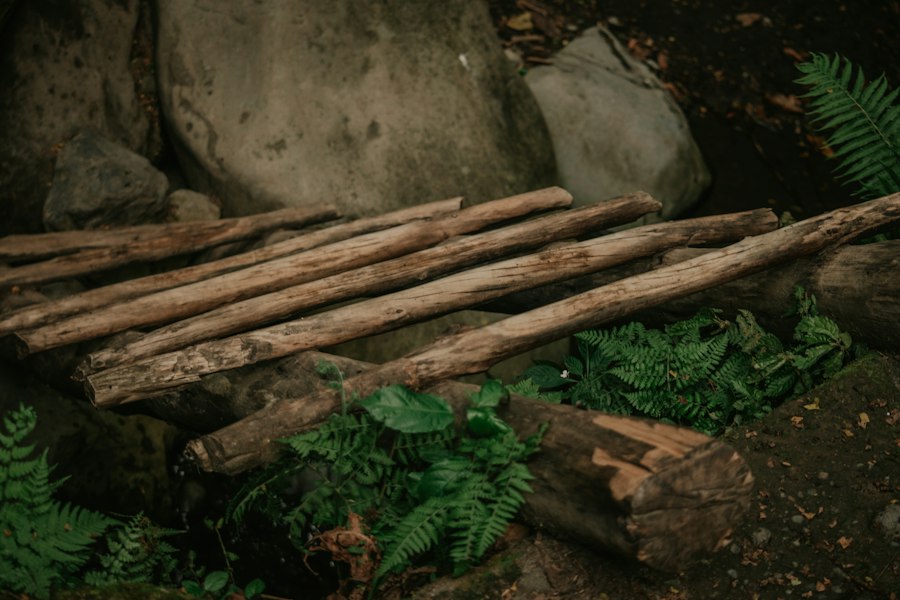
The most fundamental and likely earliest methods of fire-making relied on friction. These techniques, though seemingly simple, required skill, patience, and a deep understanding of materials. The core principle behind friction fire-making is the generation of enough heat through sustained friction to ignite a readily combustible material. This process typically involves two main components: an ignition source (the friction-generating parts) and tinder (the material that catches the spark or ember).
The Hand Drill: A Direct Application of Force
The hand drill is a quintessential friction method. It involves a spindle, usually a straight, dry stick, which is rapidly spun between the palms of the hands against a hearth board, a piece of softer wood with a small notch cut into its edge. As the spindle is pressed down into the notch and spun back and forth, friction generates fine wood dust, which accumulates in the notch. Continued spinning heats this dust until it begins to smoke and eventually forms a glowing ember. This ember is then carefully transferred to a nest of dry tinder and blown upon gently until it bursts into flame. The success of the hand drill depends on the quality of the wood, the dryness of the materials, and the stamina and technique of the fire-maker. Different wood types yield different results; hardwoods often make good spindles, while softer woods like cedar or basswood are suitable for hearth boards.
The Bow Drill: Enhancing Speed and Pressure
The bow drill represents a significant advancement over the hand drill, offering greater speed and consistent pressure, thus making ember creation more efficient. This method utilizes a bow with a string wrapped around a spindle. The spindle is positioned vertically, with its bottom end resting in a notch on a hearth board and its top end held in place by a handhold or socket, often made of stone or bone. The bow is then moved back and forth, causing the string to rotate the spindle at high speed. This rapid rotation generates intense friction in the notch, producing hot wood dust and eventually an ember. The bow drill allows for more sustained and forceful rotation than the hand drill, making it easier to generate the necessary heat. The materials used are similar to the hand drill, with variations in wood types influencing the effectiveness. Mastering the bow drill requires coordination between the hands, feet, and bow arm.
The Fire Plough: A Simple Yet Effective Mechanism
The fire plough, also known as the fire-drag or fire-saw, is another friction-based method that is conceptually straightforward. It involves a plough-like stick being rapidly rubbed back and forth along a groove carved into a hearth board. As the stick moves, it scrapes fine wood shavings down the groove, accumulating them at one end. The friction generated heats these shavings, and with sufficient speed and pressure, an ember can be formed within the pile. This method is often considered less demanding in terms of fine motor control than the drill methods, but it still requires significant physical exertion and the right combination of wood types. The groove in the hearth board is crucial for directing the friction dust to a concentrated area, facilitating ember formation.
Percussion Methods: Striking Sparks from Stone
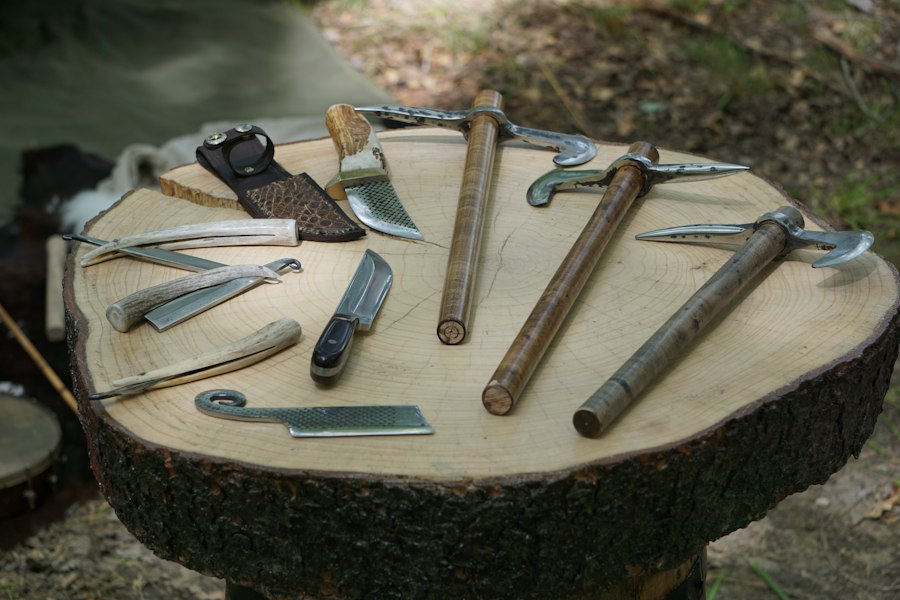
While friction methods represent the earliest known techniques, percussion methods, utilizing the properties of certain rocks, emerged as another crucial avenue for fire-making. This approach involves striking two specific types of stones together to create sparks, which are then directed onto a suitable tinder. This method requires a keen understanding of mineralogy and the ability to identify the right materials.
Flint and Pyrite: The Classic Spark Producers
The classic percussion method involves striking flint against pyrite (iron sulfide). Flint is a hard, sedimentary rock that, when struck with a sharp edge, fractures and produces sharp, thin flakes. Pyrite, on the other hand, is a brittle mineral that readily oxidizes and can be easily chipped. When flint strikes pyrite with sufficient force and at the correct angle, small fragments of pyrite are sheared off. These fragments, heated by the impact, oxidize rapidly in the air, creating small sparks. The key to success lies in the composition of the tinder. Traditional tinder for this method includes char cloth (fabric that has been partially burned in an oxygen-limited environment, making it highly combustible) or finely shredded, dry plant material. The sparks, being relatively cool compared to embers from friction methods, require a very fine and receptive tinder to ignite.
Iron Pyrite and Marcasite: Variations on a Theme
Similar to pyrite, marcasite, an allotrope of iron disulfide, can also be used in percussion fire-making. Marcasite, though chemically the same as pyrite, has a different crystal structure and can sometimes be easier to fracture and produce sparks with. Ancient peoples likely experimented with various naturally occurring iron sulfides to find the most effective combinations for spark generation. The principle remains the same: striking a hard object against a softer, reactive mineral to create sparks capable of igniting tinder. The efficiency of these methods is highly dependent on the specific mineral composition and the preparation of both the striking materials and the tinder.
The Role of the Striker and the Hearth
In percussion fire-making, the quality of the “striker” – the tool used to strike the pyrite or marcasite – is also important. While flint itself can be used, hardened steel or other very hard stones might have been employed by later prehistoric cultures as they developed more sophisticated tool-making techniques. The hearth, in this context, refers to the collection of tinder where the sparks are directed. This hearth needs to be meticulously prepared. It must be dry, finely divided, and highly combustible to catch even the relatively weak sparks produced by percussion. The ability to create and maintain such a prepared tinder bundle was as crucial as the ability to strike sparks.
Tinder and Fuel: The Essential Companions to Flame
Regardless of the method used to generate an ember or spark, the success of fire-making hinges on the quality and preparation of tinder and fuel. These materials are the unsung heroes of ancient fire creation, transforming a fleeting spark into a sustainable flame.
Tinder: The Captor of the First Spark
Tinder is the material that ignites from a spark or ember. It must be extremely dry and possess a high surface area to volume ratio, allowing it to readily catch and hold heat. Ancient peoples were adept at identifying and preparing various natural materials for tinder. These included:
- Dry Grasses and Reeds: Finely shredded and dried grasses, especially those found in the seed heads, were excellent tinder.
- Bark Fibers: The inner bark of certain trees, such as cedar or birch, could be scraped and fluffed into a downy mass.
- Fungus: Certain types of fungus, particularly the “tinder fungus” (Fomes fomentarius), when dried and processed, could be made very flammable.
- Cotton-like Plant Down: The fluffy seed pods of plants like cattails or thistles provided an easily ignitable material.
- Charred Materials: As mentioned in percussion methods, charred cloth or plant matter significantly increases the ease of ignition. The process of charring involves heating organic material in a low-oxygen environment, which makes it more prone to smoldering and igniting from a spark.
The preparation of tinder often involved rubbing, shredding, and fluffing the material to maximize its surface area and air exposure, making it receptive to even the faintest spark or ember.
Kindling: The Bridge to Sustained Fire
Once the tinder has caught fire, it needs to be transitioned to larger fuel. This stage is where kindling comes into play. Kindling consists of small, dry twigs and branches, typically no thicker than a pencil. These materials are carefully added to the burning tinder, allowing the flame to grow and consume them. The kindling acts as a bridge, transferring the heat from the initial, small flame to larger fuel sources.
- Selection: Dry, dead twigs are preferred, as green wood will not burn effectively.
- Size Progression: Kindling starts with the smallest, thinnest twigs and gradually increases in size as the fire grows stronger.
- Arrangement: Kindling is often arranged in a teepee or criss-cross fashion around the burning tinder to allow for adequate airflow.
Fuel: Sustaining the Hearth’s Warmth
The final stage involves adding larger pieces of wood, known as fuel, to maintain the fire. This can range from branches to larger logs, depending on the desired duration and intensity of the flame.
- Dryness: The most crucial factor for all fuel is dryness. Wet or green wood will smoke excessively and burn inefficiently, if at all.
- Type of Wood: Different wood types burn at different rates and produce varying amounts of heat. Hardwoods generally burn longer and hotter than softwoods.
- Gradual Addition: Fuel is added gradually to the fire, allowing each piece to catch flame before adding more, preventing the fire from being smothered.
In exploring the ingenuity of ancient civilizations, one fascinating aspect is their ability to create fire using primitive tools. This skill not only provided warmth and protection but also revolutionized cooking and social interactions. For a deeper understanding of how resource management has evolved over time, you might find it interesting to read about the current geopolitical race for resources in Antarctica, which highlights humanity’s ongoing quest for survival and innovation. You can find more information in this article on geopolitical strategies.
Beyond Survival: The Cultural and Symbolic Importance of Fire
| Tool Name | Material | Method | Estimated Age (Years Ago) | Region Found | Effectiveness |
|---|---|---|---|---|---|
| Hand Drill | Wood | Friction (Rotating stick between hands) | 100,000+ | Africa, Asia | Moderate |
| Bow Drill | Wood, Cord | Friction (Bow moves drill stick) | 50,000+ | Worldwide | High |
| Fire Plough | Wood | Friction (Ploughing stick in groove) | 70,000+ | Asia, Australia | Moderate |
| Flint and Steel | Flint, Iron | Sparking by striking | 40,000+ | Europe | High |
| Fire Saw | Wood | Friction (Sawing motion) | 60,000+ | Asia | Moderate |
The mastery of fire extended far beyond its practical applications of survival. It became deeply intertwined with human culture, mythology, and social organization, imbuing it with profound symbolic meaning that resonates even today.
Fire in Mythology and Religion
Across cultures and throughout history, fire has been a potent symbol in mythology and religion. It is often associated with creation, destruction, purification, and divine power. Many creation myths feature fire as the primordial element from which the world emerged. Deities of fire, such as the Greek Prometheus who stole fire for humanity, or the Hindu god Agni, represent its transformative and life-giving properties. Fire altars and sacred flames have been central to rituals and ceremonies in countless traditions, signifying purity, connection to the divine, and the enduring spirit of humanity. The act of tending a sacred fire often carried immense responsibility and spiritual significance.
The Hearth as a Social Hub
The hearth, the central place where fire was maintained, became the focal point of early human settlements. It was where food was cooked, stories were shared, and communities bonded. The warmth and light of the fire provided a sense of security and belonging, transforming a rudimentary dwelling into a home. Around the communal hearth, knowledge was passed down through generations, social hierarchies were reinforced, and cultural norms were established. The hearth represented the heart of the community, a symbol of unity and shared experience.
Fire in Art and Ritual
The visual impact of fire – its flickering movement, its radiant glow, its destructive potential – has inspired countless forms of artistic expression and ritualistic practices. Cave paintings sometimes depict scenes involving fire, suggesting its importance in the lives of prehistoric artists. The use of fire in rituals, from cremation to symbolic offerings, highlights its perceived ability to bridge the gap between the physical and spiritual realms. The controlled manipulation of fire for entertainment, such as early forms of pyrotechnics or fire dancing, also emerged, demonstrating a more playful and aesthetic engagement with this powerful element. The enduring fascination with fire speaks to its fundamental role in shaping the human experience.
