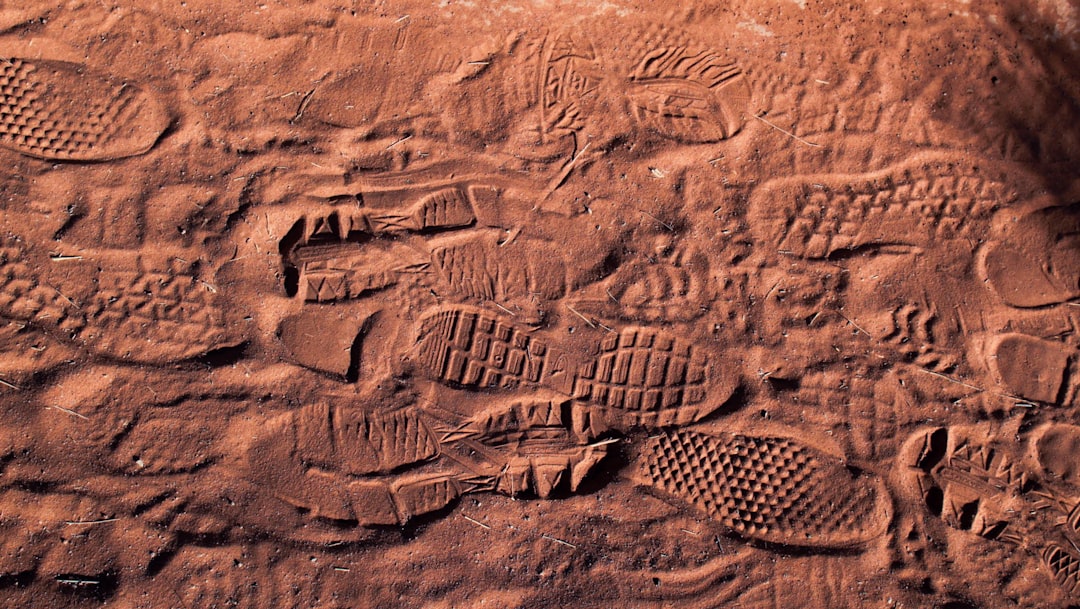
The discovery of ancient human footprints preserved in the gypsum dunes of White Sands National Park has ignited a profound debate within the scientific community. These ephemeral imprints, etched into the soft sediment thousands of years ago, represent some of the most compelling direct evidence of early human presence in North America. However, the precise age of these footprints has been a subject of intense scrutiny and evolving interpretation, making the quest for accurate dating a pivotal endeavor in understanding the timeline of human migration across the Americas.
The Discovery and Initial Significance
The White Sands footprints, first widely recognized and studied in the early 21st century, emerged from layers of gypsum sediment that had been exposed by wind erosion. These tracks, left by humans of various ages, including children and adults, offer a unique glimpse into the lives of individuals who walked this landscape during a critical period of prehistory. The sheer abundance and the remarkable state of preservation of these footprints immediately set them apart from other archeological findings. They provided a tangible connection to individuals who lived, hunted, and moved across this now arid environment when it was likely a wetter, more hospitable landscape.
The initial excitement surrounding the discovery stemmed from the potential to push back the established timelines of human arrival in the Americas. For decades, the Clovis First model, which posited that the earliest inhabitants arrived around 13,000 years ago, was the dominant paradigm. The White Sands footprints, if accurately dated to a much earlier period, could fundamentally challenge this long-held belief and rewrite the narrative of human dispersal across the continent. The implications are far-reaching, touching upon our understanding of human adaptability, technological innovation, and the complex migratory routes that led to the peopling of the New World.
Early Assessments and Ongoing Debates
The initial excitement surrounding the White Sands footprints was tempered by the inherent challenges of precisely dating such ephemeral evidence. Unlike artifacts made of bone or stone, footprints are composed of sediment and are susceptible to disruption and contamination. This necessitated the development and refinement of sophisticated dating techniques, leading to a protracted scientific discussion that continues to this day. The debate is not simply about finding a number; it’s about understanding the complex geological and environmental context in which the footprints were preserved and ensuring the reliability of the dating methodologies employed.
The very nature of sedimentary dating presents a unique set of hurdles. Gypsum, the primary mineral composition of White Sands, is not as straightforward to date as, for instance, volcanic ash layers. This has led to the application of multiple dating techniques, each with its own strengths and limitations, creating a complex mosaic of evidence that requires careful interpretation and critical evaluation by the scientific community.
Recent discoveries at White Sands National Park have unveiled ancient footprints that provide compelling evidence of human presence in North America dating back over 21,000 years. This groundbreaking finding has sparked significant interest in the study of early human migration and adaptation. For those interested in exploring more about the intersection of ancient technologies and human history, a related article titled “Unlocking the Mysteries of Lost Tech” delves into similar themes of discovery and innovation. You can read it here: Unlocking the Mysteries of Lost Tech.
Methods of Dating the Footprints
The scientific quest to date the White Sands footprints has involved the application of a variety of advanced dating techniques. Each method approaches the problem from a different angle, utilizing the properties of materials present in and around the footprints to estimate their age. The convergence of evidence from multiple independent techniques is crucial for building a robust and credible timeline.
Radiocarbon Dating of Associated Organic Material
One of the most widely used dating methods in archeology is radiocarbon dating. This technique relies on the decay of carbon-14, a radioactive isotope of carbon, which is incorporated into organic matter during an organism’s life. Once an organism dies, the carbon-14 begins to decay at a predictable rate, with a half-life of approximately 5,730 years. By measuring the remaining amount of carbon-14 in an organic sample, scientists can calculate how long ago the organism died.
In the context of the White Sands footprints, radiocarbon dating has been applied to organic materials found in close association with the tracks. This includes seeds, pollen, and other plant remains that may have been deposited at the same time as the footprints, or within the sedimentary layers that encase them. The meticulous excavation and careful selection of these organic samples are critical to avoid contamination from younger or older sources. The presence of charcoal fragments, often associated with ancient fires, has also been a valuable source for radiocarbon dating.
Challenges and Limitations of Radiocarbon Dating
Despite its widespread utility, radiocarbon dating is not without its challenges, particularly in the context of sedimentary environments like White Sands. One significant limitation is the potential for contamination. Organic materials found within sedimentary layers can be reworked by natural processes, such as water flow or animal burrowing, leading to the mixing of materials of different ages. This can result in an artificially younger or older date than the actual age of the footprints.
Furthermore, the concentration of carbon-14 in the atmosphere has not been constant throughout history. Fluctuations in atmospheric carbon-14 levels, often influenced by solar activity and geomagnetic field variations, can affect the accuracy of radiocarbon dates. Scientists use calibration curves, derived from dating tree rings and other well-dated materials, to correct for these fluctuations. However, the accuracy of these calibrations can also have limitations, especially for very ancient samples.
The scarcity of suitable organic material directly associated with the footprints can also be a constraint. In some cases, the organic matter present might be too degraded or too sparse to yield reliable results. This necessitates careful consideration of the context and provenance of any organic sample used for dating.
Optically Stimulated Luminescence (OSL) Dating
Optically Stimulated Luminescence (OSL) dating is another powerful technique employed to determine the age of sediments. This method dates the last time mineral grains, such as quartz or feldspar, were exposed to sunlight or heat. When these minerals are buried, they absorb ionizing radiation from their surroundings, causing them to accumulate trapped electrons. When these sediments are later exposed to light, the trapped electrons are released, emitting luminescence.
The intensity of this emitted light is proportional to the amount of radiation the minerals have absorbed since their last exposure to sunlight. By measuring the luminescence and estimating the background radiation dose rate, OSL dating can provide an age for the sediment layer in which the footprints are found. This technique is particularly valuable because it directly dates the sediment matrix that preserves the footprints, rather than relying on associated organic material.
OSL Dating of Sediments Enclosing the Footprints
The application of OSL dating to the sediments surrounding the White Sands footprints has provided crucial data points. Researchers meticulously collect sediment samples from layers immediately above, below, and adjacent to the footprint horizons. These samples are then analyzed in a laboratory under controlled conditions, shielded from any light. The process involves carefully measuring the luminescence emitted by the mineral grains when stimulated by specific wavelengths of light.
The results of OSL dating can offer a different perspective compared to radiocarbon dating, as it focuses on the burial history of the sediment itself. If the OSL dates from multiple samples in proximity to the footprints converge on a similar age range, it strengthens the confidence in the overall dating of the site. This technique is particularly effective in dating aeolian (wind-deposited) sediments like those found at White Sands, where continuous deposition and burial are common.
Considerations for OSL Dating Accuracy
While OSL dating is a robust technique, its accuracy is also contingent on several factors. The effectiveness of OSL dating relies on the assumption that the mineral grains were fully bleached by sunlight or heat before burial. If the sediments were not thoroughly exposed to sunlight, residual luminescence from prior exposure could lead to an underestimation of the age.
Another critical consideration is the accurate determination of the environmental dose rate, which is the rate at which the sediments have been exposed to background radiation over time. This requires careful measurement of the radioactivity of the surrounding rocks, soil, and cosmic rays. Variations in moisture content can also influence the dose rate, as water can attenuate radiation. Therefore, meticulous field measurements and laboratory analyses are essential for obtaining accurate OSL dates.
Uranium-Series Dating of Calcite Deposits
Uranium-series dating is a geochronological technique that can be applied to materials containing uranium, such as carbonates. Uranium has several radioactive isotopes that decay through a series of intermediate daughter isotopes, eventually leading to stable isotopes of lead. Some of these daughter isotopes are also radioactive and decay at known rates.
In the context of the White Sands footprints, calcite deposits that have formed over the footprints or within the surrounding sediment layers can be analyzed using uranium-series dating. As calcite precipitates from water, it incorporates uranium from the water. As the uranium decays, it produces radioactive daughter isotopes. By measuring the ratios of these uranium and daughter isotopes, scientists can estimate the time since the calcite was formed, thus providing an age for the sediments it encases or covers.
Application to Calcite Crusts and Speleothems
Calcite crusts are commonly found in arid and semi-arid environments like White Sands. These crusts often form as a result of water evaporation, leaving behind mineral deposits. If these calcite formations are found directly associated with the footprints, either by encasing them or forming within the layers that preserve them, they can provide a valuable dating tool. Speleothems, such as stalactites and stalagmites, while more commonly associated with caves, can also form in sheltered depressions or overhangs within sandy environments if conditions permit.
The analysis of these calcite deposits involves sophisticated mass spectrometry techniques to precisely measure the isotopic ratios. The presence of specific uranium and thorium isotopes, and their respective decay chains, allows for the calculation of ages ranging from a few thousand years to several hundred thousand years. This technique is particularly useful for dating materials that may not be suitable for radiocarbon or OSL dating.
Challenges in Uranium-Series Dating
Uranium-series dating, while powerful, also faces certain challenges. The accuracy of the dating relies on the assumption that the system has remained closed since formation, meaning that uranium and its daughter isotopes have not been added or removed from the material. Contamination from groundwater or the surrounding environment can introduce or leach out isotopes, compromising the dating results.
Furthermore, the presence of detrital thorium, which is not in secular equilibrium with its parent uranium, can also lead to inaccuracies in uranium-series dating. Scientists employ various methods to account for detrital thorium, such as analyzing different uranium isotopes or employing multiple analytical techniques. The choice of the appropriate uranium isotope system and the careful selection of samples are crucial for obtaining reliable dates.
Integrating Multiple Dating Lines of Evidence
The most compelling conclusions regarding the age of the White Sands footprints emerge when data from multiple, independent dating techniques converge. Relying on a single dating method, especially for complex sedimentary sites, can lead to uncertainties. The scientific process in White Sands has been characterized by a rigorous effort to cross-validate findings from different approaches.
When radiocarbon dates from associated organic material, OSL dates from the enclosing sediments, and uranium-series dates from calcite deposits all point towards a similar age range, the confidence in that age estimate significantly increases. This convergence of evidence acts as a powerful check and balance, helping to identify potential biases or inaccuracies in any single method.
Recent discoveries at White Sands National Park have unveiled ancient footprints that provide compelling evidence of early human presence in North America, sparking significant interest among archaeologists. These findings have led to discussions about the implications of human migration patterns and their interactions with the environment. For those interested in exploring how historical treaties, such as the Outer Space Treaty, may influence our understanding of human exploration, a related article can be found here: Outer Space Treaty. This connection highlights the broader themes of exploration and the quest for knowledge that have shaped human history.
The Convergence of Evidence: Reassessing Timelines
The initial findings from some of these dating methods suggested ages that significantly predated the Clovis First model. For instance, early interpretations of radiocarbon dates from organic material within the footprint layers indicated ages of over 20,000 years before present. These early results, while exciting, also generated considerable skepticism within the archeological community, given the established consensus.
Subsequent studies, employing refined methodologies and analyzing different samples, have aimed to corroborate or challenge these initial findings. The ongoing interplay between different dating techniques and the re-analysis of existing data are crucial for refining our understanding of the White Sands footprint timeline. This iterative process of discovery, dating, and debate is fundamental to scientific progress.
Interdisciplinary Collaboration and Peer Review
The investigation into the White Sands footprints is a prime example of interdisciplinary collaboration. Geologists, archeologists, physicists, and chemists have all contributed their expertise to unravel the age of these ancient tracks. This collaborative approach ensures that a wide range of scientific perspectives are considered, and that potential issues with any specific dating method are identified and addressed.
Moreover, the entire process is subject to rigorous peer review. Scientific findings are published in reputable journals after being scrutinized by other experts in the field. This critical evaluation by the scientific community is essential for ensuring the validity and reliability of the research. Disagreements and debates, while sometimes challenging, ultimately strengthen the scientific understanding by forcing researchers to refine their arguments and provide more robust evidence.
Revisiting the Chronology of Human Migration
The evolving dating evidence from the White Sands footprints has profound implications for our understanding of the chronology of human migration into the Americas. If the older dates are confirmed and accepted by the wider scientific community, it would necessitate a significant revision of established timelines.
Pushing Back the Arrival of Humans in North America
The potential for ages exceeding 20,000 years before present at White Sands suggests that humans were present in North America much earlier than previously thought. This would mean that the initial peopling of the Americas was not a single, late event, but rather a more complex process occurring over a much longer period. It raises questions about the routes taken by early migrants, the environmental conditions they encountered, and their adaptations to diverse landscapes.
The presence of humans in North America during the Last Glacial Maximum, a period of extensive glaciation, would have presented significant challenges. Understanding how these early populations navigated and survived in such a challenging environment is a key area of ongoing research. The White Sands footprints, by potentially placing humans in the Americas during this period, offer a unique window into this early chapter of human history.
Implications for Land Bridge and Coastal Migration Theories
The revised timelines also impact theories about how humans first arrived in the Americas. The traditional land bridge theory, which posits migration across the Bering Strait land bridge when sea levels were lower, remains a significant hypothesis. However, earlier arrival dates might also lend greater credence to coastal migration routes, where groups could have followed the Pacific coastline, utilizing maritime resources.
The precise timing of the opening of ice-free corridors between the North American ice sheets is also a crucial factor. Earlier arrival dates would imply that either these corridors opened earlier than previously estimated, or that migration occurred via alternative routes. The White Sands evidence, when combined with findings from other early archeological sites across the Americas, helps to paint a more nuanced picture of these migratory pathways.
The scientific journey to accurately date the ancient footprints at White Sands National Park is a testament to the power of scientific inquiry. It is a story of meticulous fieldwork, the application of cutting-edge dating technologies, and the rigorous process of scientific debate and validation. While the exact timeline may continue to be refined with new discoveries and analyses, the White Sands footprints have already irrevocably altered our perception of the deep past, offering an unparalleled glimpse into the lives of the very first humans to walk across the North American continent. The ongoing research promises to continue to unlock the secrets held within these ancient impressions, forever etching them into our collective understanding of human history.

These Footprints Could Rewrite the Story of the First Americans
FAQs
What is the significance of the footprints found at White Sands?
The footprints found at White Sands are significant because they provide evidence of human presence in North America dating back over 23,000 years, which challenges previous theories about the timeline of human migration.
How were the footprints dated?
The footprints were dated using a technique called luminescence dating, which measures the amount of light energy trapped in the sand grains to determine when they were last exposed to sunlight.
What do the footprints tell us about early human migration?
The footprints suggest that humans were present in North America much earlier than previously thought, indicating that they may have arrived during the Last Glacial Maximum when a land bridge connected Asia and North America.
What other evidence supports the findings from White Sands?
In addition to the footprints, archaeological evidence such as stone tools and butchered mammoth bones have been found at the site, further supporting the presence of early humans in the area.
What are the implications of this discovery?
The discovery of the footprints at White Sands challenges existing theories about the peopling of the Americas and opens up new avenues for research into early human migration and settlement patterns.