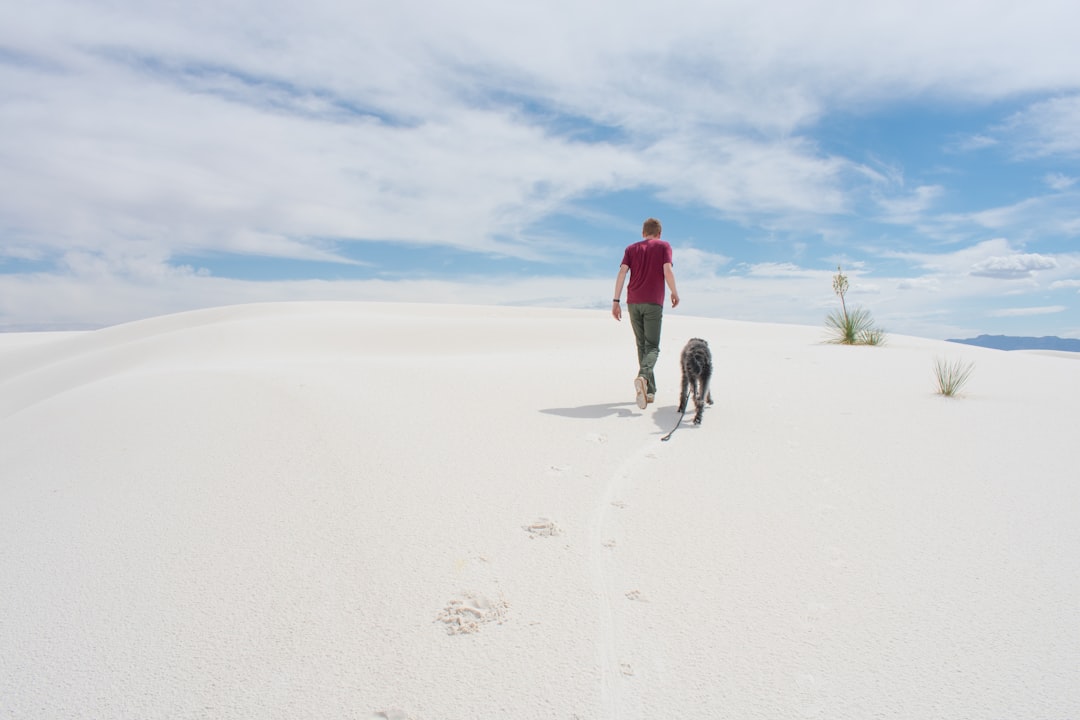
The sands of White Sands National Park, shimmering under the New Mexico sun, hold secrets far older than previously imagined. For decades, the Clovis culture, characterized by its distinctive fluted projectile points, stood as the widely accepted marker for the first humans to inhabit the Americas. This paradigm, however, has been profoundly challenged by a series of groundbreaking discoveries within White Sands, pointing to human presence that predates Clovis by millennia. These “ancient footprints,” preserved in the gypsum dunes, are rewriting the narrative of early American peopling, igniting a fervent debate and reshaping our understanding of human migration and adaptation.
The Significance of Clovis Points
The Clovis culture, named after a site in New Mexico, became synonymous with the earliest human inhabitants of North America. Their hallmark artifacts, the Clovis projectile points, are large, bifacially flaked stone tools with a distinctive “flute” or channel flake removed from the base of the point. These points were incredibly effective for hunting large game, and their widespread distribution across North America seemed to confirm a single, relatively late, migration event. For much of the 20th century, the archaeological consensus was that humans arrived in the Americas around 13,000 years ago, coinciding with the Clovis period. This model, often referred to as the “Clovis First” theory, suggested that these skilled hunters migrated south across a land bridge connecting Siberia and Alaska, known as Beringia, during the last glacial maximum when sea levels were lower.
The Ice-Free Corridor and its Challenges
The prevailing migration route proposed for the Clovis people was the “ice-free corridor.” This hypothetical passage opened between the massive Laurentide and Cordilleran ice sheets as they retreated. Archaeological evidence for widespread human occupation of this corridor, however, has been scarce and often equivocal for the period preceding Clovis. This lack of robust evidence for a pre-Clovis presence along this presumed migratory pathway began to sow seeds of doubt among some researchers. If the Clovis people were the first, how did they arrive, and why is there such a distinct gap in the archaeological record before them?
Early Challenges to Clovis First
While the Clovis First model dominated archaeological thought, a few dissenting voices and discoveries emerged over the years that hinted at an earlier human presence. Sites like Meadowcroft Rockshelter in Pennsylvania and Monte Verde in Chile yielded evidence of human occupation that appeared to predate Clovis. However, these sites faced considerable skepticism, with debates often centering on the dating methods used or the interpretation of artifacts. The Clovis First paradigm was so entrenched that challenging it often required extraordinary evidence and rigorous defense.
The discovery of ancient footprints at White Sands has sparked significant interest in understanding the early human presence in North America, particularly before the Clovis culture. This fascinating topic is further explored in a related article that delves into the climate history of Greenland, which provides essential context for the environmental conditions that early humans may have faced. For more insights, you can read the article here: Uncovering Greenland’s Climate History Through Ice Cores.
The Discovery of the White Sands Footprints: A Paradigm Shift
Unearthing Ancient Traces
The story of the White Sands footprints began not with a grand archaeological excavation, but with a series of serendipitous discoveries. In the early 2000s, hikers and park rangers began noticing unusual impressions in the soft gypsum sand of the alkali flats. These were not the tracks of modern animals, nor were they easily identifiable as human. Their age and context were unknown, but their distinctiveness sparked curiosity.
Initial Dating and Growing Intrigue
As these impressions were studied, preliminary dating techniques suggested an age that was surprisingly old. However, the precise dating of such features within the dynamic sedimentary environment of White Sands presented significant challenges. The gypsum itself could be affected by geological processes, and accurately determining the age of the impressions required careful scientific investigation. Despite these challenges, the possibility of exceptionally old human tracks began to fuel excitement and a desire for more definitive evidence.
The Landmark 2021 Publication
The scientific community was jolted by a landmark publication in the journal Science in July 2021. This paper, authored by a team of researchers including Matthew Bennett, Jeff Pigati, and David Bustos, presented compelling evidence for the presence of humans at White Sands approximately 21,000 to 23,000 years ago. This date placed human occupation firmly within the Last Glacial Maximum, a period when the prevailing “Clovis First” model considered the Americas to be largely uninhabited by humans. The evidence presented was primarily based on the analysis of fossilized human footprints.
The Nature of the White Sands Footprints
Imprints in Gypsum
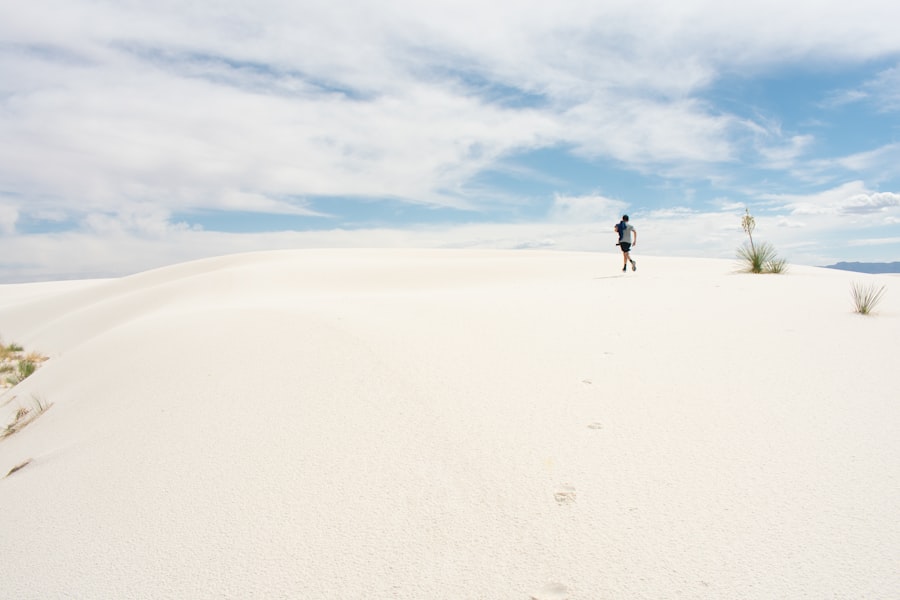
The White Sands footprints are remarkably preserved impressions left by human feet in soft, waterlogged gypsum mud. This unique environment, characterized by fluctuating water levels and rapid sediment deposition, created an exceptional preservation medium. As people walked across the damp mudflats, their feet created distinct depressions. Subsequent sediment layers, often composed of sand and silt, would then bury and protect these impressions from erosion.
Human Anatomy Preserved
What makes these footprints so extraordinary is the level of detail preserved. The impressions clearly show the shape of human feet, including toe prints and even the indentation of arches. This level of detail is rare in the archaeological record and provides invaluable information about the size, age, and even the gait of the individuals who made them. Researchers have been able to discern between adult and child footprints, suggesting family groups were present.
Types of Tracks and Their Significance
The tracks at White Sands are not uniform. Some are clear, well-defined prints, while others are smudged or partially eroded. However, scientists have been able to identify various types of footprints, including those made by adults, children, and even possibly young teenagers. The presence of different age groups strongly suggests that these were not isolated individuals but likely family groups or small bands traversing the landscape. The direction of the tracks has also provided clues, indicating movement across the ancient lake shores.
Dating the Footprints: The Scientific Breakthrough

Radiocarbon Dating of Sediments
One of the key breakthroughs in establishing the age of the White Sands footprints involved radiocarbon dating of associated organic material. Researchers meticulously collected seeds and other plant matter found within the sediment layers that directly covered and encased the footprints. These organic samples were then subjected to radiocarbon dating, a technique that measures the decay of the radioactive isotope carbon-14. The results from these samples provided a temporal framework for when the footprints were made.
Optically Stimulated Luminescence (OSL) Dating
Complementing radiocarbon dating, optically stimulated luminescence (OSL) dating was also employed. OSL dating measures the last time quartz grains in the surrounding sediments were exposed to sunlight. By analyzing the luminescence emitted by these grains, scientists can determine when they were buried. This independent dating method provided crucial corroboration for the radiocarbon dates, strengthening the evidence for the antiquity of the footprints.
The “In Situ” Advantage
A critical factor in the reliability of the dating was the “in situ” nature of the discoveries. This means that the footprints and the dating materials were found in their original depositional context, undisturbed by later human activity or geological upheaval. This stratigraphic integrity allowed researchers to confidently associate the dated organic matter with the footprints themselves, reducing the possibility of contamination or misinterpretation. The researchers were able to demonstrate that the dating samples were deposited at the same time or shortly after the footprints were made.
The discovery of the White Sands footprints, which predate the Clovis culture, has sparked significant interest in the study of ancient human activity in North America. This remarkable finding suggests that humans may have inhabited the continent much earlier than previously thought. For those intrigued by the mysteries of ancient civilizations, a related article explores various astonishing inventions from the past, including concepts that seem almost otherworldly. You can read more about these incredible innovations in the article on unbelievable ancient inventions.
Implications for Early American Peopling
| Site | Age | Footprints | Notes |
|---|---|---|---|
| White Sands | 23,000 years ago | Human footprints | Earliest known human footprints in North America |
Challenging the “Clovis First” Model
The dating of the White Sands footprints to 21,000-23,000 years ago delivers a decisive blow to the long-held “Clovis First” model. It demonstrates unequivocally that humans were present in the Americas thousands of years before the Clovis culture emerged. This discovery forces a fundamental reevaluation of when and how humans first populated the continents. The notion of a single, late migration event now appears insufficient to explain the deep antiquity of human presence.
Alternative Migration Routes and Timing
The existence of a pre-Clovis population at White Sands opens up new possibilities and intensifies the debate surrounding migration routes. It suggests that humans may have arrived in the Americas much earlier than previously believed, potentially via different pathways.
The Pacific Coastal Route
One prominent hypothesis gaining traction is the “Pacific coastal route.” This theory suggests that early humans may have traveled down the Pacific coast of North America, potentially using boats or following ice-free corridors along the shoreline. The White Sands discovery, far inland, doesn’t directly support this route but indicates that human populations were established and mobile by this early period, making coastal migrations plausible.
Trans-Pacific Migrations
Another intriguing, though more debated, possibility is trans-Pacific migration. This would involve people traveling across the Pacific Ocean from East Asia. While technically challenging, the possibility of such voyages, especially by skilled mariners, cannot be entirely discounted, particularly given the very early dates suggested by some pre-Clovis sites.
Rethinking the Arrival of Humans in the Americas
The White Sands footprints compel a significant shift in our thinking about the timeline of human arrival. It means that humans were not only present but were also established enough to leave such clear traces during a period of intense glaciation. This implies earlier successful migrations, potentially involving multiple waves of people arriving at different times and through different routes. The concept of a single, synchronous migration event is now largely considered outdated.
The Role of Climate and Environment
The timing of the White Sands footprints, during the Last Glacial Maximum, is particularly significant. This period was characterized by much lower sea levels and vast ice sheets. The landscape of North America would have been dramatically different. Understanding the environmental conditions and the available resources during this time is crucial for comprehending how early humans survived and thrived. The footprints suggest that humans were adapted to a variety of environments, not just the open plains that were once thought to be their exclusive domain.
Recent discoveries at White Sands National Park have sparked significant interest in the footprints found there, which suggest human presence in North America predating the Clovis culture. This fascinating topic is explored in depth in a related article that discusses the implications of these findings on our understanding of early human migration. For more insights into how historical developments can shape modern industries, you can read about the Mexican auto industry and its projected growth by 2025 in this article.
Ongoing Research and Future Discoveries
Continued Excavation and Exploration
The White Sands National Park remains an active site of research. Archaeologists and geologists are continually exploring new areas, meticulously searching for additional footprints and associated evidence. The dynamic nature of the dunes means that new impressions can be uncovered by wind erosion, offering fresh opportunities for discovery.
Advanced Dating Techniques
The scientific community is constantly refining dating techniques. Future research at White Sands may incorporate even more advanced methods to further pinpoint the age of the footprints and associated sediments, potentially resolving lingering uncertainties and providing even finer-grained temporal resolutions.
Interdisciplinary Collaboration
The study of the White Sands footprints is a prime example of successful interdisciplinary collaboration. Geologists, paleontologists, geneticists, and archaeologists are all contributing their expertise to unravel the complexities of early human migration. Genetic studies, for instance, are providing crucial insights into the origins and relationships of ancient populations.
The Search for Pre-Clovis Sites Beyond White Sands
The discoveries at White Sands have undoubtedly energized the search for other pre-Clovis sites across the Americas. Researchers are re-examining existing sites with new perspectives and actively looking for new locations that might hold evidence of earlier human occupation. The implications are far-reaching, potentially leading to a cascade of discoveries that will further solidify the new understanding of early American peopling. The White Sands footprints have opened a new chapter, and the story of humanity’s earliest journey to the Americas is far from complete.

These Footprints Could Rewrite the Story of the First Americans
FAQs
What is the significance of the White Sands footprints before Clovis?
The discovery of human footprints at White Sands, New Mexico, challenges the long-held belief that the Clovis people were the first to inhabit the Americas. These footprints suggest that humans were present in North America thousands of years earlier than previously thought.
How old are the footprints found at White Sands?
The footprints found at White Sands are estimated to be around 23,000 years old, based on radiocarbon dating and other scientific methods. This challenges the traditional timeline of human migration into the Americas.
What do the footprints reveal about early human migration?
The footprints at White Sands provide evidence that humans were present in North America much earlier than previously believed. This suggests that there were multiple waves of migration into the Americas, and that the story of early human settlement in the region is more complex than previously thought.
How were the footprints preserved at White Sands?
The footprints at White Sands were preserved in a layer of sediment that solidified over time, creating a natural cast of the footprints. This allowed scientists to study and analyze the footprints, providing valuable insights into early human activity in the region.
What are the implications of the White Sands footprints for our understanding of human history?
The discovery of the footprints at White Sands challenges our understanding of early human migration and settlement in the Americas. It suggests that there is still much to learn about the peopling of the Americas, and that new discoveries may continue to reshape our understanding of human history in the region.