
The ingenuity of ancient civilizations in harnessing natural forces for practical purposes stands as a testament to their understanding of physics and engineering. Among their most impressive achievements were the sophisticated gravity-fed water systems, designed and constructed without the aid of modern machinery or advanced scientific theories. These systems, ranging from simple aqueducts to complex urban distribution networks, not only supplied vital water for drinking and sanitation but also facilitated agriculture, industry, and the very growth of their societies. Examining these ancient marvels reveals a deep respect for natural principles and a remarkable ability to translate knowledge into enduring infrastructure.
The Fundamental Principle: Leveraging Elevation
The core concept behind these ancient water systems was the fundamental principle of gravity. Water naturally flows downhill, and ancient engineers understood that by sourcing water from higher elevations – be it mountain springs, rivers, or lakes – they could direct it to lower-lying settlements and fields. This seemingly simple concept, however, required an extraordinary level of planning, surveying, and construction skill to implement effectively over long distances and varied terrain. The success of these systems hinged on maintaining a consistent, albeit gentle, gradient to ensure a steady flow without excessive speed, which could erode channels or cause structural damage.
Identifying and Securing Water Sources
The first and most crucial step in any ancient water system was identifying a reliable and abundant water source. This often involved extensive exploration and a keen understanding of local hydrology. Springs, often believed to possess sacred qualities, were particularly prized. Rivers and lakes also served as valuable sources, though they presented challenges related to water quality, seasonal fluctuations, and the need for robust intake structures. Civilizations like the Romans, for instance, meticulously surveyed the surrounding landscapes to locate the purest and most consistent springs, often situating their aqueduct intake points many miles from the intended destination. The Mesopotamians, on the other hand, were masters of riverine water management, developing elaborate canal systems to irrigate vast agricultural lands fed by the Tigris and Euphrates.
The Art of the Gradient: Subtle Slopes for Steady Flow
Maintaining the correct gradient was paramount to the success of gravity-fed systems. Too steep a slope would lead to turbulent, destructive flow, while too shallow a gradient would result in stagnation or insufficient pressure. Ancient surveyors employed remarkable techniques, often using simple tools like the chorobates, a long wooden beam with a plumb line and water trough, to establish precise levels over considerable distances. They had to account for the Earth’s curvature, subtle ground undulations, and the need to overcome obstacles without disrupting the delicate balance of the gradient. The Roman aqueducts, famously stretching for tens of miles, are prime examples of this meticulous gradient control, often descending only a few inches per mile.
Overcoming Obstacles: Tunnels, Bridges, and Siphons
The direct path between a water source and its destination was rarely a straight line. Ancient engineers were confronted with valleys, rivers, and mountains, necessitating creative solutions to maintain the gravitational flow. They dug tunnels through hills, constructed impressive bridges and viaducts to span valleys, and, in some instances, employed inverted siphons to cross depressions. These siphons, often made of lead or ceramic pipes, used water pressure to push water uphill before it descended again on the other side, a feat that demonstrated a sophisticated understanding of fluid dynamics. The Pont du Gard in France, a magnificent three-tiered Roman aqueduct bridge, showcases the ability to combine functionality with architectural grandeur, allowing water to flow across a wide river valley.
Gravity-fed water systems have been a remarkable feat of engineering in ancient civilizations, showcasing their ingenuity in harnessing natural resources. These systems utilized the force of gravity to transport water from higher elevations to lower areas, ensuring a reliable supply for agriculture and daily life. For a deeper exploration of ancient technologies, including gravity-fed water systems, you can read the article “Uncovering Ancient Tech” at this link.
Roman Aqueducts: The Zenith of Ancient Water Engineering
The Roman Empire is perhaps best known for its extensive and sophisticated aqueduct systems. These engineering marvels supplied cities with vast quantities of fresh water, supporting a population of millions and enabling a level of urban living previously unimaginable. The Romans’ ability to plan, construct, and maintain these complex networks over centuries is a testament to their organizational prowess and engineering ingenuity. Their systems were not just functional; they were integrated into the fabric of Roman urban life, impacting public health, hygiene, and social customs.
The Scale and Scope of Roman Systems
Roman aqueducts were monumental undertakings, often spanning distances of 20 to 60 miles, with some extending over 100 miles. The Aqua Marcia, for instance, supplied Rome with some of its purest water from springs located over 50 miles away. These systems involved miles of underground channels, tunnels, and elevated arcades, requiring immense laborforces, specialized skills, and substantial financial investment. The sheer scale of these projects underscores the importance placed on water by Roman society, viewing it as essential for both public health and imperial prestige.
The ingenuity of ancient civilizations is often highlighted by their remarkable engineering feats, such as the gravity-fed water systems that provided essential resources to their communities. These systems utilized the natural slope of the land to transport water without the need for pumps, showcasing a deep understanding of hydrodynamics. For a deeper exploration of how such advanced techniques were employed by ancient cultures, you can read more in this insightful article about ancient advanced civilizations at Uncovering Evidence of Ancient Advanced Civilizations.
Construction Techniques and Materials
The Romans employed a variety of construction techniques and materials to build their aqueducts. For underground channels, they used carefully constructed masonry, often lined with opus caementicium, a Roman form of concrete that was remarkably durable and waterproof. Where elevated structures were necessary, they built arches and piers from stone and brick. Lead pipes were sometimes used for distribution within cities, though their use for long-distance transport was less common due to cost and concerns about potential toxicity. The precise fitting of stones and the careful sealing of channels ensured minimal leakage and maximum efficiency.
Impact on Roman Urban Life and Sanitation
The availability of abundant fresh water transformed Roman urban life. It enabled the construction of public baths, latrines, and fountains, significantly improving hygiene and public health. Water was also channeled to private homes of the wealthy, and for industrial purposes such as milling and mining. The constant flow of water through the urban infrastructure helped to carry away waste, reducing the spread of disease and contributing to the relatively good health of Roman cities compared to other ancient settlements. The aqueducts were not merely utilitarian; they were symbols of Roman power, engineering superiority, and the benefits of civilized living.
Beyond Rome: Water Systems of Other Ancient Civilizations
While Roman aqueducts often steal the spotlight, other ancient civilizations also developed impressive gravity-fed water systems, demonstrating a parallel evolution of engineering solutions tailored to their specific environments and needs. These systems, though perhaps less grand in scale than those of Rome, were no less ingenious and vital to the sustenance and development of their respective societies. From the arid lands of the Middle East to the mountainous regions of South America, the principle of using gravity to move water was a universally recognized and expertly applied concept.
The Inca’s Andean Water Management
The Inca Empire, flourishing in the rugged Andes Mountains, developed sophisticated water management systems that rivaled those of their European contemporaries in ingenuity. Faced with steep terrain and limited flat land for agriculture, the Inca engineered intricate networks of channels, terraces, and reservoirs to capture and distribute water from mountain springs and glacial melt. Their systems were designed to prevent erosion on the steep slopes and to deliver water precisely where it was needed for their extensive terrace farming. These systems were often carved directly into the rock or constructed from meticulously fitted stones, demonstrating an exceptional understanding of stonemasonry and hydraulic principles.
Mesopotamian Irrigation and Drainage
In the fertile crescent of Mesopotamia, where agriculture depended on the unpredictable flow of the Tigris and Euphrates rivers, ancient civilizations developed vast irrigation and drainage networks. While not always strictly gravity-fed from distant mountain sources in the same way as Roman aqueducts, these systems relied on carefully designed canals and levees to divert river water to agricultural lands and to manage floodwaters. The Sumerians, Babylonians, and Assyrians all created elaborate systems of canals, some reaching hundreds of miles in length, that transformed arid regions into productive farmlands. These systems required constant maintenance to prevent siltation and ensure efficient water distribution.
Ancient Greek Water Distribution
Ancient Greek city-states also implemented water supply systems, though often on a smaller scale than those of Rome. Cities like Athens utilized underground tunnels and cisterns to collect and store rainwater and water from springs. Some Greek cities also constructed rudimentary aqueducts, employing similar principles to their Roman counterparts, albeit with less extensive infrastructure. The Greeks were particularly interested in water quality and hygiene, and their public fountains and baths were integral to their social and cultural life.
The Enduring Legacy: Lessons from Ancient Water Systems
The ancient gravity-fed water systems offer more than just a glimpse into the past; they provide enduring lessons in resource management, engineering principles, and the fundamental importance of water to human civilization. Their longevity, often standing for millennia, speaks volumes about the quality of their construction and the soundness of their design. The principles they employed, though simple, were applied with remarkable sophistication and a deep understanding of the natural world.
Sustainability and Resourcefulness
These ancient systems stand as powerful examples of sustainable engineering. They relied on readily available natural resources – gravity, stone, and water itself – and were built to last with minimal reliance on continuous external energy inputs. Their construction often involved a deep integration with the natural landscape, minimizing environmental disruption. The ingenuity and resourcefulness of ancient peoples in creating such vital infrastructure without modern technology are a humbling reminder of human potential and the importance of understanding and working with natural forces.
The Foundation for Modern Engineering
The achievements of ancient water engineers laid the groundwork for subsequent developments in hydraulic engineering. The principles of gradient control, channel construction, and water diversion, refined over centuries by civilizations like the Romans, became foundational knowledge for later engineers. While modern technology has enabled us to build larger and more complex systems, the fundamental challenges and solutions encountered by ancient engineers remain relevant, offering insights into efficient and durable infrastructure design.
A Reminder of Water’s Vital Importance
Perhaps the most profound lesson from these ancient water systems is the enduring and critical importance of water. The immense effort and ingenuity invested in securing and distributing this precious resource highlight its role as a cornerstone of civilization, enabling population growth, agriculture, sanitation, and the development of complex societies. In an era facing growing water scarcity, the achievements of our ancestors serve as both inspiration and a stark reminder of the challenges and responsibilities we face in managing this vital resource for the future.
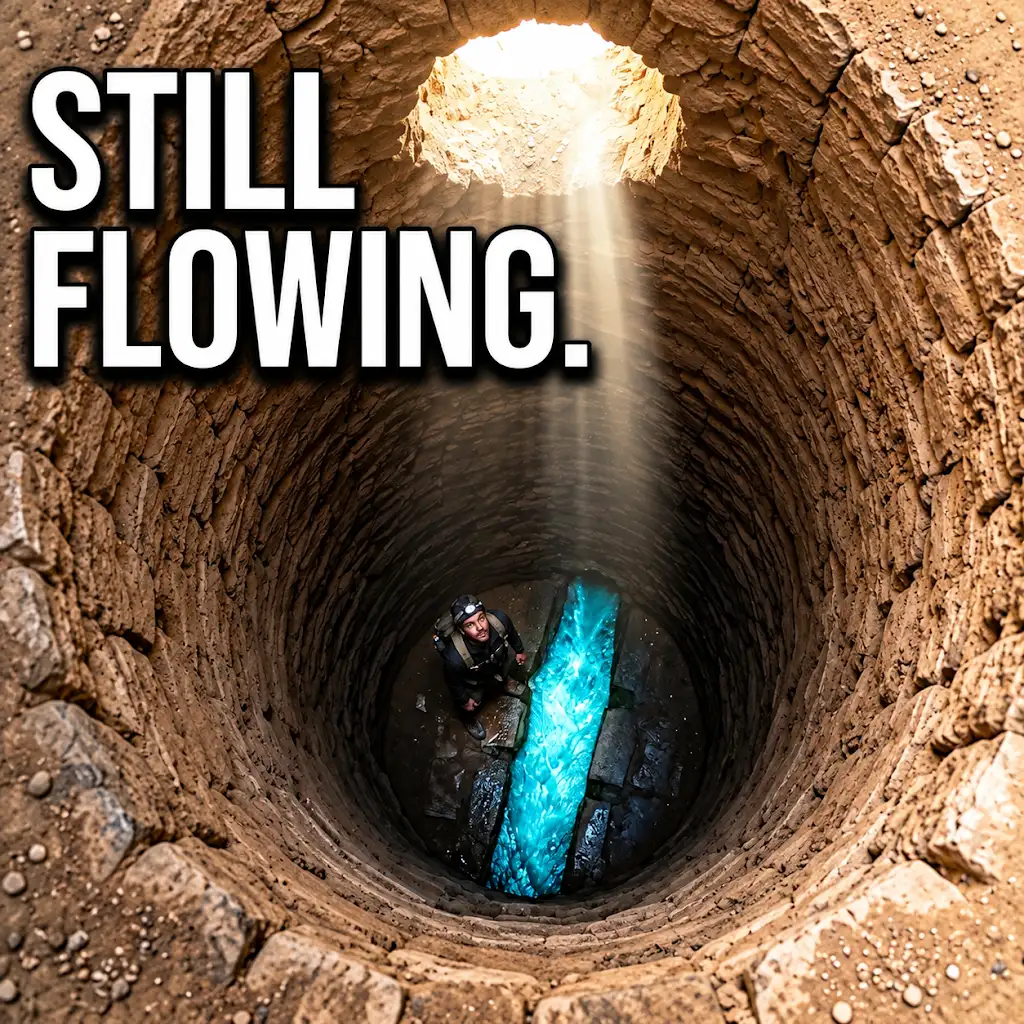
They Dug Water Tunnels Under the Desert… And They Still Flow
FAQs
What is a gravity fed water system?
A gravity fed water system is a method of supplying water to a location without the need for pumps or other mechanical devices. It relies on the force of gravity to move water from a higher elevation to a lower elevation.
How does a gravity fed water system work?
In a gravity fed water system, water is stored at a higher elevation in a reservoir or tank. When a tap or valve is opened at a lower elevation, gravity causes the water to flow downward through pipes to the desired location.
Were gravity fed water systems used in ancient times?
Yes, gravity fed water systems have been used since ancient times in various civilizations around the world. Examples include the aqueducts of ancient Rome and the qanats of ancient Persia.
What are the advantages of a gravity fed water system?
Gravity fed water systems are energy-efficient, reliable, and low-maintenance. They do not require electricity or fuel to operate, making them ideal for remote locations or areas with unreliable power sources.
Can a gravity fed water system be implemented in modern times?
Yes, gravity fed water systems are still used today in both rural and urban areas. They are often employed in sustainable water management practices and can be integrated with modern technologies to improve efficiency and reliability.