The flickering firelight cast dancing shadows on the cave walls, illuminating the rough-hewn tools and the determined faces of our ancient ancestors. Their existence was a constant negotiation with a formidable world, a landscape teeming with both opportunity and peril. Survival was not a given; it was a hard-won victory, a testament to a suite of evolving skills that, over millennia, shaped the very trajectory of humanity. These weren’t abstract concepts but visceral necessities, honed through trial and error, passed down through generations, and etched into our very genetic code. Understanding these key survival skills offers a profound glimpse into the ingenuity and resilience that defined early human evolution.
Mastering the Environment: From Nomadic Foragers to Early Settlers
The ability to understand and manipulate the environment was paramount to human survival. Our ancestors were not passive inhabitants of the planet; they were active participants, learning its rhythms, its resources, and its dangers. This mastery was not a singular achievement but a continuous process of adaptation and innovation.
Adapting to Diverse Climates and Landscapes
Early humans, through their long migratory journeys, encountered an astonishing array of environments. From the sun-drenched savannas of Africa to the icy frontiers of glacial periods, they had to adapt. This involved developing physiological traits, such as changes in body hair and sweat glands for thermoregulation, but more importantly, it necessitated behavioral adaptations. The development of clothing, rudimentary shelters, and the strategic use of fire provided essential protection against the elements. The ability to find and access water sources, crucial in arid regions, likely drove innovation in water storage and collection. Understanding seasonal changes – when certain plants bore fruit, when migratory animals would pass through – was a vital form of ecological intelligence that dictated movement and resource acquisition. This environmental literacy was a foundational pillar of their success.
The Art of Foraging and Gathering
Foragers formed the bedrock of early human subsistence. Their survival depended on an intimate knowledge of local flora and fauna. This wasn’t simply about stumbling upon edible plants; it was a sophisticated understanding of plant life cycles, identifying which parts were nutritious, when they were ripe, and crucially, which were poisonous. They learned to distinguish between edible roots, tubers, berries, nuts, and seeds, and developed techniques for processing them to make them more digestible or palatable. This knowledge was painstakingly acquired and transmitted, likely through observation, imitation, and verbal instruction. The gathering of insects, grubs, and small animals also played a significant role, providing essential protein and nutrients that might have been scarce in other food sources. This constant search for sustenance required keen observational skills, patience, and a deep understanding of ecological niches.
Ancient human evolution is a fascinating topic, particularly when examining the survival skills that our ancestors developed to thrive in challenging environments. A related article that delves into the resilience and adaptability of early humans is available at this link: The Year History Stood Still: When the Wind Ceased. This piece explores how environmental changes impacted human societies and their survival strategies, shedding light on the intricate relationship between climate and human evolution.
The Hunter’s Edge: Precision, Strategy, and Cooperation

Hunting, while not the sole means of survival, represented a significant leap in human dietary capacity and the development of complex social behaviors. The successful pursuit and acquisition of large game offered a concentrated source of protein and fat, vital for supporting larger brains and more active lifestyles. This was a skill that demanded more than just brute force; it required intellect, planning, and collaboration.
Developing Sophisticated Hunting Techniques
The transition from opportunistic scavenging to systematic hunting marked a pivotal moment. Early hunters learned to track animals, understanding their habits, migratory patterns, and vulnerabilities. This involved developing specialized tools, such as sharpened stone projectiles, spears, and eventually, the bow and arrow. The development of throwing technologies, like the atlatl (spear-thrower), significantly increased projectile velocity and range, allowing hunters to engage prey from a safer distance. They also developed traps and pitfalls, ingeniously designed to capture animals with minimal direct confrontation. The understanding of animal anatomy, knowing where to strike for maximum effect, was a testament to their accumulated knowledge. These were not random acts of aggression but calculated and strategic endeavors.
The Power of Group Hunting and Coordination
Individual hunting was often a dangerous and inefficient endeavor, especially when targeting larger or more dangerous prey. The development of coordinated group hunting strategies was a major evolutionary advantage. This required communication, trust, and the ability to assign roles and execute a shared plan. Hunters learned to flush prey towards prepared ambushes, use terrain to their advantage, and work together to bring down animals that would be impossible to tackle alone. This cooperative behavior fostered social bonds, strengthened group cohesion, and likely played a significant role in the development of complex language and social structures. The success of a hunt was a shared victory, reinforcing the importance of community and mutual reliance.
Tools and Technology: Extending Human Capabilities
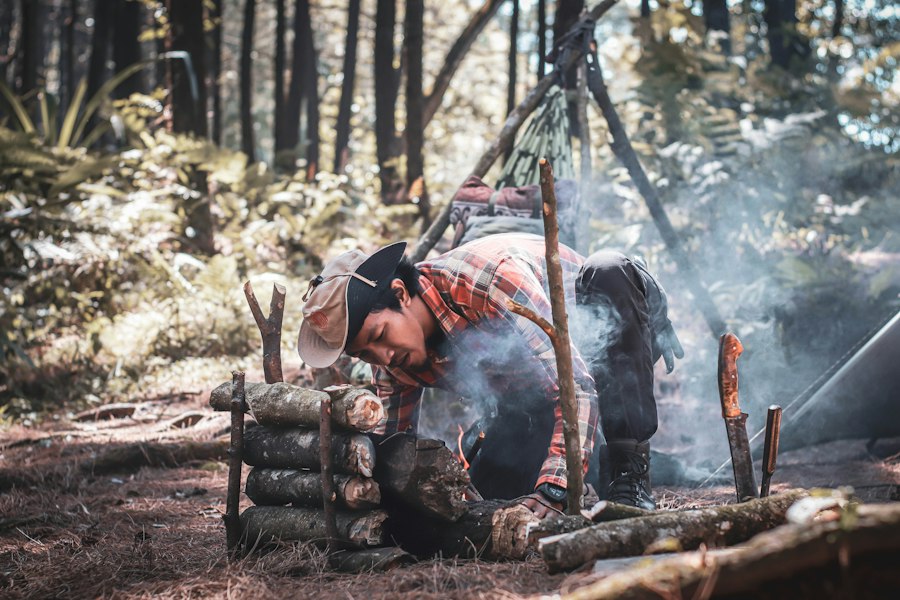
The human capacity for innovation, particularly in the creation and use of tools, is perhaps our most defining characteristic. These extensions of our physical bodies allowed our ancestors to overcome limitations and exploit resources in ways previously unimaginable.
The Evolution of Stone Tool Technology
The chipped stone tools of the Oldowan and Acheulean periods represent some of the earliest tangible evidence of human ingenuity. These were not crude rocks but carefully selected and shaped implements designed for specific tasks. Simple choppers and scrapers allowed for butchering carcasses, processing hides, and woodworking. The development of handaxes, with their symmetrical design and sharp edges, demonstrated a significant advance in cognitive abilities and an understanding of fracture mechanics. These tools were not just functional; their creation required foresight, planning, and the ability to learn from and refine techniques over generations. The continuous improvement of stone tool technology, from rudimentary flakes to more refined bifacial tools, reflects a relentless drive towards greater efficiency and effectiveness.
The Impact of Fire: A Transformative Force
The mastery of fire was a true game-changer, impacting nearly every facet of early human life. Fire provided warmth, allowing humans to inhabit colder regions and survive during harsh winters. It offered protection from predators, creating a safe haven within their living spaces. Crucially, fire revolutionized food preparation. Cooking made many foods more digestible, unlocking essential nutrients and reducing the time spent chewing and digesting. This freed up energy that could be directed towards brain development. Fire also played a role in toolmaking, enabling hardening of wooden spears and potentially aiding in certain stone knapping techniques. Its psychological and social impact was also profound, providing a central gathering point for communities, fostering social interaction, and becoming a symbol of progress and control over the natural world.
Communication and Social Bonds: The Fabric of Society
Survival was rarely a solitary pursuit. The ability to communicate effectively and maintain strong social bonds was essential for everything from sharing knowledge to coordinating complex actions. These social skills, intertwined with cognitive development, laid the groundwork for the sophisticated societies we live in today.
The Development of Early Communication and Language
While direct evidence of early human language is elusive, the increasing complexity of tool technology, social organization, and brain size strongly suggests the development of sophisticated communication systems. These likely evolved from simple gestures and vocalizations to more complex symbolic language. The ability to share information about food sources, dangers, and hunting strategies would have been a significant advantage. The transmission of knowledge across generations, crucial for the perpetuation of survival skills, would have been greatly facilitated by language. The intricate coordination seen in group hunting and the complex social structures that emerged point towards a developing capacity for abstract thought and symbolic representation, fundamental components of language.
The Importance of Cooperation and Social Learning
Human evolution is fundamentally a story of cooperation. The ability to work together, share resources, and care for the young and infirm allowed early human groups to thrive in challenging environments. Social learning, the process by which individuals acquire knowledge and skills by observing and imitating others, was a vital mechanism for transmitting essential survival techniques. This intergenerational transfer of knowledge ensured that successful strategies were not lost and that innovations could be built upon. The development of empathy and altruism, fostered by strong social bonds, would have further enhanced group cohesion and survival rates. In a world where dangers were ever-present, the support and collaboration of one’s kin and community were indispensable.
Ancient human evolution has always fascinated researchers, particularly when it comes to the survival skills that our ancestors developed to thrive in their environments. Understanding these skills can provide valuable insights into how early humans adapted to challenges such as hunting, foraging, and shelter building. For a deeper exploration of how survival strategies have evolved over time, you might find this article on government confiscation of essential resources particularly interesting, as it touches on the importance of preparedness in modern society. You can read more about it here.
Cognitive Advancements: Problem-Solving and Abstract Thinking
| Skill | Description | Importance for Survival | Estimated Time Period | Evidence Source |
|---|---|---|---|---|
| Tool Making | Creation and use of stone tools for hunting and processing food | High – Improved hunting efficiency and food preparation | 2.6 million years ago (Oldowan tools) | Archaeological stone tool findings |
| Fire Control | Ability to create and maintain fire for warmth, cooking, and protection | High – Enhanced nutrition and safety | Approx. 1 million years ago | Charcoal and hearth remains |
| Cooperative Hunting | Group strategies to hunt larger animals | High – Increased food acquisition and social bonding | Approx. 400,000 years ago | Fossilized animal bones with cut marks |
| Language Development | Use of complex vocal communication for coordination | Medium – Improved social organization and knowledge transfer | Approx. 200,000 years ago | Anthropological and genetic studies |
| Clothing and Shelter | Use of animal hides and construction of shelters for protection | Medium – Protection from elements and predators | Approx. 170,000 years ago | Bone needles and shelter remains |
| Foraging and Plant Knowledge | Identification and use of edible and medicinal plants | Medium – Diversified diet and health maintenance | Since early Homo species | Plant residues on tools and dental analysis |
Underlying all these survival skills was a remarkable evolution in cognitive abilities. The capacity for complex problem-solving, abstract thought, and foresight was instrumental in our ancestors’ ability to navigate a dynamic and often unpredictable world.
Foresight, Planning, and Strategic Thinking
The development of tools, the execution of coordinated hunts, and the establishment of social structures all point to an increasing capacity for foresight and planning. Our ancestors were not simply reacting to immediate stimuli; they were anticipating future needs and consequences. This involved considering the long-term availability of resources, planning for seasonal changes, and strategizing to overcome obstacles. The ability to envision a goal and then devise a sequence of steps to achieve it is a hallmark of advanced cognition. This capacity for strategic thinking allowed them to not only survive but to begin to shape their environment and their own destiny.
Innovation and Adaptability: The Engine of Evolution
The constant need to adapt to new challenges and exploit new opportunities drove continuous innovation. Whether it was developing a new tool, refining a hunting technique, or discovering a new food source, the ability to think creatively and find novel solutions was paramount. This inherent adaptability, coupled with a capacity for innovation, allowed early humans to spread across the globe and colonize diverse ecological niches. It is this drive to innovate, to learn, and to adapt that has been the enduring engine of human evolution, a legacy still very much alive in our species today. The survival skills of our ancestors were not just about enduring hardship; they were about the relentless pursuit of progress, a testament to the extraordinary potential of the human mind.
