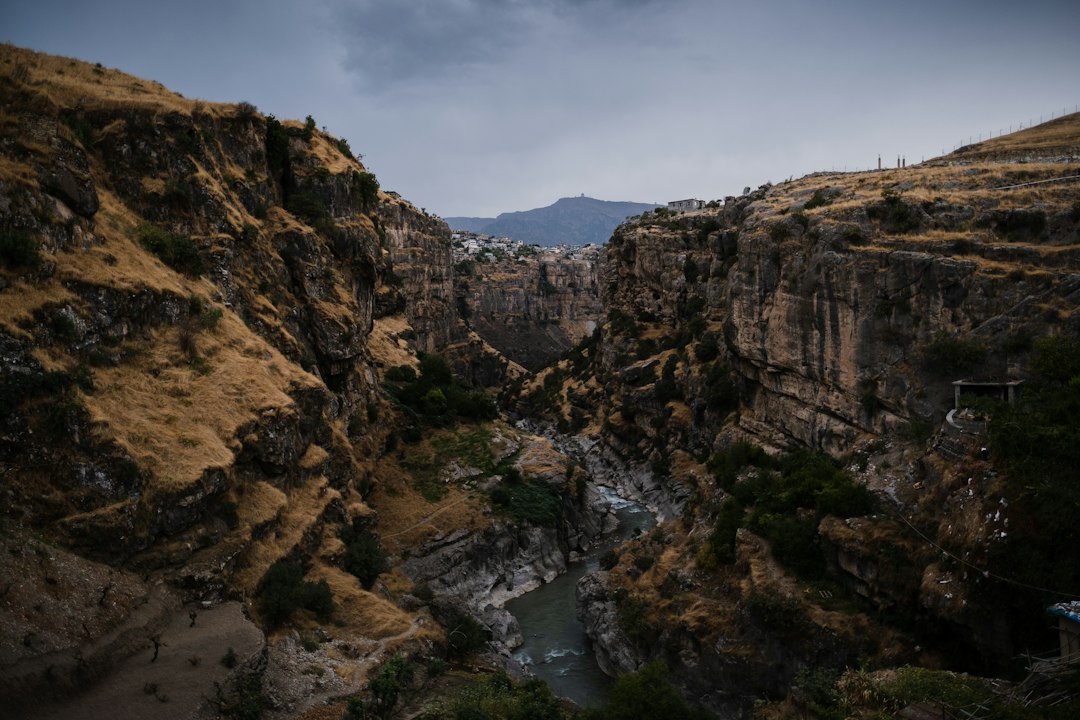
The story of humanity is intrinsically a story of movement. From the very beginnings of our species, a restless curiosity and the imperative for survival have driven us across continents and oceans, leaving behind a faint but discernible trail of stone tools, fossilized bones, and genetic echoes. For millennia, the grand narrative of ancient human migration has been pieced together through the painstaking work of archaeologists, paleoanthropologists, geneticists, and geologists. Yet, beneath the well-trodden paths of well-known dispersals lie countless “hidden valleys” – less obvious routes, previously overlooked archaeological sites, and subtle genetic signals that are now revealing a more nuanced and complex picture of our earliest journeys. These hidden valleys are not just geographical locations but represent conceptual spaces within our understanding, areas where traditional paradigms are being challenged and expanded.
## The Cradle and the First Steps Out
The genesis of Homo sapiens in Africa remains the bedrock of human evolutionary history. The prevailing scientific consensus points to East Africa as the primary cradle of our species, a crucible where biological and behavioral innovations that defined humanity first emerged. However, the precise timings and pathways of the earliest migrations out of Africa are subjects of intense ongoing research, with new discoveries continually refining our timelines. These initial dispersals were not a single, monolithic event but likely involved multiple waves, each venturing into new territories with varying degrees of success and interaction with existing hominin populations.
### Revisiting the “Out of Africa” Models
The traditional “Out of Africa” model, which posited a single, relatively recent dispersal event of anatomically modern humans, has been significantly complicated by a growing body of evidence. Genetic studies, particularly those analyzing ancient DNA, have revealed evidence of much earlier, potentially unsuccessful, or localized migrations that predated the major waves. These earlier excursions might have involved smaller groups venturing into the Levant, Arabia, or even parts of Southern Europe, only to falter or become absorbed into local populations. The discovery of fossil remains in sites like Misliya Cave in Israel, dated to over 100,000 years ago, provides compelling evidence for these earlier forays beyond the African continent, pushing back the timeline for human presence in the Near East.
### The Role of Environmental Catalysts
The drivers behind these initial migrations are multifaceted, with environmental factors playing a crucial role. Fluctuations in climate, particularly shifts in rainfall patterns and the expansion or contraction of habitable landscapes, would have directly impacted resource availability. Periods of increased aridity might have forced hunter-gatherer groups to seek out more reliable water sources and food supplies, prompting them to move into adjacent territories. Conversely, periods of increased rainfall could have opened up new ecological niches, making previously inhospitable regions attractive for exploration and settlement. Understanding these paleoenvironmental contexts is key to deciphering the routes taken and the challenges faced by early human pioneers. The opening and closing of land bridges, such as those that might have existed across the Red Sea or the Strait of Gibraltar during glacial periods, also played a significant role in facilitating or impeding movement.
The study of ancient human migration often reveals fascinating insights into how early populations adapted to their environments, including the exploration of hidden valleys that provided refuge and resources. For a deeper understanding of how these patterns of migration relate to modern challenges faced by isolated communities, you can read the article on resilience in small island developing states, which discusses the ongoing impacts of migration and environmental changes. For more details, visit this article.
## Navigating the Arabian Peninsula: A Crossroads of Early Journeys
The Arabian Peninsula, often perceived as a vast desert, has emerged as a critical and surprisingly dynamic landscape in the story of early human migration. Far from being a barren wasteland, ancient Arabia was likely characterized by more humid periods, supporting savanna-like environments and supporting diverse flora and fauna. This made it a crucial stepping stone and a potential secondary dispersal center for hominins venturing out of Africa. The routes through the peninsula were not simply linear paths but intricate networks dictated by the availability of water sources, seasonal game movements, and the presence of other hominin groups.
### The “Green Arabia” Hypothesis
The “Green Arabia” hypothesis, supported by paleoclimatic data and archaeological findings, suggests that during certain periods, particularly the Middle Paleolithic and early Upper Paleolithic, Arabia experienced significantly wetter conditions. This transformation created a network of lakes, rivers, and lush vegetation, effectively turning the peninsula into a more hospitable environment for hunter-gatherers. This transformed landscape would have offered a more palatable alternative to the harsh desert crossing, allowing for a more sustained presence and gradual movement towards the Indian subcontinent and Eurasia. Archaeological evidence, including the discovery of stone tools and fossil remains attributed to early hominins, corroborates this hypothesis, demonstrating human presence in regions now considered arid.
### Southward and Eastward Expansion
The Arabian Peninsula served as a crucial nexus for both southward and eastward expansions. For groups moving east out of Africa, it offered a direct route to the Indian subcontinent, circumventing the more challenging northern routes through the Levant. The coastal routes along the Arabian Sea, with their potential for marine resource exploitation, likely played a significant role in these dispersals. Similarly, for those moving north and east into Eurasia, Arabia provided a gateway, connecting with the established migratory paths through the Levant and into Anatolia and beyond. The discovery of hominin artifacts in Oman and Yemen, often found in association with paleoenvironmental indicators of past wetlands, further underscores the importance of this region as a corridor.
## The Eastern Frontier: Reaching the Shores of Southeast Asia and Australia
The journey to the farthest reaches of Southeast Asia and the island continent of Australia represents one of the most remarkable achievements of early human mobility. These migrations required sophisticated seafaring capabilities, challenging the traditional view of early hominins as exclusively terrestrial travelers. The successful colonization of these regions speaks volumes about human adaptability, problem-solving skills, and a willingness to exploit novel ecological niches.
### Island Hopping Across Wallacea
The colonization of Sahul (the combined landmass of Australia and New Guinea during periods of lower sea levels) and the islands of Southeast Asia involved a series of carefully planned or serendipitous sea crossings. The region known as Wallacea, the chain of islands between mainland Southeast Asia and Australia, presented a series of significant water barriers. These crossings, some spanning tens of kilometers, necessitate the development and use of rudimentary watercraft, whether rafts, dugouts, or other buoyant structures. The archaeological evidence for this is indirect, often inferred from the presence of hominins on islands that could only have been reached by sea, and the absence of land bridges. The discovery of early Homo sapiens remains and associated artifacts in caves and open-air sites across Indonesia, East Timor, and ultimately Australia, pushes the timeline for sophisticated maritime capabilities back to at least 65,000 years ago.
### Evidence from Pleistocene Coastlines
The impact of fluctuating sea levels during the Pleistocene epoch is crucial for understanding these migrations. As glaciers expanded and contracted, sea levels rose and fell dramatically, exposing or submerging land bridges and creating new archipelagos. Early human groups likely followed these dynamic coastlines, exploiting the rich marine resources available and using the exposed land bridges to move between islands. The discovery of submerged archaeological sites off the coasts of Southeast Asia and Australia offers the tantalizing possibility of uncovering further evidence of these ancient coastal journeys. The presence of specific fauna on islands that could not have supported them without human intervention, such as elephants on the island of Flores, further points to the deliberate actions of early hominins in transporting animals or exploiting their presence for sustenance.
## The Northern Expanses: Into the Heart of Eurasia
The migration into Eurasia was a protracted and complex process, involving multiple waves and diverse hominin populations. While the initial dispersals out of Africa might have focused on the southern routes, the northern pathways through the Levant and into Anatolia and subsequently Europe and Asia provided access to vast new territories and resources, shaping the genetic and cultural landscape of humanity.
### The Levant as a Gateway and a Bottleneck
The Levant, the eastern Mediterranean region, served as a critical gateway for hominin migrations into Eurasia. Its geographical position, bridging Africa and the vast Eurasian landmass, made it an inevitable thoroughfare. However, the Levant was not merely a passive conduit; it was also a region where early hominins encountered diverse environments and potentially interacted with other hominin species, such as Neanderthals. Archaeological sites in this region, dating back hundreds of thousands of years, reveal a long and continuous presence of various hominin groups, suggesting periods of settlement and potential bottlenecks that influenced subsequent dispersals.
### The Peopling of Europe and Asia
From the Levant, human groups fanned out into Europe and Asia. The peopling of Europe, in particular, was a complex mosaic, involving multiple waves of migration over tens of thousands of years. These early Europeans adapted to diverse climates, from the Mediterranean coast to the colder regions of Northern Europe. The development of new technologies, such as sophisticated stone tool industries and eventually the mastery of fire, facilitated their survival and expansion. Similarly, migrations into Asia followed various routes, both north and south of the Himalayas, leading to the establishment of human populations across the vast continent. The interaction and interbreeding with Neanderthals and Denisovans, documented through ancient DNA analysis, are key components of this northern expansion story, revealing a complex tapestry of admixture that contributed to the genetic makeup of modern humans. The discovery of early hominin fossils in caves in Siberia, such as those of Denisovans, has opened up entirely new chapters in our understanding of Eurasian prehistory.
Recent studies on ancient human migration have revealed fascinating insights into how early populations navigated hidden valleys and remote landscapes. These findings not only shed light on the adaptability of our ancestors but also connect to contemporary issues such as the challenges faced by island nations today. For a deeper understanding of the implications of environmental changes on human settlements, you can explore this related article on the threat of sinking island nations.
## Uncovering the Future: New Technologies and Unforeseen Discoveries
| Valley Name | Location | Estimated Age (Years Ago) | Significance in Migration | Key Archaeological Findings |
|---|---|---|---|---|
| Yarlung Tsangpo Valley | Tibet, China | 50,000 – 30,000 | Possible migration corridor between South Asia and East Asia | Stone tools, ancient hearths |
| Omo Valley | Southern Ethiopia | 195,000 – 130,000 | One of the earliest sites of Homo sapiens migration | Fossilized human remains, early tools |
| Denali Valley | Alaska, USA | 15,000 – 12,000 | Route for migration into North America via Beringia | Clovis points, animal bones |
| Jordan Rift Valley | Middle East | 120,000 – 90,000 | Key passage for early humans moving out of Africa | Early Homo sapiens fossils, stone tools |
| Hunza Valley | Gilgit-Baltistan, Pakistan | 40,000 – 20,000 | Possible refuge and migration route in the Himalayas | Ancient cave paintings, lithic artifacts |
The ongoing exploration of ancient human migration is a dynamic field, constantly being reshaped by technological advancements and the serendipitous discovery of new evidence. The ability to extract and analyze ancient DNA, coupled with sophisticated dating techniques and advanced imaging technologies, is revolutionizing our understanding of the timing, routes, and complexities of our ancestors’ journeys.
### The Power of Ancient Genomics
Ancient DNA (aDNA) has become an indispensable tool in unraveling the mysteries of human migration. By extracting genetic material from ancient hominin remains, scientists can trace lineage, identify admixture events, and estimate population movements with unprecedented accuracy. This has allowed for the identification of previously unknown hominin groups, like the Denisovans, and has provided definitive evidence of interbreeding between Homo sapiens, Neanderthals, and Denisovans. The study of current human populations also provides valuable genetic markers that can be traced back to ancestral hominin dispersals, acting as living maps of ancient migrations.
### The Role of Paleoenvironmental Reconstruction
The detailed reconstruction of past environments is essential for contextualizing human movements. Advances in paleoclimatology, palynology (the study of pollen), and sediment analysis allow researchers to understand the landscapes our ancestors navigated. This includes mapping the availability of water sources, identifying ancient flora and fauna, and understanding the impact of climate change on migration patterns. By integrating paleoenvironmental data with archaeological and genetic evidence, scientists can build more robust and realistic models of how and why early humans moved across the globe, revealing the hidden valleys that were once viable pathways. The discovery of new archaeological sites, often spurred by advances in remote sensing technologies like satellite imagery and Lidar, continues to unearth previously unknown chapters of our ancient past, hinting at even more hidden valleys waiting to be explored.
