Navigating the Whiteout: Ancient Human Tracking in Winter Blizzards
The chilling howl of the wind, the blinding fury of falling snow – these are the hallmarks of a winter blizzard, a formidable force that can disorient and endanger even the most experienced traveler. For ancient humans, survival in such conditions was not a matter of modern technology, but of keen observation, profound knowledge of the natural world, and the application of tracking techniques honed over millennia. While the snow-covered landscape might appear a uniform white canvas to the uninitiated, it was, in fact, a dynamic record of movement and interaction, a language that ancient trackers could read with remarkable precision. Their ability to follow prey, locate lost kin, or simply navigate their territory during the harshest months speaks volumes about their adaptability and their deep connection to the environment. These were not simply acts of desperation; they were sophisticated skills, passed down through generations, that allowed human communities to thrive in environments that would today be considered uninhabitable without extensive technological support.
Ancient human tracking methods have long fascinated researchers, particularly in the context of navigating challenging environments like winter blizzards. One insightful article that delves into this topic is titled “Unraveling the Ancient Navigation Mystery,” which explores how early humans adapted their tracking techniques to survive harsh weather conditions. By studying the strategies employed by our ancestors, we can gain a better understanding of their resilience and ingenuity. For more information, you can read the article here: Unraveling the Ancient Navigation Mystery.
Reading the Frozen Story: Signs in the Snow
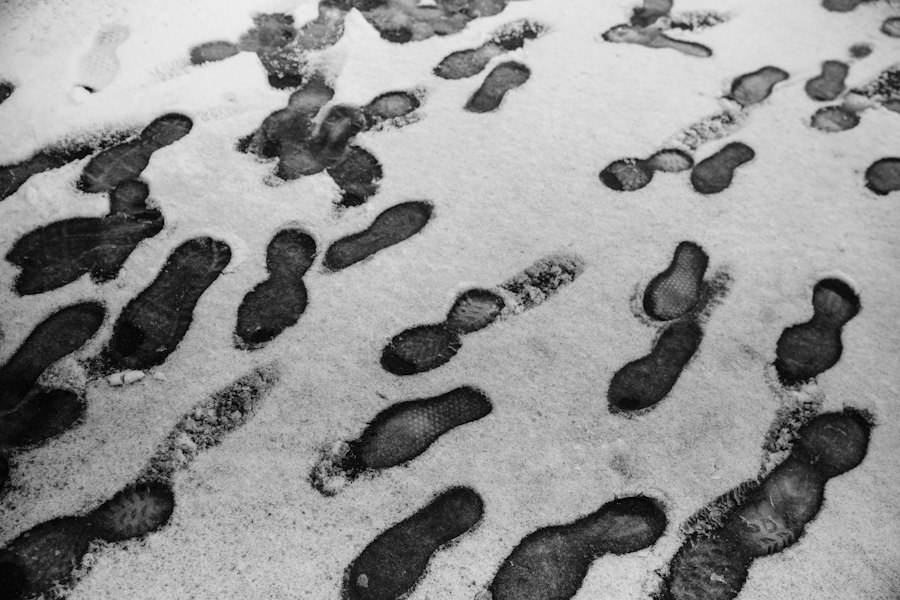
The snow itself, far from being a barrier, became a primary medium for reading the landscape. Ancient trackers understood that even a blizzard was a temporary state, and that the snow preserved evidence of events that occurred just moments before, or even during the storm’s height. The subtle variations in the snowpack, the way it settled, and the imprint it left were all critical data points.
Understanding Snow Deposition Patterns
The very way snow fell and accumulated offered vital clues. Trackers learned to differentiate between wind-blown snow and undisturbed snow. Areas where snow had been scoured away by the wind might reveal older tracks that would otherwise be buried. Conversely, sheltered areas, lee sides of hills, and the bases of trees could act as traps for fresh snow, preserving delicate impressions made just prior to or during the onset of the blizzard. They recognized that snowdrift formation was not random; it followed predictable patterns dictated by wind direction and topography. By understanding these patterns, they could anticipate where evidence might be best preserved and where it might be obliterated, thereby increasing their chances of finding what they sought. For instance, a blizzard might bury tracks on an exposed ridge but preserve them in a small hollow or against a large rock formation.
Interpreting Track Degradation
The passage of time and the relentless forces of the blizzard itself altered the appearance of tracks. Ancient trackers possessed an intuitive understanding of how snow metamorphosis affected these impressions. Freshly fallen snow would yield sharp, clear tracks, revealing the distinct shape of a paw or a foot. As the blizzard progressed, wind action could cause the edges of a track to soften, round, and eventually fill in. This degradation was not a sign of failure for the tracker, but rather a temporal marker. A tracker could estimate how long ago a creature had passed by the degree of snow abrasion and infill within the track. A track with sharp edges indicated recent passage, while a track with rounded edges and significant snow fill suggested a longer interval. They learned to distinguish between tracks made in loose, powdery snow versus those made in packed, icy snow, which would hold impressions more durably. Furthermore, they understood how temperature fluctuations could cause melting and refreezing, creating a crusted layer over tracks that could sometimes preserve them for extended periods.
Identifying Non-Track Sign
Beyond individual footprints, a blizzard offered a wealth of other indirect evidence. Broken branches, disturbed vegetation, scat, and even the scent carried on the wind (though scent tracking becomes more challenging in a blizzard, it’s not entirely absent) were all part of the tracker’s lexicon. A snapped twig at a certain height might indicate the passage of a large animal, while a scattering of fur could point to a predator-prey interaction. Scat, even when partially covered by snow, could reveal the diet of an animal, providing clues to its recent whereabouts and movements. The location of these signs was just as important as their identification. A cluster of disturbed snow near a tree line, for example, might indicate a browsing animal, while a single, well-defined dropping in an open area might suggest a more solitary journey.
Adapting to the Elements: Environmental Cues

The blizzard environment itself provided a unique set of challenges and opportunities for ancient trackers. They learned to harness the very conditions that made tracking difficult to their advantage, using their knowledge of animal behavior and the subtle nuances of the winter landscape to their benefit.
Animal Behavior in Storms
Ancient humans understood that animals, like themselves, reacted to blizzards in predictable ways. Prey animals would often seek shelter in dense thickets, under overhangs, or in sheltered valleys. Predators, in turn, would adapt their hunting strategies, often becoming more concentrated in areas where prey was likely to congregate. Trackers would therefore adjust their search patterns, focusing on these probable refuge zones. They knew that during a heavy snowfall, animals might move less, or their movements might be more restricted to immediate needs like finding food or water. They also understood that some animals might move erratically due to disorientation from the storm, creating complex track patterns that required careful interpretation. Observing the general direction of travel of smaller, more numerous animals, like birds or rodents, could also provide directional cues, as they often move away from the harshest wind.
Utilizing Wind and Visibility
While high winds and low visibility are major impediments to tracking, ancient trackers learned to use them. The wind could sometimes reveal the direction of travel by disturbing snow more on one side of a track than the other, or by carrying scents. They also understood that certain features – rock outcroppings, large trees, or changes in terrain – could serve as navigation points even in a whiteout. They might use the subtle changes in wind direction against their exposed skin, or the way snow collected on their own clothing, as a personal compass. In extreme conditions, they might follow known game trails or water sources, which, while obscured by snow, were often still discernible by the contours of the land or the presence of certain vegetation. The sound of running water beneath the ice, even faintly audible through the storm, could also be a directional guide.
Following Indirect Navigation Lines
When direct tracks were obliterated, ancient trackers relied on a network of indirect navigational cues. They might follow a ridge line, a stream bed, or a distinct geological feature that would persist regardless of the snow cover. These features acted as “lines of travel” that animals, and humans, often used. They also understood that certain plants, like evergreens, held onto snow differently than deciduous trees, creating subtle visual cues in the landscape. They might look for patterns in the way snow accumulated on the branches of trees, or for the presence of certain hardy winter plants that indicated a particular microclimate or soil type, which in turn could suggest the presence of animals. The color and texture of exposed rocks or earth could also provide crucial landmarks when visibility was extremely poor.
Tools and Techniques of the Blizzard Tracker
While the most important tools of an ancient tracker were their eyes, mind, and knowledge, they also employed specific implements and techniques to enhance their ability to find and follow signs in harsh winter conditions. These were practical, robust, and designed for survival.
Improvised Snow Probes and Digging Tools
To examine tracks buried beneath a layer of fresh snow, trackers would often use simple, pointed sticks or bone shards as probes. These were used to gently excavate and reveal impressions without damaging them. Larger, sturdier tools, perhaps made from sharpened wood or bone, might have been used to clear larger areas of snow to uncover more significant signs, such as the entrance to an animal burrow or a sheltered den. The act of probing required extreme sensitivity, as a heavy hand could easily destroy the very evidence being sought. They would also learn to interpret the resistance of the snow to their probes, which could indicate different densities and layers, further aiding in temporal and environmental assessments.
Understanding Footwear and Gait
The type of footwear an individual or animal wore, and the way they moved, left distinct marks. Ancient trackers were acutely aware of the differences between the tracks of bare feet, moccasins, or other forms of rudimentary footwear, and the tracks of various animals. They could discern the size and shape of the foot, the presence of toes, the depth of the impression, and the stride length. In soft snow, the imprint of moccasins might be quite different from bare feet, with a less defined heel and toe. They could also recognize the characteristic gait of different animals – the bounding of a deer, the plodding of a bear, the darting of a fox. This ability to differentiate between human and animal tracks, and between different types of human tracks, was fundamental to their success. They could even differentiate between the tracks of a person walking deliberately, running, or carrying a heavy load, all of which would leave distinct impressions.
Utilizing Natural Markers and Trail Aids
In situations where tracks were entirely obliterated, ancient trackers developed methods to leave or recognize natural markers that could guide them or others. This might involve breaking a twig in a specific way, piling stones in a particular pattern, or making subtle changes to the snow surface that only another tracker would recognize. These markers could indicate a direction of travel, a location of interest, or a warning. They also understood the importance of recognizing such markers left by others, whether for cooperative hunting, resource sharing, or simply maintaining contact within a nomadic group. These markers were often placed at critical junctures, such as intersections of game trails or points of entry into difficult terrain, to ensure that the intended path was clear.
Ancient human tracking methods have long fascinated researchers, particularly in how they were adapted for survival during harsh winter blizzards. These techniques, which included observing animal tracks and utilizing natural landmarks, provided essential guidance in navigating treacherous conditions. For a deeper understanding of how ancient civilizations managed their environments, you might find this article on economic resilience in challenging climates interesting, as it draws parallels between survival strategies and modern adaptations. To explore more, visit this link.
The Mind of the Tracker: Observation and Deduction
| Tracking Method | Description | Effectiveness in Blizzard Conditions | Tools/Materials Used | Challenges Faced |
|---|---|---|---|---|
| Footprint Analysis | Following footprints left in snow to track animals or people. | Moderate – footprints can be quickly covered by blowing snow. | Sharp observation, knowledge of animal/human gait. | Snow accumulation and wind can obscure tracks rapidly. |
| Wind Direction and Snow Drift Patterns | Using snow drift shapes and wind patterns to infer movement direction. | Low to Moderate – requires experience interpreting subtle signs. | Experience with local weather and terrain. | Blizzards can alter snow patterns unpredictably. |
| Use of Natural Landmarks | Tracking by referencing known trees, rocks, or terrain features. | Moderate – landmarks may be obscured by snow. | Memory and knowledge of terrain. | Poor visibility and snow cover can hide landmarks. |
| Animal Behavior Observation | Following signs of animal movement such as broken branches or scat. | Moderate – signs can be hidden or erased by snow. | Knowledge of animal habits and signs. | Snowfall can erase subtle signs quickly. |
| Use of Scent Tracking | Following scent trails left by animals or humans. | Low – cold and wind reduce scent detection. | Highly trained dogs or keen human sense of smell. | Blizzard winds disperse scents rapidly. |
| Listening for Sounds | Detecting sounds such as footsteps or animal calls to locate targets. | Low – blizzard noise masks sounds. | Acute hearing and quiet approach. | Wind and snow noise reduce sound clarity. |
The most powerful tools available to ancient trackers were not physical, but mental. Their ability to observe, to deduce, and to synthesize information from disparate clues was paramount to their success, especially in the challenging conditions of a blizzard.
Pattern Recognition and Deduction
Ancient trackers possessed an extraordinary capacity for pattern recognition. They could see a series of faint impressions, a disturbed patch of snow, and a broken twig not as isolated events, but as pieces of a larger narrative. They could deduce the species of animal, its approximate weight, its speed, its direction of travel, and even its mood or intent. This was not guesswork; it was a logical process of elimination and inference, based on a vast repository of accumulated knowledge. They could see how a predator’s tracks might circle a prey animal’s tracks, indicating a failed hunt, or how a herd might move in a specific direction to avoid a perceived threat. The absence of expected signs was also a clue; for instance, the lack of tracks in a likely feeding area might indicate that the animals had moved on.
Memory and Environmental Knowledge
Generations of experience were distilled into the minds of these trackers. They possessed an encyclopedic knowledge of their territory, including the location of water sources, feeding grounds, animal territories, and safe havens. This deep, intuitive understanding of the environment allowed them to make informed predictions about animal movements and to navigate effectively even when visual cues were severely limited. They would remember the subtle changes in vegetation that indicated a particular type of soil, the flow of underground water that influenced snow melt patterns, or the migration routes of birds that signaled seasonal shifts. This intimate knowledge was not just about places, but also about the intricate relationships between them and the creatures that inhabited them.
The Importance of Patience and Focus
Tracking in a blizzard demanded an immense amount of patience and unwavering focus. The conditions were designed to frustrate and disorient. The tracker had to resist the urge to rush, to constantly re-evaluate their findings, and to remain mentally agile. A single moment of distraction could lead to the loss of a vital clue, or to becoming lost themselves. The ability to maintain a calm, methodical approach, even when faced with the extreme discomfort and danger of the elements, was a hallmark of their skill. They understood that the search might take hours, or even days, and that persistence was key to success. This mental fortitude allowed them to see past the immediate chaos of the storm to the underlying order of the natural world.
Ancient human tracking methods have always fascinated researchers, especially when considering how early civilizations navigated challenging environments like winter blizzards. These methods often relied on keen observation of natural signs and animal behavior, allowing them to find their way even in the harshest conditions. For a deeper understanding of how skilled engineering talent has evolved over time, you might find it interesting to explore this article on Mexico’s skilled engineering talent, which highlights the ingenuity and adaptability of humans throughout history.
Legacy of the Blizzard Tracker: Lessons for Today
While modern technology has largely supplanted the need for such rigorous tracking skills in many parts of the world, the knowledge and principles employed by ancient blizzard trackers offer valuable lessons. Their ingenuity, their deep connection to nature, and their ability to thrive in challenging environments are enduring testaments to human resilience and adaptability.
Preserving Indigenous Knowledge
The techniques of ancient blizzard trackers are often embedded within Indigenous cultures. The continued preservation and transmission of this knowledge are crucial not only for understanding our past but also for fostering a more sustainable relationship with the natural world. These skills represent a sophisticated understanding of ecology and animal behavior that can inform modern conservation efforts. Sharing these traditions can also empower younger generations with a sense of connection to their heritage and a deeper appreciation for the natural world.
Modern Applications and Relevancy
Even in the 21st century, there are situations where ancient tracking skills remain relevant. Search and rescue operations in remote, snowy areas can benefit from the principles of observational tracking. Wildlife biologists and conservationists studying animal behavior in harsh climates can learn much from these traditional methods. Furthermore, the mindset of keen observation, deduction, and environmental awareness that characterized ancient trackers is a valuable asset in any field that requires problem-solving and understanding complex systems. The ability to “read the landscape” in a holistic way, understanding interconnectedness and subtle cues, is a skill that transcends time and technology. The principles of understanding how environmental forces shape evidence, and how to interpret that evidence with patience and deduction, are universally applicable.