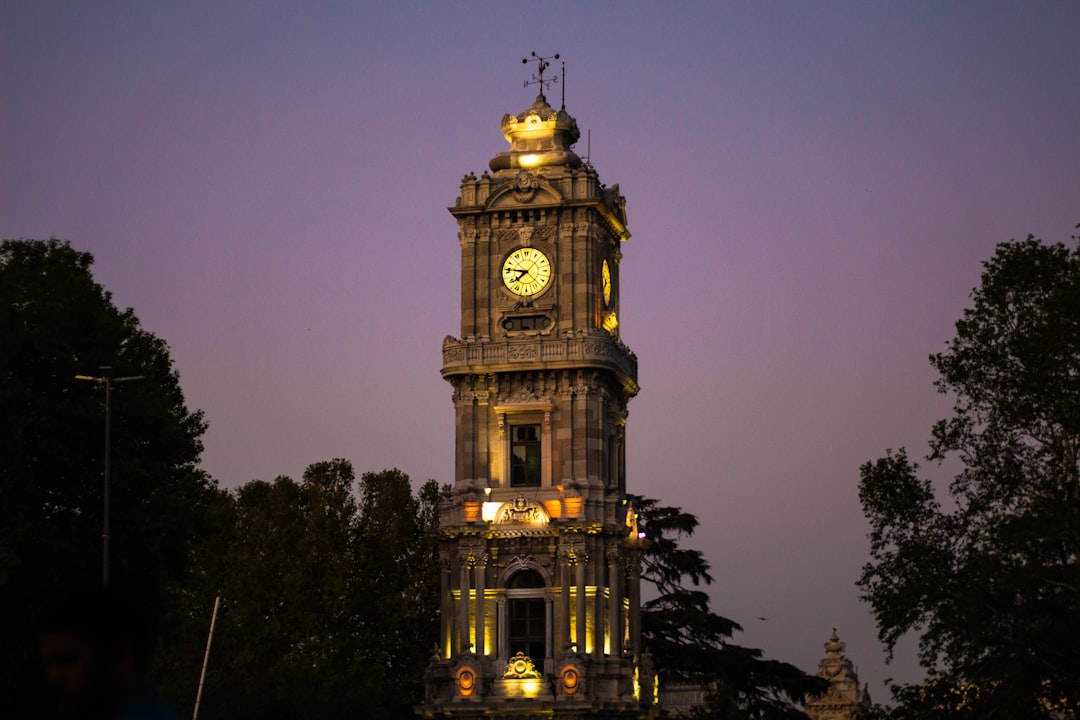
The concept of precise timekeeping in ancient societies, while often perceived through the lens of sundials or water clocks, also encompassed more complex and monumental structures: the wind towers that served as master clocks. These imposing edifices, scattered across various ancient civilizations, represent a remarkable confluence of architectural ambition and sophisticated mechanical engineering. Far from being mere decorative elements, these wind towers were integral to the functioning of cities and communities, orchestrating daily life, religious observances, and astronomical monitoring. Their existence speaks to a deep understanding of celestial mechanics, a mastery of intricate gearing, and a societal need for synchronized temporality that predates the widespread adoption of portable timepieces by centuries.
Foundations of Ancient Timekeeping: Beyond the Obvious
Before delving into the specifics of wind towers, it is crucial to establish the broader context of ancient timekeeping. Societies throughout history have grappled with the need to measure and divide time. This need was not solely for philosophical interest but was intrinsically linked to practical concerns. Agricultural cycles, religious festivals, and economic activities all depended on predictable temporal markers.
The Limitations of Early Methods
Early methods of timekeeping, while innovative for their era, possessed inherent limitations. Sundials, dependent on solar visibility and latitude, could not track time at night or on cloudy days. Water clocks, though functional regardless of sunlight, were susceptible to environmental factors like temperature fluctuations affecting water viscosity and evaporation rates, and required constant replenishment. Their accuracy also varied, and the complexity of their construction and maintenance could be substantial.
The Societal Demand for Synchronization
The development of more complex societies brought with it an increased demand for synchronized activities. Agricultural practices often required collective action, such as irrigation or harvesting. Religious rituals and ceremonies were frequently tied to specific astronomical events or times of day, necessitating a shared understanding of time. Furthermore, the administration of expanding cities and empires required coordinated efforts, from the deployment of military patrols to the scheduling of markets and public announcements. These societal pressures spurred the search for more reliable and visible means of timekeeping.
The fascinating world of ancient master clock wind towers reveals the ingenuity of early civilizations in harnessing timekeeping technology. For those interested in exploring more about the remarkable engineering feats of ancient societies, a related article titled “Unlocking the Secrets of Ancient Megalithic Engineering” offers insightful perspectives on how these cultures constructed monumental structures with precision and purpose. You can read the article here: Unlocking the Secrets of Ancient Megalithic Engineering.
Wind Towers: A Synthesis of Purpose and Design
The wind towers, functioning as master clocks, represented a significant leap forward in addressing these demands. Their design was a deliberate response to both the need for a highly visible time indicator and the desire for a robust and relatively accurate mechanical system. They were not isolated inventions but rather emerged from established architectural traditions and evolved with advancements in metallurgical and mechanical knowledge.
Architectural Precursors and Influences
The archetypal wind tower often drew inspiration from existing architectural forms. For instance, in some Mesopotamian cultures, elevated platforms and towers were used for astronomical observation and signaling. Similarly, in ancient Egypt, monumental structures like obelisks served as massive sundials, marking the passage of time. The development of sophisticated stonework and the principles of load-bearing construction were essential in enabling the creation of these tall, stable structures that could house complex mechanisms and be visible from afar.
The Role of the Wind in Mechanical Operation
The defining characteristic of these master clock wind towers was their reliance on wind power. This was not a whimsical choice but a practical one. Wind, being a readily available and often consistent natural force in many coastal or open regions, provided a powerful and continuous source of energy to drive the clockwork. Unlike water, which required canals and reservoirs, or human power, which was finite and inconsistent, wind offered a more perpetual and scalable solution for a large-scale mechanical device. The design of the tower itself often incorporated elements to capture and channel wind effectively, such as strategically placed openings or rotating vanes.
The Intricacies of the Master Clock Mechanism
The heart of a wind tower master clock lay in its complex internal mechanism. These were not simple gears but intricate assemblies that translated the energy of the wind into the rhythmic movement of timekeeping indicators. The development of these mechanisms represented a significant achievement in mechanical engineering.
Gearing and Power Transmission
The fundamental principle behind the wind tower’s clockwork was the use of gears. A large vane or wheel, situated at the top of the tower and driven by the wind, would engage with a series of smaller gears. Through a carefully calculated system of gear ratios, the rotational speed of the wind-driven element would be progressively reduced to drive the clock’s hands or chimes at the desired rate. The precision with which these gears were cut and fitted was paramount to the accuracy of the timekeeping. Evidence suggests that early forms of escapements, crucial for regulating the release of energy and ensuring a steady, consistent movement, were also employed, although their exact forms and sophistication may have varied across different cultures and time periods.
The Role of Counterweights and Flywheels
To ensure a consistent and smooth operation, mechanisms often incorporated counterweights and flywheels. Flywheels, due to their rotational inertia, helped to dampen fluctuations in wind speed, preventing abrupt changes in the clock’s pace. Counterweights could be employed in conjunction with the winding mechanism or as part of the power storage system, ensuring a steady force was applied to the gearing even during periods of weaker wind. The intricate interplay of these components was vital for maintaining a predictable tempo.
Indicators and Astronomical Synchronization
The output of the clockwork was manifested in various forms, designed for clear visibility and functionality. Large hands on a prominent dial, often situated high on the tower, indicated the hours and sometimes minutes. In some instances, these towers also incorporated astronomical devices that tracked celestial movements, such as the position of the sun or moon. This integration allowed for a more profound connection between human timekeeping and the natural cosmic rhythms, further enhancing their role as societal anchors. The ability to synchronize the clock’s movement with astronomical observations would have been a testament to the advanced astronomical knowledge of these societies.
The Societal Impact and Functionality of Wind Tower Master Clocks
The presence and function of these wind tower master clocks had a profound and far-reaching impact on the societies that developed them. They served not only as accurate timekeepers but as central nodes around which daily life and civic order revolved.
Orchestrating Daily Life and Work
In urban centers equipped with these towers, the tolls of the clock bells or the visual cues of the large hands dictated the rhythm of life. Work schedules for artisans and laborers, market opening and closing times, and the commencement of public gatherings were all synchronized to the master clock. This enforced adherence to a shared temporal framework facilitated greater efficiency and coordination in economic activities and social interactions.
Religious Observances and Rituals
Religion played a central role in ancient societies, and the precise timing of religious ceremonies was often paramount. Wind tower master clocks ensured that prayers, sacrifices, and festivals were observed at the correct times, according to established liturgical calendars. Their ability to track not only diurnal but also potentially celestial cycles would have been particularly significant for religious practices tied to solstices, equinoxes, or lunar phases.
Navigation and Astronomy
Beyond daily life, these towers often served broader scientific and navigational purposes. Their elevated positions and visible time displays could have been used as reference points for maritime or overland navigation. Furthermore, the astronomical functions integrated into some of these clocks provided valuable data for astronomers, contributing to a deeper understanding of celestial mechanics and the development of calendars. The accuracy required for astronomical observations would have driven the engineering of highly precise mechanisms.
Ancient master clock wind towers are fascinating structures that not only showcase the ingenuity of early engineering but also reflect the societal values of their time. These towers served as timekeeping devices, ensuring that communities could synchronize their daily activities. For those interested in exploring the broader implications of historical structures and their connection to societal issues, a related article discusses the ancient evidence of elite corruption, shedding light on how power dynamics influenced architectural developments. You can read more about it in this insightful piece on elite corruption.
Preservation and Legacy: Echoes of Ancient Ingenuity
While the winds that once powered these ancient master clocks have long since abated, their architectural remains and the knowledge of their existence offer a glimpse into a past where temporal precision was achieved through monumental effort and sophisticated design. The study of these structures continues to inform our understanding of ancient engineering capabilities and societal organization.
Architectural Survivals and Archaeological Evidence
While few complete wind tower master clocks survive in their original operational state, archaeological excavations and architectural studies have provided substantial evidence of their existence and construction. Remains of foundations, surviving gear components, and textual descriptions offer crucial insights into their design and functionality. The careful analysis of these remnants allows historians and archaeologists to reconstruct the likely mechanics and appearance of these lost marvels.
The Evolution of Timekeeping and Modern Relevance
The evolution of timekeeping has, of course, progressed dramatically since the era of wind tower master clocks. The invention of portable mechanical clocks, followed by quartz and atomic timekeeping, has fundamentally altered our relationship with time. However, the underlying principles of precise measurement and the societal need for synchronization that drove the development of these ancient towers remain constant. The ingenuity displayed in these wind-powered giants serves as a reminder of humanity’s enduring quest to understand and master the passage of time, and their impressive engineering prowess. They stand as testament to a time when time itself was a monumental force, measured and governed by architectural titans.
FAQs
What are ancient master clock wind towers?
Ancient master clock wind towers are traditional structures found in the Middle East, particularly in Iran and parts of the Arabian Peninsula. These towers were used to harness wind power to operate a master clock, which was used to keep time in the surrounding area.
How do ancient master clock wind towers work?
The towers are designed to capture and channel the wind to power a series of gears and mechanisms that operate a master clock. The clock would then signal the time to the surrounding area through various means, such as bells or other audible signals.
What is the historical significance of ancient master clock wind towers?
These towers are significant because they represent an early form of timekeeping technology and demonstrate the ingenuity of ancient engineers in harnessing natural resources, such as wind power, to serve the needs of their communities.
Where can ancient master clock wind towers be found?
Ancient master clock wind towers can be found in regions with a history of traditional wind technology, such as Iran and parts of the Arabian Peninsula. Some of these towers have been preserved as historical landmarks and can still be visited today.
Are ancient master clock wind towers still in use today?
While many ancient master clock wind towers are no longer in use, some have been restored and are still operational as historical attractions. However, modern technology has largely replaced the need for such traditional timekeeping methods.