
The gentle trickle of water, seemingly conjured from the very earth, has been a lifeblood for civilizations since antiquity. The ingenious qanat systems, an ancient form of subterranean water management, stand as monumental testaments to early human ingenuity in engineering and resourcefulness. These remarkable structures, predating modern plumbing by millennia, represent a sophisticated understanding of hydrology, geology, and construction, allowing arid and semi-arid regions to flourish. Archaeological evidence unearthed across vast swathes of the ancient Near East, Central Asia, and North Africa paints a compelling picture of their development, operation, and profound impact on human settlement and agricultural productivity. Examining these subterranean conduits provides a unique lens through which to appreciate the sophisticated water engineering skills possessed by our ancestors.
The Genesis of Subterranean Water Extraction
The origins of qanat systems are shrouded in the mists of time, but archaeological findings strongly suggest their development emerged from a fundamental need: reliable access to water in regions prone to drought. The very concept of tapping into groundwater, especially in arid landscapes where surface water is scarce and unreliable, would have been a revolutionary leap in human adaptation. Early attempts likely involved simple wells, but the limitations of these were quickly apparent, particularly in areas with deep water tables or where evaporation losses were significant. The qanat offered a solution that overcame these challenges, providing a more stable and sustainable water source.
Early Evidence and Regional Variations
While pinpointing a single origin point for qanats is challenging due to the diffuse nature of early human development and the inherent difficulty in excavating such subterranean structures, archaeological evidence points towards the Iranian plateau and Mesopotamia as probable cradles for this technology. Excavations in regions like western Iran have revealed early water channels that, while perhaps not as complex as later qanat systems, exhibit the foundational principles of underground water conveyance. Sites such as the ruins associated with the ancient Elamite civilization have yielded evidence of rudimentary water management systems that might have evolved into the more sophisticated qanats.
Furthermore, the distribution of early qanat-like structures suggests a gradual diffusion of this technology across adjacent regions. Archaeological surveys in areas of modern-day Iraq and Syria have uncovered evidence of ancient irrigation networks that bear similarities to qanat principles, hinting at an interconnected development of water management strategies. The discovery of ancient settlement patterns intrinsically linked to areas where groundwater is accessible at varying depths further supports the theory that the qanat’s development was driven by immediate environmental pressures and the need for dependable water supplies for agriculture and domestic use.
The Underlying Principles of Qanat Construction
The brilliance of the qanat lies in its elegant simplicity and its adherence to natural laws. The fundamental principle is to intercept groundwater flowing underground, typically from mountainous or higher-elevation areas, and channel it via gravity to lower-lying settlements or agricultural fields. This involves a carefully engineered system of interconnected subterranean tunnels. The process begins with the identification of an aquifer, a geological formation containing groundwater. Vertical access shafts, known as wells, are then dug downwards from the surface to reach the water table. These shafts serve multiple crucial purposes: they allow for the excavation of the main tunnel, provide ventilation, and facilitate maintenance.
The main tunnel, the ‘qanat’ itself, is then excavated horizontally, with a very slight gradient, from the point where the water table is intercepted to the point of delivery. This meticulous gradient is critical; it must be sufficient to allow gravity to move the water but not so steep as to cause excessive erosion or rapid water flow. The construction required a profound understanding of soil mechanics and hydrogeology. Engineers had to assess the stability of different soil types, anticipate potential collapses, and ensure that the tunnel remained below the water table for its entire length to prevent leakage and evaporation. The excavated material from both the shafts and the main tunnel was often used to construct the surface structures, including retaining walls and distribution channels, further demonstrating the resourcefulness of these ancient builders.
Recent archaeological evidence has shed light on the ancient qanat irrigation systems, which were instrumental in the development of agriculture in arid regions. These underground channels, originating in Persia, demonstrate advanced engineering techniques that allowed civilizations to thrive in challenging environments. For further exploration of how historical innovations continue to influence modern society, you can read a related article on the implications of territorial sovereignty in space at Is the Moon a Sovereign Territory?.
Unearthing the Architectural Marvels: Archaeological Discoveries
The archaeological record of qanat systems is a treasure trove of information, revealing the scale, complexity, and longevity of these engineering feats. Excavations, often challenging due to the subterranean nature of the structures and the passage of millennia, have brought to light not only the qanats themselves but also the ancillary structures and evidence of their impact on the surrounding landscapes.
Major Qanat Sites and Their Significance
Numerous archaeological sites across the Middle East and beyond showcase impressive qanat systems. Perhaps one of the most renowned examples is the city of Palmyra in Syria, where extensive qanat networks were crucial for supporting its desert metropolis. The discovery of these qanats revealed how a city could thrive in an arid environment, demonstrating sophisticated water management for agriculture, public fountains, and domestic consumption. Similarly, the ancient Persian city of Yazd in Iran boasts a remarkably well-preserved and still partially functional qanat system, testament to its enduring legacy. Archaeological surveys around Yazd have mapped extensive networks that supplied the city for centuries, with visible vertical shafts and underground tunnels.
Further afield, in Central Asia, regions like Uzbekistan have revealed qanat systems that supported ancient Sogdian cities, such as those around Samarkand and Bukhara. These systems highlight the adaptability of qanat technology to diverse geographical conditions. The sheer scale of some of these ancient water systems, stretching for many kilometers and involving hundreds of vertical shafts, underscores the immense labor and organizational capacity required for their construction and maintenance. The careful planning and execution involved in interlinking numerous shafts to form a continuous, gently sloping tunnel demonstrate a high level of engineering precision.
Evidence of Construction Techniques and Tools
The archaeological excavation of qanat tunnels and shafts has provided invaluable insights into the construction techniques and tools employed by ancient engineers. While organic materials rarely survive in the harsh desert conditions, the hardened earth, stone linings, and the very form of the excavated tunnels speak volumes. The consistency in the diameter and shape of the main tunnels, often just wide enough for a person to work in, suggests standardized practices. The careful removal of excavated soil, often piled up around the vertical shafts, created distinct mounds that are still visible today, acting as archaeological markers.
The presence of stone lining in some of the more critical or unstable sections of the tunnels indicates an understanding of structural reinforcement. This would have been crucial for preventing collapses, especially in areas with sandy or unstable soil. Evidence of rudimentary tools, such as pickaxes made of stone or bronze, and shovels, has also been found in or near qanat excavations, though direct association can be difficult to definitively prove. The sheer volume of earth moved, in some cases amounting to thousands of cubic meters for a single qanat, points to a well-organized labor force, likely comprising skilled workers and seasonal laborers.
The Role of Qanats in Settlement and Agriculture
The impact of qanat systems on human settlement and agricultural practices is undeniable and archaeologically well-documented. The availability of a reliable water supply facilitated the establishment and growth of permanent settlements in areas that would otherwise be uninhabitable. Villages and towns were often strategically located near the outlet of a qanat, ensuring direct access to water for domestic use, livestock, and most importantly, irrigation.
Archaeological evidence in the form of ancient agricultural fields, terraced landscapes, and the remnants of irrigation channels directly connected to qanat outlets strongly supports their role in food production. The ability to irrigate land allowed for the cultivation of a wider range of crops, leading to increased food security and population growth. The development of specialized agricultural techniques, such as flood irrigation and carefully managed water distribution, became intrinsically linked to the presence of qanats. The prosperity of many ancient civilizations, from the Persian Empire to the Roman provinces in arid regions, was directly underpinned by the efficiency and sustainability of their qanat systems.
The Operational Dynamics of Ancient Water Management
The construction of a qanat was only the beginning of its importance. The ongoing operation and maintenance of these complex systems were crucial for their longevity and effectiveness, and archaeological evidence sheds light on these dynamics.
Maintenance and Repair Strategies
Qanats, by their very nature, require continuous maintenance to remain functional. The accumulation of silt, the collapse of tunnel sections, and groundwater level fluctuations all pose constant threats. Archaeological discoveries have revealed strategies employed to address these issues. The vertical shafts, as mentioned, were not only for excavation but also served as critical points for accessing the tunnels for cleaning and repair. Evidence of tools used for scooping out silt and mending collapsed sections has been found.
Furthermore, the organization of communities around qanat maintenance is often inferred from settlement patterns and historical records. It is highly probable that these societies developed cooperative systems where families or communities were responsible for specific sections of the qanat, ensuring their upkeep. The presence of workshops or specialized areas within ancient settlements might also indicate facilities dedicated to the repair of qanat infrastructure or the production of necessary tools. The sheer number of shafts in some qanat systems likely served as a distributed maintenance network, allowing access to different parts of the tunnel without having to excavate new shafts.
Water Distribution and Usage Patterns
Once the water reached the surface outlet of the qanat, its distribution and usage were carefully managed, often through a system of distribution channels and reservoirs. Archaeological excavations have unearthed remnants of these surface distribution networks, including lined channels and small dams designed to regulate water flow. The pattern of these channels often indicates how water was allocated to different agricultural plots or communal areas.
The size and number of agricultural fields irrigated by a qanat, as identified through landscape archaeology, provide clues about the volume of water available and the agricultural practices employed. Evidence of water-sharing agreements, sometimes inscribed on ancient tablets or clay fragments, further illustrates the sophisticated social and economic systems that governed water use. The presence of public fountains and baths in ancient cities, fed by qanats, demonstrates the integration of this water supply into the daily lives of the populace, beyond mere agricultural needs.
The Socio-Economic Impact of Qanat Systems
The economic and social ramifications of qanat systems were profound and long-lasting. They were not merely feats of engineering but fundamental pillars of societal development. The reliable water supply fostered agricultural surplus, which in turn supported larger populations, specialized labor, and trade. This economic prosperity often translated into the development of cultural centers, the construction of monumental architecture, and advancements in other fields of knowledge.
The control and management of qanats also played a significant role in social organization and power structures. Those who controlled the water sources or the distribution networks often held considerable influence within their communities. Archaeological evidence, such as the remains of elite residences strategically located near water sources or administrative buildings associated with water management, can hint at these power dynamics. The very existence of large-scale qanat projects required significant social cohesion and the ability to mobilize and organize large labor forces, suggesting complex governance structures in ancient societies.
Qanat Technology Beyond the Near East
While the most extensive and well-documented qanat systems are found in the Near East and Central Asia, evidence suggests the diffusion or independent invention of similar subterranean water extraction techniques in other parts of the world.
Parallel Developments in Other Arid Regions
The fundamental challenges posed by arid and semi-arid environments – the scarcity of surface water and the presence of groundwater – are universal. It is therefore not surprising that similar solutions have emerged independently or through cultural diffusion. Archaeological evidence from regions like the Iberian Peninsula, particularly in areas with Roman or Moorish influence, reveals sophisticated water management systems that share qanat-like principles. These systems often involve underground tunnels to intercept and convey water.
Further afield, in North Africa, particularly in oasis regions such as those in Algeria and Morocco, historical and archaeological accounts describe underground water channels that bear striking resemblances to qanats. These systems, often developed over centuries, demonstrate an indigenous understanding of hydrogeology and engineering. The survival of some of these systems to the present day, albeit often in a modified form, attests to their efficacy and the enduring wisdom of their ancient creators.
The Influence and Spread of Qanat Technology
The influence of qanat technology likely spread through trade routes, conquest, and cultural exchange. As empires expanded and interacted, knowledge of successful technologies, including water management, would have been disseminated. The Achaemenid Persian Empire, for instance, was instrumental in spreading qanat technology across its vast domain, from Egypt to parts of the Indian subcontinent. Archaeological evidence of qanat-like structures in these regions suggests their introduction or adaptation during this period.
The Roman Empire also adopted and adapted water management techniques, including subterranean channels, in its territories across the Mediterranean and beyond. The ingenuity of qanat systems would have been recognized as a valuable asset for supporting agricultural production and urban development in its drier provinces. This process of diffusion and adaptation allowed the core principles of qanat technology to influence water management practices across a wide geographical and temporal spectrum.
Recent discoveries in qanat archaeological evidence have shed light on ancient water management systems, revealing how these ingenious structures were crucial for sustaining agriculture in arid regions. The intricate design of qanats not only highlights the engineering prowess of ancient civilizations but also their adaptability to changing climates. For a deeper understanding of how ancient societies navigated environmental challenges, you can explore the related article on ancient climate strategies found here. This connection emphasizes the importance of water management in historical contexts and its relevance to contemporary discussions on sustainability.
The Enduring Legacy and Modern Relevance
| Metric | Description | Example Site | Estimated Age | Significance |
|---|---|---|---|---|
| Length of Qanat | Measured length of qanat tunnels | Persian Qanats (Iran) | Up to 70 km | Indicates advanced engineering and water management |
| Number of Vertical Shafts | Count of vertical access shafts per qanat | Shushtar Historical Hydraulic System | 20-30 shafts per qanat | Facilitates maintenance and ventilation |
| Water Flow Rate | Volume of water transported per second | Qanats in Yazd, Iran | 0.5 to 2 liters/second | Supports irrigation and domestic use |
| Construction Material | Materials used in qanat lining and shafts | Various sites across Middle East | Stone, brick, and mortar | Ensures durability and prevents collapse |
| Archaeological Dating | Estimated period of qanat construction | Fars Province, Iran | Circa 1000 BCE | One of the earliest known qanat systems |
The ancient qanat systems, though many are no longer in active use, continue to hold immense significance for both historical understanding and modern inspiration. Their study offers invaluable lessons in sustainable water management and highlights the enduring capacity of human ingenuity.
Lessons in Sustainable Water Management
In an era increasingly defined by water scarcity and the challenges of climate change, the ancient qanat systems offer compelling lessons in sustainable water management. Their design inherently minimizes water loss through evaporation, a critical advantage in arid regions. The reliance on gravity as the sole source of power demonstrates a sophisticated understanding of natural forces and a rejection of energy-intensive solutions. Furthermore, the community-based maintenance models associated with many qanats highlight the importance of collective responsibility and social cohesion in managing shared resources.
The resilience of qanat systems over millennia, supporting civilizations through periods of drought and hardship, underscores their long-term sustainability. By studying their construction, operation, and the social structures that supported them, we can glean insights into how to develop more robust and environmentally sound water management strategies for the future. The focus on tapping into groundwater, a largely untapped resource in many regions, and conveying it efficiently, remains a relevant approach to water security.
Archaeological Research and Preservation Efforts
Ongoing archaeological research continues to uncover new qanat systems and to refine our understanding of existing ones. Advanced techniques such as remote sensing, geophysical surveys, and detailed mapping are revealing the full extent and complexity of these ancient networks. The preservation of these remarkable archaeological sites is a critical endeavor, not only for scientific study but also for cultural heritage. Many qanats are fragile and vulnerable to modern development and environmental degradation.
International organizations and local communities are increasingly recognizing the importance of qanats as historical artifacts and as potential sources of inspiration for contemporary water management. Efforts to document, protect, and in some cases, even restore active qanat systems are underway in various parts of the world. These efforts aim to ensure that the legacy of these ancient water engineers is not lost to time and that their ingenious solutions can continue to inform and inspire future generations. The painstaking work of archaeologists in unearthing, analyzing, and preserving these subterranean marvels is essential for understanding the depth of ancient human ingenuity and its lasting impact on our world.
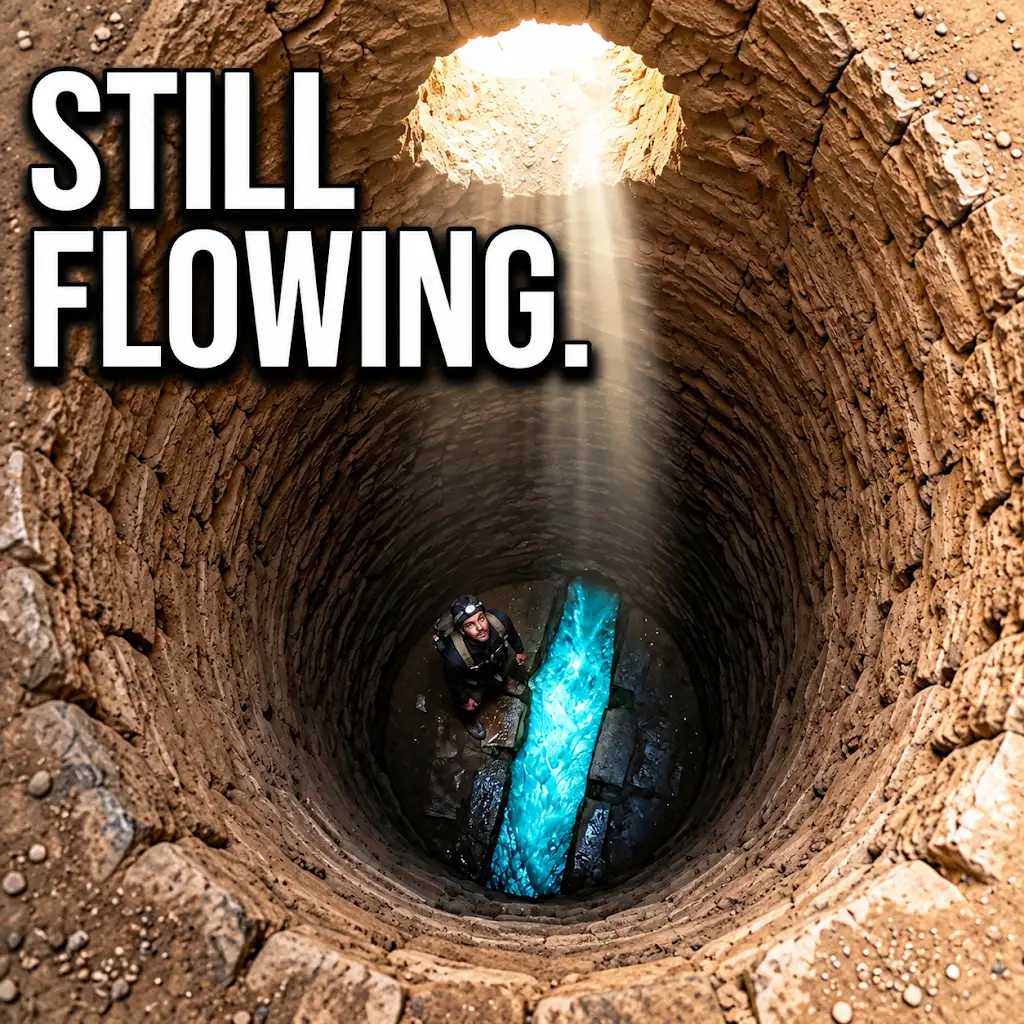
They Dug Water Tunnels Under the Desert… And They Still Flow
FAQs
What is a qanat?
A qanat is an underground water management system used to transport water from an aquifer under a hill to the surface for irrigation and drinking purposes.
How were qanats constructed?
Qanats were typically constructed by digging a series of vertical shafts into the ground, connecting them with a gently sloping tunnel, and then covering the tunnel with earth.
Where have qanats been found?
Qanats have been found in various regions around the world, including Iran, North Africa, Spain, and Central Asia.
What archaeological evidence supports the existence of qanats?
Archaeological evidence supporting the existence of qanats includes the presence of vertical shafts, tunnels, and surface structures used for accessing and maintaining the qanat system.
What insights can qanat archaeological evidence provide about ancient civilizations?
Studying qanat archaeological evidence can provide insights into the technological advancements, water management practices, and agricultural systems of ancient civilizations that utilized these underground water systems.