
Whispers from the River: Unveiling Stone Age Fishing Ingenuity
The murky depths of ancient waterways, once teeming with life and sustenance, have yielded a remarkable secret: the sophisticated design of Stone Age fishing trap chambers. For millennia, these ingenious structures lay hidden, testaments to the acute observational skills and advanced engineering capabilities of our prehistoric ancestors. Recent archaeological discoveries have begun to peel back the layers of time, revealing not just rudimentary fish corrals, but complex, purpose-built chambers designed to maximize catch efficiency and ensure survival in challenging environments. This revelation forces a re-evaluation of our understanding of Stone Age societies, moving beyond a simplistic portrayal of hunter-gatherers to acknowledge their capacity for foresight, resource management, and intricate construction. The study of these submerged marvels offers a profound glimpse into the daily lives, dietary habits, and technological prowess of peoples who navigated a world vastly different from our own, yet whose fundamental needs and ingenuity resonate across the ages.
Recent studies on ancient fishing techniques have shed light on the innovative designs of Stone Age fishing traps, which were crucial for early human survival. These traps, often constructed with natural materials, demonstrate a sophisticated understanding of aquatic ecosystems. For a deeper exploration of how ancient practices intersect with modern challenges, you can read about the complexities of navigating the South China Sea in this related article: Navigating the South China Sea: Challenges and Opportunities.
The Discovery: Echoes from Submerged Histories
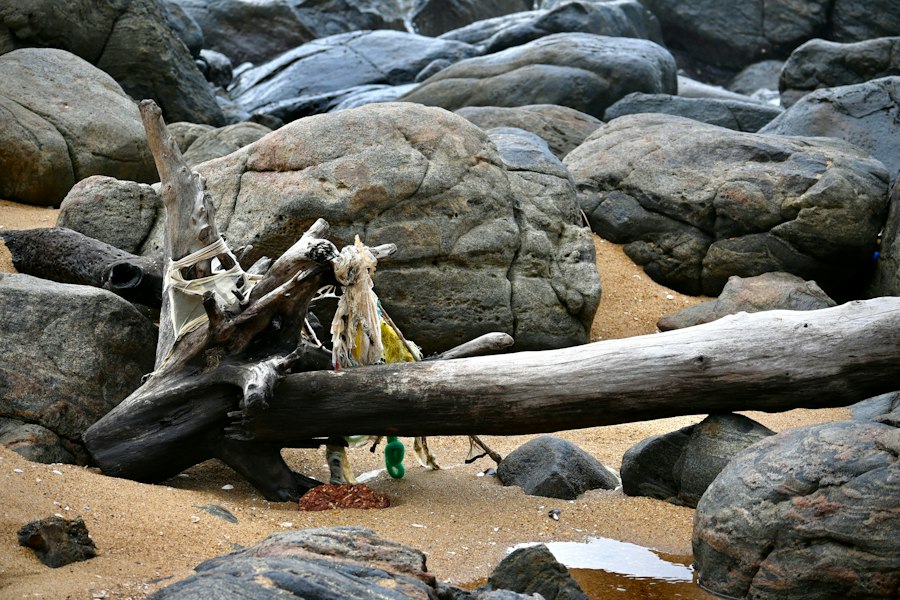
The ongoing exploration of riverbeds and coastal margins has become a crucial frontier in understanding prehistoric human activity. It is within these aquatic archives that the most compelling evidence of Stone Age fishing traps has emerged. These discoveries are not accidental finds; they are often the result of meticulous fieldwork, employing advanced sonar technology, underwater excavation techniques, and a keen eye for anomalies in the seabed’s natural formations. The careful documentation of each stone, each arrangement, and the surrounding sediment provides invaluable data, allowing archaeologists to reconstruct the original form and function of these ancient structures. The challenges inherent in such work are significant, from the difficulties of working in low visibility and strong currents to the painstaking process of preserving fragile organic materials. Yet, the rewards are immense, offering direct insights into human behavior and technological development that terrestrial sites can rarely provide with such clarity.
Unearthing the Foundations: Where and How They Were Found
The geographical distribution of these Stone Age fishing trap chambers is surprisingly broad, indicating a widespread adoption of this fishing strategy across diverse prehistoric cultures. Sites have been identified in freshwater river systems, estuarine environments, and even along protected coastlines. The conditions required for their preservation are specific: a stable substrate, often silty or sandy sediment that can gradually bury the structures, protecting them from erosion and anthropogenic disturbance. For instance, discoveries in the British Isles, particularly in areas with slow-moving rivers or tidal estuaries, have revealed well-preserved examples built from carefully placed stones. Similarly, evidence from continental Europe and parts of North Africa suggests that similar fishing technologies were employed in a variety of aquatic settings. The methods of discovery vary, but often begin with sonar surveys that detect unusual linear or geometric arrangements of submerged objects. These initial findings are then followed by diver-led investigations and, in some cases, controlled underwater excavations to carefully expose and record the trap structures. The meticulous mapping of each component stone and its context is paramount, as this spatial information is critical for understanding the intended design and function.
The Silent Witnesses: Artifacts and Context
Beyond the stone structures themselves, the surrounding sediment often holds a treasure trove of information. Microscopic analysis can reveal the presence of fish bones, scales, and even fragments of fishing gear, such as bone hooks or net weights. These ecofactual remains provide direct evidence of the types of fish targeted and the methods used to capture them. The presence of particular tools or worked bone fragments can also offer clues about the broader toolkit of the people who built and maintained these traps. Furthermore, the sediment layers can provide chronological data through radiocarbon dating of any associated organic material. This allows researchers to place the construction and use of the traps within a specific timeframe, offering a dynamic picture of Stone Age subsistence strategies over generations. The careful recovery and analysis of these associated artifacts, no matter how small, are essential for building a comprehensive understanding of the trap chambers’ role in the wider prehistoric economy and social structure.
The Architecture of Abundance: Design Principles Revealed

The archaeological evidence paints a picture far more sophisticated than simple piles of rocks. These Stone Age fishing trap chambers exhibit deliberate architectural planning, employing principles of hydraulics, animal behavior, and efficient construction. They are not haphazard accumulations of stones, but rather carefully constructed barriers and enclosures designed to channel, trap, and ultimately capture fish. The scale and complexity of these structures vary, reflecting different environmental conditions, target species, and the technological capabilities of the communities that built them. Understanding these design principles is key to appreciating the ingenuity of Stone Age peoples and their deep understanding of their aquatic environments.
Harnessing the Flow: Hydrodynamic Considerations
A fundamental aspect of these trap designs lies in their manipulation of water flow. Builders understood how currents could be used to their advantage, either to guide fish towards the trap or to flush out unwanted debris. Many traps feature V-shaped or funnel-like structures, designed to narrow the waterway and direct migrating fish into a confined area. The stones are often placed with careful consideration of their size and shape to minimize resistance to the current, allowing water to pass through while impounding the fish. Some designs incorporate strategically placed baffles or deviations in the wall

The 7,000-Year-Old Secret Hidden Under a Lake
FAQs
What materials were typically used to construct Stone Age fishing trap chambers?
Stone Age fishing trap chambers were commonly constructed using rocks, sticks, branches, and other natural materials found in the surrounding environment. These materials were carefully arranged to create effective traps for catching fish.
How were Stone Age fishing trap chambers designed to catch fish?
Stone Age fishing trap chambers were designed with narrow entrances that led into a larger chamber where fish would swim in but struggle to find their way out. The design often included barriers or obstacles to prevent fish from escaping once they entered the trap.
Where were Stone Age fishing trap chambers typically built?
Stone Age fishing trap chambers were usually built in rivers, streams, or other bodies of water where fish were abundant. They were strategically placed in areas where fish would naturally swim, such as along migration routes or near feeding grounds.
Did Stone Age fishing trap chambers require maintenance or repair?
Stone Age fishing trap chambers did require occasional maintenance and repair to ensure they remained effective. Over time, natural elements like water flow and debris could damage the traps, so Stone Age people would regularly check and fix any issues to keep the traps functional.
What evidence supports the use of Stone Age fishing trap chambers?
Archaeological findings, such as the discovery of ancient fishing tools and remnants of trap chambers, provide evidence of Stone Age people using these traps for fishing. Additionally, historical accounts and cave paintings also depict the use of fishing trap chambers by early human societies.