The silent language of the wilderness, a tapestry woven with ephemeral clues, has guided humans for millennia. Long before the advent of sophisticated technology, our ancestors were masters of observation, deciphering the stories etched into the landscape by the passage of creatures great and small. This innate skill, honed through generations of necessity and survival, allowed them to track game for sustenance, avoid predators, and navigate vast territories. Today, modern science continues to uncover the remarkable effectiveness of these ancient tracking signs, revealing how a broken twig or a frozen footprint could paint a vivid picture of events long past.
The Subtle Art of the Broken Twig
The humble twig, often overlooked in its commonplace existence, transforms into a vital hieroglyph in the hands of a skilled tracker. Its orientation, the type of break, and the surrounding context all speak volumes about the creature that disturbed it. These seemingly insignificant gestures are, in fact, intentional or accidental communications from the natural world, a testament to the intricate dance between animal behavior and the environment. Understanding these signs requires a deep appreciation for the physical forces at play and the predictable reactions of flora to disturbance.
Decoding the Snap and the Bend
A snapped twig, clean and abrupt, suggests a forceful passage, perhaps by a larger animal pushing its way through dense undergrowth. The height of the break can indicate the size and gait of the animal, while the direction of the break might reveal its path of travel. Conversely, a bent twig, its fibers stressed rather than severed, points to a more delicate touch, perhaps a smaller creature brushing past or a browsing animal nibbling at leaves. The direction of the bend is equally informative, hinting at the direction of movement or feeding. Furthermore, the freshness of the break is crucial. A green, moist break signifies a recent event, while a dry, brittle snap indicates a passage from some time ago. The presence of sap on a freshly broken twig can even offer clues about the species, as different trees bleed sap in distinct ways.
Foliage as a Fingerprint
Beyond the break itself, the state of the foliage attached to or surrounding the disturbed twig offers further insights. Leaves might be torn or matted, revealing the direction of impact. Tiny fragments of leaf, clinging to a passing animal’s fur or hide, can be collected and analyzed, potentially identifying the species by its unique leaf preferences. The color of the foliage, whether it’s a vibrant green or a faded brown, also helps to establish a timeline. Freshly disturbed leaves might show signs of bruising or discoloration that quickly fade. The absence of dew or moisture on broken leaves, when the surrounding foliage remains damp, is another indicator of a recent event. In winter, the presence of snow or frost on broken twigs can provide invaluable temporal data, as melted snow or disturbed frost patterns can be interpreted with surprising accuracy.
In the study of ancient tracking signs, such as broken twigs and frozen footprints, researchers have uncovered fascinating insights into the behaviors and movements of early human societies. These subtle markers not only reveal the paths taken by our ancestors but also provide clues about their interactions with the environment and wildlife. For those interested in understanding how to prepare for unexpected situations, a related article discusses the importance of having a financial emergency plan, which can be crucial in navigating unforeseen challenges. You can read more about this topic in the article found here: Financial Emergency Plan for US Citizens.
The Enduring Legacy of Frozen Footprints
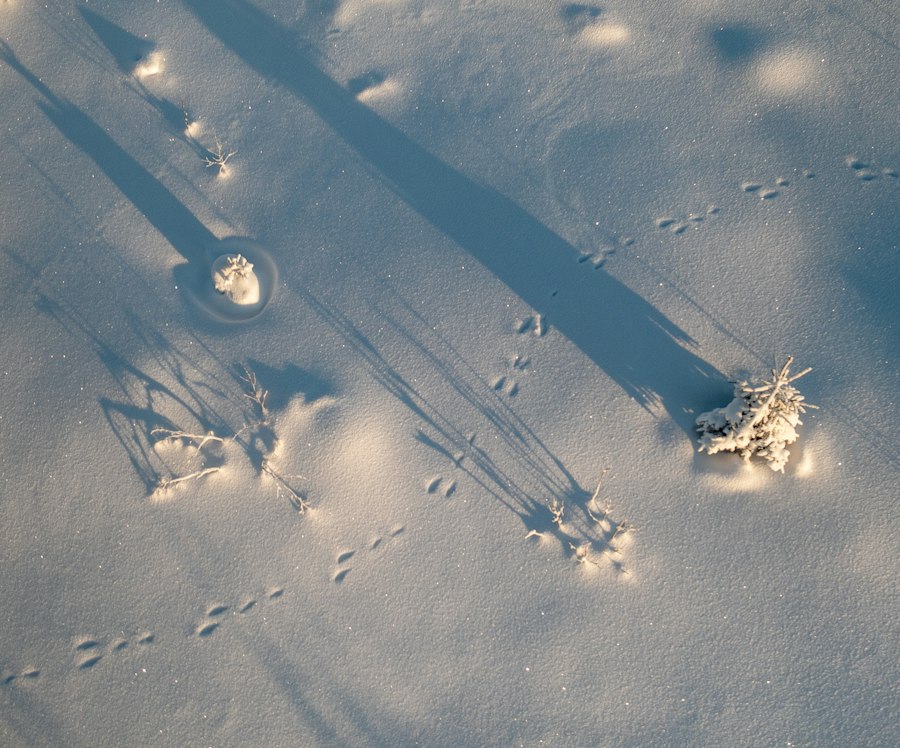
When the earth yields to the grip of winter, the landscape transforms, and with it, the nature of tracking signs. Frozen footprints, etched into the snow or ice, become frozen moments in time, offering an unparalleled window into the movements of wildlife. These ephemeral impressions, once thawed, disappear, but in their frozen state, they preserve details that can be astonishingly informative. The precision of these impressions is a direct result of the unique properties of water in its solid state, allowing for a fidelity of detail rarely seen in other mediums.
Reading the Snow’s Story
The depth and shape of a footprint in snow are primary indicators of the animal’s weight and its gait. A deep impression suggests a heavier animal, while a shallow one points to a lighter one. The spacing between footprints, known as stride length, reveals the speed and energy of the animal’s movement. A long, bounding stride indicates a rapid pursuit or escape, while a short, shuffling gait suggests a more leisurely amble. The clarity of the print is also vital. A sharp, well-defined print implies recent activity before the snow had time to melt or be disturbed by wind. Over time, wind can sculpt snow, softening edges and creating false impressions, but subtle variations in these wind patterns can themselves offer clues. The presence of snow crystals, clinging to the edges of a print, can indicate freshness.
Ice as an Archive
Frozen puddles, stream edges, and even solid ice can preserve footprints with remarkable fidelity. Unlike snow, ice offers a smoother, more uniform surface, allowing for incredibly detailed impressions. The texture of the ice, whether it is rough or glassy, can influence the clarity of the print. In some cases, footprints in ice can preserve the finer details of an animal’s footpads, including the patterns and even minor imperfections, akin to a natural fingerprint. The depth of the impression in the ice is a direct measure of the animal’s weight, and the spread of any cracks emanating from the print can provide information about the force applied. Even the presence of small air bubbles trapped within the ice around a footprint can offer subtle clues about the time of its creation, as these bubbles may shift or coalesce over time. The ability of ice to encapsulate and preserve these impressions makes it a particularly valuable, albeit seasonal, archive of animal activity.
The Unseen Trails of Fur and Feather

While broken twigs and frozen footprints are overt signs, the passage of animals often leaves behind more subtle, less obvious clues – traces of fur, discarded feathers, or even the faintest scent. These remnants, though delicate, are powerful indicators of presence and can reveal much about the creature that left them behind. Their discovery often requires a heightened sense of awareness and an appreciation for the minute details that permeate the natural world.
Whispers of Fur and Scale
A snagged tuft of fur on a thorny bush or a patch of fur caught on a rough bark surface speaks volumes. The color, length, and texture of the fur can often identify the species. A fine, downy fur might belong to a young animal or a creature adapted to cold, while coarse, bristly fur suggests a different habitat or a larger mammal. The density of the fur can also hint at the season, with thicker coats indicating colder months. In some instances, microscopic analysis of fur can reveal the diet or even the health of the animal. For similar reasons, shed scales from reptiles or amphibians, though rare to find, are equally distinctive and offer a direct link to the creature’s identity. The presence of blood or other bodily fluids clinging to these discarded remnants can further enhance the information available to a tracker.
The Language of Feathers
For avian species, feathers are a constant source of tracking information. A shed feather, caught on a branch or lying on the ground, can readily identify the bird species by its size, shape, color patterns, and barb structure. The condition of the feather – whether it is pristine, damaged, or molted – can indicate the bird’s recent activity and even its health. A feather dropped during flight will likely be intact, while a feather lost in a struggle or a nesting site might be frayed or partially damaged. The location of a dropped feather can also be telling. Feathers found in a roosting area or a feeding ground provide context for the bird’s behavior. The discovery of a molted feather, often found in specific locations where birds preen, can indicate a regular haunt.
Environmental Echoes: The Disturbed Earth and the Silent Stream
The environment itself acts as a canvas, recording the passage of life through subtle alterations. A disturbed patch of earth, a displaced stone, or a ripple in a stream can all be interpreted by a discerning eye as echoes of animal activity. These are the indirect signs, the environmental responses to physical presence, that require a deeper understanding of ecological relationships.
Earth’s Subtle Scars
The ground beneath our feet is a sensitive recorder. A patch of flattened grass, where an animal has rested or played, is a clear indication of its presence. The direction of the flattened blades can suggest the direction of movement or the orientation of the animal. Similarly, a dislodged stone, a pushed-over leaf, or a newly exposed patch of soil can all signal recent disturbance. The type of soil and its moisture content will influence the clarity and persistence of these marks. Dry, dusty soil will show fleeting impressions, while damp, loamy soil can preserve detailed outlines for longer periods. Even the subtle compression of moss or the bending of small plants can provide clues. The presence of insect activity around a disturbed area can also be indicative, as certain insects are attracted to the scents or decay associated with recent animal presence.
The Whisper of Water
Water bodies, whether streams, puddles, or the damp edges of ponds, offer a unique set of tracking opportunities. A ripple on the surface of a calm pool, even after the creature has departed, can indicate recent entry or exit. The pattern of these ripples can sometimes suggest the size and speed of the animal. Footprints in the mud at the water’s edge are often incredibly well-preserved, especially if the mud is soft and pliable. The clarity of these prints in wet earth can rival those found in snow. The displacement of aquatic plants or the disturbance of sediment on the streambed can also signal the passage of aquatic or semi-aquatic creatures. The presence of disturbed waterlogged vegetation can indicate where an animal has been foraging or seeking refuge.
In exploring the fascinating world of ancient tracking signs, such as broken twigs and frozen footprints, one can gain insights into the behaviors and movements of early civilizations. These subtle markers not only tell stories of survival but also hint at the reasons behind the abandonment of certain areas. For a deeper understanding of how these signs relate to broader patterns of settlement and abandonment, you may find it interesting to read about the trends in ancient city abandonment in this related article.
The Wisdom of the Ancient Tracker
| Tracking Sign | Description | Common Indicators | Possible Age | Environmental Impact |
|---|---|---|---|---|
| Broken Twigs | Twigs snapped or bent, indicating passage of an animal or human | Fresh breaks, angled snaps, scattered debris | Hours to days | Can be obscured by wind or rain |
| Frozen Footprints | Impressions left in snow or ice that have solidified | Clear toe and heel marks, depth varies with weight | Hours to weeks, depending on temperature | Preserved well in cold, can melt or distort with warming |
| Ancient Tracking Signs | Old signs such as dried footprints, crushed vegetation, or soil disturbances | Faded impressions, brittle broken twigs, compacted soil | Weeks to months or longer | Often degraded by weather and animal activity |
The knowledge embedded in these ancient tracking signs is not merely a collection of isolated observations; it represents a holistic understanding of the natural world. It is the culmination of generations of careful watching, patient learning, and the development of a deep, intuitive connection with the environment. These skills, once essential for survival, are now increasingly recognized for their value in modern fields, from wildlife conservation to ecological research.
Bridging Past and Present
Modern scientists and conservationists are rediscovering the profound wisdom of ancient tracking techniques. By studying the methods of traditional trackers and applying them alongside contemporary scientific tools, researchers can gain a more comprehensive understanding of wildlife populations, their movements, and their ecological impacts. DNA analysis of scat, for example, can be significantly enhanced by accurate field identification of the scat’s origin, a skill honed by traditional tracking. Camera traps, while invaluable, can be deployed more effectively when informed by the knowledge of animal travel corridors and preferred resting spots, gleaned from traditional tracking signs. The ability to interpret subtle environmental cues allows for less invasive wildlife monitoring and a deeper appreciation for the intricate web of life.
The Enduring Relevance
In an era increasingly dominated by technology, the lessons of ancient tracking remain profoundly relevant. They remind us of the importance of observation, patience, and a respectful connection with the natural world. These skills foster a sense of awareness and mindfulness, encouraging us to look beyond the surface and appreciate the hidden narratives that unfold all around us. The broken twig and the frozen footprint, though seemingly simple, are powerful testaments to the enduring legacy of human ingenuity and our deep-seated relationship with the wild. They are a constant invitation to slow down, observe, and listen to the silent language of the earth.