Navigating the Dawn: Early Mobility and Settlement in Bronze Age Morocco
The Bronze Age in Morocco, spanning roughly from the third to the first millennium BCE, represents a pivotal period in the region’s history. It was a time of burgeoning trade, evolving social structures, and the initial mastery of new technologies, particularly metallurgy. While much of the archaeological focus often falls on monumental architecture or sophisticated artifacts, understanding the methods and routes of transport during this era is crucial for a comprehensive picture of Bronze Age Moroccan life. The ability to move people, goods, and ideas across the diverse Moroccan landscape – from the Atlantic coast to the Atlas Mountains and beyond – shaped settlement patterns, fostered cultural exchange, and underpinned economic development. This article delves into the likely modes of transport employed by Bronze Age communities in Morocco, examining the evidence and inferring their significance for the period.
The study of ancient transport in Morocco during the Bronze Age reveals fascinating insights into the trade routes and cultural exchanges that shaped the region. For a deeper understanding of how ancient civilizations navigated and mapped their world, you can explore the article titled “Navigating the Unknown: Mapping the World Before Discovery” which discusses various aspects of ancient navigation and transport systems. This article can be found at Navigating the Unknown.
The Backbone of Travel: Overland Routes and Terrestrial Mobility
Overland travel formed the fundamental basis of transportation in Bronze Age Morocco, dictated by the varied topography of the region. The vast distances and challenging terrain, including rugged mountain ranges and arid plains, necessitated the development of resilient and adaptable means of conveyance. The presence of human settlements, resource extraction sites, and potential trade nexus points would have inevitably spurred the creation and maintenance of pathways.
Paths Worn Through Time: Early Trackways and Trails
While the existence of formal, paved roads as we understand them today is unlikely for the Bronze Age, it is highly probable that a network of well-trodden tracks and trails existed. These would have been formed organically by the repeated passage of people, pack animals, and potentially wheeled vehicles over generations. Archaeological surveys in regions with known Bronze Age settlements often reveal concentrations of artifacts or burial sites along natural routes, suggesting their consistent use for travel. The topography itself would have guided these paths, favoring valley floors, mountain passes, and coastal plains where movement was less arduous. Evidence of early human activity, such as prehistoric campsites or tool manufacturing sites, often appears in clusters that can be interpreted as points along these nascent travel corridors. The careful selection of these routes would have been informed by factors such as water availability, access to grazing land for animals, and the avoidance of impassable terrain. The gradual hardening of these routes, perhaps through the clearing of brush or the filling of minor ruts, would have enhanced their efficiency for longer journeys.
The Power of the Pack: Animal Traction and Burden-Bearing
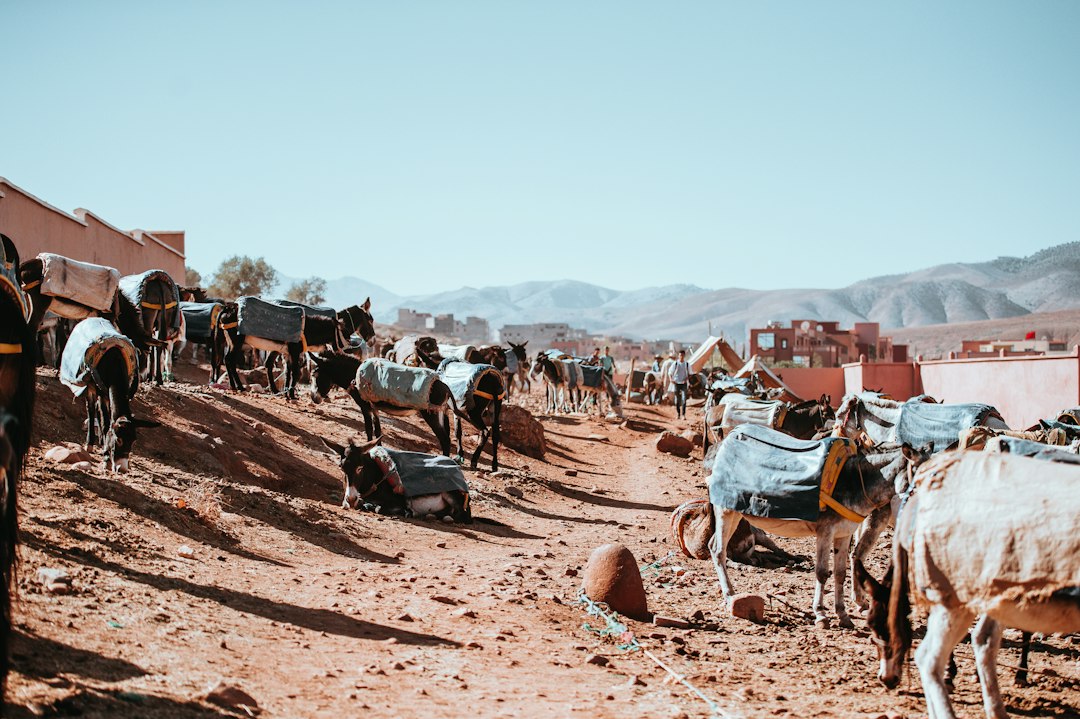
The domestication of animals, particularly equids like donkeys and possibly early forms of horses, would have been a transformative development for Bronze Age transport. These animals provided a significant advantage over human porterage, enabling the carriage of heavier loads over greater distances. Evidence for animal domestication in North Africa dates back to earlier periods, and by the Bronze Age, it is reasonable to assume their widespread use for agricultural purposes and as beasts of burden. The morphology of Bronze Age skeletal remains, where available, could offer clues about the prevalence and role of domesticated animals. Furthermore, the distribution of archaeological sites, particularly those associated with mining or specialized crafts requiring raw materials, often hints at the necessity of animal transport to move these goods. The ability to transport food surpluses, tools, building materials, and trade items efficiently would have been critical for the growth and sustainability of Bronze Age communities. The development of simple harnesses and pack saddles, though not necessarily leaving direct archaeological traces, would have been a logical progression to maximize the carrying capacity of these animals.
The Advent of the Wheel: Wheeled Vehicles and Their Limitations
The introduction of the wheel, a technology that revolutionized transport, likely reached Morocco during the Bronze Age, possibly through diffusion from the Near East or Egypt. While direct archaeological evidence of wheeled vehicles from this period in Morocco is scarce, its presence in contemporary North African and Mediterranean cultures makes its adoption plausible. The archaeological record of the wider North African region suggests the presence of chariots and carts in later Bronze Age and Iron Age periods, indicating a gradual integration of this technology. If wheeled vehicles were indeed in use, their application would have been primarily limited to flatter, more accessible terrain. Coastal plains and wider river valleys would have been the most suitable environments for their deployment. The construction of such vehicles would have required skilled craftsmanship, and the development of roads capable of supporting them would have been a slow and gradual process. The scarcity of surviving evidence for wheels themselves, due to their organic components or reuse, makes definitive statements challenging. However, their potential impact on trade, military movement, and the transport of heavy goods would have been profound, even if their use was not ubiquitous across the entire Moroccan landscape.
Waterways as Arteries: The Role of Rivers and Coastlines
Morocco’s extensive coastline along the Atlantic and Mediterranean, as well as its navigable river systems, offered crucial alternative routes for transportation. Waterways provided a more efficient means of moving goods and people over longer distances, especially when compared to the challenges of overland travel in certain regions. The movement of bulk goods like salt, fish, grain, and potentially raw materials would have benefited greatly from this mode of transport.
Coastal Currents and Maritime Journeys
The extensive Atlantic coastline of Morocco, with its natural harbors and strategic bays, would have served as a vital highway for Bronze Age mariners. Evidence of maritime activity during this period, while not as abundant as in later eras, can be inferred from the distribution of coastal settlements and the presence of marine resources in inland sites. The development of simple, sturdy boats, likely constructed from wood and animal hides, would have enabled coastal voyages. These journeys would have facilitated trade between different coastal communities, allowing for the exchange of local specialties and the distribution of goods arriving from or destined for regions beyond Morocco. The understanding of prevailing currents, wind patterns, and rudimentary navigation techniques would have been essential for successful seafaring. Coastal settlements often acted as natural ports, where goods could be loaded and unloaded, and where communities could specialize in maritime activities. The discovery of artifacts from distant regions in coastal Moroccan sites, and vice versa, would provide direct evidence of these maritime trade networks.
Recent discoveries in Morocco have shed light on the transport methods used during the Bronze Age, revealing how ancient civilizations navigated their landscapes. These findings are crucial for understanding trade routes and cultural exchanges in the region. For a deeper insight into ancient communication methods that may have influenced these transport systems, you can explore this related article on hidden writings and their significance in historical contexts. Check it out here.
Navigating the Inland Flow: Riverine Transportation and its Constraints
Morocco possesses several significant river systems, such as the Oum Er-Rbia and the Sebou, which would have offered avenues for inland transportation, particularly in their lower, more navigable reaches. While these rivers might not have been as extensively utilized for long-distance travel as the sea, they would have been instrumental in connecting inland agricultural areas with coastal settlements or other population centers. The types of vessels used would likely have been smaller and less robust than those employed for sea voyages, designed for riverine conditions. The extent of navigability would have been dictated by factors such as river depth, the presence of rapids or waterfalls, and seasonal variations in water

They Found a 4,000-Year-Old Defense Line in Morocco
FAQs
What were the main modes of transport used during the Bronze Age in Morocco?
During the Bronze Age in Morocco, the main modes of transport used were donkeys, camels, and boats. Donkeys were commonly used for carrying goods over land, while camels were used for longer journeys across the desert. Boats were used for transportation along the coast and on rivers.
How did the use of donkeys impact transportation during the Bronze Age in Morocco?
The use of donkeys had a significant impact on transportation during the Bronze Age in Morocco. Donkeys were able to carry heavy loads over rough terrain, making them essential for transporting goods between settlements and across the region.
Were there any specific trade routes that were important during the Bronze Age in Morocco?
Yes, there were several important trade routes during the Bronze Age in Morocco. One of the most significant was the trans-Saharan trade route, which connected North Africa with West Africa. This route facilitated the exchange of goods such as gold, salt, and ivory.
How did the introduction of camels affect transportation in Morocco during the Bronze Age?
The introduction of camels had a major impact on transportation in Morocco during the Bronze Age. Camels were well-suited to the desert environment and could travel long distances without needing much water. This made them ideal for transporting goods across the Sahara and other arid regions.
What role did boats play in transportation during the Bronze Age in Morocco?
Boats played a crucial role in transportation during the Bronze Age in Morocco. They were used for fishing, trade, and travel along the coast and on rivers. Boats enabled the people of ancient Morocco to access resources from the sea and to trade with other regions along the coast.