The story of Homo sapiens’ survival through the winter ages is a testament to a unique blend of biological adaptability, cognitive prowess, and the development of intricate social and technological strategies. Unlike many hominin species that succumbed to the relentless environmental pressures of glacial periods, our ancestors not only endured but thrived, laying the groundwork for their eventual global dominance. These harsh epochs, characterized by frigid temperatures, reduced habitable zones, and fluctuating resource availability, acted as powerful selective forces, favoring individuals and groups possessing the most effective survival mechanisms. The journey through these frozen eras was not a single, linear progression but a complex interplay of innovation, adaptation, and resilience.
The Crucible of Climate Change
The Pleistocene epoch, often referred to as the Ice Age, was not a monolithic period of unremitting cold. Instead, it was punctuated by numerous glacial and interglacial cycles, each presenting distinct challenges. During glacial maxima, vast ice sheets covered significant portions of the Northern Hemisphere, drastically altering landscapes, sea levels, and the distribution of flora and fauna. These dramatic shifts created a dynamic and often hostile environment that tested the limits of early human endurance.
Adapting to Extreme Cold
The most immediate challenge posed by winter ages was the pervasive cold. Survival demanded physiological and behavioral adaptations. While humans are endothermic, meaning they generate their own body heat, sustained exposure to sub-zero temperatures without adequate protection is lethal. Early Homo sapiens likely benefited from an increasingly robust subcutaneous fat layer, a legacy inherited from their hominin ancestors. However, this alone was insufficient.
The development and refinement of clothing, utilizing animal hides and furs, represented a monumental leap in cold adaptation. The process of tanning hides to make them pliable and durable, along with the creation of sewn garments, provided crucial insulation against biting winds and freezing temperatures. The archaeological record, though often sparse for these early periods, offers glimpses into these technological advancements through the discovery of bone needles and awls, tools essential for crafting sophisticated clothing.
Fire played an equally indispensable role. Its control allowed for warmth, protection from predators, and the ability to cook food, making it more digestible and unlocking vital nutrients. The strategic placement of hearths within shelters, and the ability to transport and maintain fires, were crucial for survival in the harsh winter months. Evidence of controlled fire use dates back hundreds of thousands of years, indicating its foundational importance to our lineage’s ability to colonize colder regions.
Shifting Habitats and Resource Scarcity
As glaciers advanced and retreated, so too did the availability of food and water. Large game animals, like mammoths, woolly rhinos, and various species of deer and bison, were a vital food source, but their migratory patterns and seasonal availability were dictated by the prevailing climate. This necessitated advanced hunting strategies and the ability to exploit a wider range of food resources when primary targets were scarce.
The exploitation of plant-based resources also became critical. During warmer interglacial periods, lush vegetation would have been more abundant. However, in the grip of a glacial maximum, edible plants might have been buried under snow or frozen, requiring innovative methods for foraging and preservation. Evidence suggests that early humans were adept at identifying and utilizing tubers, roots, and seeds, and likely developed techniques for storing these foods for leaner times. The understanding of seasonal plant cycles and their nutritional content would have been a vital component of survival knowledge passed down through generations.
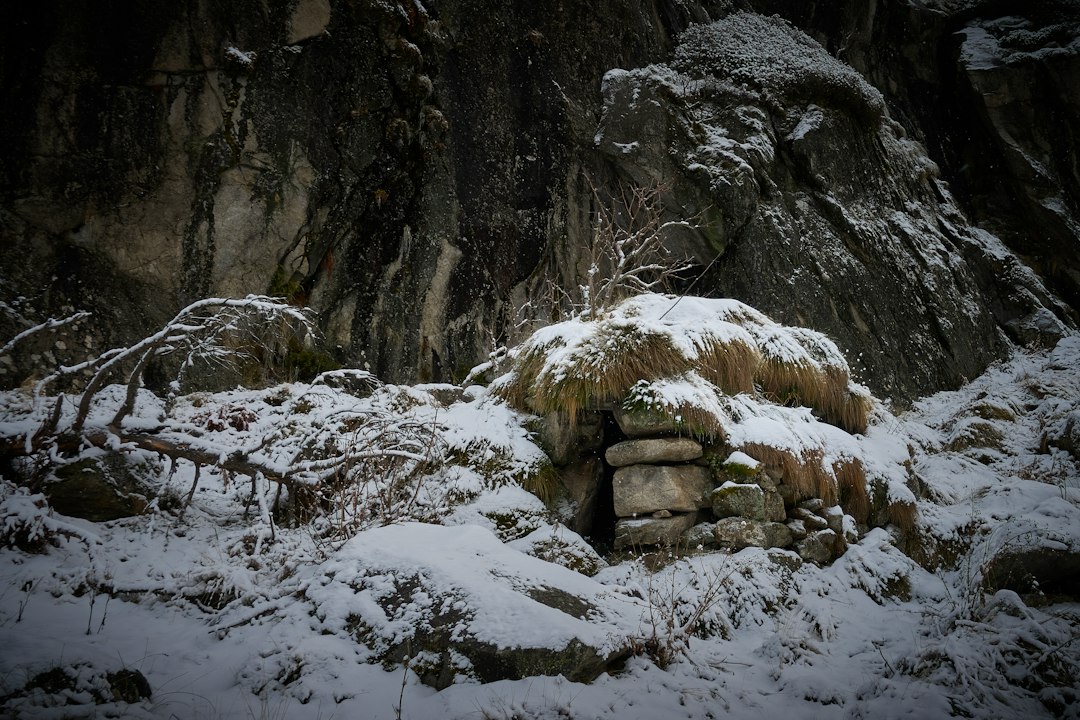
The retreat of glaciers also had profound effects on human settlement patterns. As coastlines receded and inland waterways froze or dried up, humans were forced to adapt their migratory routes and settlement strategies. This often meant seeking refuge in caves, rock shelters, or constructing rudimentary shelters from readily available materials like branches, hides, and mud. The ability to establish and maintain temporary or semi-permanent settlements in a variety of challenging environments speaks to a remarkable degree of flexibility.
In exploring the evolutionary history of Homo sapiens, particularly during the harsh winters of the ancient world, it is fascinating to consider how early humans adapted to their environments. A related article that delves into the broader implications of adaptation and survival strategies can be found at this link. Understanding these historical contexts not only sheds light on our ancestors’ resilience but also informs our current perspectives on human evolution and adaptation in the face of climate challenges.
Cognitive Innovations and Social Networks

While biological adaptations were important, the true differentiator for Homo sapiens during the winter ages was their advanced cognitive abilities and the complex social structures they fostered. These cognitive capacities enabled innovation, problem-solving, and the transmission of knowledge, all of which were crucial for navigating the unforgiving realities of glacial periods.
The Power of Abstract Thought and Planning
The capacity for abstract thought allowed early humans to go beyond immediate needs and engage in long-term planning. This was essential for anticipating seasonal changes, tracking animal migrations, and strategizing for hunts that might require days or even weeks of preparation. The creation of tools, not just for immediate use but for future tasks, also reflects this forward-thinking ability.
The development of symbolic behavior, evidenced by early forms of art, adornment, and possibly ritual practices, suggests a sophisticated level of cognitive development. These expressions might have served to reinforce social bonds, transmit cultural knowledge, or help individuals cope with the stresses of their environment. The ability to conceive of abstract concepts, such as time, season, and shared purpose, would have been instrumental in coordinating group efforts for survival.
The Strength of Collaboration and Communication
Survival in harsh environments is rarely a solitary endeavor. Homo sapiens’ success was deeply rooted in their ability to form complex social groups and cooperate effectively. These social networks provided mutual support, shared labor, and the pooling of resources. A successful hunt might be shared among multiple families, ensuring that everyone benefited from the acquisition of vital protein. The protection offered by a group against predators was also a significant advantage.
Effective communication was the glue that held these social structures together. The development of increasingly sophisticated language, even if rudimentary by modern standards, would have facilitated the planning of hunts, the sharing of information about resources and dangers, and the transmission of crucial survival skills from one generation to the next. The ability to coordinate actions through verbal instruction and shared understanding was a profound evolutionary advantage.
The Legacy of Knowledge Transfer
The winter ages necessitated the accumulation and transmission of a vast amount of survival knowledge. This included understanding the behavior of animals, the properties of plants, the intricacies of toolmaking, and the most effective methods for shelter construction and fire management. This knowledge was not innate; it had to be learned and passed down.
Oral traditions, storytelling, and practical demonstration were likely the primary mechanisms for knowledge transfer. Elders, possessing a lifetime of experience, would have been invaluable repositories of this crucial information. The ability of Homo sapiens to learn from experience, both their own and that of others, and to build upon existing knowledge rather than having to reinvent it repeatedly, conferred a significant adaptive advantage. This cumulative culture allowed them to adapt and innovate at a pace unmatched by other species.
Technological Advancements in the Face of Adversity

The challenges of the winter ages spurred significant technological innovation among Homo sapiens. These advancements were not merely incremental improvements; they often represented fundamental shifts in how humans interacted with and manipulated their environment.
Refining Stone Tool Technology
The Paleolithic period, a vast span of time encompassing much of early human history, is characterized by the development of stone tools. During the winter ages, the selection and shaping of stone became increasingly sophisticated. The Levallois technique, for example, allowed for the efficient production of standardized flakes from a core, providing sharp and versatile cutting edges.
The Mousterian and later Upper Paleolithic toolkits saw an explosion in the variety and complexity of lithic implements. This included not only knives and scrapers but also projectile points for spears and eventually arrows, harpoons for fishing, and tools for woodworking and bone working. The development of specialized tools for specific tasks reflects a deeper understanding of materials and their potential applications.
Beyond Stone: Bone, Antler, and Wood
While stone was a primary material, Homo sapiens also became adept at utilizing other readily available resources. Bone and antler were fashioned into awls, needles, fishing hooks, and decorative items. Wood was likely shaped into spear shafts, digging sticks, and the frameworks for shelters, although few examples of early wooden tools survive due to decomposition.
The integration of different materials, such as hafting stone points onto wooden shafts, created more effective and versatile tools. This ability to combine materials and design composite tools was a significant step in technological advancement, allowing for greater efficiency and precision in hunting, butchering, and other essential activities.
The Hearth as a Technological Hub
The controlled use of fire was, in itself, a profound technological achievement. Beyond providing warmth, fire was used for hardening wooden tools, enabling the creation of more durable and effective implements. It was also crucial for cooking, which not only made food more palatable and digestible but also helped to kill parasites and bacteria, reducing the incidence of disease. The strategic use of fire for clearing land or driving game during hunts also demonstrates a sophisticated understanding of its applications.
Social Organization and Subsistence Strategies
The way early Homo sapiens organized themselves and acquired food was intrinsically linked to their ability to survive the winter ages. These strategies were dynamic and adapted to the prevailing environmental conditions.
Nomadic Lifestyles and Seasonal Movements
During glacial periods, the nomadic lifestyle was often a necessity. As resources became scarce in one area, groups would move to new territories where food and water were more readily available. These movements were often dictated by the seasons and the migratory patterns of game animals. Understanding these patterns and predicting the best times and places to travel was a critical skill.
The size and composition of nomadic groups likely varied. Smaller, more mobile bands might have been more effective at exploiting dispersed resources, while larger groups could have offered greater protection and enabled more ambitious hunting expeditions. The ability to efficiently pack and transport belongings during these movements was also crucial.
The Rise of Specialized Hunting Techniques
Surviving on large game required sophisticated hunting techniques. The development of projectile weapons, such as spears tipped with sharpened points, allowed hunters to engage prey from a safer distance. Evidence of communal hunting, where multiple individuals or groups coordinated their efforts to bring down large animals, points to a high level of social organization and communication.
The processing of carcasses was also a critical skill. Every part of the animal, from the meat and organs to the bones and hides, would have been utilized to maximize the nutritional yield and provide materials for clothing and tools. Understanding the anatomy of prey animals would have been essential for efficient butchering and resource utilization.
Adapting to Shifting Resource Landscapes
While large game was a prime target, the winter ages also demanded flexibility in subsistence strategies. When large game was scarce, early humans likely relied more heavily on smaller animals, fish, and a wider array of plant-based foods. This required a deep knowledge of local ecosystems and the ability to identify and exploit a diverse range of edible resources.
The development of fishing techniques, using hooks, lines, and possibly nets, would have been particularly important in areas with access to rivers or coastlines. The exploitation of marine resources, even during glacial periods when coastlines were altered, demonstrates a remarkable adaptability to new environments.
In exploring the evolutionary history of Homo sapiens, particularly during the harsh winters of the ancient world, one can gain insights into how our ancestors adapted to extreme conditions. These adaptations were crucial for survival and played a significant role in shaping early human societies. For a deeper understanding of how societal structures can evolve and collapse, especially in the context of modern challenges, you might find this article on the rise of artificial intelligence and societal collapse intriguing. It offers a thought-provoking perspective on the parallels between ancient survival strategies and contemporary societal dynamics. You can read more about it here.
The Enduring Legacy of Resilience
| Period | Event/Metric | Description | Approximate Date |
|---|---|---|---|
| Middle Pleistocene | Emergence of Homo sapiens ancestors | Early hominins showing traits leading to modern humans | 700,000 – 300,000 years ago |
| Late Pleistocene | Appearance of anatomically modern Homo sapiens | First evidence of Homo sapiens with modern anatomy | ~300,000 years ago |
| Last Glacial Maximum (Winter Period) | Climate conditions | Coldest phase of the last Ice Age, impacting human migration and survival | ~26,500 – 19,000 years ago |
| Late Pleistocene | Adaptations to cold climates | Development of clothing, fire use, and shelter to survive winter conditions | ~50,000 – 10,000 years ago |
| Holocene | Post-glacial human expansion | Rapid population growth and spread after Ice Age winters ended | ~11,700 years ago to present |
The ability of Homo sapiens to not only survive but to ultimately expand their range and dominance throughout the world is a direct consequence of their capacity to overcome the challenges of the winter ages. These periods of intense environmental pressure acted as a crucible, refining their biological, cognitive, and social traits.
Genetic Adaptations for a Colder World
While behavioral and technological adaptations were paramount, there is also evidence of subtle genetic shifts that may have conferred advantages in colder climates. While speculative, adaptations related to thermoregulation, metabolic efficiency, and resistance to cold-related diseases could have played a role in long-term survival. The relatively recent emergence of certain genetic traits associated with adaptation to cold climates in populations that historically inhabited higher latitudes suggests ongoing evolutionary processes.
The Foundation for Future Expansion
The skills and knowledge honed during the winter ages provided the essential foundation for Homo sapiens’ eventual migration out of Africa and their colonization of every habitable continent. The resilience, ingenuity, and social cohesion developed during these challenging periods proved to be a formidable evolutionary advantage. The ability to adapt to extreme conditions, innovate technologically, and form strong social bonds became hallmarks of our species.
The enduring legacy of the winter ages is etched into our genetic makeup, our cultural practices, and our very capacity for innovation and cooperation. It serves as a powerful reminder that adversity, while a formidable force, can also be a potent catalyst for evolution and the emergence of remarkable resilience. The story of our ancestors braving the cold, the hunger, and the uncertainty of the Ice Age is not just a chapter in human history; it is the very foundation upon which our present and future are built.