
The Paleolithic era, often called the Old Stone Age, spans a massive chunk of human history – from around 2.5 million years ago to about 12,000 BCE. It’s a time when our ancestors developed basic stone tools, learned to control fire, and began to form complex social structures. While we often picture cavemen grunting and hitting rocks, new discoveries are painting a much richer, more sophisticated picture of these early humans, revealing mysteries about their lives, travels, and even their minds.
Journeys Across Vast Distances
It’s easy to imagine Paleolithic humans sticking close to home, but recent findings suggest they were far more mobile and connected than we ever gave them credit for. Think of them as early explorers, charting territories and interacting with distant groups.
Pushing East: Early European Footprints
For a long time, the idea of sophisticated stone tool use, specifically the Acheulean industry characterized by handaxes, was thought to have arrived in Eastern Europe much later. However, discoveries in southern Russia are changing that. We’re talking about handaxes, picks, and cleavers found at sites dating back an astonishing 450,000 to 400,000 years ago. This pushes the known timeline for this technology in Eastern Europe significantly further back, beyond just the Caucasus region. It forces us to reconsider how and when early humans spread across the continent and the routes they might have taken. It’s a bit like finding an ancient passport stamp in a place you thought was off the beaten track.
Ice Age Networks: Europe’s Connected Communities
The last Ice Age wasn’t just about frozen landscapes and survival. New ancient DNA analysis from individuals belonging to the Gravettian culture (dating back over 30,000 years) reveals a remarkably interconnected Europe. Genetic links were found stretching from east to west. This suggests that people weren’t isolated in small pockets. Instead, there were robust networks for long-distance travel, interbreeding, and the sharing of ideas and cultural practices. Imagine these groups as nomadic communities that kept in touch, perhaps following migrating herds or seasonal resources across the continent.
Desert Wanderers: Sophisticated Levant Nomads
Even in seemingly harsh environments, like the high desert of what is now Israel, Upper Paleolithic hunter-gatherers were thriving and connected. Excavations at the Shualim Rockshelter, with finds dating between 47,000 and 36,000 years ago, paint a picture of “cosmopolitan” nomads. They weren’t just using local materials; they were incorporating exotic items and a wide variety of tool types. This points to strong, long-distance contacts and a lively exchange of knowledge and materials. These weren’t isolated survivalists; they were part of a broader cultural landscape.
Sailing the Seas: Southeast Asia’s Ancient Mariners
Perhaps one of the most mind-boggling recent discoveries concerns Southeast Asia, around 40,000 years ago. Evidence from the Philippines, Indonesia, and Timor-Leste, including stone tools and plant processing remains, strongly suggests ancient seafaring capabilities. We’re talking about evidence for rope-making, fishing gear, and, crucially, the remains of pelagic fish – creatures that live in the open ocean, like tuna and sharks. This implies that these early humans were not just paddling around near the coast but were actively navigating and fishing in deep waters. This challenges the long-held view that sophisticated boatbuilding and deep-ocean fishing only emerged much later. It suggests a level of technological and navigational skill that predates many other known maritime achievements.
The Paleolithic era, often shrouded in mystery, offers fascinating insights into the lives of early humans and their interactions with the environment. One intriguing aspect of this period is how ancient climate changes influenced human behavior and societal development. To explore this connection further, you can read the article titled “Lessons from Ancient Climate Crisis: A Historical Perspective,” which delves into the impact of climate on ancient civilizations and draws parallels to contemporary issues. For more information, visit this link.
Minds That Thought and Felt
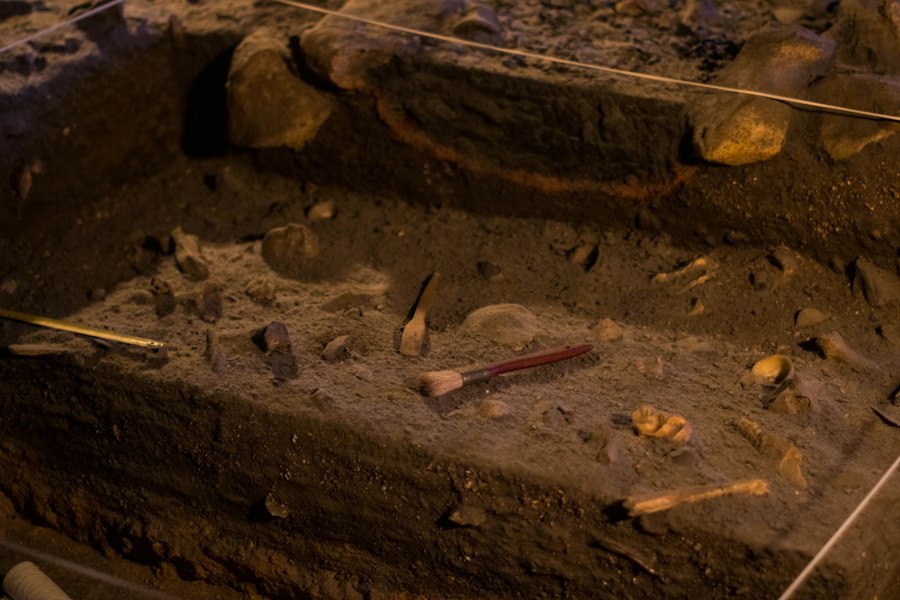
Beyond survival and travel, Paleolithic peoples possessed complex cognitive abilities, indicated by their art, symbolic expressions, and even abstract thought. These discoveries reveal a deeper understanding of their inner lives.
Turtle Symbols: Early Art and Beliefs in Anatolia
In Gedikkaya Cave in Turkey, archaeologists have found around 25 small turtle figurines dating from about 14,500 to 11,200 BCE. Some of these are even coated with clay. While these might seem like simple carvings, their presence suggests symbolic or ritualistic behaviors. These figurines are found at a site bridging the late Paleolithic and early Epipaleolithic periods. This discovery adds to the growing body of evidence for sophisticated art and evolving belief systems in Anatolia during this crucial transitionary period. It suggests that animals, perhaps due to their resilience or life cycles, held significance for these early people.
The “World’s Oldest 3D Map”?
In a rock shelter in the Paris Basin, France, a fascinating artifact has been unearthed that some researchers are tentatively calling the “world’s oldest 3D map.” This is a small, engraved object that appears to represent a miniature landscape. Alongside this, geometric engravings found in Levantine caves also highlight a significant capacity for abstract thinking. These aren’t just random scratches; they are deliberate patterns. This suggests that Paleolithic peoples were capable of not only representing the world around them visually but also of engaging in abstract thought and complex spatial reasoning, possibly for navigation, planning, or even artistic expression.
Ochre Secrets: Hidden Technologies and Symbolism
A 60,000-year-old deposit of ochre from South Africa is revealing even more about our ancestors’ ingenuity. Protein analysis of residues found on this ochre has uncovered previously unrecognized animal exploitation techniques linked to pigment use. This implies that the use of ochre wasn’t just about color; it was part of a more complex system of subsistence, technology, and symbolic behavior than scientists had previously understood. It suggests a deeper connection between how they obtained resources and how they expressed themselves visually.
Rethinking Roles: The Paleolithic Household

One of the most significant shifts in our understanding of the Paleolithic era involves reassessing the roles of men and women. The old stereotype of “man the hunter, woman the gatherer” is increasingly being challenged by solid evidence.
Women Were Hunters Too
A comprehensive review of Paleolithic evidence – looking at burial sites, tool usage, diet analysis, and even skeletal physiology – is finding little support for rigid gender divisions. Over the vast span of the Paleolithic, from 2.5 million to 12,000 years ago, it appears that both men and women were actively involved in hunting and providing meat for their groups. This doesn’t mean everyone did everything equally, but it certainly dismantles the idea of a strict division of labor based solely on sex. It paints a picture of more collaborative and adaptable societies where skills were shared based on aptitude and need.
Fire’s True Power: More Than Just a Warm Glow
The discovery and control of fire was a monumental step for humanity. While we often focus on cooking, recent research suggests that its initial advantages might have been more practical and immediate.
Preserving Meat and Staying Safe
New thinking argues that the primary drivers for early humans adopting fire were not necessarily cooking food, but rather preserving meat and protecting themselves from predators. Think about it: a fire could keep scavengers away from a kill, allowing a group to return later for a fresh meal. It could also act as a deterrent to dangerous animals at night. This reframes our understanding of why and how fire became so central to human evolution. It wasn’t just about making food more digestible; it was about survival in a dangerous world and resource management.
The Paleolithic era, often shrouded in mystery, has captivated historians and archaeologists alike with its enigmatic artifacts and cave paintings that hint at the lives of our ancient ancestors. Recent discoveries continue to shed light on this fascinating period, revealing insights into early human behavior and social structures. For those interested in exploring the broader implications of ancient civilizations and their rulers, a related article discusses the intriguing deceptions employed by ancient leaders, which can be found here. This connection between the distant past and the complexities of leadership offers a compelling perspective on how ancient societies may have shaped their narratives.
Social Dynamics: Even Neanderthals Had Their Conflicts
| Mystery | Description | Estimated Date | Location | Significance |
|---|---|---|---|---|
| Blombos Cave Engravings | Abstract ochre engravings believed to be early symbolic art | ~75,000 years ago | South Africa | Evidence of early cognitive and artistic behavior |
| Venus Figurines | Small statuettes of female figures, possibly fertility symbols | ~28,000 – 22,000 years ago | Europe | Insight into Paleolithic spirituality and social structure |
| Chauvet Cave Paintings | Highly detailed cave paintings depicting animals and hunting scenes | ~32,000 – 30,000 years ago | France | Demonstrates advanced artistic skills and symbolic thought |
| Göbekli Tepe | Stone circle structures with carved pillars, possibly ritualistic | ~11,600 years ago | Turkey | Challenges understanding of hunter-gatherer societies’ complexity |
| La Ferrassie Burial | Neanderthal burial site with grave goods | ~40,000 years ago | France | Indicates early ritualistic burial practices |
While not strictly Homo sapiens, our close relatives, the Neanderthals, offer crucial insights into the social complexities of the Paleolithic. Recent discoveries reveal that their interactions could be brutal.
Neanderthal Cannibalism of Outsiders
Analysis of Neanderthal bones found in the Goyet cave in Belgium, dating between 41,000 and 45,000 years ago, has uncovered chilling evidence of cannibalism. The bones, belonging to women and children from groups not local to the area, show clear signs of butchery, similar to how animal prey would be processed. This indicates that targeted cannibalism occurred, likely for sustenance or as a result of conflict between groups, rather than for ritualistic purposes. It offers a stark glimpse into the harsh social dynamics and territorial struggles that existed among late Neanderthal populations, suggesting that even our ancient relatives faced internal and external threats that shaped their lives.

Life 20,000 Years Ago | When Your Ice Age Family Can’t Feed the Dog
FAQs
What is the Paleolithic era?
The Paleolithic era, also known as the Old Stone Age, is a prehistoric period that lasted from approximately 2.6 million years ago to around 10,000 BCE. It is characterized by the development of early human tools made from stone, as well as the emergence of hunter-gatherer societies.
What are some notable archaeological sites from the Paleolithic era?
Some notable archaeological sites from the Paleolithic era include Lascaux Cave in France, known for its prehistoric cave paintings; Altamira Cave in Spain, famous for its polychrome rock paintings; and the Blombos Cave in South Africa, which has yielded evidence of early human behavior and symbolic thought.
What types of art were created during the Paleolithic era?
Paleolithic art primarily includes cave paintings, carvings, and portable art objects. The cave paintings often depict animals and hunting scenes, while carvings include figurines like the Venus of Willendorf, which is thought to represent fertility or femininity.
What were the living conditions like during the Paleolithic era?
During the Paleolithic era, humans lived in small, nomadic groups and relied on hunting, fishing, and gathering for sustenance. They often sought shelter in caves or constructed temporary dwellings using natural materials. Their lifestyle was heavily influenced by the availability of resources and seasonal changes.
What mysteries remain about the Paleolithic era?
Many mysteries remain about the Paleolithic era, including the exact reasons for the development of symbolic thought and art, the social structures of early human groups, and the specifics of their migration patterns. Additionally, the purpose of certain artifacts and cave paintings continues to be a subject of debate among researchers.