Angkor: The Rise of a Megacity
The sprawling ruins of Angkor, nestled deep within the Cambodian jungle, stand as a colossal testament to human ambition and ingenuity. For centuries, this once-vibrant metropolis flourished, a testament to an advanced civilization that engineered a complex urban landscape on an unprecedented scale. The sheer magnitude of its construction, the intricate detail of its artistry, and the sophisticated hydrological systems that sustained its populace, all point to the rise of a true megacity, a hub of power, religion, and commerce that dominated Southeast Asia for over half a millennium. Understanding Angkor’s ascent requires delving into the social, political, economic, and environmental factors that converged to forge this extraordinary urban center.
The foundations of the Angkorian Empire were not laid in a vacuum. Emerging from a turbulent period of fragmented kingdoms and shifting alliances, the rise of Angkor was a gradual yet inexorable process. The Khmer people, with their rich cultural heritage and a growing understanding of statecraft, gradually consolidated power in the fertile plains of the Tonle Sap lake. This period of consolidation was characterized by a series of ambitious rulers who recognized the strategic importance of the region and began to forge a unified identity and administrative structure.
Unifying the Khmer Lands: Early Monarchs and Strategic Consolidations
Before the legendary rise of Angkor, the Khmer territory was divided amongst various principalities, often vying for dominance. Early kings, though their reigns are often shrouded in myth and legend, played a crucial role in bringing these disparate groups under a single banner. They leveraged both military prowess and diplomatic acumen to forge a supra-regional authority. The strategic control of waterways and fertile agricultural land was paramount in this early stage. These early rulers understood that a powerful, centralized state would require not only military strength but also the ability to organize and mobilize resources for large-scale projects. The establishment of a capital city, however modest it may have been in its earliest iterations, was a critical step in solidifying this nascent power.
The Influence of Indian Religions and Political Ideologies
The cultural and religious landscape of Southeast Asia was profoundly shaped by interactions with India. Hinduism and Buddhism, along with Indian concepts of rulership and kingship, profoundly influenced the nascent Khmer civilization. The concept of the devaraja, or god-king, provided a powerful ideological framework for Angkorian rulers. This divine mandate legitimized their authority, encouraging monumental construction and the subjugation of neighboring territories in the name of their divine right. The intricate symbology within Angkorian temples, depicting scenes from Hindu epics like the Ramayana and the Mahabharata, underscores this deep cultural infusion. This ideological bedrock not only unified the population but also projected an image of divine power to the wider world.
The Strategic Advantage of the Tonle Sap Basin
The location of Angkor in the Tonle Sap basin was no accident; it was a deliberate and highly strategic choice. The Tonle Sap, Southeast Asia’s largest freshwater lake, offered a bounty of resources and a unique ecological advantage. Its seasonal flooding, managed through sophisticated water management systems, provided fertile soil for agriculture, supporting a massive population. The lake itself served as a vital source of protein through its abundant fish stocks. Furthermore, the intricate network of rivers and canals connected to the Tonle Sap provided natural highways for trade, communication, and military movement. This aquatic infrastructure was instrumental in consolidating power and facilitating the empire’s expansion.
The rise of Angkor as a megacity is a captivating subject that intertwines with the exploration of lost technologies in ancient civilizations. For those interested in understanding the advanced engineering and societal structures that contributed to Angkor’s growth, the article “Lost High Technology: A Fascinating Documentary” provides valuable insights. It delves into the remarkable innovations that may have supported the development of such a vast urban center. You can read more about these intriguing concepts in the article available at Lost High Technology: A Fascinating Documentary.
Engineering a Metropolis: The Water Management Revolution
The true marvel of Angkor lies not just in its temples, but in the unseen infrastructure that enabled its existence. The Angkorians were masters of hydraulic engineering, developing a complex system of canals, reservoirs, and barays that transformed the landscape and supported a population that may have rivaled that of contemporary European cities. This mastery of water was the engine that fueled Angkor’s rise, allowing for unprecedented agricultural surplus and a densely populated urban core.
The Role of the Barays: Colossal Reservoirs of Life
The most striking manifestations of Angkorian hydraulic engineering are the barays, vast man-made reservoirs. The East Baray and the West Baray, in particular, are staggering feats of engineering, stretching for miles and capable of holding immense volumes of water. These were not merely decorative ponds; they were vital life support systems. During the dry season, the stored water was meticulously released through an intricate network of canals to irrigate rice paddies, ensuring multiple harvests per year. This agricultural security was the bedrock of Angkor’s prosperity, allowing the empire to sustain a large, non-agricultural workforce needed for construction and administration.
The Network of Canals: Arteries of an Urban Empire
Beyond the barays, a comprehensive network of canals crisscrossed the Angkorian landscape. These canals served multiple purposes. They facilitated the efficient distribution of water from the reservoirs to agricultural lands and to the city itself. They also acted as vital transportation arteries, allowing goods and people to move swiftly and easily across the vast empire. During the monsoon season, canals could be used to manage floodwaters, protecting settlements and infrastructure. This integrated system of water management was a key factor in the density and scale of Angkor as an urban center.
Rice Cultivation and Agricultural Surplus: The Foundation of Power
The sophisticated water management systems directly translated into unparalleled agricultural productivity. The Khmer people developed advanced techniques for rice cultivation, capable of producing a substantial surplus. This surplus was crucial for several reasons. It fed the ever-growing population of the capital city, freeing up a significant portion of the workforce to engage in other pursuits such as construction, art, and religious service. It also provided a commodity for trade, both internally within the empire and externally with neighboring kingdoms, generating wealth and resources that further fueled Angkor’s growth and influence.
The Majestic City of Angkor: A Center of Power and Faith

At the heart of the empire lay the gleaming city of Angkor, a sprawling urban complex that was a marvel of its time. It was not merely a collection of buildings, but a meticulously planned city, organized around religious and political centers, and teeming with life. The sheer scale of construction and the intricate artistry reflect the immense power and wealth of the Angkorian rulers.
Angkor Thom: The Grand Capital and its Precincts
The city of Angkor Thom, meaning “Great City,” was the last and perhaps most glorious capital of the Angkorian Empire. Its construction, initiated by Jayavarman VII in the late 12th century, was an ambitious project designed to showcase the might and piety of the king. Surrounded by a formidable moat and defensive walls, it housed a population of hundreds of thousands. Within its walls lay a meticulously organized urban landscape, featuring palaces, temples, administrative buildings, and residential areas. The Bayon temple, with its enigmatic smiling faces, stands as a central icon of Angkor Thom, radiating an aura of sublime power.
The Temple-Mountain: A Cosmic Axis and Symbol of Kingship
A recurring architectural motif and a defining feature of Angkorian urbanism is the temple-mountain. Structures like Angkor Wat and the Bayon are grand examples of this concept, where the temple symbolizes Mount Meru, the cosmic axis of Hindu and Buddhist cosmology. These monumental structures, often built on artificial hills, were designed to represent the universe and to be the earthly abode of the gods. For the king, they were also potent symbols of his divine status and his connection to the celestial realm, reinforcing his authority and legitimacy in the eyes of his subjects.
The Urban Fabric: Markets, Residences, and Daily Life
Beyond the grand religious and royal complexes, Angkor was a living, breathing city. Archaeological evidence and historical accounts suggest a vibrant urban fabric. bustling markets teemed with merchants trading goods from across the empire and beyond. Residential areas, though less well-preserved than the stone temples, would have housed a diverse population of artisans, laborers, priests, and administrators. The intricately laid out streets and canals would have facilitated the movement of people and the daily rhythms of urban life, painting a picture of a thriving, dynamic metropolis.
Angkor Wat and the Bayon: Icons of Faith and Power
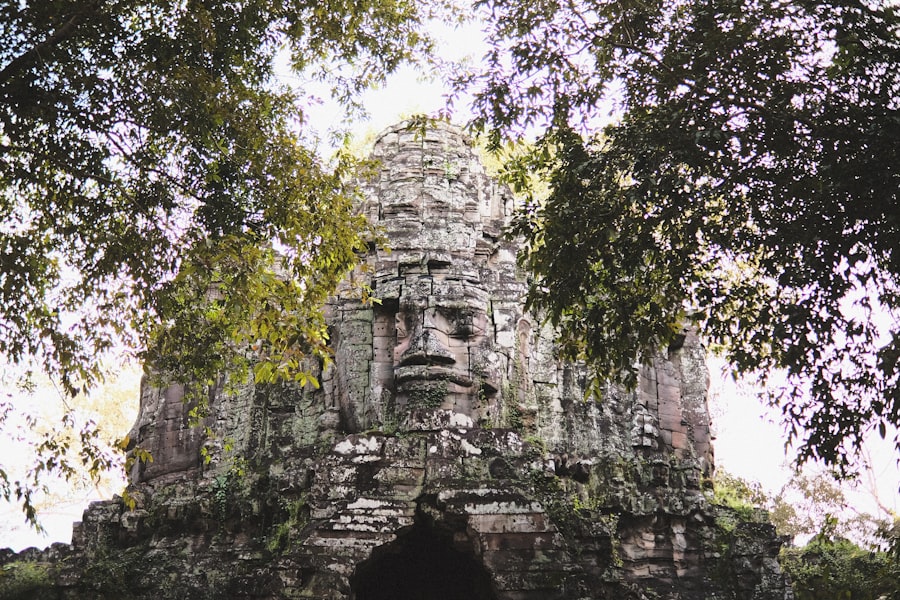
While the entire Angkorian complex is awe-inspiring, Angkor Wat and the Bayon stand as the most iconic and celebrated monuments, embodying the empire’s religious devotion and political ambition. Their sheer scale, intricate artistry, and symbolic significance continue to captivate visitors and scholars alike.
Angkor Wat: A Temple Dedicated to Vishnu and a Celestial Realm
Commissioned by Suryavarman II in the early 12th century, Angkor Wat is the largest religious monument in the world and a masterpiece of Khmer architecture. Originally dedicated to the Hindu god Vishnu, it later transitioned to Buddhist use. Its vast scale, symmetrical design, and the breathtaking bas-reliefs that adorn its walls are unparalleled. These reliefs depict epic Hindu narratives, historical events, and scenes of daily life, offering an invaluable window into Angkorian society. Angkor Wat was not just a temple; it was conceived as a microcosm of the cosmos, a celestial palace on earth, and a powerful statement of the king’s devotion and his empire’s glory.
The Bayon: A Labyrinth of Faces and Mystical Power
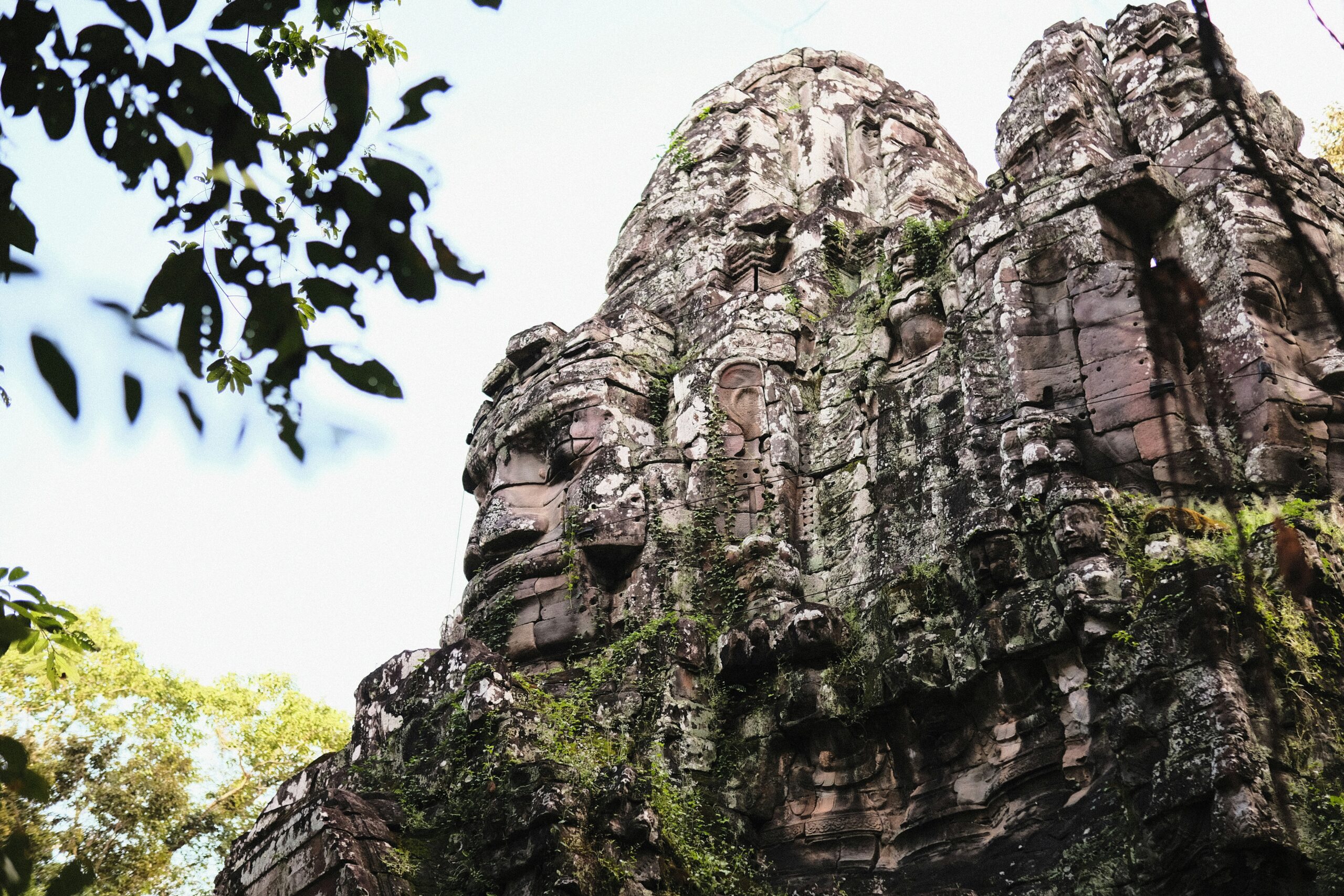
The Bayon, at the center of Angkor Thom, is perhaps the most enigmatic of Angkor’s temples. Built by Jayavarman VII, it is renowned for its multitude of serene, enigmatic faces carved into its towers. These faces, often interpreted as those of Jayavarman VII himself or the bodhisattva Avalokiteshvara, gaze out in all directions, bestowing a sense of watchful benevolence. The Bayon’s architecture is more complex and less geometrically ordered than Angkor Wat, creating a labyrinthine atmosphere that adds to its mystical allure. It served as the state temple of Jayavarman VII and a symbol of his universal sovereignty and his dedication to the welfare of his people.
The Artistry of the Khmer Sculptors: A Legacy in Stone
The artistic achievements of the Angkorian civilization are etched in stone for eternity. The sculptors and artisans who labored on these monumental structures were exceptionally skilled. Their intricate carvings depict an astonishing array of subjects, from celestial dancers (apsaras) and mythical beings to intricate floral motifs and scenes of warfare and daily life. The precision and detail of their work, often carved from sandstone, reveal a deep understanding of aesthetics and a profound dedication to their craft. This artistic legacy is not merely decorative; it is a vital source of information about the beliefs, history, and social structures of the Angkorian people.
The transformation of Angkor into a megacity is a fascinating subject that highlights the complex interplay of urban development, culture, and history. As the Khmer Empire flourished, Angkor became a bustling hub of trade and innovation, drawing people from various regions and contributing to its rapid growth. For those interested in understanding the broader implications of urbanization and international relations, an insightful article can be found here, which discusses key strategies for success in navigating global dynamics that can also be applied to the historical context of cities like Angkor.
The Decline and Rediscovery of a Lost City
| Factors | Contributions |
|---|---|
| Infrastructure | Extensive network of roads, canals, and reservoirs |
| Agriculture | Innovative rice cultivation techniques |
| Trade | Strategic location for trade routes |
| Religion | Construction of numerous temples and religious monuments |
| Population | Growth of a large and diverse population |
Despite its immense power and grandeur, the Angkorian Empire eventually entered a period of decline, leading to its eventual abandonment. The reasons for this decline are complex and have been the subject of much scholarly debate. Following its rediscovery, Angkor captured the imagination of the world, leading to decades of dedicated archaeological work and preservation efforts.
Factors Contributing to the Decline: Environmental and Sociopolitical Pressures
Several theories attempt to explain the disintegration of the Angkorian Empire. Environmental factors, such as prolonged droughts, flooding, and the eventual degradation of their sophisticated water management systems, are often cited. Furthermore, the constant demands of maintaining such a massive urban center, coupled with potentially overly ambitious construction projects, may have strained resources. Sociopolitical pressures, including internal rebellions, succession disputes, and increased pressure from neighboring states, such as the Siamese kingdom of Ayutthaya, also played a significant role. The gradual abandonment of Angkor as the capital, likely occurring over several decades, suggests a complex interplay of these factors.
The Rediscovery and the Dawn of Archaeological Exploration
While Angkor was never truly “lost” to the local Khmer people, it faded from the global consciousness for centuries. It was during the mid-19th century, with the accounts of French explorers like Henri Mouhot, that Angkor was reintroduced to the Western world. Mouhot’s vivid descriptions and illustrations sparked immense interest, leading to a wave of archaeological expeditions. This marked the beginning of extensive research, excavation, and conservation efforts aimed at understanding and preserving this extraordinary heritage.
The Ongoing Legacy: Preservation and Cultural Significance
Today, Angkor is a UNESCO World Heritage site and Cambodia’s premier tourist destination. The ongoing efforts to preserve its magnificent temples from the ravages of time and the elements are crucial. Beyond its historical and architectural significance, Angkor represents a profound source of national pride for Cambodia, embodying the achievements of its ancestors. Its rediscovery and continued study offer invaluable insights into complex societies, advanced engineering, and the enduring power of human creativity, reminding us of the rise and fall of civilizations and the indelible mark they leave on the world.

The Machine That Kept Angkor Alive
FAQs
1. What is Angkor?
Angkor was a megacity located in present-day Cambodia, which was the capital of the Khmer Empire from the 9th to the 15th centuries.
2. How did Angkor become a megacity?
Angkor became a megacity due to the strategic location of the Khmer Empire, which allowed for extensive agricultural production and trade, as well as the construction of elaborate water management systems and impressive architectural structures.
3. What were the key factors contributing to Angkor’s growth as a megacity?
The key factors contributing to Angkor’s growth as a megacity included its centralized political power, advanced agricultural techniques, extensive trade networks, and the construction of elaborate infrastructure such as reservoirs, canals, and temples.
4. What led to the decline of Angkor as a megacity?
The decline of Angkor as a megacity was attributed to a combination of factors, including environmental degradation, climate change, political instability, and the sacking of the city by neighboring powers.
5. What is the significance of Angkor as a megacity in history?
Angkor’s significance as a megacity in history lies in its architectural and engineering achievements, its influence on Southeast Asian culture and society, and its role as a major center of political, economic, and religious power in the region during its peak.