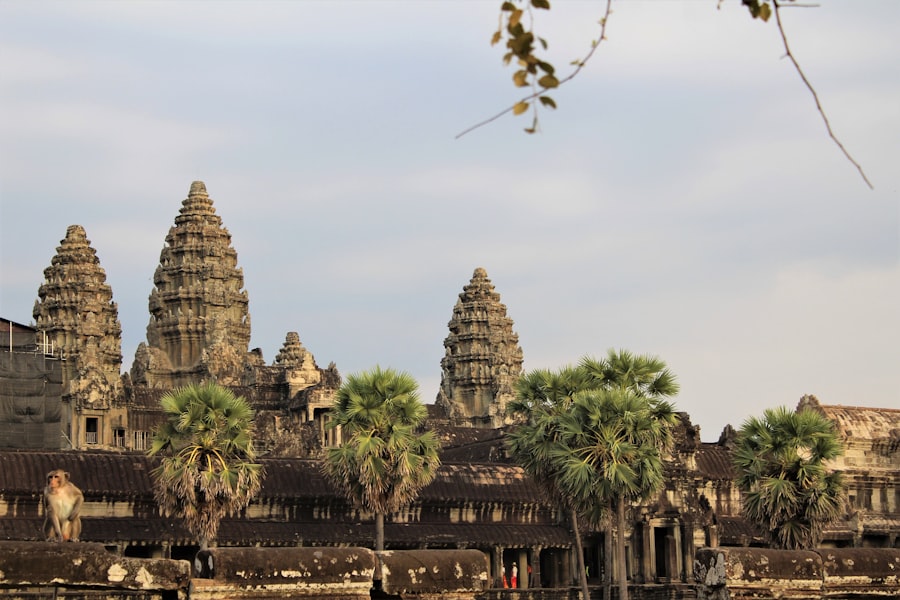
The sun, a molten orb, began its descent, casting a warm, golden glow across the iconic silhouette of Angkor Wat. This colossal temple complex, a testament to the architectural prowess and spiritual devotion of the Khmer Empire, stands as the undisputed jewel of Cambodia. Its soaring towers, intricate bas-reliefs, and sprawling courtyards whisper tales of a civilization that once dominated Southeast Asia, a legacy that continues to captivate the imagination of visitors from around the globe. Angkor Wat is not merely a collection of ancient stones; it is a portal to a past teeming with religious fervor, sophisticated engineering, and a profound understanding of the cosmos.
The story of Angkor Wat is inextricably linked to the rise and eventual zenith of the Khmer Empire, a powerful civilization that flourished in Southeast Asia for over six centuries. From its humble beginnings, the Khmer kingdom grew to become a dominant force, influencing the region’s art, culture, and political landscape for centuries. Understanding the context of its creation is crucial to appreciating the monumental scale and significance of Angkor Wat.
Early Foundations of the Khmer State
The origins of the Khmer people can be traced back to the Funan and Chenla kingdoms, which preceded the Khmer Empire. These early states, influenced by Indian culture and Hinduism, laid the groundwork for the complex societal structures and religious practices that would define the Angkorian era. Archeological evidence suggests early settlements and the adoption of Sanskrit and Brahmanical rituals.
The Influence of Indianization
The concept of “Indianization” is central to understanding the early Khmer civilization. This process involved the adoption of Indian religious, political, and cultural ideas, including Hinduism and Buddhism, as well as concepts of kingship and governance. While often described as Indianization, it’s important to note that this was not a mere replication but rather an adaptation and integration of these influences into existing Khmer traditions.
The Role of Trade and Geography
The strategic location of the Khmer kingdom, facilitating trade routes between India and China, was a significant factor in its prosperity. Access to vital waterways and fertile land provided the resources necessary for growth and the development of sophisticated agricultural techniques. The control of these trade networks also allowed the Khmer rulers to amass wealth and power, essential for funding ambitious construction projects.
The Angkorian Age: A New Golden Era
The Angkorian age, officially beginning in the 9th century CE, marked a period of unprecedented expansion, wealth, and artistic achievement for the Khmer people. This era is characterized by the construction of magnificent temples, the development of advanced irrigation systems, and a highly organized administrative structure.
The Founding of the Capital: Yasodharapura
The creation of the capital city, Yasodharapura, by King Yasovarman I in the late 9th century, was a pivotal moment. This city, strategically built around the Tonle Sap Lake, became the political, religious, and economic heart of the empire. Its scale and organization were indicative of the growing power and ambition of the Khmer rulers.
The Concept of Devaraja: The God-King
A crucial element of Khmer kingship during the Angkorian period was the concept of devaraja, or the “god-king.” This ideology posited that the king was a divine representative on Earth, often linked to Hindu deities like Shiva or Vishnu. This belief instilled immense authority in the ruler and justified the construction of elaborate temples as earthly abodes for the gods and the king’s spiritual legacy. The elaborate ceremonies and rituals associated with the devaraja cult further cemented the king’s power and influence.
The history of the Angkor Wat civilization is a fascinating subject that delves into the architectural and cultural achievements of the Khmer Empire. For those interested in exploring the broader implications of lost civilizations and their legacies, the article “Lost Power Found: A Captivating Documentary” provides insightful perspectives on how ancient societies, including Angkor Wat, have shaped our understanding of history. You can read more about it here: Lost Power Found: A Captivating Documentary.
Forging a Spiritual Sanctuary: The Construction of Angkor Wat
Angkor Wat, the pinnacle of Khmer architectural achievement, was not built in a vacuum. Its construction represents the culmination of centuries of religious and architectural development, driven by a deep spiritual conviction and a desire to express the divine on Earth. The sheer scale and intricate detail of the temple are a testament to the devotion and artistry of its creators.
The Vision of Suryavarman II
The construction of Angkor Wat is primarily attributed to King Suryavarman II, who reigned in the early 12th century. He envisioned a grand temple dedicated to Vishnu, one of the principal deities in Hinduism, as a representation of Mount Meru, the mythical abode of the gods. This ambitious project was designed to be the state temple and the king’s eventual mausoleum, aimed at ensuring his passage into the afterlife and glorifying his reign.
Architectural Influences and Innovations
While deeply rooted in Indian architectural principles, Angkor Wat also showcases unique Khmer innovations. The temple’s symmetrical design, concentric galleries, and the famous five lotus-bud towers are distinct features. The use of sandstone as the primary building material, along with laterite and brick, allowed for the creation of massive structures and intricate carvings.
The Symbolic Representation of the Cosmos
Angkor Wat’s layout and design are imbued with profound cosmic symbolism. The central sanctuary, with its towers, represents Mount Meru, while the moat surrounding the temple symbolizes the cosmic ocean. The entire complex is a microcosm of the Hindu universe, meticulously crafted to reflect divine order and harmony. Each element, from the orientation of the temple to the placement of its various courtyards, held a specific meaning within this grand cosmic scheme.
The Enigmatic Role of Buddhism
While Angkor Wat is predominantly Hindu in its iconography and original dedication, the later introduction and eventual dominance of Buddhism in Khmer society led to its adaptation as a Buddhist temple. This transformation, occurring over centuries, is evident in the presence of Buddhist sculptures and iconography that were later incorporated into the existing structure. This adaptability of the temple underscores the evolving spiritual landscape of the Khmer Empire.
The Transition from Hinduism to Buddhism
The shift from Hinduism to Buddhism was a gradual process, influenced by various factors, including the arrival of Buddhist monks and the kings’ adoption of Buddhist principles. While the core structure of Angkor Wat remained, new religious practices and imagery were integrated, reflecting the changing spiritual beliefs of the population. This syncretic nature of Khmer religion is a fascinating aspect of its history.
The Masterful Craftsmanship of the Khmer Artisans
The creation of Angkor Wat involved an immense workforce and highly skilled artisans. The precision of the stonecutting, the intricate bas-reliefs, and the overall structural integrity of the temple speak volumes about their expertise. These artisans, working for decades, brought to life the visions of their kings and the intricacies of their religious beliefs. Their legacy is etched in every stone.
The Art of Bas-Relief: Storytelling in Stone
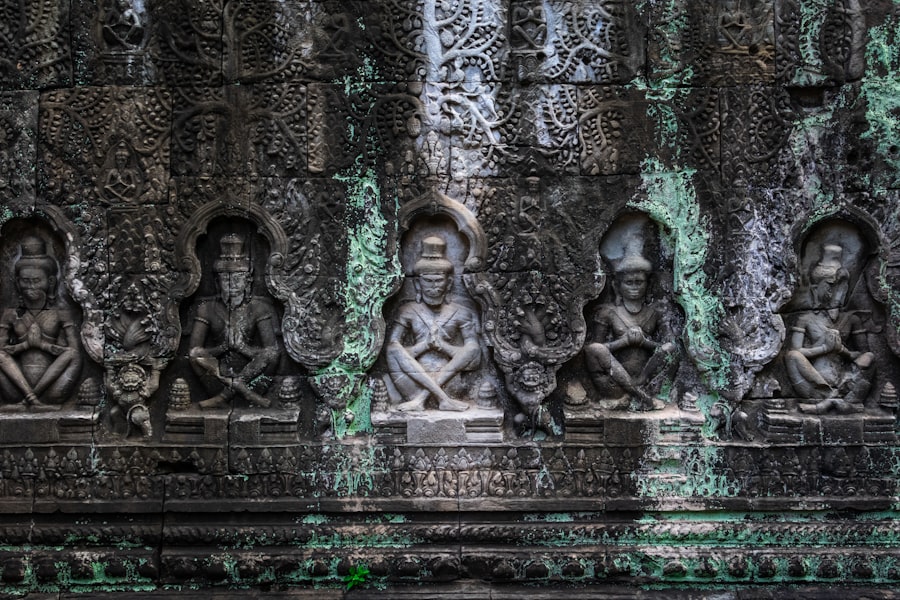
The bas-reliefs adorning the walls of Angkor Wat are among its most captivating features. These elaborate carvings depict scenes from Hindu epics like the Ramayana and the Mahabharata, historical events, and the daily life of the Khmer people. They serve as a visual chronicle of the empire’s rich cultural heritage and religious narratives, offering invaluable insights into their worldview. The Churning of the Ocean of Milk is a particularly famous and detailed relief, showcasing the epic struggle between gods and demons.
The Grandeur and Geometry of Angkor Thom
While Angkor Wat often steals the spotlight, the nearby city of Angkor Thom stands as another testament to the architectural genius of the Khmer Empire. This vast walled city, with its impressive temples and imposing gates, served as the capital for many Khmer rulers and housed some of their most significant religious and political structures.
The Legacy of Jayavarman VII
Angkor Thom is largely associated with the reign of King Jayavarman VII (late 12th to early 13th century), one of the most prolific builders of the Angkorian era. He transformed the capital into a mahayana Buddhist center, commissioning numerous temples and public works, including the iconic Bayon temple. His reign marked a shift towards Mahayana Buddhism, and his architectural projects reflected this profound spiritual commitment.
The Bayon Temple: Faces of Compassion
The Bayon temple, located at the center of Angkor Thom, is renowned for its multitude of serene, smiling faces carved onto its towers. These enigmatic faces, often interpreted as those of Jayavarman VII himself or compassionate bodhisattvas, gaze out in all directions, embodying a sense of universal watchfulness and benevolence. The sheer number and artistry of these faces are what make the Bayon a truly awe-inspiring and unique monument.
The Terrace of the Elephants and the Terrace of the Leper King
Other significant structures within Angkor Thom include the Terrace of the Elephants and the Terrace of the Leper King. These grand platforms, adorned with intricate carvings of elephants and mythical figures, served as ceremonial stages for royal processions and public audiences. They further demonstrate the Khmer rulers’ desire to impress and connect with their subjects through magnificent public spaces.
The Ingenuity of Khmer Urban Planning
The city of Angkor Thom itself reflects a sophisticated understanding of urban planning. Its grid-like layout, defensive walls, and intricate network of canals and reservoirs demonstrate a practical and organized approach to city management. The efficient management of water resources, in particular, was crucial for sustaining the large population and agricultural productivity of the capital.
Water Management Systems: The Lifeblood of the Empire
The Khmer Empire was remarkably adept at water management. Their advanced irrigation systems, including reservoirs (barays) and canals, were essential for agriculture, providing a reliable water supply for rice cultivation, which formed the backbone of their economy. These systems not only supported their population but also allowed for surplus production, contributing to the empire’s wealth and power.
The Unraveling of a Civilization: Decline and Rediscovery
Like all great empires, the Khmer civilization eventually faced decline. The reasons for this decline are complex and debated by historians, but the eventual abandonment of Angkor as the capital led to its gradual absorption by the jungle. However, the resilience of its structures and the persistent knowledge of its existence ensured its eventual rediscovery.
Factors Contributing to the Decline
Several theories attempt to explain the decline of the Khmer Empire. These include environmental factors such as soil degradation and water management system failures, the rise of neighboring powers like the Siamese (Thai) kingdom, internal political instability, and shifts in religious ideology. It is likely a combination of these factors that led to the gradual weakening and eventual collapse of the empire’s centralized authority.
Environmental Challenges and Resource Strain
Over-reliance on intensive agriculture and the strain on natural resources may have contributed to environmental degradation. Changes in climate patterns or the mismanagement of their sophisticated water systems could have led to agricultural decline, impacting the empire’s ability to sustain its population and its vast construction projects.
The Rise of Neighboring Powers
The emergence of powerful neighbors, particularly the Siamese kingdom, posed a significant military threat. Throughout the later Angkorian period and beyond, conflicts with these rising powers led to territorial losses and the eventual sacking of Angkor, contributing to the empire’s weakening.
The Rediscovery of the ‘Lost City’
For centuries, Angkor remained largely hidden, its magnificent temples swallowed by the dense jungle. While local populations were aware of its existence, it was the Western explorers and archaeologists of the 19th century who brought Angkor back into global consciousness. Their accounts and subsequent archaeological work sparked renewed interest in this extraordinary lost civilization.
The Persistent Legends and Local Knowledge
It is crucial to acknowledge that Angkor was never truly “lost” to the local Cambodian people. Legends and oral traditions kept its memory alive, and the temples continued to be a site of religious significance for some. The rediscovery by the West was more of a reintroduction to the wider world.
Early Western Explorations and Documentation
French explorers and botanists, such as Henri Mouhot in the mid-19th century, were among the first Westerners to document their encounters with Angkor, their vivid descriptions fueling fascination and prompting further scientific investigation. Their published works, filled with awe-inspiring accounts and illustrations, painted a picture of a civilization of unparalleled grandeur.
The history of the Angkor Wat civilization is a fascinating topic that reveals the complexities of ancient societies and their architectural achievements. For those interested in exploring how civilizations can rise and fall, a related article discusses the broader implications of societal structures and their vulnerabilities in the face of change. You can read more about this intriguing connection in the article on the rise of artificial intelligence and societal collapse, which can be found here. This perspective can provide valuable insights into the dynamics that shaped not only Angkor Wat but also other great civilizations throughout history.
Angkor Wat Today: A Symbol of Cambodian Identity
| Time Period | Events |
|---|---|
| 9th-13th century | Construction of Angkor Wat and rise of Khmer Empire |
| 15th century | Decline of Angkor Wat civilization due to Thai invasions |
| 19th century | Rediscovery of Angkor Wat by European explorers |
| 20th century | Restoration and preservation efforts of Angkor Wat |
Today, Angkor Wat stands not only as a UNESCO World Heritage site and a major tourist attraction but also as a profound symbol of Cambodian national identity and pride. The enduring spirit of the Khmer people is intrinsically linked to the magnificence of this ancient wonder.
Preserving a Priceless Heritage
The preservation of Angkor Wat and the wider Angkor Archaeological Park is a monumental undertaking. Ongoing efforts by Cambodian authorities and international organizations focus on conservation, restoration, and sustainable tourism to ensure that this invaluable heritage is protected for future generations.
Challenges of Conservation and Restoration
The sheer scale of the complex and the ravages of time, weather, and past conflicts present significant challenges to conservationists. Restoring decaying structures while respecting their historical integrity requires meticulous planning, specialized expertise, and substantial financial resources. The delicate balance between preservation and accessibility is a constant consideration.
The Impact of Tourism on the Site
Tourism, while crucial for Cambodia’s economy and for raising awareness about Angkor, also presents its own set of challenges. Managing visitor numbers, mitigating environmental impact, and ensuring respectful engagement with the site are vital aspects of sustainable tourism. Balancing economic benefits with the need for preservation remains a critical ongoing effort.
Angkor Wat in Modern Cambodian Culture
Angkor Wat is deeply interwoven into the fabric of modern Cambodian culture. Its image is ubiquitous, appearing on currency, national emblems, and in artistic expressions. It serves as a powerful reminder of Cambodia’s glorious past and an enduring source of national pride and resilience.
A Beacon of Hope and Resilience
For the Cambodian people, Angkor Wat represents more than just ancient ruins. It embodies their rich history, their artistic achievements, and their enduring spirit. In the face of past hardships, the magnificent structures of Angkor stand as a testament to their strength and their ability to rebuild and reclaim their heritage.
Angkor Wat, with its majestic spires piercing the Cambodian sky, is an enduring marvel. It is a place where history whispers from every stone, where the ingenuity of ancient engineers meets the depth of spiritual devotion. The Khmer Empire may have faded, but its masterpiece, Angkor Wat, continues to inspire awe, to educate, and to serve as a timeless bridge to a civilization that shaped the very soul of Southeast Asia. Its story is far from over; it is a continuing narrative of human endeavor, artistic brilliance, and the profound quest for the divine.

The Machine That Kept Angkor Alive
FAQs
What is Angkor Wat?
Angkor Wat is a temple complex in Cambodia and the largest religious monument in the world. It was built in the early 12th century by the Khmer King Suryavarman II as a Hindu temple dedicated to the god Vishnu.
What was the Angkor Wat civilization?
The Angkor Wat civilization refers to the Khmer Empire, which was a powerful Hindu-Buddhist empire that ruled much of Southeast Asia from the 9th to the 15th centuries. The civilization was known for its impressive architecture, including the construction of Angkor Wat.
What was the significance of Angkor Wat civilization?
The Angkor Wat civilization was significant for its advanced infrastructure, including a sophisticated water management system and extensive road networks. It was also known for its art, literature, and religious influence, which spread throughout Southeast Asia.
What led to the decline of the Angkor Wat civilization?
The decline of the Angkor Wat civilization is attributed to a combination of factors, including environmental degradation, political instability, and invasions from neighboring empires. The empire eventually shifted its capital to Phnom Penh, leading to the abandonment of Angkor.
What is the legacy of the Angkor Wat civilization?
The legacy of the Angkor Wat civilization can be seen in the enduring influence of Khmer culture, art, and architecture in Cambodia and the surrounding region. Angkor Wat remains a symbol of national pride and is a UNESCO World Heritage site, attracting millions of visitors each year.