
The vast, desolate expanse of Greenland, perpetually locked in ice, holds a secret that belies its seemingly frozen tranquility. During the height of the Cold War, amidst the geopolitical tensions between the United States and the Soviet Union, a clandestine project was born from the icy heart of the Arctic: Camp Century. Officially, it was presented as a scientific research station, a testament to American ingenuity and a beacon of progress in the unforgiving polar environment. However, beneath the veneer of scientific inquiry lay a far more ambitious and terrifying objective, a purpose so strategic and so fraught with peril that its full implications were only understood decades later. This was not merely a base for studying ice cores or meteorology; it was a strategic weapon, a hidden dagger pointed at the heart of the enemy, conceived in the shadow of nuclear annihilation.
Genesis of a Subterranean Fortress
The genesis of Camp Century can be traced back to the intense strategic thinking of the early Cold War. As the United States and the Soviet Union engaged in a global chess match, both superpowers recognized the immense strategic value of the Arctic. Its proximity to both continents made it a crucial theater for potential conflict, particularly in the realm of missile delivery. The vast, sparsely populated, and ice-covered landscape offered a unique operational environment, both for observation and for offensive capabilities.
The Growing Shadow of Nuclear Warfare
The advent of nuclear weapons fundamentally reshaped military strategy. The concept of “Mutually Assured Destruction” (MAD) began to take hold, a terrifying doctrine where any nuclear attack by one side would inevitably lead to the complete annihilation of both. This created an imperative for both the US and the USSR to develop methods of delivering nuclear payloads with speed and stealth, and equally, to protect their own retaliatory capabilities from a first strike.
America’s Arctic Ambitions
The United States, acutely aware of the Soviet Union’s growing military might and its expanding reach into the Arctic, sought to establish a dominant presence in the region. Early reconnaissance flights and the development of early warning systems like the Distant Early Warning (DEW) Line highlighted the strategic importance of this frozen frontier. However, simply observing from afar was insufficient; a tangible, operational presence was deemed necessary to deter Soviet aggression and project American power.
The Challenge of the Arctic Environment
Operating in the Arctic presented immense logistical and engineering challenges. The extreme cold, the perpetual darkness of winter, and the dynamic nature of the ice all posed significant obstacles. Traditional bases were difficult to maintain, vulnerable to the elements, and easily detectable. The need for a secure, permanent, and operational facility that could withstand these harsh conditions was paramount.
Camp Century was built in Greenland during the Cold War as part of a secret U.S. Army project aimed at testing the feasibility of establishing a nuclear missile base in the Arctic. The camp served as a research facility and a base for studying the effects of climate and environment on military operations in extreme conditions. For a deeper understanding of historical military strategies and their implications, you might find the article on the Piri Reis map insightful, as it explores the connections between ancient navigation and modern military tactics. You can read more about it here: Uncovering the Source Documents of the Piri Reis Map.
Project Iceworm: The True Purpose Revealed
The official narrative of Camp Century as a purely scientific endeavor was a carefully constructed facade. The true purpose, codenamed “Project Iceworm,” was a far more audacious and chilling proposition: to house and launch intercontinental ballistic missiles (ICBMs) from beneath the Greenland ice sheet. This subterranean missile base was intended to provide a secure and survivable platform for nuclear deterrence, capable of reaching targets deep within the Soviet Union while remaining hidden from Soviet surveillance.
The Stealth Advantage of the Ice Sheet
The logic behind Project Iceworm was rooted in the perceived invulnerability offered by the Greenland ice sheet. By excavating tunnels and constructing launch facilities deep within the ice, the US military hoped to create a missile base that would be undetectable by Soviet reconnaissance and exceptionally difficult to attack. The sheer mass of ice would provide natural protection against conventional attacks, and its remote location would make a surprise nuclear strike incredibly challenging.
The “Mobile” Missile Concept
A key aspect of Project Iceworm was the concept of a “mobile” missile base. The idea was to construct a network of tunnels and caverns within the ice, allowing for the relocation of missile launch positions. This mobility would further enhance survivability, as it would be virtually impossible for the Soviets to pinpoint and target all potential launch sites simultaneously. The missiles themselves would be housed in launchers that could be moved along a track system within the tunnels.
Strategic Implications for the Cold War Balance
The successful implementation of Project Iceworm would have dramatically altered the strategic balance of the Cold War. It would have provided the United States with a significant first-strike capability, allowing for the projection of nuclear power directly from the Arctic. This could have served as a powerful deterrent against Soviet aggression and potentially influenced the course of future negotiations and conflicts.
The Scale of the Undertaking
The ambition of Project Iceworm was immense. It envisioned a vast network of tunnels, stretching for miles beneath the ice, housing living quarters, support facilities, power generators, and, crucially, launch silos for nuclear missiles. The sheer engineering feat required to excavate and maintain such a complex underground facility in the Arctic was unprecedented.
Constructing the Subterranean City
The construction of Camp Century was a monumental undertaking, a testament to American engineering and a demonstration of the nation’s commitment to its strategic objectives. From 1959 to 1960, a team of engineers, soldiers, and laborers worked tirelessly in extreme conditions to bring this ambitious project to life. The camp was designed to be a self-sufficient, subterranean city, a marvel of temporary construction that would eventually become a permanent fixture in the Arctic landscape.
The “Cut-and-Cover” Technique
The primary construction method employed was a “cut-and-cover” technique. Large trenches were excavated into the ice, and prefabricated modules and infrastructure were lowered into these trenches. The ice was then allowed to refreeze around these structures, effectively encasing them and providing a degree of natural insulation and structural support.
Prefabricated Modules and Infrastructure
The camp consisted of over 60 prefabricated modules, each designed for a specific purpose. These included living quarters, a mess hall, a hospital, a laundromat, a workshop, a power plant, and importantly, the infrastructure necessary to house and maintain the missile launch facilities. Roads were built within the ice tunnels, allowing for the movement of personnel and equipment.
Powering the Arctic Metropolis
A significant challenge was providing a reliable power source for the camp. A nuclear reactor, the PM-2A, was installed to generate electricity. This provided a continuous and substantial power supply, crucial for maintaining the camp’s operations and its complex systems. The reactor was a marvel of engineering in itself, designed to operate in the harsh Arctic environment.
Addressing the Environmental Challenges
The construction and operation of Camp Century were fraught with environmental challenges. The constant threat of ice melt, snow accumulation, and the sheer difficulty of working in sub-zero temperatures required innovative solutions and constant vigilance. Despite these challenges, the initial construction was remarkably swift, a testament to the urgency and resources dedicated to the project.
The Unforeseen Consequences: A Nuclear Time Bomb
While Project Iceworm was conceived with strategic brilliance, it harbored a fatal flaw: the inherent instability of the Arctic environment. The ice, though seemingly solid, is a dynamic and ever-changing medium. The heat generated by the camp’s operations, particularly the nuclear reactor, and the warming global temperatures began to exert their inevitable influence, creating a slow-motion environmental disaster that threatened to expose the secrets buried within.
The Destabilizing Power of Heat
The most significant threat to Camp Century’s longevity was the heat generated by its operations. The nuclear reactor, living quarters, and other facilities produced a considerable amount of heat, which began to melt the surrounding ice. This melting created instability, causing the tunnels to sag and the structures to shift.
The Unpredictable Nature of Glacial Movement
Beneath the surface, the Greenland ice sheet is not static. It flows and shifts, a slow but relentless movement. This glacial movement put immense pressure on the underground structures, causing them to deform and, in some cases, to collapse. The “mobile” missile concept, intended to enhance survivability, became a potential vector for the dispersal of radioactive material as tunnels shifted and broke apart.
The Growing Threat of Radioactive Contamination
The presence of a nuclear reactor and the potential for nuclear missiles raised the specter of catastrophic radioactive contamination. As the ice melted and the structures degraded, the risk of leaks and spills increased. The possibility of radioactive material being released into the environment, carried by meltwater into the ocean, was a terrifying prospect.
The Long-Term Environmental Legacy
Even after its abandonment, Camp Century left behind a potentially hazardous environmental legacy. Buried beneath tons of ice and snow are the remnants of the camp, including potentially hazardous materials and radioactive waste from the reactor. The slow melt of the ice sheet means that these materials will eventually be exposed to the environment, posing a long-term risk.
Camp Century was built in Greenland during the Cold War as part of a secret U.S. military project aimed at establishing a base for nuclear missile launch capabilities and conducting research in the Arctic environment. The project was not only a strategic military initiative but also an experiment in constructing a facility beneath the ice, showcasing the lengths to which the U.S. was willing to go in the name of national security. For a deeper understanding of how military strategies have evolved over time, you can explore this related article on the United States’ current lunar strategies at United States Space Forces Lunar Strategy.
The End of an Era and the Lingering Questions
By the late 1960s, it became clear that Camp Century, and by extension Project Iceworm, was no longer a viable strategic asset. The engineering challenges proved insurmountable, the environmental risks too great, and the political climate shifted. The project was officially decommissioned, and the secrets buried beneath the ice were largely forgotten, or at least, publicly relegated to the realm of historical footnotes.
The Decommissioning and Abandonment
The decision to abandon Camp Century was driven by a combination of factors. The escalating costs of maintenance, the growing understanding of the environmental dangers, and the development of new missile technologies rendered the subterranean base obsolete. The camp was officially closed in 1966, and its inhabitants were evacuated.
The Ice Claims its Own
Following its abandonment, the ice sheet began to reclaim Camp Century. The tunnels collapsed, the modules were buried, and the once-thriving subterranean city disappeared beneath the frozen surface. The relentless forces of nature, which the project had sought to harness, ultimately proved its undoing.
The Lingering Threat of Nuclear Waste
Despite the decommissioning, the threat of radioactive contamination from the abandoned nuclear reactor remains a concern. While efforts were made to remove spent fuel, some residual radioactive material may still be present. As the ice sheet continues to melt due to climate change, the long-term consequences of this buried waste are uncertain.
The Ethical and Historical Implications
The story of Camp Century and Project Iceworm raises profound ethical and historical questions. It highlights the lengths to which nations will go in pursuit of strategic advantage during times of geopolitical tension, even at the risk of catastrophic environmental damage. The project serves as a stark reminder of the hidden dangers that can lie beneath the surface, both literally and figuratively, and the importance of understanding the full implications of our technological ambitions. The secret purpose of Camp Century, once a closely guarded military secret, now stands as a cautionary tale from the heart of the Arctic Cold War.
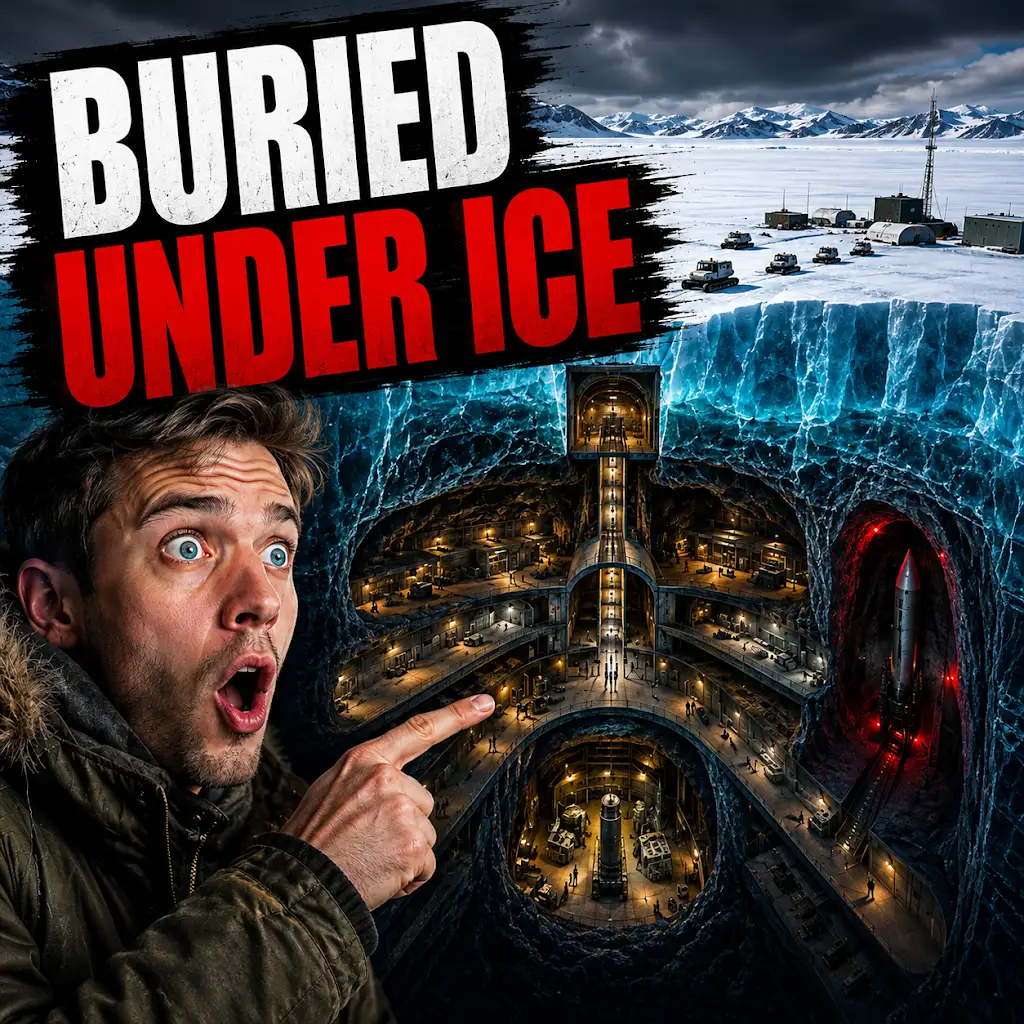
The U.S. Built a Nuclear City Under Greenland. The Ice Won.
FAQs
What is Camp Century?
Camp Century was a military base built by the United States Army Corps of Engineers in Greenland during the Cold War. It was constructed in 1959 as part of a secret project known as “Project Iceworm.”
Why was Camp Century built in Greenland?
Camp Century was built in Greenland as part of the United States’ efforts to establish a strategic military presence in the Arctic region during the Cold War. The location was chosen for its proximity to the Soviet Union and its potential as a site for launching nuclear missiles.
What was the purpose of Camp Century?
The primary purpose of Camp Century was to house and support a mobile nuclear reactor and a network of tunnels that would serve as a launch site for ballistic missiles aimed at the Soviet Union. It was also intended to conduct scientific research on the feasibility of deploying military infrastructure in the Arctic.
What happened to Camp Century?
Camp Century was abandoned in 1967 due to concerns about the stability of the ice sheet and the environmental impact of the base. The nuclear reactor and other infrastructure were removed, but the camp’s tunnels and other structures were left behind and have since been buried under layers of ice and snow.
What is the current status of Camp Century?
In recent years, there has been renewed interest in Camp Century due to the effects of climate change on the Greenland ice sheet. As the ice melts, there are concerns about the potential release of pollutants and radioactive waste from the camp’s abandoned infrastructure. Discussions are ongoing between the United States and Denmark, which governs Greenland, about addressing these environmental and geopolitical challenges.