
The wind howled across the desolate Greenland ice sheet, a relentless force shaping the landscape and challenging human endeavor. For the United States Army, this unforgiving environment was not a deterrent but a canvas for an audacious experiment: Camp Century. More than just a military outpost, Camp Century was a testament to ingenuity, ambition, and the unwavering human spirit’s ability to conquer the seemingly impossible. This article delves into the fascinating history of Camp Century, the US Army’s remarkable Arctic construction project, exploring its origins, the incredible engineering feats involved, the scientific pursuits it enabled, and its ultimate legacy.
The story of Camp Century is inextricably linked to the geopolitical climate of the Cold War. As tensions escalated between the United States and the Soviet Union, the Arctic region, once a remote and largely ignored territory, became a strategic frontier. The vast, icy expanse offered a potential route for intercontinental ballistic missiles and submarines, making surveillance and presence in the region paramount.
The “Polaris” Vision
A key driver for Arctic exploration and military development was the United States’ burgeoning Polaris ballistic missile program. The Navy envisioned submarines armed with these missiles capable of launching from beneath the polar ice cap, a concept that demanded a deep understanding of the Arctic environment and the logistical challenges it presented. Camp Century, with its focus on sustained operations in extreme conditions, was seen as a crucial stepping stone in validating such ambitious military strategies.
Early Arctic Exploration and Research
Prior to Camp Century, the US Army and other branches of the military had conducted various expeditions and established smaller research stations in the Arctic. These early ventures provided invaluable, albeit often hard-won, knowledge about ice dynamics, cold-weather survival, and the logistical hurdles of operating in polar regions. The experiences gained from places like the Thule Air Base in Greenland laid some of the foundational understanding necessary for a project as large as Camp Century.
Project Iceworm: The Covert Mandate
Beneath the overt justifications of scientific research and strategic presence lay a more covert objective: Project Iceworm. This ambitious, and ultimately classified, endeavor aimed to explore the feasibility of constructing a network of underground missile launch facilities beneath the Greenland ice sheet. Camp Century, though presented as a scientific research station, served as a crucial testbed for the technologies and techniques required for such a massive undertaking. The scale of the proposed missile complex was staggering, envisioning thousands of soldiers housed in hundreds of miles of tunnels.
The construction of Camp Century by the US Army during the Cold War was a fascinating endeavor that showcased the military’s innovative approach to Arctic warfare and research. For those interested in exploring how historical maps and theories can reveal hidden narratives, a related article discusses the intriguing Piri Reis map and its implications for our understanding of lost civilizations. You can read more about it in this article: Uncovering the Lost Civilization: Piri Reis Map Theory.
Engineering the Unimaginable: Tunnels in the Ice
The most striking aspect of Camp Century was its construction: a network of over a mile of tunnels carved into the Greenland ice sheet. This was not simply digging into frozen earth; it was excavating and stabilizing a structure within a dynamic, constantly shifting mass of ice. The engineering challenges were unprecedented, requiring innovative solutions and a deep understanding of glaciology.
The “Cut and Cover” Method
The primary construction method employed was a sophisticated version of “cut and cover.” Large sections of ice were excavated using heavy machinery, creating open trenches. Prefabricated modules, essentially buildings and infrastructure components built in temperate climates, were then transported to the site, lowered into the trenches, and covered with more ice. This process was repeated to create a sprawling network of interconnected tunnels.
Precision Excavation
The precision required for excavating the ice was paramount. Deviations in depth or width could lead to structural instability or compromised the integrity of the ice roof. Specialized equipment, including crawler tractors and graders, were modified for operation in extreme cold and on the icy terrain. Experienced operators, often veterans of earlier Arctic expeditions, were essential for this delicate work.
The Ice Roof: A Dynamic Shield
The ice roof, while providing a natural shield against the elements and potential enemy observation, was also the project’s greatest challenge. The ice sheet is not static; it flows, albeit slowly, and is subject to melting and refreezing cycles. Engineers had to account for these movements, designing the tunnels to withstand pressure and thermal expansion.
Prefabricated Modules: Efficiency in the Extreme
To overcome the logistical difficulties of constructing on-site in such a harsh environment, the Army relied heavily on prefabricated modules. These modules, manufactured in the United States, were designed for rapid assembly and installation. They housed everything from living quarters and mess halls to laboratories and power generation facilities. The modular approach allowed for a more controlled construction process and reduced the amount of on-site fabrication needed in the frigid Arctic.
Transporting the Giant Pieces
The logistics of transporting these massive prefabricated modules to a remote location on the Greenland ice sheet were Herculean. They were shipped by sea to Thule Air Base and then transported inland by specialized ice-traversing vehicles. The journey across the rough, unpredictable ice could take weeks, with constant risks of equipment breakdown and navigational hazards.
Powering the City Beneath the Ice
Providing a reliable source of power for Camp Century was a critical concern. The station was designed to be largely self-sufficient. A nuclear reactor, the PM-2A, was a cornerstone of its energy infrastructure. This compact reactor provided electricity and heat, allowing for comfortable living conditions and the operation of scientific equipment.
The PM-2A Reactor: A Technological Marvel
The deployment of a nuclear reactor in such an extreme and remote location was a significant technological achievement. It offered a powerful and consistent energy source, eliminating the reliance on bulky and less efficient fossil fuels that would have been challenging to transport in sufficient quantities. The reactor’s operation was carefully managed, with a dedicated team of technicians and engineers ensuring its safety and efficiency.
Redundancy and Backup Systems
Recognizing the potential for failures in such a challenging environment, redundant power systems and backup generators were in place. This ensured that even in the event of a primary system failure, essential services could be maintained, a crucial consideration for personnel safety and ongoing operations.
A Hub of Scientific Discovery: Beyond Military Ambition
While the strategic and covert military objectives were significant, Camp Century also became a vital hub for scientific research. The unique environment offered unparalleled opportunities for studying glaciology, meteorology, and other Arctic phenomena.
Glaciological Research: Unveiling the Ice Sheet’s Secrets
The very nature of Camp Century – its construction within the ice – provided scientists with an unprecedented laboratory. Researchers were able to collect ice cores, providing invaluable data on past climate conditions, atmospheric composition, and the history of the Greenland ice sheet.
Ice Core Analysis: A Window to the Past
The analysis of ice cores retrieved from Camp Century offered a remarkable glimpse into Earth’s past. These layers of compressed snow and ice captured trapped air bubbles, dust particles, and chemical signatures that allowed scientists to reconstruct ancient temperatures, greenhouse gas concentrations, and volcanic activity stretching back thousands of years. This research contributed significantly to our understanding of climate change.
Ice Dynamics and Flow Studies
Understanding how the massive Greenland ice sheet moved and flowed was crucial for both scientific and military purposes. Camp Century’s location and instrumentation allowed for detailed studies of ice deformation, basal sliding, and the overall dynamics of the ice sheet. This research helped refine models of ice sheet behavior, which are critical for predicting future sea-level rise.
Meteorological Observations: The Arctic’s Fury
The Arctic is a region of extreme weather, and Camp Century played a vital role in meteorological observation. Instruments deployed by the station provided continuous data on temperature, wind speed and direction, precipitation, and atmospheric pressure.
Weather Forecasting and Climate Monitoring
The data collected at Camp Century contributed to a broader understanding of Arctic weather patterns and their impact on global climate. This information was valuable for improving weather forecasting in the region and for long-term climate monitoring, providing essential insights into the complex interplay of Arctic climate systems.
Atmospheric Research
Beyond surface-level weather, Camp Century also facilitated research into the Arctic atmosphere. Studies of atmospheric composition, including the presence of aerosols and trace gases, provided insights into atmospheric circulation and pollution transport.
Other Scientific Pursuits
The unique research opportunities at Camp Century extended beyond glaciology and meteorology. Researchers also conducted studies in fields such as:
Geophysics
Investigating the underlying bedrock and seismic activity beneath the ice sheet.
Biology
Studying the hardy life forms that existed in the extreme Arctic environment, including extremophiles and adaptations of Arctic flora and fauna.
Astronomy
Taking advantage of the clear, dark Arctic nights for astronomical observations, with minimal light pollution.
Life in the Sub-Zero City: A Unique Community
Living and working in Camp Century was a unique experience, a testament to human adaptability and the creation of community in the most challenging of circumstances. Soldiers and scientists alike had to contend with the isolation, the extreme cold, and the confined living spaces.
Daily Life and Routine
Life in Camp Century followed a structured routine. Soldiers were responsible for maintaining the base, operating equipment, and supporting the scientific endeavors. Scientists dedicated their time to research, data collection, and analysis. The constant need for vigilance against the elements and the potential for equipment failure was an ever-present reality.
Maintaining the Infrastructure
A significant portion of the daily work involved maintaining the complex infrastructure of the base. This included monitoring the nuclear reactor, managing power distribution, ensuring the integrity of the tunnels, and operating snow-clearing equipment.
The Importance of Morale
In such an isolated and demanding environment, maintaining morale was paramount. The Army organized recreational activities, provided communication channels with the outside world, and fostered a sense of camaraderie among the personnel. The shared experience of living and working in this extraordinary setting undoubtedly forged strong bonds.
Overcoming Isolation and Confinement
The feeling of isolation was profound. Located hundreds of miles from the nearest established settlement, and with limited communication capabilities in the early days, personnel were cut off from the comforts of home. The confined spaces of the tunnels, while providing shelter, could also contribute to feelings of claustrophobia.
Communication Challenges
Maintaining reliable communication with the outside world was a constant challenge due to the atmospheric conditions and the sheer distance. Early communication relied on radio transmissions, which could be unreliable. Later advancements in satellite communication improved connectivity.
Psychological Impact
The psychological impact of living in such an extreme and isolated environment was a consideration for the Army. They implemented measures to support the mental well-being of the personnel, including access to psychological support and opportunities for social interaction.
The construction of Camp Century by the US Army during the Cold War is a fascinating example of military ingenuity and ambition, as it was designed to be a self-sustaining research facility in the harsh conditions of Greenland. This project not only aimed to explore the feasibility of building military bases in extreme environments but also involved significant advancements in engineering and logistics. For those interested in how historical narratives can be shaped by various interpretations, a related article discusses the Piri Reis map and its implications in understanding ancient cartography. You can read more about it in this insightful piece here.
The Unraveling of Iceworm: Legacy and Demise
| Metrics | Data |
|---|---|
| Location | Greenland |
| Construction Period | 1959-1960 |
| Purpose | Research and testing of Arctic construction and military tactics |
| Size | 1.5 million square feet |
| Power Source | Nuclear reactor |
| Abandonment | 1967 |
Despite its remarkable achievements, Camp Century’s days were ultimately numbered. The very ice sheet that it was built upon proved to be its undoing, along with shifts in geopolitical priorities.
The Shifting Ice: A Slow but Inevitable Threat
The fundamental challenge of building within a dynamic ice sheet became increasingly apparent. The ice sheet’s slow but persistent flow exerted pressure on the tunnels, causing them to deform and buckle over time. Furthermore, warmer periods led to increased melting and refreezing, further destabilizing the structures.
The Concept of “Sacrifice”
The planners of Camp Century understood that the ice sheet was not a permanent foundation. The original concept of Project Iceworm envisioned a network of launch facilities that would eventually be consumed by the ice, requiring periodic abandonment and relocation. Camp Century, in a way, was a living embodiment of this understanding.
The Pace of Ice Movement
While the ice moved slowly, the cumulative effect over years was significant. The tunnels, designed to withstand certain pressures, began to show signs of stress and deformation, necessitating constant repairs and ultimately rendering the base unsustainable.
The Demise of Project Iceworm
As the strategic landscape of the Cold War evolved and the technological feasibility of underground missile sites within the ice became questionable, Project Iceworm began to lose favor. The immense cost and the inherent instability of the environment made it an increasingly impractical undertaking.
Shifting Military Strategies
The development of new missile technologies and the evolution of military strategies meant that the initial rationale for a vast network of buried missile sites diminished. The focus shifted towards more mobile and flexible launch platforms.
Environmental Concerns and Costs
The environmental impact of such a large-scale construction project in a pristine Arctic environment also began to be a consideration. Furthermore, the ongoing maintenance and the eventual decommissioning of the base presented significant financial challenges.
Abandonment and the Lingering Presence
In 1966, after less than a decade of operation, Camp Century was officially abandoned. The decision was made to evacuate all personnel and equipment, leaving behind a ghost of human ambition beneath the ice. The nuclear reactor, however, presented a unique disposal challenge.
Decommissioning the Nuclear Reactor
The decommissioning of the PM-2A reactor was a complex and carefully managed operation. The fuel was removed, and the reactor was buried deep within the ice, a stark reminder of the nuclear age’s presence in the Arctic.
A Time Capsule Beneath the Ice
Today, Camp Century lies buried deep beneath the Greenland ice sheet, a frozen testament to a bygone era. While the tunnels and structures are slowly being crushed and distorted by the moving ice, the scientific data collected and the engineering lessons learned continue to inform our understanding of the Arctic and the challenges of human endeavor in extreme environments. The legacy of Camp Century serves as a potent reminder of human ingenuity, the power of scientific inquiry, and the enduring influence of geopolitical forces on our exploration and utilization of the planet’s most remote frontiers. It is a story etched not in stone, but in ice, a whisper from the frozen past that continues to resonate in the present.
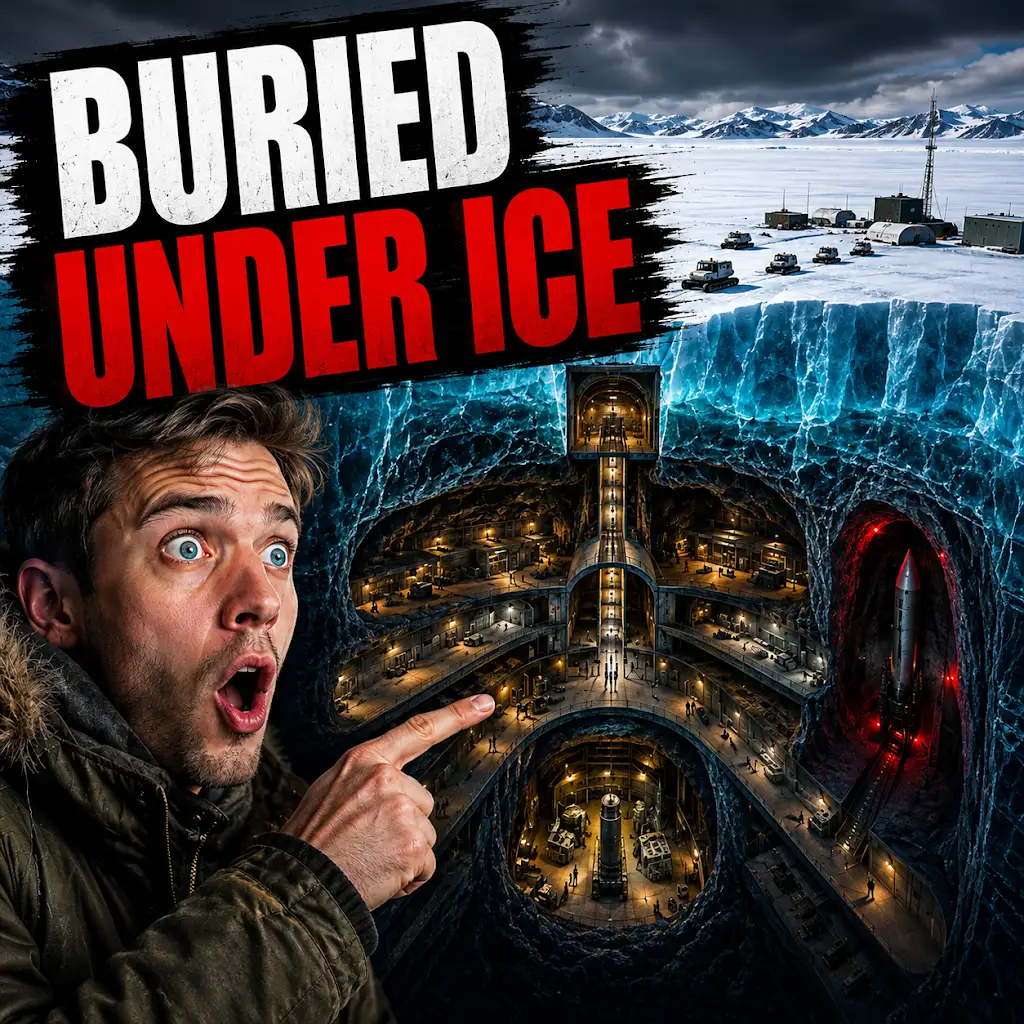
The U.S. Built a Nuclear City Under Greenland. The Ice Won.
FAQs
What is Camp Century?
Camp Century was a military base built by the United States Army in Greenland during the Cold War. It was constructed to house and support a nuclear-powered research center.
When was Camp Century built?
Construction of Camp Century began in 1959 and was completed in 1960. It was operational until 1966 when it was decommissioned and abandoned.
What was the purpose of Camp Century?
The primary purpose of Camp Century was to conduct research on ice and snow, as well as to test the feasibility of deploying nuclear missiles in the Arctic.
How was Camp Century built?
Camp Century was built using a concept known as “Project Iceworm,” which involved constructing a network of tunnels and chambers within the ice sheet. The base was powered by a portable nuclear reactor.
What happened to Camp Century?
After it was decommissioned in 1966, Camp Century was abandoned. The site was eventually covered by snow and ice, and due to the movement of the ice sheet, it is now buried deep beneath the surface.