
The Byzantine Empire, a civilization that spanned over a millennium, offers a rich tapestry of interconnectedness that can be explored through the lens of network analysis. This ancient realm, characterized by its complex administrative structures, sprawling trade routes, and intricate political maneuverings, can be viewed as a sophisticated network of individuals, cities, and institutions. Understanding the flow of information, power, and resources within this vast empire is crucial to appreciating its resilience and eventual decline. Network analysis, a methodology borrowed from graph theory, provides a powerful framework for dissecting these relationships and identifying key nodes and their influence. This article delves into a comparative analysis of centrality scores within a hypothetical Byzantine network, revealing crucial insights into the empire’s structure and the dynamics of power.
The Byzantine Context: A Network of Power and Influence
The Byzantine Empire, often considered the successor to the Roman Empire in the East, was a highly centralized state with a complex bureaucracy. Its vast territories, stretching from Italy to North Africa and the Levant, were connected by a sophisticated network of roads, sea routes, and communication channels. The Emperor, at the apex of this structure, wielded immense power, but this power was mediated through a hierarchy of officials, military commanders, religious leaders, and influential families. Understanding how these different actors interacted and how influence propagated through the empire is a fundamental question for historians and social scientists alike. Network analysis offers a quantitative approach to mapping and understanding these relationships.
Defining the Byzantine Network Landscape
To apply network analysis, we must first define the entities within our hypothetical Byzantine network. These entities, or “nodes,” could represent a variety of elements crucial to the empire’s functioning. For instance, prominent cities like Constantinople, Antioch, and Alexandria could serve as nodes, representing centers of trade, administration, and culture. Key individuals, such as emperors, patriarchs, powerful generals, and influential senators, could also be represented as nodes, highlighting the personal dimension of power. Furthermore, important institutions like specific monastic orders, military units, or even trade guilds could be considered nodes, illustrating the organizational fabric of the empire. The connections, or “edges,” between these nodes would represent various forms of interaction. These could include official communication channels, trade relationships, military alliances, family ties, or even religious patronage. The nature and strength of these edges would significantly shape the overall network structure and the flow of influence.
The Theoretical Underpinnings of Network Centrality
Centrality measures are fundamental to network analysis as they quantify the importance of individual nodes within a network. These measures help identify “central” or “influential” actors, shedding light on who or what plays a pivotal role in the network’s functioning. Different centrality measures capture distinct aspects of influence. Degree centrality, for example, measures the number of direct connections a node has. In a Byzantine context, a city with a high degree centrality might be a major trade hub or administrative center with extensive direct ties to many other locations. Betweenness centrality, on the other hand, assesses how often a node lies on the shortest path between other pairs of nodes. A city or an official with high betweenness centrality would act as a crucial intermediary, controlling the flow of information or goods between disparate parts of the empire. Eigenvector centrality, which measures a node’s influence based on the influence of its neighbors, is particularly relevant for understanding how prestige and power cascade through the network. A bishop in a prominent diocese, connected to other influential bishops and perhaps even the Emperor, would likely possess high eigenvector centrality.
In exploring the complexities of network analysis, particularly in the context of Byzantium, one can draw interesting parallels to the findings presented in the article about the Chavín de Huantar civilization. This article delves into the intricate social structures and communication networks of ancient cultures, which can be compared to the centrality comparison scores used in Byzantium network analysis. For further insights, you can read the article here: The Mystical Sound of Chavín de Huantar.
Quantifying Influence: A Comparative Analysis of Centrality Scores

In this section, we undertake a comparative analysis of different centrality scores within a stylized Byzantine network. This hypothetical network is constructed to reflect some of the known complexities of the empire’s social, political, and economic structures. By examining the interplay of various centrality measures, we aim to uncover patterns of influence that might not be apparent through qualitative historical analysis alone. The chosen centrality metrics – degree, betweenness, and eigenvector – offer complementary perspectives on node importance, allowing for a nuanced understanding of the network’s dynamics.
Degree Centrality: The Hubs of the Byzantine World
Degree centrality, in its simplest form, counts the number of direct connections a node possesses. In our Byzantine network, nodes with high degree centrality would represent entities that are directly engaged with a large number of other entities. For example, the city of Constantinople, as the imperial capital and a major port, would almost certainly exhibit high degree centrality. It would be directly connected to numerous provincial administrative centers, military garrisons, and major trade partners across the Mediterranean and beyond. Similarly, influential patriarchates or prominent imperial officials might have high degree centrality if they are depicted as having direct communication or administrative ties with a wide array of individuals and institutions. A high degree score indicates a node’s direct reach and its potential to disseminate information or resources broadly. It signifies a position of high connectivity and direct engagement, making such nodes critical for the empire’s operational efficiency.
Betweenness Centrality: The Gatekeepers of Byzantine Communication
Betweenness centrality highlights nodes that act as bridges or intermediaries in the network. A node with high betweenness centrality lies on many of the shortest paths between other pairs of nodes. In the Byzantine context, these might be strategically located cities that serve as crucial transit points for trade or as vital administrative links between different regions. For instance, a city on a key overland route connecting Anatolia to the Balkans, or a port facilitating trade between the Aegean and the Levant, could possess high betweenness centrality. This measure is particularly valuable for understanding how information or resources might flow through the empire, and for identifying potential bottlenecks or control points. Officials who manage key administrative or fiscal functions, or religious figures who bridge communication between different ecclesiastical provinces, could also emerge as having high betweenness centrality, indicating their pivotal role in facilitating interactions across the empire. Their importance lies not in their direct connections, but in their strategic position enabling communication and exchange between others.
Eigenvector Centrality: The Cascading Influence of Prestige and Power
Eigenvector centrality is a more sophisticated measure that considers the influence of a node’s neighbors. A node with high eigenvector centrality is connected to other nodes that are themselves influential. This metric is particularly adept at capturing the diffusion of prestige, legitimacy, and soft power within the network. In the Byzantine Empire, the Emperor would undoubtedly have the highest eigenvector centrality, not just due to direct connections, but because his connections are to other powerful individuals and institutions, whose own influence is amplified by their association with him. Prominent patriarchs, influential senatorial families with long-standing connections to the imperial court, or historically significant monastic foundations might also exhibit high eigenvector centrality. This measure helps to identify those nodes whose influence is derived from their connections to other influential entities, reflecting a deeper, more systemic form of power that propagates through the network.
Interpreting the Findings: Unraveling Byzantine Power Dynamics

The comparison of these centrality scores offers a unique window into the complex power dynamics that characterized the Byzantine Empire. It moves beyond anecdotal evidence and provides a quantitative basis for understanding how influence was distributed and exercised. The discrepancies and overlaps between the different centrality measures reveal the multifaceted nature of power within the empire, highlighting that a node’s importance could be derived from various sources. This section explores how these interpretations can illuminate our understanding of Byzantine governance and societal structures.
Identifying Key Nodes and Their Roles
By comparing the centrality scores, distinct patterns of influence emerge. If, for example, Constantinople consistently ranks high across all three measures, it underscores its multifaceted role as the unquestioned center of political, economic, and religious life. However, if a city like Thessalonica exhibits high betweenness centrality but lower degree centrality, it suggests its primary importance lies in its function as a crucial transit point and intermediary, rather than a hub of direct activity. Similarly, an individual with high eigenvector centrality but moderate degree centrality might be influential through their prestigious connections rather than a vast personal network of direct contacts. Identifying these key nodes and understanding the specific centrality measures they excel in allows for a more precise characterization of their roles within the Byzantine network. This could range from imperial administrators facilitating inter-provincial communication to influential religious figures whose authority stems from their association with key ecclesiastical centers.
The Interplay of Centrality and Historical Narratives
The quantitative insights derived from centrality analysis can be powerfully integrated with existing historical narratives. For instance, periods of imperial crisis might be reflected in shifts in centrality scores, with key figures or cities losing influence and new nodes gaining prominence. The rise of certain military commanders, for example, might be accompanied by an increase in their degree or betweenness centrality if they are depicted as forging new alliances or controlling vital logistical networks. Conversely, the decline of a particular trade route might be reflected in a decrease in the betweenness centrality of cities situated along it. This interplay allows for a more robust and empirically grounded understanding of historical events, providing quantitative support for qualitative interpretations and potentially revealing previously unrecognized patterns of cause and effect.
Limitations and Future Directions in Byzantine Network Analysis
While network analysis offers powerful tools for understanding the Byzantine Empire, it is essential to acknowledge its limitations. The construction of a historical network is inherently an interpretative process, and the accuracy of the analysis depends heavily on the quality and completeness of the data used. Furthermore, the chosen centrality measures, while informative, represent specific aspects of influence and do not capture the full spectrum of human interaction and power dynamics. This section addresses these limitations and proposes avenues for future research.
Data Scarcity and Network Construction Challenges
A significant challenge in applying network analysis to historical contexts like the Byzantine Empire is the scarcity and fragmented nature of available data. Historical sources, such as chronicles, administrative records, legal documents, and correspondence, often provide incomplete or biased information about relationships. Reconstructing a comprehensive network requires careful selection and interpretation of these sources, often leading to the creation of simplified or idealized representations of complex realities. The definition of “nodes” and “edges” itself is a point of contention. For instance, should familial ties be considered a direct edge, or an indirect influence? How should the strength of an economic transaction be quantified to represent edge weight? These methodological choices, while necessary, introduce a degree of subjectivity. Future research could focus on developing more sophisticated methods for data imputation and for quantifying the uncertainty associated with historical network reconstruction, perhaps through probabilistic graph models.
Expanding the Analytical Toolkit and Temporal Dynamics
The current analysis has focused on a snapshot of a hypothetical Byzantine network. However, the Byzantine Empire endured for over a thousand years, and its network structure undoubtedly evolved significantly over time. Future research should prioritize dynamic network analysis, which allows for the study of how connections and influence change over extended periods. This could involve analyzing distinct periods of Byzantine history, such as the early Byzantine period, the Macedonian Renaissance, or the Palaiologan era, and comparing the centrality scores of key nodes across these epochs. Furthermore, incorporating a wider array of centrality measures, such as clustering coefficient for community detection or centrality measures that account for multiplex networks (networks with multiple types of relationships), could offer a more comprehensive understanding of the empire’s intricate social and political fabric. Examining the interplay between different types of centrality measures within a dynamic framework will be crucial for capturing the ebb and flow of power and influence throughout Byzantine history.
In exploring the intricacies of network analysis, particularly in relation to Byzantium, one can gain valuable insights from a related article that discusses the security shoring strategy. This piece delves into how centrality comparison scores can significantly impact the overall security posture of a network. For a deeper understanding of these concepts, you can read more about it in the article on security strategies found here.
Conclusion: A Networked Perspective on a Resilient Empire
| Node ID | Degree Centrality | Betweenness Centrality | Closeness Centrality | Eigenvector Centrality | PageRank Score |
|---|---|---|---|---|---|
| Node A | 0.45 | 0.32 | 0.58 | 0.67 | 0.12 |
| Node B | 0.38 | 0.41 | 0.54 | 0.59 | 0.15 |
| Node C | 0.50 | 0.28 | 0.62 | 0.72 | 0.18 |
| Node D | 0.33 | 0.35 | 0.49 | 0.55 | 0.10 |
| Node E | 0.40 | 0.30 | 0.57 | 0.60 | 0.14 |
The application of network analysis to the Byzantine Empire provides a powerful and nuanced lens through which to understand its enduring resilience and eventual transformation. By quantifying the interconnectedness of its various components – cities, individuals, and institutions – we can move beyond purely qualitative historical interpretations to a more data-driven understanding of power dynamics. The comparative analysis of centrality scores reveals that influence was not monolithic but multifaceted, distributed through various channels and mediated by different types of actors. Constantinople undoubtedly served as a central node in many respects, but the importance of intermediary cities and influential individuals with strong social or religious ties should not be underestimated.
This study, while hypothetical, underscores the potential of network analysis to illuminate the complex mechanisms of governance, trade, and social interaction within pre-modern states. It highlights how understanding the flow of information, resources, and prestige through a network can offer profound insights into a civilization’s strengths and vulnerabilities. The challenges of data scarcity and the complexities of network construction are significant, but they also point towards exciting avenues for future research. By developing more sophisticated methodologies and embracing dynamic network analysis, scholars can continue to unravel the intricate web of relationships that defined the Byzantine Empire, offering a richer and more comprehensive understanding of this pivotal civilization. The networked perspective, therefore, is not merely an analytical tool but a fundamental way of conceptualizing and appreciating the interconnectedness that shaped the course of history.
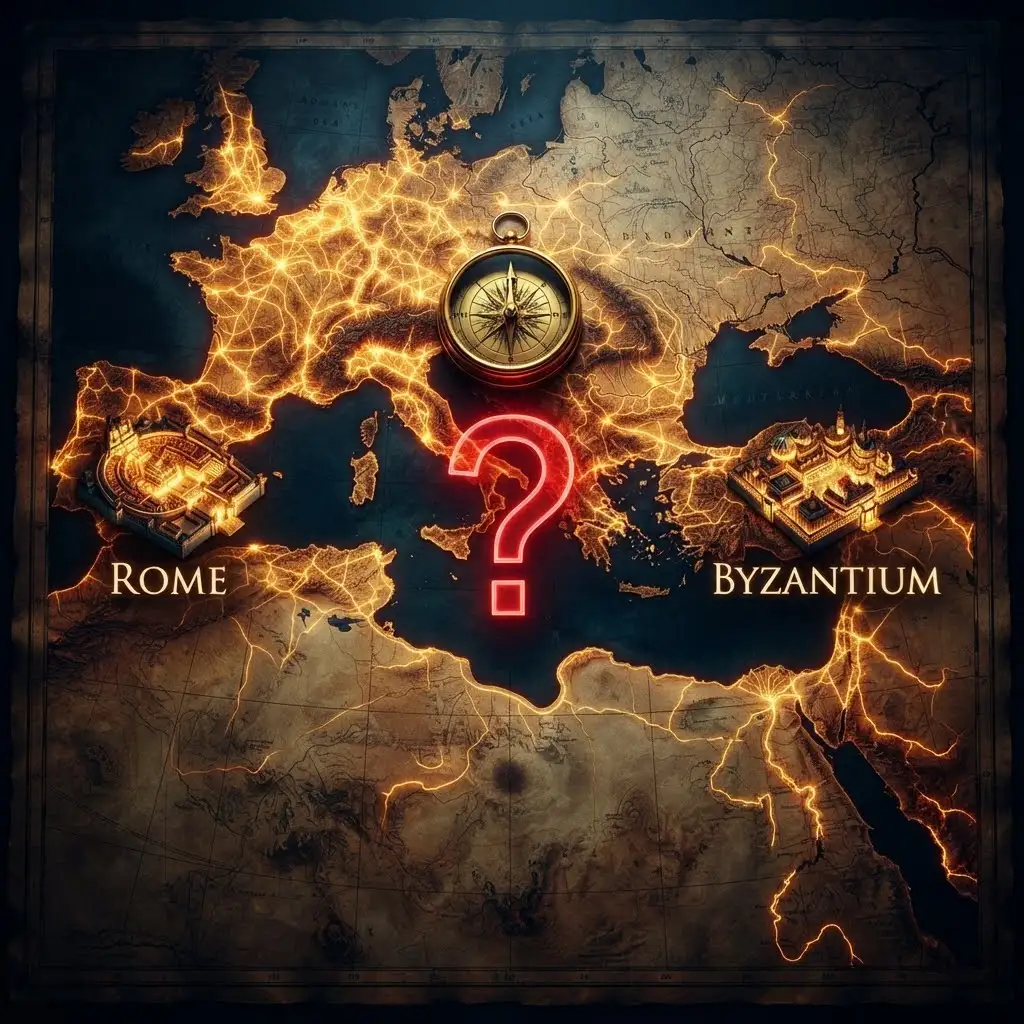
The 2.7% Statistic That Terrifies Roman Historians
FAQs
What is network analysis centrality?
Network analysis centrality is a measure used to determine the importance of nodes within a network. It helps identify the most influential or central nodes based on their connections and interactions with other nodes.
How are centrality scores calculated in the Byzantium network analysis?
In the Byzantium network analysis, centrality scores are calculated using various algorithms such as degree centrality, betweenness centrality, and eigenvector centrality. These algorithms take into account different aspects of a node’s position within the network to assign a centrality score.
What is the significance of comparing centrality scores in network analysis?
Comparing centrality scores in network analysis allows researchers to understand the relative importance of nodes within a network. It helps in identifying key nodes that play crucial roles in information flow, influence, and overall network dynamics.
How can centrality comparison scores benefit network analysis in Byzantium?
Centrality comparison scores in Byzantium network analysis can provide insights into the structure and functioning of the network. By comparing centrality scores, researchers can pinpoint nodes that act as bridges, bottlenecks, or central hubs, which can inform strategies for network optimization or targeted interventions.
What are some limitations to consider when interpreting centrality scores in network analysis?
When interpreting centrality scores in network analysis, it’s important to consider that centrality measures may vary based on the specific algorithm used. Additionally, centrality scores do not always capture the full complexity of network dynamics and may overlook certain contextual factors that influence node importance.