
The sprawling landscape of southwestern Illinois, a gentle undulation of prairie and river, conceals a secret from a bygone era. Beneath the tall grasses and modern agriculture lie the remnants of a once-mighty civilization, a testament to human ingenuity and societal complexity that thrived centuries before European arrival. This is the story of Cahokia Mounds, a UNESCO World Heritage Site and the most significant archaeological testament to the Mississippian culture, a sophisticated society that dominated the heartland of North America from roughly 700 to 1400 CE. The sheer scale of Cahokia, with its monumental earthworks, intricate social structures, and vast trade networks, continues to awe and challenge our understanding of pre-Columbian North America.
The story of Cahokia is one of remarkable growth and societal transformation, unfolding over several centuries. While the exact origins remain a subject of ongoing research, the site experienced a dramatic population boom and cultural efflorescence during the Mississippian period, particularly between 1050 and 1300 CE. This era, often referred to as the “Monks Mound Age,” saw the construction of Cahokia’s most iconic structures and the solidification of its status as a paramount center.
Early Settlements and the Emergence of Social Hierarchy
The earliest inhabitants of the Cahokia region, predating the full bloom of Mississippian culture, were likely small, agrarian communities. These early peoples, often associated with the Woodland tradition, laid the groundwork for later developments. Evidence suggests a gradual increase in population and a growing complexity in social organization. The development of maize agriculture, a staple crop that allowed for greater food surpluses, played a crucial role in supporting larger populations and the emergence of a more stratified society. This surplus also facilitated the specialization of labor, allowing individuals to focus on crafts, religious duties, or governance rather than solely on subsistence.
The Grandeur of Monks Mound: A Monument to Power
Dominating the landscape of Cahokia is Monks Mound, an artificial hill of staggering proportions. Rising over 100 feet from its base and covering an area of approximately 14 acres, it is the largest prehistoric earthen structure in the Americas. Its construction, an undertaking that involved the excavation and placement of millions of cubic feet of soil, is a testament to the organizational capacity and labor force available to the Cahokian elite. The precise purpose of Monks Mound remains a subject of intense study, but evidence strongly suggests it served as the seat of political and religious power, likely housing the residence of the paramount chief and serving as a focal point for ceremonies and rituals. Its sheer size and imposing presence would have conveyed a clear message of authority and dominance to all who beheld it.
The Urban Core: A Bustling Center of Life
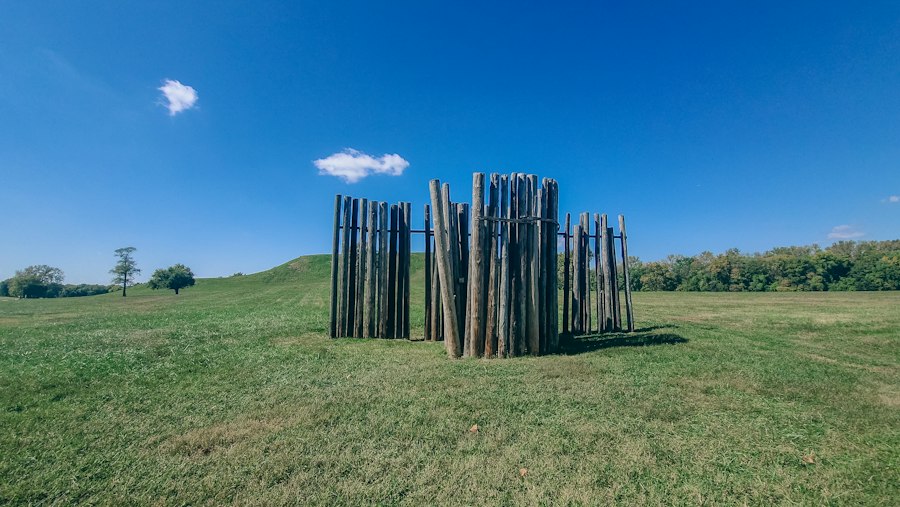
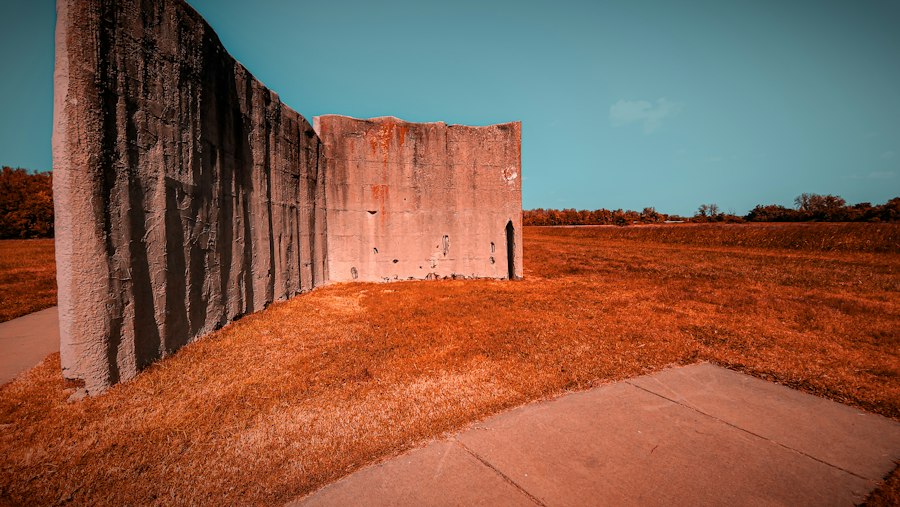
Beyond Monks Mound, Cahokia’s urban core was a meticulously planned and densely populated area. Evidence points to a highly organized urban environment with distinct residential, ceremonial, and administrative zones. The city was laid out in a grid-like pattern, reflecting a sophisticated understanding of urban planning. Large plazas, used for gatherings, ceremonies, and markets, were interspersed with residential areas and public structures. The presence of palisades and defensive walls around parts of the city suggests a need for protection, though the exact nature of any threats remains unclear.
Cahokia Mounds, an ancient civilization that thrived in what is now Illinois, offers a fascinating glimpse into the complex social structures and urban planning of pre-Columbian North America. For those interested in exploring the broader context of labor and societal evolution in American history, a related article can be found at The Evolution of the American Factory Worker, which discusses how the development of labor systems has shaped communities over time. This connection highlights the importance of understanding historical civilizations like Cahokia in relation to modern societal structures.
The Social Fabric of Cahokia
The remarkable achievements of Cahokia were underpinned by a complex and hierarchical social structure. The evidence gleaned from burial sites, settlement patterns, and the distribution of goods reveals a society with distinct classes and a powerful elite. Understanding this social fabric is crucial to appreciating the dynamics of this ancient civilization.
A Stratified Society: Chiefs, Priests, and Commoners
The archaeological record clearly indicates a stratified society at Cahokia. At the apex were the paramount chiefs, whose power was likely inherited and whose authority extended over a vast territory. Beneath them were elites, likely comprising priests, warriors, and influential families, who managed various aspects of societal organization. The majority of the population consisted of commoners, primarily engaged in agriculture, craft production, and the construction and maintenance of the monumental earthworks. The disparity in burial goods, with some individuals interred with elaborate grave offerings and others with little, is a stark indicator of this social stratification.
The Role of Religion and Ritual
Religion played a central role in Cahokian life, permeating all aspects of society. The construction of massive mounds, the intricate carvings found at the site, and the evidence of elaborate burial practices all point to a deeply spiritual culture. Priests likely held significant influence, mediating between the human and spiritual realms. Ceremonial plazas and elite residences were often aligned with astronomical events, suggesting a sophisticated understanding of celestial cycles and their connection to agricultural practices and societal well-being. The presence of elaborate effigy pottery and symbolic artifacts further underscores the importance of religious beliefs in shaping Cahokian worldview.
The Mystery of the Woodhenges
Among the most intriguing discoveries at Cahokia are the remnants of “Woodhenges.” These circular arrangements of large wooden posts, strategically placed and oriented, served as sophisticated solar calendars. By observing the sunrise or sunset through specific gaps in the posts, the Cahokians could accurately track the solstices, equinoxes, and other important astronomical events. This knowledge was vital for agricultural planning, determining planting and harvesting seasons, and for synchronizing communal rituals and festivals. The precision with which these structures were built highlights the scientific acumen and meticulous observation of the Cahokian people.
A Network of Trade and Influence
Cahokia was not an isolated entity; it was the vibrant heart of an expansive network that stretched across eastern North America. The circulation of goods and ideas throughout this network speaks to Cahokia’s economic and political dominance, solidifying its position as a paramount center of Mississippian culture.
Obsidian, Shell, and Exotic Goods: The Flow of Commerce
The archaeological evidence reveals a remarkable flow of goods into and out of Cahokia. Obsidian, originating from distant volcanic sources in the Rocky Mountains, and marine shells, harvested from the Gulf Coast, are found in significant quantities at the site. These exotic materials, prized for their beauty and symbolic significance, were transformed into tools, ornaments, and ceremonial objects. The presence of these goods at Cahokia, and the distribution of Cahokian-made items far and wide, demonstrates extensive trade routes and a complex system of exchange.
Mississippian Culture: A Shared Identity
Cahokia was the pinnacle of the Mississippian culture, a broad cultural complex characterized by similar agricultural practices, social organization, and material culture. While regional variations existed, the influence of Cahokia as a dominant center likely contributed to the spread of Mississippian traits across a vast geographic area. This shared cultural identity, facilitated by trade and the movement of people, fostered a sense of connection and interdependence among diverse groups.
The Diffusion of Technologies and Ideas
Beyond material goods, Cahokia likely served as a conduit for the diffusion of technologies and ideas. Innovations in agriculture, pottery production, mound construction, and social organization may have originated or been refined at Cahokia and subsequently spread to other Mississippian communities. The movement of individuals, whether traders, travelers, or emissaries, would have facilitated this cultural exchange, shaping the trajectory of development across eastern North America.
The Decline and Abandonment of Cahokia
Despite its immense power and influence, Cahokia eventually experienced a period of decline and eventual abandonment. The reasons for this shift are complex and likely multifaceted, a scenario that has intrigued archaeologists for decades.
Environmental Pressures and Resource Depletion
One prominent theory suggests that environmental factors played a significant role in Cahokia’s decline. Intensive agriculture, coupled with deforestation for construction and fuel, may have led to soil erosion and resource depletion. As the environment struggled to support the large population, strains on food resources and social stability could have increased. Evidence of increased flood events and potential climatic shifts may have further exacerbated these challenges.
Internal Strife and Social Unrest
It is also plausible that internal social and political factors contributed to Cahokia’s downfall. As the population grew and societal pressures mounted, tensions between different social groups or within the ruling elite may have intensified. The strain of maintaining a large, complex society, coupled with potential challenges to authority, could have led to instability and eventual fragmentation. The construction of defensive structures in later periods might indicate growing internal conflict or external threats.
The Dispersal of a People
The abandonment of Cahokia did not signify the end of the Mississippian people. Rather, it likely represented a dispersal. As the central authority weakened and resources dwindled, the population may have dispersed to smaller, more sustainable settlements throughout the region. These smaller communities continued to carry forward aspects of Mississippian culture, albeit on a smaller scale. The legacy of Cahokia, therefore, is not solely tied to its monumental remains but also to the enduring influence it exerted on subsequent generations.
The Cahokia Mounds, an ancient civilization that thrived in North America, showcases the complexity of pre-Columbian societies and their impressive architectural achievements. For those interested in exploring the broader implications of ancient civilizations and their interactions with the environment, a fascinating article discusses various geopolitical challenges and opportunities in the South China Sea, which can be seen as a modern parallel to the strategic considerations faced by ancient cultures. You can read more about this topic in the article here.
Preserving the Legacy: Cahokia Mounds Today
| Aspect | Metric |
|---|---|
| Location | Collinsville, Illinois, USA |
| Period | Approximately 1050-1350 AD |
| Population | Estimated 10,000-20,000 inhabitants at its peak |
| Structures | Monks Mound, Woodhenge, Grand Plaza, and more |
| Importance | One of the largest pre-Columbian settlements north of Mexico |
Today, Cahokia Mounds State Historic Site stands as a vital testament to this ancient civilization, offering a unique window into the past. Its preservation and study are crucial for understanding the rich history of North America and the capabilities of its indigenous peoples.
Archaeological Investigations and Ongoing Discoveries
The story of Cahokia is still being written, with ongoing archaeological investigations continually unearthing new insights. Modern techniques, from LiDAR imaging to advanced soil analysis, are revealing previously unknown structures, settlement patterns, and details about daily life. Each excavation and discovery adds another layer to our understanding of this complex society, challenging previous assumptions and opening new avenues of research.
A UNESCO World Heritage Site: Global Recognition
In recognition of its outstanding universal value, Cahokia Mounds was designated a UNESCO World Heritage Site in 1982. This designation underscores its importance not just as a regional historical site but as a globally significant monument to human history and cultural achievement. It highlights the need for its continued protection and interpretation for future generations.
Education and Interpretation: Connecting Past and Present
The Cahokia Mounds State Historic Site is more than just an archaeological excavation; it is a place of education and interpretation. Visitors can explore the grounds, climb Monks Mound, and learn about the Mississippian culture through interpretive exhibits, guided tours, and educational programs. The site serves as a crucial bridge between the ancient past and the present, fostering an appreciation for the ingenuity, complexity, and resilience of the people who built and inhabited this extraordinary city. The ongoing efforts to preserve and interpret Cahokia Mounds ensure that the story of this ancient civilization will continue to be told and understood for generations to come, a silent yet powerful reminder of the vibrant human history that unfolded on the American continent.

A City Bigger Than London Once Stood in America. Then It Vanished.
FAQs
What is Cahokia Mounds ancient civilization?
Cahokia Mounds is an ancient Native American city located in present-day Illinois, USA. It was the largest pre-Columbian settlement north of Mexico and was inhabited from about 700 to 1400 AD.
What is the significance of Cahokia Mounds?
Cahokia Mounds is significant because it was a major center for the Mississippian culture, with a population that may have reached 20,000 at its peak. It was also a hub for trade, religion, and politics in the region.
What are the mounds at Cahokia used for?
The mounds at Cahokia served various purposes, including as platforms for important buildings, as burial sites for the elite, and as ceremonial spaces for religious and social gatherings.
What evidence of advanced civilization has been found at Cahokia Mounds?
Archaeological evidence at Cahokia Mounds includes large earthen mounds, a sophisticated urban layout, evidence of long-distance trade, and a complex social and political structure, all of which indicate an advanced civilization.
What led to the decline of Cahokia Mounds?
The decline of Cahokia Mounds is still not fully understood, but factors such as environmental changes, resource depletion, and social or political upheaval are believed to have contributed to the eventual abandonment of the site around 1400 AD.