
Cahokia, a sprawling metropolis that once pulsed with life along the fertile floodplain of the Mississippi River, stands as a testament to the ingenuity and complexity of North America’s ancient past. For centuries, this sophisticated urban center, flourishing between the 11th and 14th centuries CE, was a hub of trade, religion, and political power, far surpassing any other known settlement in the region at the time. Its rise and eventual decline offer a compelling narrative of human adaptation, societal organization, and the enduring mysteries of a lost civilization.
The story of Cahokia is one of remarkable growth and societal transformation. Emerging from earlier Woodland period traditions, a new cultural complex, often referred to as Mississippian, began to coalesce in the American Bottoms, the fertile river valley surrounding modern-day St. Louis. This fertile land, rich with alluvial soil and abundant natural resources, provided the ideal foundation for a burgeoning population and an increasingly complex social structure.
The Mississippian Culture: A Foundation for Cahokia
The Mississippian culture, characterized by its distinctive pottery, shell-tempered ceramics, and the widespread cultivation of maize (corn), laid the groundwork for Cahokia’s spectacular development. This agricultural revolution allowed for surplus food production, which in turn supported larger populations and the specialization of labor. Early Mississippian settlements, while significant, were often dispersed and less nucleated than what would later define Cahokia. These communities engaged in extensive trade networks, exchanging goods such as shell from the Gulf Coast, copper from the Great Lakes, and mica from the Appalachian Mountains. These exchanges not only facilitated the movement of material goods but also the diffusion of ideas and cultural practices.
The Shift Towards Urbanism
The transition from dispersed settlements to a centralized urban core was a gradual but profound process. Several factors likely contributed to this shift. The increasing importance of maize agriculture, coupled with advancements in farming techniques, allowed for greater population density. Furthermore, the development of sophisticated social hierarchies, evident in burial practices and the construction of monumental architecture, suggested the emergence of powerful leaders capable of organizing large-scale labor projects. The fertile lands of the American Bottoms, with their predictable flooding cycles and access to waterways for transportation, provided an unparalleled advantage for a growing society.
The Geographic Advantage of the American Bottoms
The location of Cahokia was not accidental. The American Bottoms offered a unique confluence of advantageous factors. The Mississippi River, a natural superhighway, provided an efficient means of transportation and communication, connecting Cahokia to distant regions and facilitating trade. The fertile alluvial soils, replenished annually by the river’s floods, were exceptionally productive for agriculture, particularly for maize cultivation, which formed the dietary staple of the Mississippian people. The surrounding environment also provided abundant game, fish, and natural resources like timber and clay for construction and craft production. This strategic location, coupled with agricultural innovations, provided the fertile ground for Cahokia to bloom into one of the largest and most influential settlements in pre-Columbian North America.
Cahokia, an ancient city located near the Mississippi River, serves as a fascinating example of how geographic determinism shaped the development of early civilizations. The strategic positioning of Cahokia allowed it to thrive as a major urban center, influencing trade and culture in the region. For a deeper understanding of how geography impacts societal growth, you can explore the article on this topic at The Influence of Geographic Determinism.
The Heart of the City: Monks Mound and Beyond
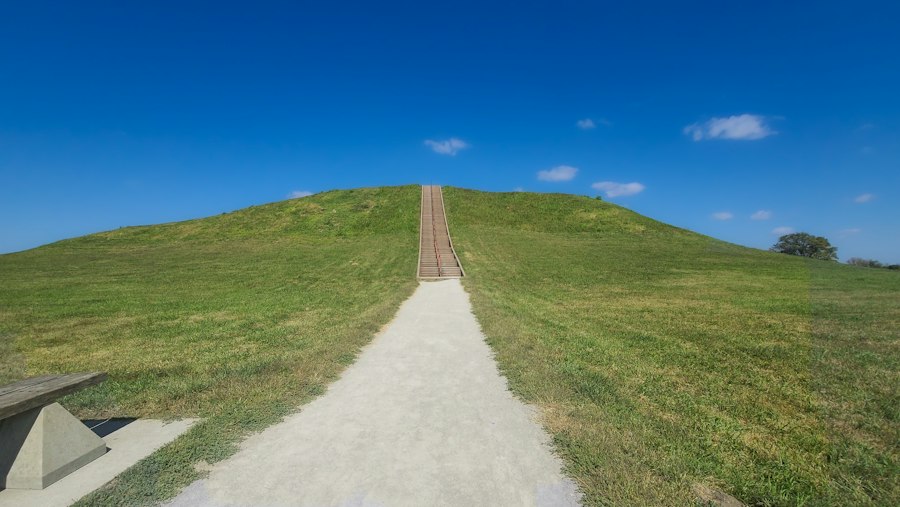
At the epicenter of Cahokia’s vast urban sprawl stood Monks Mound, an architectural marvel that continues to inspire awe and wonder. This colossal earthen structure, the largest prehistoric structure in the Americas, served as the administrative and ceremonial heart of the city, a tangible symbol of its power and prestige.
Monks Mound: A Monument to Power
Monks Mound is an impressive sight, a four-terraced platform mound covering an area of approximately 14 acres and rising to a height of nearly 100 feet. Its construction involved the movement of an estimated 22 million cubic feet of earth, a monumental undertaking that would have required thousands of laborers working for decades. Archaeologists believe that the summit of Monks Mound once supported a large wooden building, likely the residence of Cahokia’s paramount chief or ruling elite, as well as a ceremonial center. From its elevated vantage point, rulers could survey their domain, preside over important rituals, and project their authority. The sheer scale of Monks Mound speaks to the advanced organizational capabilities and the immense manpower available to Cahokia’s leaders.
The Urban Layout and Its Significance
Beyond Monks Mound, Cahokia was an intricately planned city, covering an area of at least six square miles and encompassing hundreds of mounds of various sizes and functions. The city was organized around a central plaza, likely a public gathering space for markets, ceremonies, and social events. Residential areas were organized into distinct neighborhoods, with evidence of specialized craft production, such as pottery making and shell bead manufacturing, found in specific zones. The layout of Cahokia, with its deliberate placement of mounds and plazas, reflects a sophisticated understanding of urban planning and a conscious effort to create a structured and ordered society.
The Grand Plaza and Public Life
The Grand Plaza, a vast open space situated to the west of Monks Mound, was a crucial element of Cahokia’s urban fabric. This expansive area served as a focal point for public life, a venue for bustling markets where goods from across the Mississippian world were exchanged, and a stage for important religious and civic ceremonies. The presence of numerous smaller mounds surrounding the plaza suggests that it was a highly curated space, designed to enhance the ceremonial and social functions of the city. The Grand Plaza would have been a vibrant hub of activity, a place where people gathered, traded, and participated in the communal life of Cahokia.
Specialized Craft Production and Trade Networks
Cahokia was not merely a center of power and ceremony; it was also a thriving hub of economic activity. Evidence from archaeological excavations reveals a sophisticated system of specialized craft production. Skilled artisans produced a wide array of goods, including intricately decorated pottery, finely crafted stone tools, and exquisite jewelry made from shell and copper. These goods were not only for local consumption but also formed the basis of extensive trade networks that stretched across eastern North America. Cahokia’s elite controlled the flow of these valuable commodities, further solidifying their power and influence.
The Spiritual and Celestial Connections
Religion and cosmology played a central role in Cahokian society, influencing its art, architecture, and daily life. The Cahokians held a complex belief system that likely involved a reverence for the natural world, astronomical observations, and the power of their leaders to mediate between the earthly and spiritual realms.
The Role of Cosmology in Cahokian Beliefs
While much of Cahokian cosmology remains enigmatic, archaeological evidence provides tantalizing clues. The alignment of certain mounds and structures with celestial events, such as solstices and equinoxes, suggests a deep understanding of and reverence for the movements of the sun, moon, and stars. The iconic “Woodhenge” structures, circular arrangements of large wooden posts, likely served as astronomical observatories, allowing priests to track celestial cycles and determine auspicious times for ceremonies and agricultural activities. These observations were not merely academic; they were intrinsically linked to the well-being and prosperity of the community.
Mound Construction as a Sacred Act
The construction of mounds, particularly the monumental ones like Monks Mound, was undoubtedly a sacred undertaking. These earthworks were not simply utilitarian structures; they were believed to be imbued with spiritual significance, serving as conduits between the human world and the supernatural. The meticulous placement of layers of earth, often containing offerings and burial remains, suggests a profound connection to ancestral spirits and the land itself. The act of building these mounds was a communal expression of faith and a means of reinforcing the social and political order.
Iconography and Symbolism in Cahokian Art
Cahokian art is rich in symbolism, offering insights into their spiritual beliefs. Recurring motifs include birds, serpents, and human figures, often depicted in dynamic and stylized forms. These images likely represented deities, spirits, or important mythological figures. The use of materials like shell, copper, and mica, which were often obtained through long-distance trade, further emphasizes the importance of these symbolic objects. The intricate designs and the careful craftsmanship of Cahokian artifacts reveal a society deeply invested in expressing its spiritual worldview through artistic creation.
The Significance of Water and the Underworld
Water, particularly the Mississippi River and its tributaries, held profound significance in Cahokian cosmology. Rivers were seen as life-giving forces, essential for agriculture and sustenance, but also as pathways to the underworld. Evidence of elaborate burial rituals, often involving the placement of the deceased near water sources or within mounds that may have been associated with aquatic symbolism, suggests a belief in an afterlife or a spiritual realm connected to water.
Social Structure and Daily Life
Cahokia was a society with a clearly defined social hierarchy, with a ruling elite at the top, supported by a large population of commoners, farmers, artisans, and laborers. The lives of these individuals, though vastly different, were interconnected and contributed to the vibrant tapestry of the city.
The Elite and Their Privileges
At the apex of Cahokian society stood a powerful elite, whose wealth and influence were evident in their elaborate burials, finely crafted grave goods, and their direct association with the monumental architecture of the city. These rulers likely held both political and religious authority, controlling vast resources, organizing labor, and presiding over important ceremonies. Their residences, potentially situated on the summits of major mounds, would have afforded them both physical and symbolic dominance over the populace. The control of prestige goods, such as copper axes and finely wrought shell beads, also served to demarcate their elevated status.
The Commoners: The Backbone of Cahokia
The vast majority of Cahokia’s population consisted of commoners, who formed the backbone of the city’s economy and workforce. These individuals were primarily engaged in agriculture, cultivating maize, beans, and squash on the fertile lands surrounding the urban core. They also participated in communal labor projects, such as the construction of mounds and public spaces, and provided the skilled craftsmanship necessary for the production of everyday goods and specialized crafts. While their lives may have been more arduous, their contributions were essential for the functioning and prosperity of Cahokia.
Evidence of Child Labor and Specialization
Archaeological findings have also provided insights into the specialized roles and even the presence of child labor within Cahokian society. Excavations have revealed evidence of young individuals engaged in tasks such as pottery making or shell bead production, indicating early vocational training and the integration of children into the economic activities of the community. This suggests a structured society where skills were passed down through generations, contributing to the continued success of Cahokian industries.
Diet and Subsistence Strategies
The diet of Cahokians was largely based on agriculture, with maize being the primary staple. However, they also supplemented their diet with wild plants, nuts, berries, and a variety of animal proteins, including deer, fish, and fowl. The abundance of resources in the Mississippi River valley ensured a relatively stable food supply, which was crucial for supporting a large urban population. Archaeological analysis of human remains can reveal detailed information about their dietary habits and the health of the population.
Cahokia, located near the Mississippi River, was once a thriving urban center that showcased the advanced societal structures of ancient civilizations. The intricate mounds and complex social organization of Cahokia provide a fascinating glimpse into the lives of its inhabitants, who were skilled in agriculture and trade. For those interested in exploring more about the technological advancements of ancient cultures, a related article discusses the lost secrets of these civilizations and their remarkable achievements. You can read more about it in this insightful piece on ancient technology.
The Mystery of Cahokia’s Decline
| Population | Area | Founded |
|---|---|---|
| 15,241 | 9.1 sq mi | 1699 |
Despite its impressive rise and sustained prosperity, Cahokia experienced a significant decline around the 14th century CE. The reasons for this abandonment are a subject of ongoing debate and scholarly inquiry, with various theories proposing a complex interplay of factors.
Environmental Degradation and Resource Depletion
One prominent theory suggests that Cahokia’s rapid growth and intensive land use led to environmental degradation and resource depletion. Deforestation for construction and fuel, coupled with unsustainable agricultural practices, may have led to soil erosion, reduced soil fertility, and increased vulnerability to natural disasters like flooding. The strain on local resources could have made it increasingly difficult to sustain the large urban population, prompting a gradual dispersal of people.
Social and Political Instability
Another significant factor may have been social and political instability. As Cahokia grew, internal tensions and competition among elites could have escalated, leading to conflict and the breakdown of centralized authority. The complex social structure, while enabling growth, may have also created vulnerabilities that, when stressed, could lead to fragmentation and abandonment. The evidence of violence in some later Cahokian burials might also support this theory.
Climate Change and Disease
More recent research has also explored the role of climate change and disease. Periods of drought or increased flooding could have significantly impacted agricultural yields and overall societal stability. Furthermore, the dense urban environment could have been conducive to the rapid spread of infectious diseases, potentially leading to a demographic crisis and contributing to the city’s decline.
The Legacy of a Lost Civilization
Regardless of the precise combination of factors that led to its abandonment, Cahokia’s legacy endures. It stands as a powerful reminder of the sophisticated societies that flourished in North America long before European arrival. The archaeological discoveries at Cahokia continue to reshape our understanding of pre-Columbian history, revealing a complex and dynamic civilization that rivaled, and in some ways surpassed, contemporary urban centers in other parts of the world. The ongoing research and preservation efforts at Cahokia ensure that its story, though partially lost to time, will continue to inform and inspire future generations.

A City Bigger Than London Once Stood in America. Then It Vanished.
FAQs
What is Cahokia city near the Mississippi River?
Cahokia was a pre-Columbian Native American city located near the confluence of the Mississippi, Missouri, and Illinois rivers in present-day Illinois. It was the largest and most influential urban settlement of the Mississippian culture, which developed advanced societies in the midwestern and southeastern United States.
When was Cahokia city established?
Cahokia was established around 600 AD and reached its peak population and influence around 1050 AD. It was inhabited for about 600 years before being abandoned around 1400 AD.
What was the population of Cahokia city?
At its peak, Cahokia’s population is estimated to have been between 10,000 and 20,000 people, making it one of the largest cities in the world at that time.
What were some of the features of Cahokia city?
Cahokia was characterized by its large earthen mounds, including Monks Mound, which is the largest prehistoric earthwork in the Americas. The city also had a sophisticated urban layout, with plazas, residential areas, and ceremonial spaces.
What is the significance of Cahokia city?
Cahokia is significant for its role as a major center of Mississippian culture and its influence on the development of complex societies in North America. It is also a UNESCO World Heritage site and an important archaeological and historical landmark.