Cahokia: The Flourishing Mississippi River Civilization
Nestled in the fertile floodplain of the Mississippi River, just a stone’s throw from modern-day St. Louis, lay the sprawling metropolis of Cahokia. For centuries, this ancient city stood as the vibrant heart of a sophisticated Mississippian culture, a civilization that flourished in what is now the American Midwest. Far from being a primitive settlement, Cahokia represented a complex society with a highly organized social structure, impressive architectural achievements, and a robust economic system, all intricately linked to the life-giving waters of the Mississippi River. Its rise and eventual decline offer a compelling narrative of human ingenuity, adaptation, and the enduring power of place.
The story of Cahokia is not one of sudden appearance, but rather a gradual evolution from smaller, regional settlements. The Mississippian period, roughly spanning from 800 to 1600 CE, witnessed the emergence of large, complex societies across eastern North America, and Cahokia quickly became the preeminent center of this burgeoning civilization.
Early Foundations and Population Growth
The origins of Cahokia can be traced back to the Late Woodland period, when agricultural practices began to gain a stronger foothold. While maize cultivation was not entirely unknown, its widespread adoption and intensification marked a significant turning point. This agricultural revolution provided a more stable and abundant food supply, allowing for larger, more sedentary populations. The fertile alluvial soils of the Mississippi River valley were particularly well-suited for intensive maize farming, supporting the growing communities.
The earliest evidence of occupation at the Cahokia site dates back to around 600 CE. Initially, these were relatively small, dispersed villages. However, over the next few centuries, a remarkable process of centralization began to take place. People from surrounding areas were drawn to this strategically located and resource-rich area, leading to a dramatic increase in population. By the 11th century, Cahokia had transformed from a collection of villages into a veritable urban center.
The Strategic Importance of the Mississippi River
The Mississippi River was the lifeblood of Cahokia, shaping its development, economy, and worldview. Its annual floods deposited rich silt, creating exceptionally fertile land ideal for agriculture. This agricultural surplus was fundamental to supporting a large, non-farming population, a characteristic of urbanism.
Moreover, the river served as a vital transportation artery. Canoes and other watercraft allowed for efficient movement of people, goods, and ideas across vast distances. This facilitated trade networks that stretched far beyond the immediate Cahokian hinterland, connecting the city to other Mississippian centers and even influencing its cultural and technological development. The river also provided abundant resources such as fish, waterfowl, and reeds, further contributing to the sustenance and material culture of the inhabitants.
The Cahokia civilization, located near the Mississippi River, was one of the most significant pre-Columbian urban centers in North America, known for its impressive earthen mounds and complex societal structure. For those interested in exploring the implications of land ownership and the potential risks associated with government actions, a related article discusses the safety of real estate from government seizure. You can read more about this topic in the article here: Is Real Estate Safe from Government Seizure?.
The Apex of Cahokian Society
By its peak, around 1050 to 1350 CE, Cahokia was a city of unprecedented scale and complexity in North America. Its population is estimated to have been between 10,000 and 20,000 people, rivaling the size of many contemporary European cities. This dense urban population was supported by a sophisticated social and political structure.
Monks Mound: The Monumental Heart
Dominating the Cahokian landscape is Monks Mound, a colossal earthen structure that stands as a testament to the engineering prowess and organizational capacity of its builders. This massive platform mound, measuring approximately 1,000 feet by 700 feet at its base and rising 100 feet in height, is the largest prehistoric earthen structure in the Americas. It is composed of an estimated 22 million cubic feet of earth, meticulously transported and sculpted by human hands.
The construction of Monks Mound was a monumental undertaking, likely requiring generations of labor. Its purpose is still a subject of debate among archaeologists, but it is widely believed to have served as the central administrative and ceremonial complex of Cahokia. Its summit likely supported a large wooden building, perhaps a palace or a temple, from which rulers could preside over their domain and conduct important rituals. The sheer scale of Monks Mound suggests a powerful and centralized authority capable of mobilizing and directing a large workforce.
The Grand Plaza and Other Mounds
Surrounding Monks Mound was a vast, flat open area known as the Grand Plaza. This space likely served as a central gathering place for public ceremonies, markets, and other civic activities. The Grand Plaza was bordered by numerous other mounds, each with its own distinct function and significance.
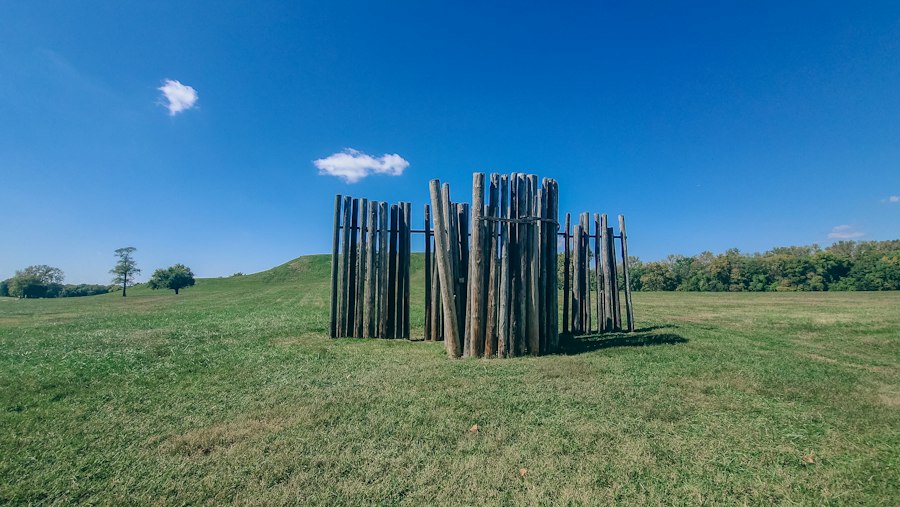
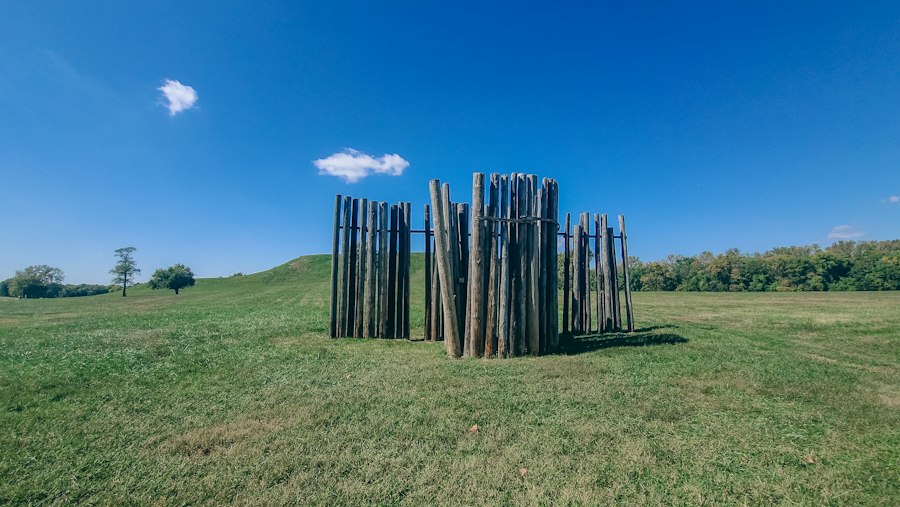
These mounds varied in size and shape, including platform mounds, conical burial mounds, and ridge-top mounds. Some mounds may have served as residences for the elite, while others were likely dedicated to religious or astronomical purposes. The arrangement of these mounds was not random; it reflected a carefully planned urban design that was both aesthetically pleasing and functionally organized. The meticulous planning and construction of these numerous mounds underscore the advanced understanding of engineering, surveying, and labor management possessed by the Cahokians.
A Hierarchical Social Structure
The monumental architecture of Cahokia points to a highly stratified society, with a clear hierarchy of power and privilege. At the apex of this hierarchy were likely chiefs or rulers who held significant political and religious authority. Evidence suggests a hereditary system of leadership, with power passed down through families.
Below the ruling elite were various social strata, including priests, warriors, artisans, farmers, and laborers. The presence of distinct burial practices and grave goods indicates social differentiation, with the elite receiving more elaborate burials. The organization of labor required to construct and maintain the city also suggests a structured workforce, with individuals fulfilling specific roles within the community.
The Economic Engine of Cahokia
Cahokia’s success was underpinned by a robust economy that was both agrarian and mercantile. The fertile river valley provided the agricultural foundation, while extensive trade networks amplified its prosperity.
Agricultural Innovations and Surplus
As mentioned, maize was the staple crop, but the Cahokians also cultivated beans, squash, and sunflowers. Their agricultural practices were sophisticated, utilizing tools such as hoes and digging sticks. The consistent availability of food, especially maize, allowed for the support of a large urban population and the development of specialized crafts.
The ability to produce a significant agricultural surplus was crucial. This surplus allowed for individuals to engage in activities other than food production, leading to the emergence of skilled artisans and craftspeople. It also provided a buffer against lean years and contributed to the city’s overall stability.
Extensive Trade Networks
Cahokia was a major hub of a vast trade network that encompassed much of eastern North America. Goods flowed into Cahokia from as far away as the Great Lakes region (copper), the Appalachian Mountains (stone tools), and the Gulf Coast (shells). In return, Cahokia likely exported agricultural products, finished goods, and perhaps even its cultural influence.
The Mississippi River and its tributaries were the highways of this ancient commerce. The efficient movement of goods via waterways allowed for the exchange of resources and ideas, fostering cultural diffusion and economic interdependence among different Mississippian communities. Archaeological evidence, such as the presence of exotic materials in Cahokian burials and artifacts found at distant sites, clearly illustrates the extent of these trade connections.
Craft Specialization and Material Culture
The economic prosperity of Cahokia supported a range of craft specializations. Artisans were skilled in working with various materials, including stone, shell, bone, and wood. They produced a wide array of artifacts, from utilitarian tools and weapons to decorative items and ceremonial objects.
Pottery production was particularly important, with Cahokian potters developing distinctive styles and techniques. These vessels were used for cooking, storage, and ceremonial purposes. The intricate designs and fine craftsmanship of some Cahokian pottery indicate a high level of artistic skill and aesthetic sensibility. The presence of shell beads, copper ornaments, and finely crafted stone tools in burials further attests to the wealth and artistry of Cahokian society.
Spiritual Life and Worldview
The Mississippian peoples, including those at Cahokia, possessed a rich spiritual life deeply intertwined with the natural world and their understanding of the cosmos. Their beliefs are inferred from archaeological evidence, particularly from mound construction, iconography, and burial practices.
Cosmology and Sacred Landscapes
The Cahokians likely viewed their world through a cosmological lens that placed great importance on the cardinal directions, the celestial bodies, and the forces of nature. The arrangement of mounds and other features at Cahokia may have reflected this cosmological understanding, creating a sacred landscape that mirrored their beliefs about the universe.
Monks Mound, with its commanding presence, likely played a central role in their spiritual practices, serving as a connection point between the earthly realm and the heavens. The meticulous alignment of some mounds with celestial events, such as solstices and equinoxes, suggests a sophisticated understanding of astronomy and its integration into their religious observances.
Rituals, Ceremonies, and Iconography
Evidence suggests that Cahokia was a place of significant religious activity, with elaborate rituals and ceremonies conducted by priests and rulers. These events likely involved feasting, music, dancing, and possibly even human sacrifice, as suggested by some burial contexts.
The iconography found on artifacts, such as pottery and shell gorgets, provides glimpses into their mythological beliefs and the beings they venerated. Figures often depicted include birds, serpents, and human-animal hybrids, suggesting a worldview that recognized the interconnectedness of all living things and the power of transformative beings. These symbols likely conveyed important messages about their spiritual beliefs, social order, and the relationship between the human and supernatural realms.
Burial Practices and the Afterlife
The burial practices at Cahokia offer profound insights into their beliefs about death and the afterlife. Elite burials were often accompanied by rich grave goods, including finely crafted artifacts, precious materials like copper and shell, and sometimes even sacrificial victims. These elaborate burials suggest a belief in an afterlife where social status and material wealth continued to hold significance.
The careful placement of bodies and grave goods within mounds indicates a reverence for the deceased and a desire to provide for their journey into the next world. The variations in burial types and associated offerings further support the existence of social stratification, with the elite receiving more elaborate treatment.
The Cahokia civilization, known for its impressive earthen mounds along the Mississippi River, has long fascinated historians and archaeologists alike. While exploring the complexities of ancient societies, one might also find interest in how other civilizations have adapted to their environments, such as the intriguing discoveries in Antarctica. For a deeper understanding of how hidden secrets can reshape our view of ancient cultures, you can read more in this article about the continent’s mysteries at Antarctica’s hidden secrets.
The Enigma of Cahokia’s Decline
| Population | Peak Population | Area | Time Period |
|---|---|---|---|
| Estimated 10,000 to 20,000 | Estimated 40,000 to 50,000 | Approximately 6 square miles | Approximately 1050-1350 AD |
Around the 14th century, Cahokia began to decline, and by the time Europeans arrived in the region, the city had been largely abandoned. The reasons for this dramatic shift remain a subject of ongoing archaeological and historical research.
Environmental Factors and Resource Depletion
One prominent theory suggests that environmental degradation played a significant role in Cahokia’s downfall. Intensive agriculture, coupled with the demands of a large urban population, may have led to deforestation, soil erosion, and a depletion of natural resources in the surrounding areas. This could have resulted in decreased agricultural yields and food scarcity, putting immense pressure on the city’s inhabitants.
The reliance on the Mississippi River, while beneficial, also exposed Cahokia to the risks of floods and potential changes in watercourses. Alterations in the river’s flow or increased frequency of devastating floods could have disrupted agriculture and access to resources, contributing to the city’s decline.
Social and Political Instability
Internal social and political factors may also have contributed to Cahokia’s decline. Overpopulation could have led to increased competition for resources and social unrest. The complex social hierarchy might have become strained, or the authority of the ruling elite may have weakened.
It is possible that external pressures, such as conflict with neighboring groups or the rise of competing centers of power, also played a role. The loss of control over trade routes or a breakdown in alliances could have weakened Cahokia’s economic and political standing.
Migration and Relocation
The abandonment of Cahokia was likely not a sudden, catastrophic event, but rather a gradual process of depopulation. It is probable that as conditions in the city became more challenging, its inhabitants began to migrate to other areas, establishing new settlements or joining existing ones. This migration would have dispersed the Cahokian population and their cultural traditions across a wider region.
The legacy of Cahokia endured, however. The descendants of its people continued to inhabit the Mississippi River valley, carrying with them the knowledge and traditions of their ancestors. While the monumental city itself was eventually reclaimed by nature, its story serves as a powerful reminder of the remarkable achievements of a sophisticated Indigenous civilization that once thrived along the mighty Mississippi. The ongoing archaeological work at Cahokia continues to reveal the depth and complexity of this fascinating chapter in North American history.

A City Bigger Than London Once Stood in America. Then It Vanished.
FAQs
What is Cahokia and the Mississippi River civilization?
Cahokia was a pre-Columbian Native American city located in present-day Illinois near the Mississippi River. It was the largest and most influential urban settlement of the Mississippian culture, which was a mound-building Native American civilization that flourished in the Midwestern, Eastern, and Southeastern United States from approximately 800 to 1600 AD.
What was the significance of Cahokia and the Mississippi River civilization?
Cahokia and the Mississippi River civilization were significant for their large, complex urban centers, extensive trade networks, and sophisticated agricultural practices. Cahokia was the largest city in North America north of Mexico at its peak, and its influence extended across the region.
What were some key features of Cahokia and the Mississippi River civilization?
Key features of Cahokia and the Mississippi River civilization included large earthen mounds, such as Monk’s Mound, which was the largest prehistoric earthwork in the Americas, as well as a complex social and political structure, extensive trade networks, and a rich artistic and religious tradition.
What led to the decline of Cahokia and the Mississippi River civilization?
The decline of Cahokia and the Mississippi River civilization is thought to have been caused by a combination of environmental factors, such as deforestation and soil depletion, as well as social and political upheaval. By the time European explorers arrived in the 17th century, the once-thriving civilization had largely disappeared.
What is the legacy of Cahokia and the Mississippi River civilization?
The legacy of Cahokia and the Mississippi River civilization includes their impact on subsequent Native American cultures in the region, as well as their influence on the development of the United States. The site of Cahokia is now a UNESCO World Heritage site and continues to be a source of fascination for archaeologists and historians.