So, you’re curious about the genetic tapestry of Cajun people? It’s a fascinating story, really. At its core, Cajun genetic history is a blend, primarily of French ancestry, but with significant contributions from other European groups and, importantly, enslaved Africans and Indigenous peoples who were here long before. It’s not a single, neat origin story, but rather a dynamic evolution shaped by migration, displacement, and cultural fusion over centuries in the unique environment of Louisiana.
Echoes of Acadia: The French Foundation
The story of the Cajuns, genetically speaking, begins not in Louisiana, but in Acadia, a French colony in what is now Nova Scotia, Canada. From the mid-17th century onwards, French settlers, primarily from western France (regions like Poitou, Saintonge, and Normandy), established communities there. These were hardy folk, farmers and fishermen, who built a life in this new world.
The Acadians’ Journey: From Canada to Louisiana
The pivotal event in Cajun history, and thus their genetic dispersal, was the Great Expulsion, or Le Grand Dérangement, initiated by the British in 1755. The Acadians, largely refusing to swear an oath of allegiance to the British Crown, were forcibly removed from their homes. This was a brutal period, scattering families and communities across North America and even to Europe.
French Provinces of Origin: A Closer Look
While broadly “French,” the genetic makeup of the Acadian settlers wasn’t uniform. Studies analyzing modern Cajun DNA often point to specific regions in France as having the strongest influence. This makes sense; migration patterns in early modern Europe were often localized. Families and neighbors from the same villages or provinces tended to migrate together.
The exploration of Cajun genetic history reveals a rich tapestry of cultural and ancestral influences, shedding light on the unique heritage of this vibrant community. For those interested in how technological advancements are reshaping our understanding of historical narratives, the article on revolutionary tech breakthroughs can provide valuable insights. You can read more about these transformative developments in the context of history by visiting this link: Revolutionary Tech Breakthroughs Changing History.
Beyond France: Other European Threads
While French is the dominant ancestral strand, it’s not the only European thread woven into the Cajun genetic story. Throughout their history, and particularly after their arrival in Louisiana, there were interactions and admixtures with other European populations.
Spanish Influence: A Louisiana Connection
Louisiana was a Spanish colony for a period, and while the French language and culture remained dominant, there was certainly interaction. This is reflected in some genetic markers, though it’s generally a less pronounced influence than the French. Think of it as subtle coloration rather than a primary hue.
German and Italian Settlers: Adding Flavor
Later waves of European immigration to Louisiana also contributed. Small but notable communities of German and Italian settlers integrated into the broader Cajun milieu. These groups brought their own traditions, and over time, intermarriage led to a measurable genetic contribution. These influences are often more localized within specific Cajun communities.
The Invisible Threads: African and Indigenous Ancestry
This is a crucial, and often overlooked, aspect of Cajun genetic history. The enslaved Africans brought to Louisiana, and the Indigenous peoples who inhabited the land long before European arrival, are significant contributors to the modern Cajun genetic profile. Ignoring these contributions gives an incomplete and inaccurate picture.
The intricate tapestry of Cajun genetic history reveals a fascinating blend of cultures and ancestries that have shaped the community over centuries. For those interested in exploring the broader implications of how diverse genetic backgrounds influence modern societies, a related article discusses the importance of securing satellites and defending deep space assets, highlighting the interconnectedness of our world in ways we often overlook. You can read more about this intriguing topic here.
The Complexities of Enslavement and Integration
The institution of slavery in Louisiana was harsh, and it profoundly shaped the demographic landscape. However, it wasn’t solely a story of oppression. Over generations, relationships formed, and through both coercion and voluntary unions, people of African descent became part of the developing Acadian society. This admixture is a vital part of what makes Cajun heritage unique.
Indigenous Roots: The First Peoples of Louisiana
Long before the French or Spanish arrived, Native American tribes were the original inhabitants of the region. Tribes like the Chitimacha, Houma, and Atakapa were present. As French and later Acadian settlers moved into the territory, there was interaction, trade, and intermarriage with these Indigenous communities. This indigenous ancestry is a significant, though often subtle, component of Cajun genetics.
Unraveling the Genetic Map: Scientific Insights
Modern genetic research, through DNA testing and population genetics studies, has provided concrete evidence for these historical narratives. By analyzing specific genetic markers, scientists can trace ancestral origins and quantify the contributions of different populations.
Autosomal DNA: A Broad Overview
Autosomal DNA, inherited from both parents, gives a broad picture of your ancestry. Studies using autosomal DNA have consistently shown a strong French component in Cajun populations, as expected. However, they also reveal varying degrees of African and Indigenous ancestry, which can differ
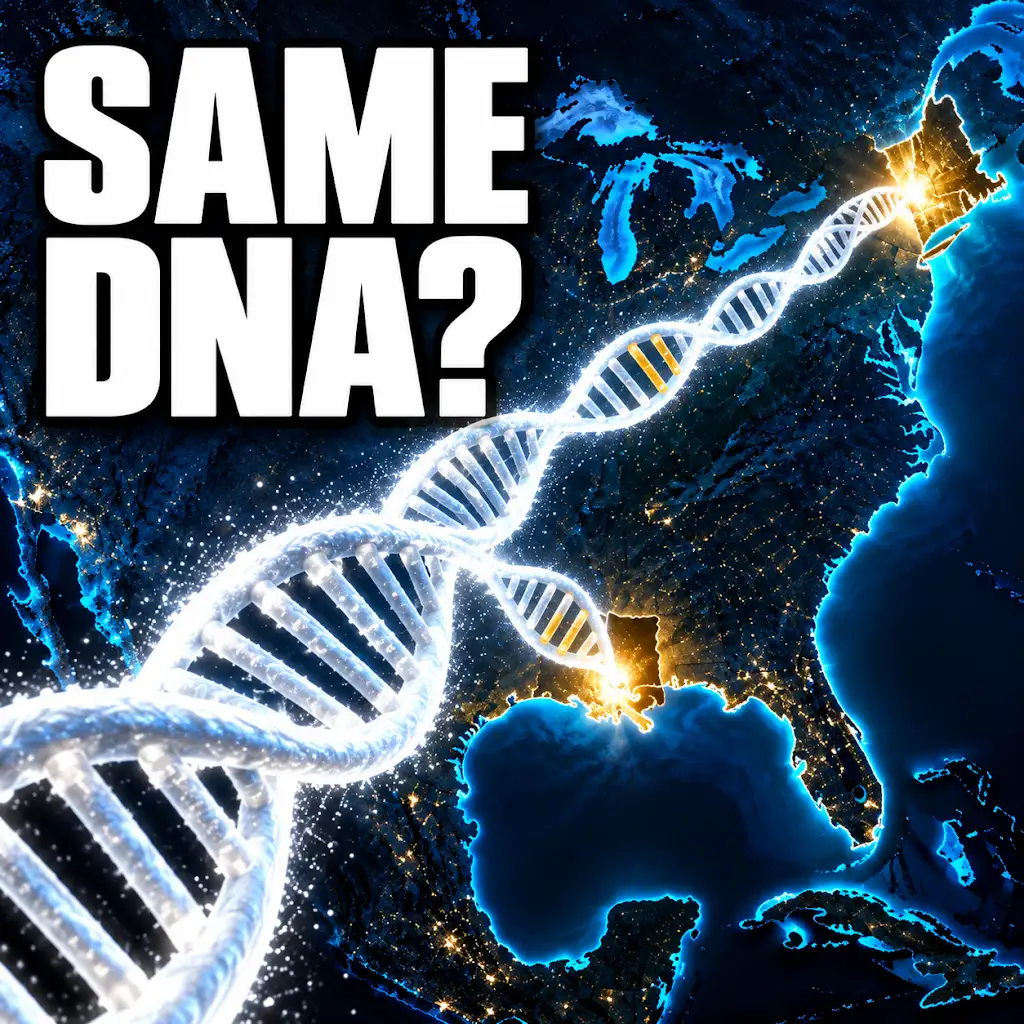
Cajun or French Canadian? The DNA Looked the Same—Until Researchers Looked Closer
FAQs
What is Cajun genetic history?
Cajun genetic history refers to the genetic ancestry and heritage of the Cajun people, who are descendants of French-speaking Acadians from Canada who settled in Louisiana in the 18th century.
What are the main genetic influences in Cajun DNA?
The main genetic influences in Cajun DNA come from the Acadian settlers who were primarily of French descent, as well as contributions from Native American, Spanish, African, and other European populations.
How has Cajun genetic history been studied?
Cajun genetic history has been studied using a combination of genetic testing, genealogical research, and historical records to trace the origins and genetic makeup of the Cajun population.
What are some common genetic markers found in Cajun DNA?
Common genetic markers found in Cajun DNA include markers associated with French, Native American, and European ancestry, reflecting the diverse origins of the Cajun population.
How has Cajun genetic history influenced the culture and identity of the Cajun people?
Cajun genetic history has played a significant role in shaping the culture and identity of the Cajun people, influencing their language, cuisine, music, and traditions that are unique to the Cajun culture in Louisiana.