Thinking about diving into your Cajun heritage through genetic analysis? It’s a fantastic way to connect with your roots, and the short answer is: yes, Cajun genetic profile analysis can definitely help you trace your ancestry and heritage. It’s not just about finding distant cousins; it’s about understanding the unique blend of people and history that makes up the Cajun story.
The Cajun people, descendants of Acadian exiles from French Canada, have a rich and fascinating history. Their journey to Louisiana, their adaptation to a new environment, and their unique cultural development have left a distinct genetic footprint. Genetic testing can unlock clues about this journey, revealing connections you might not have known existed.
Understanding the Cajun Genetic Landscape
So, what exactly are we looking for when we talk about a “Cajun genetic profile”? It’s not a single, monolithic genetic signature, but rather a recognizable pattern that reflects the historical migrations and genetic contributions of various populations to the Cajun community. Think of it as a mosaic, pieced together over centuries.
The Acadian Ancestry Core
The primary ancestral thread in the Cajun genetic tapestry is undoubtedly Acadian. These were French colonists who settled in what is now Nova Scotia and New Brunswick in the 17th century. When they were forcibly expelled by the British in the mid-18th century – an event known as the “Grand Dérangement” – many found their way to Louisiana, bringing their language, culture, and, of course, their genes. Genetic testing can often identify French and Western European markers that strongly align with this Acadian lineage. These are the foundational pieces of the puzzle.
Beyond the French: Diverse Influences
However, the Cajun story is not solely French. Louisiana’s history is a complex interplay of cultures. As Acadians settled in their new home, they interacted with and intermarried with other groups already present or arriving in the region. This is where genetic analysis gets really interesting, as it can reveal these fascinating admixtures.
Indigenous Peoples of Louisiana
Long before the Acadians arrived, the land was home to various Indigenous tribes. Interactions between Acadians and Native American populations, such as the Choctaw, Houma, and Chitimacha, are a significant part of Cajun history and can be detected in genetic profiles. Look for markers associated with Native American ancestry, often showing up as distinct segments of DNA. These segments are not just arbitrary; they represent a direct ancestral link to the original inhabitants of the region.
African Contributions
The history of Louisiana is also deeply intertwined with the African diaspora. Enslaved Africans were brought to the region, and free people of color also formed communities. Over time, there was interaction and intermarriage between Acadian, French, Spanish, and African populations. Genetic testing can reveal African ancestry, often showing a blend of West African markers, which is a testament to the diverse gene pool that contributed to the Cajun identity. This African heritage is an integral part of the richness of Cajun culture and its genetic makeup.
Iberian and Other European Settlers
Louisiana also experienced Spanish rule, and there was a significant influx of Spanish settlers. Furthermore, other European groups, including Germans and Italians, settled in Louisiana, sometimes alongside or near Cajun communities. While French and Acadian ancestry forms the bulk, these other European contributions can also be present in a Cajun genetic profile, adding further layers to the ancestral narrative. These less dominant, but still significant, European threads can emerge through detailed genetic analysis.
Cajun genetic profile analysis offers fascinating insights into the unique heritage of the Cajun people, revealing how their ancestry has been shaped by historical migrations and cultural exchanges. For a broader understanding of how genetics can influence the development of societies, you might find the article on the sudden collapse of ancient civilizations particularly intriguing. It explores how genetic factors, along with environmental and social influences, can lead to the downfall of societies. You can read more about this topic in the article available at The Downfall of Ancient Civilizations: Sudden Collapse Explained.
How Genetic Testing Uncovers Cajun Roots

So, how does all this genetic information get translated into understanding your Cajun heritage? It boils down to comparing your DNA to vast databases of genetic information from populations around the world.
Autosomal DNA Testing: The Broad Strokes
The most common type of genetic testing for ancestry is autosomal DNA testing. This type of test examines DNA from all 23 pairs of your chromosomes. It’s excellent for tracing your ancestry back about 5-7 generations, making it ideal for identifying your relatively recent ancestors.
When you submit your sample for autosomal DNA testing, the company analyzes millions of markers across your genome. These markers are compared against reference populations in their database. For someone with Cajun ancestry, the results will likely show a significant percentage of Northwestern European DNA, with a strong emphasis on French and, often, Spanish components.
However, it’s not just about the broad percentages. The software also looks for longer segments of DNA. These longer segments are more likely to have been inherited from a common ancestor relatively recently. If these longer segments match those found in people known to have Cajun ancestry, it provides strong evidence for your connection. The ethnicity estimates will often break down your European ancestry, and you might see specific regions highlighted that correspond to areas of France or even Spain.
Connecting with Relatives: The Power of the Network
One of the most compelling aspects of autosomal DNA testing is its ability to connect you with living relatives. Genetic testing companies maintain large databases of users. If you share DNA with someone else in the database, it’s because you share a common ancestor.
For those tracing Cajun roots, this can be incredibly powerful. You might connect with distant cousins who have already done extensive genealogical research on your shared Acadian or Louisiana family lines. These cousins can often fill in the gaps in your family tree, provide family stories, and share documents that illuminate your heritage. Imagine finding a third cousin who has digitized old family photos or has access to parish records that you never knew existed – this is the practical magic of genetic genealogy.
The relative matching feature often indicates the estimated relationship (e.g., 2nd cousin, 3rd cousin once removed). This helps you prioritize who to reach out to and what kind of shared ancestry you might explore. It’s a collaborative effort to piece together the larger family puzzle.
Mitochondrial DNA (mtDNA) and Y-DNA: Deeper Ancestral Journeys
While autosomal DNA gives you a broad overview, other types of DNA testing can offer different perspectives on your heritage.
Mitochondrial DNA (mtDNA): Tracing the Maternal Line
Mitochondrial DNA is passed down exclusively from mother to child. Testing your mtDNA can trace your maternal ancestral line all the way back to prehistoric times. For Cajun ancestry, mtDNA can reveal the ancient maternal origins of your lineage, which might be European, but could also, in some cases, reveal very ancient maternal lines that predate the Acadian migration, potentially linking back to indigenous or even earlier migrations into Europe. It’s a slow-moving river of inheritance, focusing on one specific branch of your family tree.
Y-DNA: Following the Paternal Line
Y-DNA is passed down from father to son. If you are male, testing your Y-DNA can trace your paternal ancestral line. This can be particularly useful for confirming French or other European paternal lineage, or in some instances, for uncovering unexpected paternal ancestral connections from populations that interacted with the Acadians. It’s a direct line from father to son, offering a distinct ancestral path to explore.
While mtDNA and Y-DNA are less about identifying broad ethnic percentages like autosomal DNA, they provide a deep dive into specific ancestral lineages. For Cajun researchers, they can corroborate autosomal findings or open up new avenues for exploration if unexpected results appear.
Navigating the Results: Interpreting Your Cajun Genetic Data
Receiving your genetic results is just the beginning. The real work, and the real excitement, comes in interpreting what they mean for your Cajun heritage. It’s a process that combines scientific data with genealogical research.
Ethnicity Estimates: More Than Just Numbers
Your ethnicity estimate will likely show a dominant Northwestern European component, often with a significant French percentage. You might also see Spanish, and potentially smaller percentages attributed to other European groups.
Crucially, remember that ethnicity estimates are estimates. They are based on the reference populations the testing company has access to. As these databases grow and improve, your estimates might be refined over time. For Cajun ancestry, it’s important to look beyond the precise percentages and consider the patterns. A high French percentage is expected, but the presence of other European or even Native American and African markers can be just as significant in understanding your unique family history.
Identifying Ancestral Regions: Pinpointing Your Past
Many testing companies will also break down your European ancestry by region. For Cajun descendants, you might see results pointing to specific regions in France, such as Brittany, Normandy, or Poitou, which were historically significant for French settlement in North America. You might also see Spanish regions if there’s a detectable Iberian contribution. These regional breakdowns can be very helpful in focusing your genealogical research. If your results suggest a strong link to a particular French region, you can then start looking for Acadian families that originated from that area.
The Importance of Context and Genealogy
Genetic results are most powerful when combined with traditional genealogical research. DNA can tell you that you have a certain ancestry, but genealogy helps you understand who those ancestors were and how they are connected to you.
If your genetic results show a significant Native American component, for example, you’ll want to use genealogical records to identify which Indigenous tribe your ancestors may have belonged to and research the historical interactions between that tribe and the Acadian settlers in Louisiana. Similarly, if African ancestry is detected, genealogical research can help you uncover the names and stories of your ancestors who were part of the African diaspora in Louisiana.
Think of it this way: genetics provides the broad strokes, the initial map. Genealogy then fills in the details, the names, dates, and stories that bring that map to life. It’s an ongoing conversation between your DNA and your family history.
Practical Steps for Tracing Cajun Ancestry with DNA
Ready to embark on your Cajun genetic journey? Here’s a practical guide to get you started.
Choosing the Right DNA Test
For tracing Cajun heritage, autosomal DNA testing is generally the best starting point. The major companies offering this service include:
- AncestryDNA: This is often recommended for its large user database, which can lead to more potential matches with relatives, and its extensive genealogical tools.
- 23andMe: Known for its detailed health reports (if you opt for them) and solid ethnicity estimates.
- MyHeritage DNA: Another popular choice with a large international database, which can be beneficial for tracing European roots.
- Family Tree DNA: Offers a range of tests, including autosomal, Y-DNA, and mtDNA, making it a good option if you’re interested in deeper lineage tracing.
Consider which company’s database is likely to have the most users with potential Cajun connections, and which set of tools best suits your research style. Many people find it beneficial to test with multiple companies to maximize their chances of finding matches.
Submitting Your Sample and Receiving Results
Once you’ve chosen a service, ordering a test kit is straightforward. You’ll typically receive a saliva collection kit in the mail. Follow the instructions carefully to provide your sample and mail it back to the lab. The turnaround time for results can vary, but usually takes several weeks.
When your results are ready, you’ll access them through the company’s online platform. This is where you’ll find your ethnicity estimates, your list of DNA matches, and tools for exploring your family tree.
Building Your Family Tree: The Foundation
Start building your family tree, even before you get your DNA results. Document everyone you know – parents, grandparents, great-grandparents – and any information you have about them (birth dates, marriage dates, places of origin). This forms the foundational structure upon which your DNA results can be layered.
As you build your tree, use the information you gather to inform your expectations for your DNA results. If you know your family has deep roots in Southwest Louisiana, you’ll be looking for specific patterns that reflect that history.
Connecting with DNA Matches
Once you have your DNA matches, the real detective work begins. Don’t just look at the number of centimorgans (cMs) shared; examine the matches themselves. Look for common surnames, shared geographic locations in their family trees, or individuals who have already identified as having Cajun ancestry.
Reaching out to matches can be a rewarding experience. Start with a polite, introductory message. Mention that you’re also tracing your Cajun heritage and you noticed you share DNA. Ask if they’d be willing to compare trees or share any research they’ve done. Be patient; not everyone will respond, but those who do can be invaluable allies in your search.
Documenting and Verifying
As you uncover new ancestral links through DNA and genealogy, make sure to document everything. Note the source of your information – whether it’s a DNA match, a birth certificate, a census record, or a family story. Verify information from multiple sources whenever possible. This rigorous approach ensures the accuracy of your findings and builds a solid, well-supported family history.
Recent studies on Cajun genetic profile analysis have revealed fascinating insights into the unique ancestry of this vibrant community. Researchers have traced the genetic markers that highlight the blend of French, Spanish, African, and Native American heritage, showcasing how historical migrations have shaped the Cajun identity. For those interested in exploring the complexities of cultural and genetic intersections, a related article discusses the intriguing findings of archaeological digs and their implications for understanding heritage. You can read more about it in this article.
The Enduring Legacy: Beyond the Genes
| Genetic Marker | Allele Frequency (%) | Associated Ancestry | Significance |
|---|---|---|---|
| HLA-DRB1*04 | 12.5 | European (French) | Linked to immune response variations common in Cajun populations |
| mtDNA Haplogroup H | 45.0 | Western European | Indicative of maternal lineage from French settlers |
| Y-DNA Haplogroup R1b | 60.0 | Western European | Common paternal lineage among Cajun males |
| Native American Admixture | 8.0 | Indigenous American | Reflects historical intermixing with local tribes |
| West African Admixture | 5.0 | West African | Result of African ancestry due to historical migration and slavery |
| Autosomal SNP Diversity | Moderate | Mixed Ancestry | Shows genetic diversity from multiple ancestral sources |
Genetic analysis offers a powerful lens through which to view your Cajun heritage, but it’s important to remember that ancestry is more than just DNA. It’s about culture, traditions, language, and the stories passed down through generations.
Cultural Connections: A Living Heritage
The genetic threads that connect you to the Acadian diaspora are interwoven with a rich cultural tapestry. The French language, though evolving, still echoes in the Cajun dialect. The music, the food, the storytelling – these are all vibrant expressions of a heritage that has endured centuries of change. Your DNA might confirm your lineage, but it’s your engagement with these cultural elements that truly brings your heritage to life.
Exploring the history of the Grand Dérangement, learning about traditional Cajun recipes, listening to Cajun music – these are all ways to connect with the cultural legacy that your DNA represents. The genetic profile is the blueprint; the cultural heritage is the living, breathing structure built upon it.
The Importance of Community and Preservation
For many, discovering their Cajun roots through genetic analysis also sparks a desire to connect with the broader Cajun community. This can involve attending festivals, joining historical societies, or participating in online forums dedicated to Cajun ancestry. These communities are vital for preserving and sharing the unique heritage of the Cajun people.
Your personal genetic journey can become a contribution to the collective understanding of Cajun history and identity. By sharing your findings (where comfortable and appropriate), you might help others make connections or inspire further research. The pursuit of ancestral knowledge is often a shared endeavor.
A Continuous Journey of Discovery
Genetic testing is not a one-time event; it’s a gateway to an ongoing journey of discovery. As DNA databases grow and analytical tools improve, new insights may emerge. Furthermore, your own genealogical research will continue to deepen over time.
Embrace the process. Be curious. And remember that the story of your Cajun heritage is a dynamic one, shaped by migrations, adaptations, and the enduring spirit of a resilient people. Your DNA is a part of that story, a powerful testament to your place in its unfolding narrative.
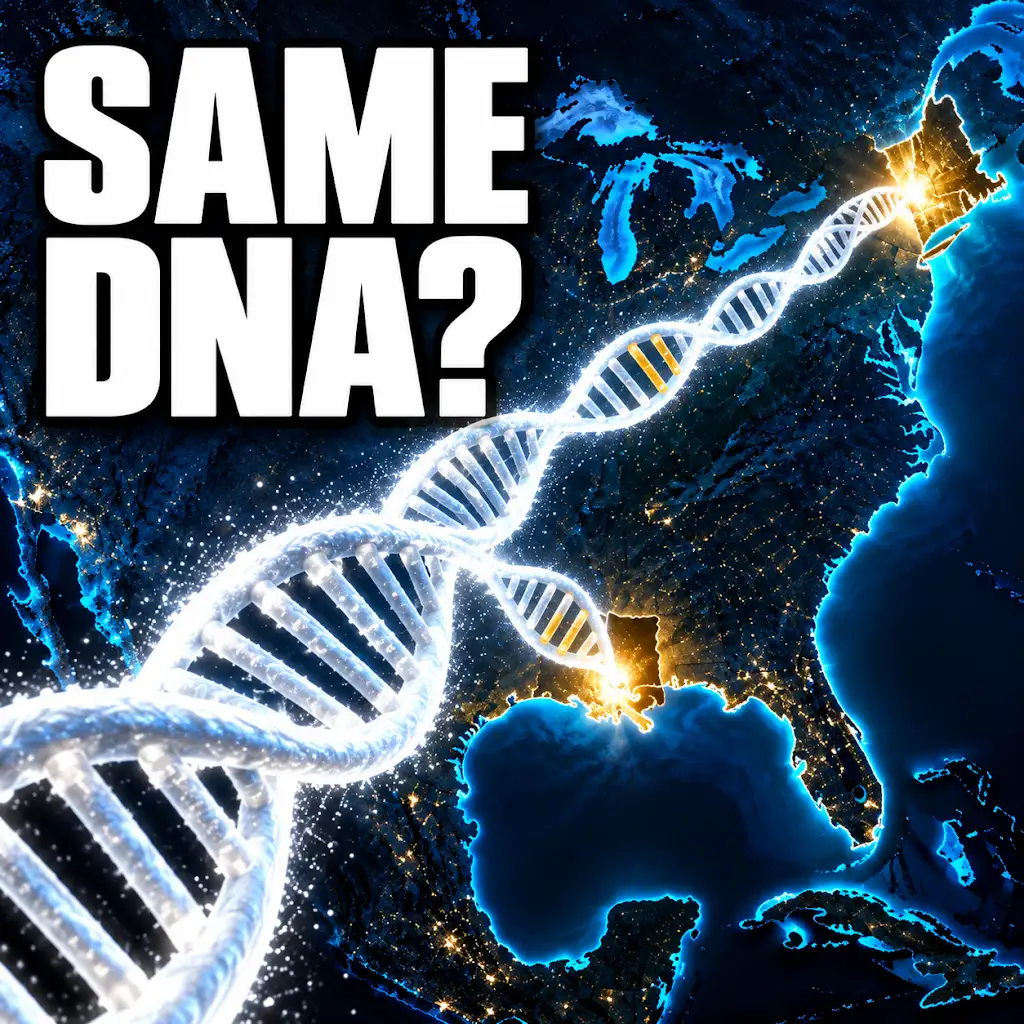
Cajun or French Canadian? The DNA Looked the Same—Until Researchers Looked Closer
FAQs
What is a Cajun genetic profile analysis?
A Cajun genetic profile analysis is a study that examines the genetic makeup of individuals with Cajun ancestry to identify unique genetic markers and characteristics specific to this population.
How is a Cajun genetic profile analysis conducted?
A Cajun genetic profile analysis is typically conducted by collecting DNA samples from individuals with Cajun heritage and analyzing specific genetic markers that are common among this population.
What are the benefits of a Cajun genetic profile analysis?
A Cajun genetic profile analysis can provide valuable insights into the genetic history, ancestry, and health characteristics of individuals with Cajun heritage. It can also help in identifying genetic predispositions to certain diseases or conditions.
Can a Cajun genetic profile analysis help in genealogical research?
Yes, a Cajun genetic profile analysis can be a useful tool in genealogical research by providing information about the genetic connections and ancestry of individuals with Cajun heritage. It can help in tracing family lineages and connections.
Are there any privacy concerns associated with Cajun genetic profile analysis?
Privacy concerns may arise with Cajun genetic profile analysis, as it involves the collection and analysis of individuals’ DNA data. It is important to ensure that proper consent and privacy measures are in place to protect the confidentiality of genetic information.