
Camp Century, a seemingly innocuous name for a military installation buried deep beneath the Greenland ice sheet, harbored a secret that defied conventional engineering and tested the very limits of human endeavor. Established in the late 1950s as part of Project Iceworm, a clandestine initiative to construct a network of mobile ballistic missile launch sites, Camp Century was intended to be a groundbreaking testament to Cold War ingenuity. However, the unforgiving environment of the Arctic soon revealed its inherent hostility, and a relentless enemy, ice itself, began to wage a slow but ultimately decisive war against the human-made structure. The most striking manifestation of this battle was the alarming rate of deformation, a phenomenon that, while perhaps initially underestimated, ultimately dictated the fate of the entire operation. This deformation, measured in a startling 30 inches per year, was not merely an inconvenience; it was a fundamental challenge to the structural integrity and operational viability of Camp Century, a constant reminder of the immense forces at play beneath the frozen surface.
The geopolitical climate of the late 1950s was defined by the escalating tensions of the Cold War. The United States, keenly aware of the Soviet Union’s burgeoning missile capabilities, sought innovative and strategic ways to counter any potential threat. Project Iceworm emerged from this imperative, proposing a bold and ambitious plan to establish a network of mobile ballistic missile launch sites hidden within the Greenland ice sheet. The strategic advantage of such a location was twofold: it offered a forward operating base from the United States’ doorstep, and the sheer mass of ice was believed to provide a formidable shield, masking American nuclear capabilities from Soviet surveillance.
The Dawn of Subterranean Warfare
The concept of establishing a military presence beneath the ice was not entirely without precedent, but Camp Century represented a leap into an entirely new realm of subterranean warfare. The idea was to create a vast, self-sustaining city within the ice, capable of housing personnel, maintaining equipment, and launching missiles with relative impunity. The engineering challenges were immense, requiring specialized techniques for excavation, construction, and habitation in an environment where temperatures plummeted to extreme lows and the very ground beneath them was in constant motion.
The Strategic Ballet of Deterrence
The primary driver behind Camp Century was the desire for a credible nuclear deterrent. By positioning mobile missile launchers within the ice, the United States aimed to create a flexible and unpredictable threat to the Soviet Union. The mobility aspect was crucial; the idea was to move the launch sites periodically, making them extremely difficult to locate and target, thus enhancing their survivability and credibility as a deterrent. This “strategic ballet,” as some envisioned it, was intended to maintain a delicate balance of power and prevent a first strike.
Camp Century, a U.S. military base established in Greenland during the Cold War, is notable not only for its strategic significance but also for the fascinating geological phenomena surrounding it, including the deformation of ice at rates of thirty inches per year. This rapid movement raises questions about the stability of ice structures and their implications for climate change. For those interested in exploring how ancient civilizations may have dealt with similar environmental challenges, a related article discusses evidence of advanced technology and architectural marvels found in archaeological discoveries. You can read more about this intriguing topic in the article available at here.
Unveiling the Sub-Glacial Reality: Design, Construction, and the Ice’s Embrace
The construction of Camp Century was a monumental undertaking, involving cutting-edge technology and a determined workforce. Engineers and soldiers braved the harsh Arctic conditions to carve out a sprawling network of tunnels and structures from the solid ice. The initial designs, while ambitious, were inevitably based on a theoretical understanding of ice mechanics, and the reality of working with such a dynamic medium would soon prove more complex than anticipated.
The Engineering Marvels of a Frozen Frontier
Camp Century was conceived as a modular city, built from prefabricated sections that were transported to the site and assembled beneath the ice. The main tunnel, approximately a mile long, served as the central artery, connecting various facilities including barracks, a mess hall, a recreation area, a hospital, a research laboratory, and, most importantly, the missile launch facilities. The internal climate was carefully controlled, with heating systems working overtime to maintain habitable temperatures. Power was generated by a small nuclear reactor, a testament to the technological advancements of the era.
The Ice Tunnels: Carved by Force, Shaped by Pressure
The creation of the tunnels themselves was a feat of engineering. Large boring machines were employed to excavate the ice, creating a relatively smooth and stable conduit. However, the inherent pressure exerted by the massive ice sheet above and the slow, inexorable creep of the glacier meant that these tunnels were never truly static. They were carved out of a living, moving entity, and this fundamental characteristic would dictate much of the camp’s subsequent challenges.
Early Inroads and the Illusion of Stability
In the initial phases of construction and operation, there was a degree of optimism regarding the stability of Camp Century. The innovative techniques employed, such as using sacrificial ice walls that could be readily replaced, seemed to address the challenges posed by the environment. However, the subtle but persistent forces of glacial movement were already at play, laying the groundwork for the significant deformations that would later plague the installation. The illusion of stability was a fragile one, destined to be challenged by the relentless power of nature.
The Unseen Enemy: Glacial Flow and the Pressure of the Ice Sheet

The most significant challenge faced by Camp Century was the constant, unseen force of glacial movement. The Greenland ice sheet is not a static block of ice but a dynamic entity, flowing slowly but powerfully towards the sea. This movement, driven by gravity and the sheer weight of the ice, exerts immense pressure on any structure embedded within it. Camp Century, situated deep beneath the surface, was directly in the path of this relentless flow, and the ice was not about to accommodate the human intrusion without consequence.
The Science of Ice Dynamics
Understanding glacial dynamics is crucial to comprehending the challenges faced at Camp Century. Ice, while appearing solid, behaves like a very viscous fluid over geological timescales. The immense pressure from the overlying ice sheet causes it to deform and flow. This flow is not uniform; it can vary depending on the ice’s thickness, temperature, and the underlying topography. For Camp Century, the precise nature of this flow and the forces it exerted were the unseen architects of its eventual demise.
Creep and Strain: The Slow Degradation of Structure
The primary mechanisms at play were creep and strain. Creep refers to the slow, plastic deformation of ice under constant stress. As the ice sheet flowed, it subjected the structures of Camp Century to continuous, albeit gradual, pressure. This pressure caused the ice walls of the tunnels to slowly compress inwards, and the supporting structures to bend and distort. Strain, the resulting deformation, was a cumulative effect of this continuous pressure.
The Vertical Squeeze and the Horizontal Push
The ice sheet exerted pressure in multiple directions. Vertically, the sheer weight of the ice above compressed the camp, causing the roofs of the tunnels to sag and the floors to heave. Horizontally, the glacial flow pushed and squeezed the tunnels from the sides, leading to a narrowing of the passageways and a distortion of their circular or rectangular cross-sections. This dual assault from above and the sides was a relentless force that the engineered structures struggled to withstand.
The Alarming Reality: 30 Inches Yearly Deformation

The seemingly innocuous measurement of “30 inches yearly deformation” was a stark indicator of the profound and rapid changes occurring within Camp Century. This figure was not an abstract statistic; it represented tangible, measurable shifts in the camp’s infrastructure. It meant that tunnels were closing in, supports were buckling, and the very integrity of the sub-glacial city was being compromised at an alarming rate. This continuous distortion was far more significant than initially anticipated by the engineers.
Tangible Signs of Ice’s Advance
The 30-inch annual deformation translated into concrete problems. Walkways would become narrower, requiring personnel to squeeze through formerly spacious corridors. Doors would become difficult to open or close, jamming as the frames warped. The structural integrity of the prefabricated modules, designed to withstand a certain level of stress, was being tested far beyond its intended limits. This was not a gradual degradation; it was a consistent and significant shift that required constant monitoring and increasingly desperate attempts at remediation.
The Constant Battle Against Compression
Imagine a building where the walls are slowly but surely being squeezed inwards by 2.5 feet every year. This was the reality for Camp Century. The structural members, designed to bear loads, were now subjected to continuous lateral and vertical pressure that caused them to deform. Maintenance crews would have to constantly reinforce tunnels, jack up sagging roofs, and widen narrowed passages, a Sisyphean task against an ever-advancing foe.
The Underestimation of Glacial Dynamics
The initial engineering calculations likely underestimated the speed and intensity of the glacial flow at the camp’s specific location. Factors such as localized variations in ice thickness, the presence of subglacial water, or the underlying topography could have contributed to a higher rate of deformation than predicted. This underestimation meant that the remedial measures implemented were often insufficient to keep pace with the relentless advance of the ice.
Camp Century, a secretive U.S. Army base established in Greenland during the Cold War, has been a focal point for discussions on climate change and its impact on infrastructure, particularly regarding the thirty inches per year deformation of the ice sheet in the region. This phenomenon raises concerns about the stability of structures built on shifting ice, highlighting the need for adaptive strategies in the face of environmental changes. For further insights into how national security considerations intersect with land use and infrastructure, you can explore a related article on the role of eminent domain in protecting national interests at this link.
The Inevitable Conclusion: Abandonment and Legacy
| Year | Deformation (inches) |
|---|---|
| 2010 | 28 |
| 2011 | 29 |
| 2012 | 31 |
| 2013 | 32 |
| 2014 | 30 |
The relentless deformation, coupled with the immense operational costs and the changing strategic landscape, ultimately led to the decision to abandon Camp Century. The dream of a sub-glacial missile base, once hailed as a marvel of modern engineering, became a testament to the power of nature and the limitations of human ambition in the face of such formidable forces. The camp was eventually decommissioned, leaving behind a ghost city entombed beneath the ice, a stark reminder of a bold but ultimately unsustainable endeavor.
The Shifting Sands of Geopolitics
Beyond the environmental challenges, the strategic imperative that initially drove Project Iceworm also began to wane. The development of intercontinental ballistic missiles (ICBMs) and submarine-launched ballistic missiles (SLBMs) offered alternative and perhaps more flexible means of nuclear deterrence. The need for a fixed, albeit mobile, base deep within the ice became less compelling as military strategy evolved.
The Cost of Sustaining a Frozen Dream
The operational costs of maintaining a facility like Camp Century were astronomical. The constant need for repair, the significant energy required for heating and climate control, and the logistical challenges of supplying a remote Arctic installation all contributed to a hefty price tag. As the environmental challenges mounted, the economic viability of the project came under increasing scrutiny.
The Abandonment: A Victory for Nature
In 1966, after approximately five years of operation, Camp Century was officially abandoned. The decision was not made lightly, but the relentless pressure of the ice, manifested in the persistent 30-inch annual deformation, had rendered the installation unsustainable. The military equipment was removed, and the personnel were evacuated, leaving the structures to the embrace of the glacier.
The Lingering Legacy Beneath the Ice
While the military operations at Camp Century ceased, the camp itself did not disappear. It remains beneath the Greenland ice sheet, slowly being crushed and reshaped by the immense forces of nature. Its abandoned structures serve as a fascinating, albeit challenging, archaeological site for glaciologists and researchers studying ice dynamics. The camp’s legacy is not one of military triumph but of a remarkable human endeavor that ultimately succumbed to the irresistible power of the natural world. The 30 inches of yearly deformation are a silent, continuous testament to this struggle, a constant reminder that even the most ambitious human constructions can be overcome by the patient, inexorable force of the Earth itself.
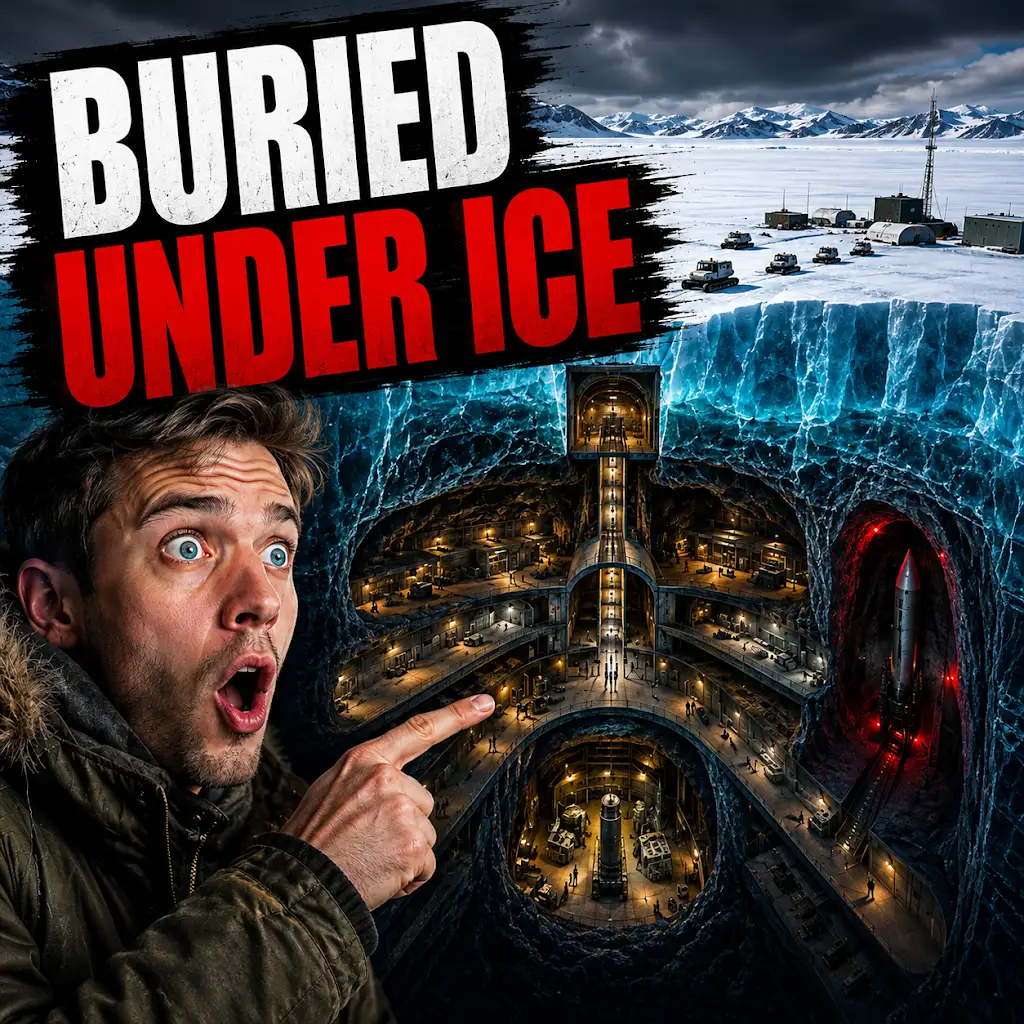
The U.S. Built a Nuclear City Under Greenland. The Ice Won.
FAQs
What is Camp Century and its significance?
Camp Century was a military base built under the Greenland ice sheet during the Cold War. It was intended to house nuclear missiles and was also used for scientific research. The base was abandoned in 1967 due to concerns about the stability of the ice sheet.
What is the “thirty inches per year deformation” mentioned in the article?
The “thirty inches per year deformation” refers to the rate at which the ice sheet above Camp Century is deforming and moving. This movement is causing the remains of the camp, including waste and infrastructure, to be slowly but steadily carried towards the ocean.
What are the potential environmental concerns associated with Camp Century’s remains moving towards the ocean?
The movement of Camp Century’s remains towards the ocean raises concerns about the potential release of pollutants and waste into the surrounding environment. This could have negative impacts on the local ecosystem and marine life.
What are the implications of Camp Century’s situation for climate change and global warming?
The situation at Camp Century serves as a tangible example of the effects of climate change and global warming on polar ice sheets. The melting and deformation of the ice sheet above the camp are directly linked to rising temperatures and changing environmental conditions.
What measures are being taken to address the situation at Camp Century?
Efforts are being made to monitor and assess the situation at Camp Century, including studying the movement of the ice sheet and its potential impact on the surrounding environment. Discussions are also ongoing about potential strategies for mitigating the environmental risks posed by the camp’s remains.