Camp Century, a testament to human ingenuity and a pioneering outpost for scientific exploration, stands as a remarkable chapter in the annals of polar research. Established in 1959, this subterranean base, carved into the Greenland ice sheet, was more than just a military installation; it was a forward-thinking hub designed to advance modern scientific research in one of the planet’s most challenging and revealing environments. Its story is one of audacious engineering, groundbreaking discoveries, and a legacy that continues to inform our understanding of climate, geology, and the very limits of human endurance.
The genesis of Camp Century was intrinsically linked to the Cold War and the burgeoning need for scientific understanding in the Arctic. Driven by strategic interests, the United States Army Corps of Engineers envisioned a permanent, self-sufficient base within the ice that could serve as a platform for both military operations and extensive scientific inquiry. The project, codenamed “Project Iceworm,” aimed to explore the feasibility of constructing and maintaining a vast network of tunnels beneath the ice surface. This ambitious undertaking was not merely about establishing a presence but about unlocking the secrets held within the ancient ice, secrets that held vital clues about past climates and future environmental changes. The sheer audacity of digging a city beneath kilometers of ice underscored a commitment to pushing the boundaries of what was considered possible.
Strategic Imperatives and Scientific Ambitions
While the military’s strategic interests in the Arctic were undeniable, the scientific ambitions for Camp Century were equally profound. The thawing of permafrost and the potential for nuclear conflict in the polar regions spurred a desire to understand the mechanics of the ice sheet, its movement, and its potential impact on global sea levels. Furthermore, the isolation and pristine nature of the Arctic offered an unparalleled laboratory for studying atmospheric conditions, solar radiation, and even the possibility of life in extreme environments. The vision was to create a sustained research presence that could conduct long-term studies, unhindered by the transient nature of earlier polar expeditions. This dual-purpose foundation set Camp Century apart, ensuring that its existence served a purpose far beyond mere military observation.
Engineering Marvels in an Extreme Environment
The construction of Camp Century was an engineering feat of unprecedented scale. The base was not built on top of the ice, but rather dug into it. A fleet of specialized vehicles, including crawler-transports and bulldozers, carved out an extensive network of tunnels stretching over 1,300 feet. These tunnels housed living quarters, laboratories, a power plant, a hospital, a cafeteria, and even a small chapel, creating a self-contained community. The challenges were immense, from the extreme cold and unpredictable ice movements to the logistical nightmare of supplying a remote base. The engineers had to devise innovative methods for heating, ventilation, and waste disposal, all while battling the constant threat of the ice deforming and crushing the structures. The very act of carving a habitable space within a living glacier was a testament to human ingenuity and the relentless pursuit of scientific understanding.
Recent scientific research at Camp Century, a former U.S. military base in Greenland, has shed light on the implications of climate change and its impact on the Arctic environment. The findings from this research highlight the importance of understanding historical climate patterns to better predict future changes. For a broader perspective on how these environmental challenges intersect with economic strategies, you can read about the need for strengthening domestic manufacturing and investing in infrastructure in this article: Securing U.S. Economic Survival: A Strategic Plan.
Unveiling the Secrets of the Greenland Ice Sheet
Camp Century’s primary scientific objective was to delve into the heart of the Greenland ice sheet, a colossal reservoir of frozen water holding critical information about Earth’s past climate. The base’s unique location allowed for unprecedented access to the ice, enabling scientists to collect deep ice cores, which serve as invaluable archives of atmospheric conditions over millennia. These ice cores, meticulously extracted and analyzed, provided a chronological record of temperature fluctuations, greenhouse gas concentrations, volcanic eruptions, and even dust composition, offering a detailed narrative of Earth’s climatic history. The ability to study these ancient ice layers provided a tangible link to past environments, allowing researchers to understand natural climate variability and the long-term impacts of atmospheric changes.
Deep Ice Coring: A Window to the Past
The painstaking process of deep ice coring was central to Camp Century’s scientific endeavors. Utilizing specialized drilling equipment, scientists were able to extract cylindrical samples of ice from depths of over a kilometer. These cores were then transported to laboratories for detailed analysis. By examining trapped air bubbles, isotopic ratios, and impurities within the ice, researchers could reconstruct past atmospheric compositions, temperatures, and precipitation patterns. This information was crucial for validating climate models, understanding the drivers of climate change throughout history, and providing a baseline against which to assess current and future warming trends. The findings from these cores significantly enhanced the scientific community’s understanding of the Earth’s climate system and its long-term dynamics.
Glaciological Studies: Understanding Ice Dynamics
Beyond ice cores, Camp Century facilitated extensive glaciological studies, focusing on the physical behavior and movement of the Greenland ice sheet. Researchers monitored ice flow rates, measured temperature gradients within the ice, and studied the interaction between the ice and the underlying bedrock. These investigations were critical for understanding the stability of the ice sheet, its potential contribution to global sea-level rise, and the processes that govern its eventual melt. The unique subterranean environment allowed for in-situ measurements that were impossible to obtain from surface-based observations, providing a more comprehensive picture of the ice sheet’s complex internal dynamics. Understanding these dynamics is paramount in an era of accelerating climate change, where the fate of polar ice sheets is a significant global concern.
Advancing Polar Meteorology and Atmospheric Research
The frigid, windswept environment of Greenland provided an ideal setting for meteorological and atmospheric research. Camp Century’s isolation and its position beneath the vast ice sheet offered a unique vantage point for studying atmospheric phenomena, contributing to a deeper understanding of weather patterns, air circulation, and the exchange of energy and matter between the atmosphere and the cryosphere. The base’s sophisticated instrumentation allowed for continuous monitoring of key atmospheric parameters, providing valuable data that improved weather forecasting models and our comprehension of global atmospheric processes.
Monitoring Climate Variables and Atmospheric Composition
Camp Century served as a vital hub for monitoring critical climate variables and atmospheric composition. Researchers collected data on temperature, humidity, wind speed and direction, precipitation, and solar radiation. Beyond these standard meteorological measurements, the base was equipped to analyze the composition of the atmosphere, including concentrations of greenhouse gases like carbon dioxide and methane, as well as aerosols and other trace elements. This long-term data collection was invaluable for identifying trends, detecting changes in atmospheric chemistry, and understanding the complex interplay between human activities and the global climate system. The pristine Arctic air offered a relatively unpolluted baseline, making observations particularly insightful.
Studying Atmospheric Circulation and Energy Exchange
The unique geographical location of Camp Century provided an exceptional opportunity to study atmospheric circulation patterns and the exchange of energy between the atmosphere and the Greenland ice sheet. Researchers investigated katabatic winds, the dense, cold winds that flow down from the ice sheet’s interior, and their impact on local weather and climate. They also studied the absorption and reflection of solar radiation by the ice surface and its influence on atmospheric temperatures. Understanding these energy exchange processes is crucial for accurately modeling climate, predicting future warming, and assessing the overall health of the polar regions. The data gathered contributed to a more nuanced understanding of how the Arctic influences global weather systems.
Biological and Geological Exploration Beneath the Ice
While primarily known for its glaciological and atmospheric research, Camp Century also facilitated important biological and geological investigations, pushing the boundaries of what was thought to be possible in such an extreme environment. The opportunity to access the bedrock beneath the ice and to sample the ancient ice itself revealed unexpected insights into past life and the geological history of the region, further cementing the base’s role as a multi-disciplinary scientific outpost.
Subglacial Environments and Potential for Life
One of the most intriguing aspects of Camp Century’s scientific legacy lies in its exploration of subglacial environments. The very notion of life existing beneath kilometers of ice was once considered a scientific fantasy. However, by drilling through the ice and reaching the bedrock, scientists had the opportunity to sample sediments and meltwater that had been trapped for millennia. These samples yielded evidence of past microbial life, demonstrating the resilience and adaptability of organisms in seemingly inhospitable conditions. The discovery of ancient bacteria and their metabolic pathways opened new avenues of research into astrobiology and the potential for life on other icy worlds. This research significantly broadened our understanding of the biosphere’s tenacity.
Geological History and Paleoclimatic Reconstruction
The geological exploration conducted at Camp Century provided invaluable data for reconstructing the region’s past. By analyzing rock samples from beneath the ice sheet, geologists could gain insights into the geological history of Greenland, including its formation, tectonic activity, and past environmental conditions. The presence of ancient flora and fauna preserved in the bedrock offered further clues about past climates and ecosystems, extending our paleoclimatic records beyond what could be gleaned from ice cores alone. Understanding the deep geological history of the region is essential for comprehending the long-term evolution of Earth’s climate system and the factors that have shaped our planet. The confluence of geological and glaciological data provided a holistic view of the region’s past.
Recent scientific research at Camp Century, an abandoned U.S. military base in Greenland, has shed light on the potential impacts of climate change on Arctic ice and its implications for global sea levels. This fascinating study not only explores the historical significance of the site but also emphasizes the importance of international cooperation in addressing environmental challenges. For a deeper understanding of how nations can work together to prevent conflicts over resources in space, you can read more in this article on preventing a space arms race through international cooperation.
The Legacy of Camp Century: Enduring Contributions to Science
| Research Area | Findings |
|---|---|
| Ice Core Analysis | Revealed historical climate data |
| Glaciology | Studied ice flow and dynamics |
| Geophysics | Measured ice thickness and bedrock topography |
| Climate Modeling | Predicted future ice sheet behavior |
Although Camp Century was eventually decommissioned in 1966 due to the challenges of ice movement and structural integrity, its legacy continues to resonate within the scientific community. The data collected and the research conducted during its operational years have provided foundational knowledge for subsequent polar expeditions and have significantly advanced our understanding of Earth’s climate system, glaciology, and atmospheric science. The lessons learned in engineering and logistics from building and operating a base beneath the ice have also informed future Arctic infrastructure development.
Informing Climate Change Research and Modeling
The scientific data meticulously gathered at Camp Century remains highly relevant to contemporary climate change research. The long-term records of atmospheric composition, temperature, and ice sheet behavior provide invaluable baseline data for validating and refining climate models. The insights into past climate variability and the natural drivers of change offer critical context for understanding the current anthropogenic warming trends. The understanding of ice sheet dynamics is paramount in predicting future sea-level rise, a critical concern for coastal communities worldwide. Camp Century’s contributions continue to empower scientists to better predict and mitigate the impacts of a changing planet.
Inspiring Future Polar Exploration and Innovation
Camp Century stands as an enduring symbol of human ambition and the relentless pursuit of scientific knowledge in extreme environments. Its existence demonstrated that even the most challenging frontiers could be conquered through innovation and perseverance. The engineering solutions developed for its construction and operation continue to inspire future Arctic explorers and engineers, pushing the boundaries of what is possible in polar research and infrastructure development. The spirit of Camp Century, its dedication to scientific inquiry against all odds, serves as a powerful reminder of humanity’s capacity for exploration and discovery, encouraging new generations to venture into the unknown and contribute to our collective understanding of the world.
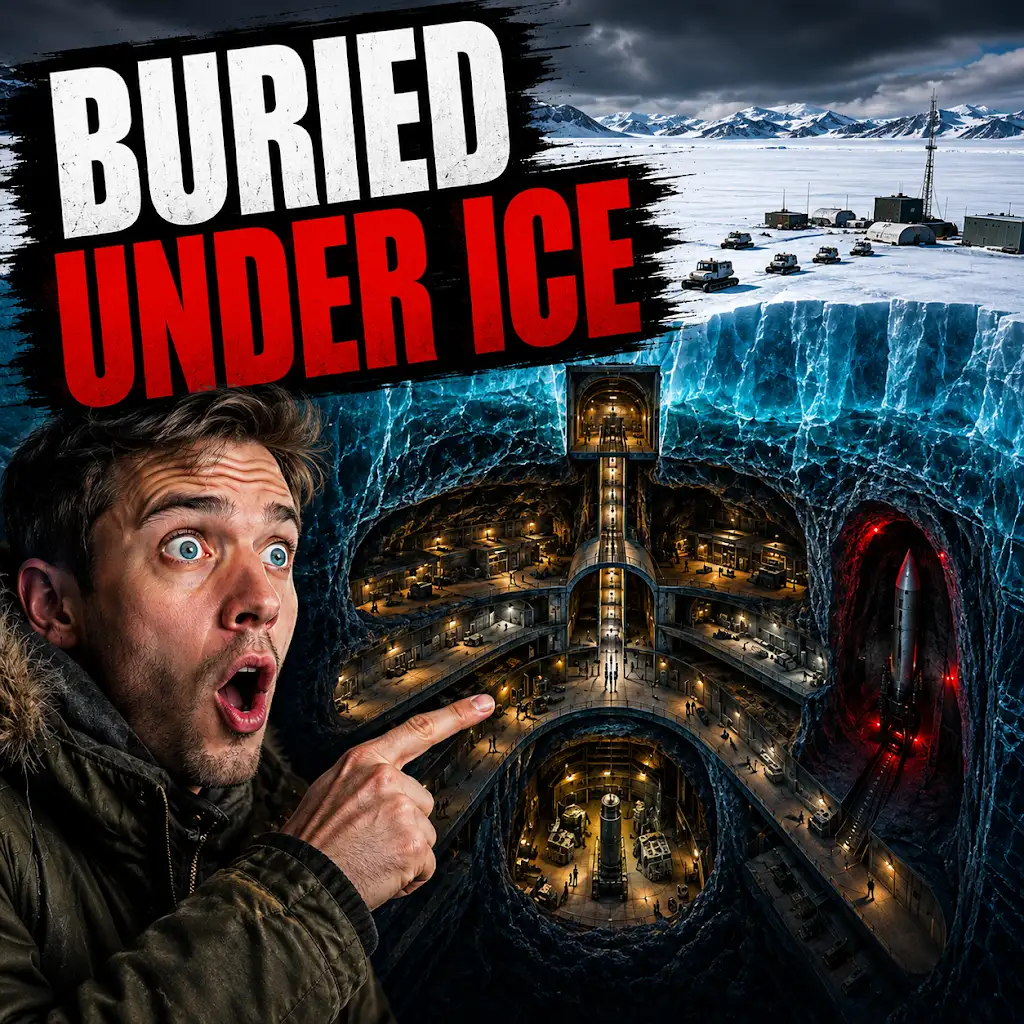
The U.S. Built a Nuclear City Under Greenland. The Ice Won.
FAQs
What is Camp Century?
Camp Century was a military base built by the United States in Greenland in 1959 as part of a secret Cold War project. It was intended to be a network of tunnels and buildings under the ice, housing a nuclear reactor and missiles.
What is the current status of Camp Century?
Camp Century was abandoned in 1967 due to the unstable ice sheet and the project’s environmental impact. The camp’s infrastructure, including its nuclear reactor, was left in place and is now buried under layers of ice.
What modern scientific research is being conducted at Camp Century?
Today, Camp Century is the focus of scientific research related to climate change and glaciology. Scientists are studying the ice sheet above the camp to understand its dynamics and the potential impact of melting ice on sea level rise.
What are the environmental concerns related to Camp Century?
The abandoned camp poses environmental concerns due to the presence of pollutants such as diesel fuel, PCBs, and radioactive waste. As the ice sheet melts, there is a risk of these contaminants being released into the environment.
What are the implications of Camp Century’s melting ice for the future?
The melting ice above Camp Century has implications for global sea level rise and the release of pollutants into the environment. Understanding the dynamics of the ice sheet above the camp is important for predicting and mitigating these potential impacts.