Beneath the vast, white expanse of the Greenland ice sheet lies a forgotten chapter of human endeavor and a chilling testament to the ambitions of the Cold War. Camp Century, a former U.S. Army military base, was not merely built upon the ice; it was carved into it, a testament to ingenuity and a stark reminder of nature’s persistent power. Once hailed as a triumph of engineering and a vision of a future military presence, the camp has since been abandoned, its structures slowly succumbing to the relentless flow of glacial ice, burying it deeper and deeper into the frigid embrace of Greenland. This article delves into the fascinating history of Camp Century, its ambitious goals, its eventual demise, and the lingering environmental concerns it presents.
Recent explorations of Camp Century, a former U.S. military base buried deep under Greenland’s ice, have sparked interest in the potential for uncovering ancient technologies and innovations. This topic is further explored in a related article that discusses how lost civilizations have contributed to modern advancements. For more insights on this fascinating subject, you can read the article here: Uncovering Ancient Tech: Lost Civilizations’ Innovations.
The Genesis of a Sub-Glacial City
The origins of Camp Century are rooted in the geopolitical anxieties of the Cold War. As the United States and the Soviet Union engaged in a protracted ideological and military standoff, strategic positioning became paramount. The Arctic, with its proximity to both superpowers, emerged as a critical theater for surveillance and potential military operations. The U.S. military, in its quest for innovation and dominance, envisioned a network of secret bases beneath the ice of Greenland, offering a secure and covert platform for a variety of purposes.
Project Iceworm: The Strategic Imperative
The grand vision was known as Project Iceworm. The overarching goal was to construct a network of underground facilities that would be virtually undetectable from the surface and resilient to nuclear attack. These bases were intended to house missile launch sites, radar installations, and support infrastructure, allowing the United States to maintain a significant military presence in the Arctic without overtly provocative surface installations. Camp Century was conceived as the flagship and most ambitious undertaking of this project. Its location was chosen for its relative accessibility, while still offering significant ice cover. The sheer scale of the endeavor was unprecedented, requiring innovative engineering solutions to work in the harsh Arctic environment.
Technological Innovations for an Icy Frontier
Building a functional city within the ice presented a monumental engineering challenge. The U.S. Army’s Corps of Engineers, in collaboration with private contractors, had to develop and deploy novel techniques. The concept was to excavate trenches into the ice and then cover them with prefabricated modules, creating a network of interconnected tunnels and buildings. These structures were to be insulated to maintain a habitable temperature, and power generated by a small nuclear reactor would provide electricity and heat. The challenges were immense, from managing the structural integrity of the ice to ensuring the reliable operation of sophisticated equipment in sub-zero temperatures. This project pushed the boundaries of what was considered possible in polar construction.
Life and Purpose at Camp Century
Despite its subterranean nature, Camp Century was designed to be a fully functional community, albeit a temporary one. It housed hundreds of personnel and was equipped with all the necessary amenities for extended operations. The dual purpose of the base, encompassing both military strategy and scientific research, added another layer to its unique existence.
A Community Beneath the Ice
At its peak, Camp Century housed over 150 military personnel and civilian contractors. They lived and worked in a network of tunnels, each serving a specific purpose. There were barracks for sleeping, a mess hall for dining, a hospital, a recreation center, a workshop, and even a greenhouse for growing fresh produce. The construction involved the extensive use of standardized prefabricated modules, allowing for relatively rapid assembly once the initial excavation was complete. Life was challenging, characterized by isolation, extreme cold, and the inherent risks of living in a sub-glacial environment. Yet, a sense of camaraderie and purpose undoubtedly permeated the community, united by the shared experience of living and working in such an extraordinary location.
Military Might and Scientific Discovery
Camp Century served a dual purpose. Militarily, it was intended to be a strategic hub, a platform for deploying intercontinental ballistic missiles (ICBMs) and conducting reconnaissance. The primary objective was to be ready to retaliate against a Soviet attack from a secure, hidden location. However, the unique environment also made it an invaluable site for scientific research. Glaciologists, geologists, and atmospheric scientists conducted numerous studies, contributing significantly to our understanding of the Greenland ice sheet, its formation, and its dynamics. Ice cores were extracted, providing invaluable data about past climates and atmospheric conditions, a legacy that continues to inform climate science today. The scientific endeavors at Camp Century were as ambitious as its military aspirations.
The Unforeseen Architect: The Greenland Ice Sheet
The very element that provided Camp Century with its strategic advantage – the ice – ultimately became its undoing. The dynamic nature of the ice sheet, a slow-moving but powerful force, proved to be an underestimated adversary.
The Constant Creep of Ice
The Greenland ice sheet is not a static entity. It is a colossal mass of frozen water in perpetual motion, constantly flowing downhill towards the coast. This glacial movement, though slow, exerts immense pressure and deforms the ice. The tunnels and structures of Camp Century, initially designed to withstand the pressures of the ice, were gradually compressed and distorted over time. The weight of the overlying ice caused the very foundations of the base to shift and sag, rendering the facilities increasingly unstable. The engineers had accounted for some ice movement, but the scale and persistence of this force were greater than anticipated.
Environmental Changes and Structural Degradation
The gradual warming of the Arctic, even during the Cold War era, contributed to the degradation of the ice. Surface meltwater could penetrate the ice, weakening its structure and exacerbating the effects of glacial flow. The insulating properties of the ice also meant that internal heating from the camp’s reactor and human activity could subtly influence the surrounding ice, potentially contributing to localized melting and instability. Over time, the interconnected tunnels began to buckle, support structures failed, and the entire base became a precarious labyrinth within the ice. The constant struggle to maintain the structures against the relentless forces of nature became an increasingly futile endeavor.
Recent discoveries about Camp Century, which is buried deeper under Greenland’s ice, have sparked interest in the mysteries of historical exploration. This topic resonates with the intriguing story of Piri Reis and the enigmatic maps he created, which have puzzled historians for centuries. To delve deeper into the connections between ancient cartography and modern-day explorations, you can read more in this fascinating article about lost maps and their significance in understanding our past. For further insights, check out this article.
The Abandonment and the Lingering Legacy
| Metric | Value |
|---|---|
| Depth of Camp Century | 115 feet |
| Year of establishment | 1959 |
| Estimated annual snow accumulation | 0.1-0.2 meters |
| Projected depth in 2090 | 230-460 feet |
As the structural integrity of Camp Century deteriorated and the strategic landscape of the Cold War evolved, the decision was made to abandon the ambitious sub-glacial base. However, its legacy continues to pose a unique set of challenges.
A Strategic Shift and Operational Costs
The world political climate began to shift. The development of new missile technologies and changes in military strategy rendered some of Camp Century’s original purposes less relevant. Furthermore, the cost of maintaining and repairing the constantly shifting structures, coupled with the inherent risks involved, became prohibitive. The logistical challenges of supplying and operating a remote base in such an extreme environment were also a significant factor. In 1966, after only a few years of operation, Camp Century was officially decommissioned and evacuated. The decision was made to leave the structures in place, allowing them to be entombed by the ice, believing this to be the most effective way to manage the site.
The Unresolved Environmental Question
The abandonment of Camp Century left behind a significant environmental concern. The base was equipped with a small nuclear reactor and contained various hazardous materials, including diesel fuel, lubricants, and chemical waste. While efforts were made to remove the most critical components before evacuation, the possibility remains that residual radioactive materials and other pollutants are still present within the buried structures. As the ice continues to move and melt, there is a growing concern that these contaminants could eventually be released into the fragile Arctic environment, potentially impacting local ecosystems and freshwater sources. The buried camp represents a ticking environmental time bomb, albeit a slow-acting one.
The Future of Camp Century: A Ghost Beneath the Ice
Camp Century, once a symbol of human ambition and technological prowess, is now a ghost beneath the ice, a forgotten outpost slowly being erased by the very element it sought to master. Its story serves as a poignant reminder of the unpredictable nature of both human endeavors and the natural world.
The Rediscovery and Ongoing Monitoring
In recent years, with advances in radar and satellite technology, Camp Century has been rediscovered and is being closely monitored. Scientists and environmental agencies are actively studying the site to assess the extent of potential contamination and the rate at which the ice is encroaching upon the buried structures. The fear is that as global temperatures continue to rise, the ice sheet will melt at an accelerated rate, exposing the hazardous materials within. Understanding the rate of ice movement and the processes of degradation is crucial for predicting when and if a major environmental event might occur.
The Implications for Climate Change Research
The story of Camp Century also offers a unique, albeit unintentional, case study for understanding the impacts of climate change on polar environments. The challenges faced by the military personnel in maintaining the base due to ice movement and degradation are now being amplified by global warming. The site’s burial serves as a stark visual metaphor for the profound changes occurring within the Greenland ice sheet and the potential consequences for the planet. The ongoing research at Camp Century contributes not only to environmental risk assessment but also to our broader understanding of glacial dynamics in a warming world. The future of Camp Century is intrinsically linked to the future of the Arctic and the planet itself. It stands as a silent sentinel, a buried secret waiting to be fully understood and managed before its secrets are irrevocably released.
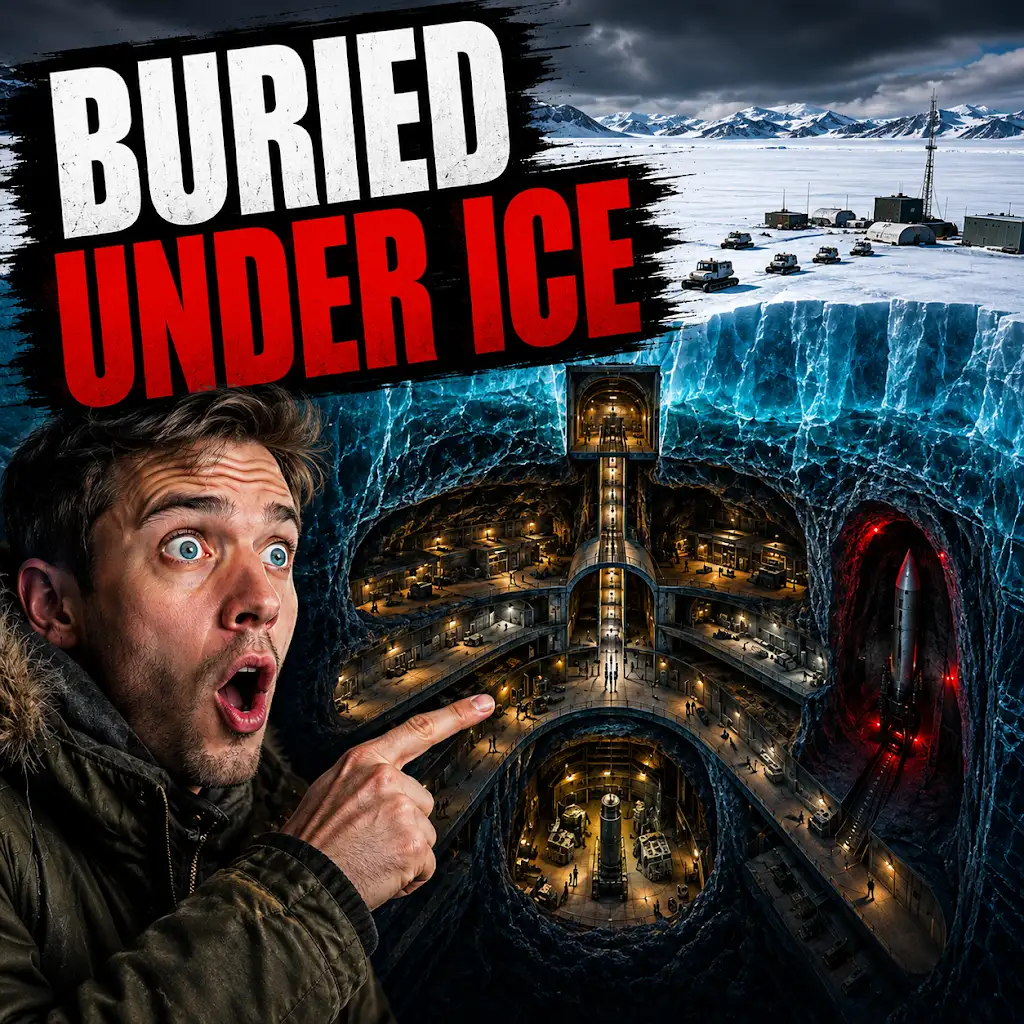
The U.S. Built a Nuclear City Under Greenland. The Ice Won.
FAQs
What is Camp Century?
Camp Century was a military base built by the United States Army Corps of Engineers in Greenland in 1959. It was primarily used for scientific research and as a cover for the deployment of nuclear missiles during the Cold War.
Why was Camp Century buried deeper under Greenland?
Camp Century was buried deeper under Greenland due to the melting ice caused by climate change. The base was originally constructed under the assumption that the ice sheet would remain stable, but as the ice has started to melt, the base and its waste materials have become exposed.
What are the environmental concerns associated with Camp Century?
The main environmental concern associated with Camp Century is the potential release of pollutants and radioactive waste as the ice continues to melt. This could have serious implications for the surrounding ecosystem and local communities.
What is being done to address the environmental impact of Camp Century?
Efforts are being made to assess the environmental impact of Camp Century and to develop plans for mitigating any potential harm. This includes monitoring the site and exploring options for removing or containing the waste materials.
What are the geopolitical implications of Camp Century’s exposure?
The exposure of Camp Century has raised questions about the responsibility for addressing the environmental and geopolitical implications of the base. It has also sparked discussions about the broader impact of climate change on military infrastructure and international relations.