Greenland, a land of ice and stark beauty, holds secrets buried deep within its frozen expanse. Among these is Camp Century, a former U.S. Army Cold War-era military base, ingeniously constructed beneath the ice sheet. Once a marvel of engineering and a symbol of scientific ambition, Camp Century now stands as a poignant reminder of the ephemeral nature of human endeavors in the face of a changing planet. Its once-proud network of tunnels, designed to withstand the harsh Arctic environment, is now succumbing to the relentless pressures of its icy tomb, exhibiting significant deformation that threatens to reclaim the entire facility. This article delves into the multifaceted issue of Camp Century’s tunnel deformation, exploring its causes, consequences, and the implications for understanding the Arctic’s evolving landscape.
Recent studies on the deformation of the Camp Century tunnel in Greenland have raised concerns about the stability of this underground facility as climate change accelerates. This topic is intricately connected to broader discussions about the shifting global landscape, as highlighted in a related article that explores anticipated global map shifts due to environmental changes. For more insights on this pressing issue, you can read the article here: Anticipated Global Map Shifts.
The Genesis of an Arctic Outpost: Camp Century’s Cold War Origins
The story of Camp Century is inextricably linked to the geopolitical tensions of the Cold War. Established in 1959, it was conceived as part of Project Iceworm, a top-secret military initiative to construct a network of missile launch facilities deep within the Greenland ice sheet. The strategic advantage of such a location was undeniable: placing intercontinental ballistic missiles within striking distance of the Soviet Union while being relatively concealed beneath vast swathes of ice. Beyond its military purpose, Camp Century also served as a significant scientific research station, a hub for glaciology, meteorology, and even the search for extraterrestrial life through its radio astronomy capabilities.
Project Iceworm: A Strategic Vision
The audacious idea behind Project Iceworm was to create a mobile, subsurface missile base. The plan envisioned a sprawling network of tunnels, excavated by the Army Corps of Engineers, that could be extended and shifted as the ice flowed. This foresight, while technologically impressive for its time, ultimately proved to be a critical miscalculation in the long term. The sheer scale of the undertaking – over 13,000 feet of tunnels, branching out from a central core – was a testament to human ingenuity and the era’s grand ambitions.
A Dual Purpose: Military Might and Scientific Exploration
While the military imperative was the primary driver for Camp Century’s construction, its scientific contributions were substantial. The isolation and unique environment offered unparalleled opportunities for researchers. The base housed laboratories, living quarters, a power plant, and even a greenhouse that successfully cultivated fresh produce. The ice cores extracted from Camp Century provided invaluable data about Earth’s past climate, contributing significantly to our understanding of glaciology and paleoclimatology. This dual nature, a clandestine military outpost and a beacon of scientific inquiry, adds layers of complexity to its eventual demise.
The Ice’s Embrace: Understanding Tunnel Deformation
The fundamental challenge at Camp Century was, and remains, the dynamic nature of the ice sheet itself. Far from being a static frozen mass, the Greenland ice sheet is a constantly moving entity, flowing under its own weight. The tunnels, carved into this ice, are subjected to immense pressure from above and the insidious creep of the ice from the sides. This relentless force, coupled with factors like internal ice melt and thermal expansion, has led to the progressive deformation of the underground structures.
The Undulating Forces of the Ice Sheet
The Greenland ice sheet is not a uniform block. It is a
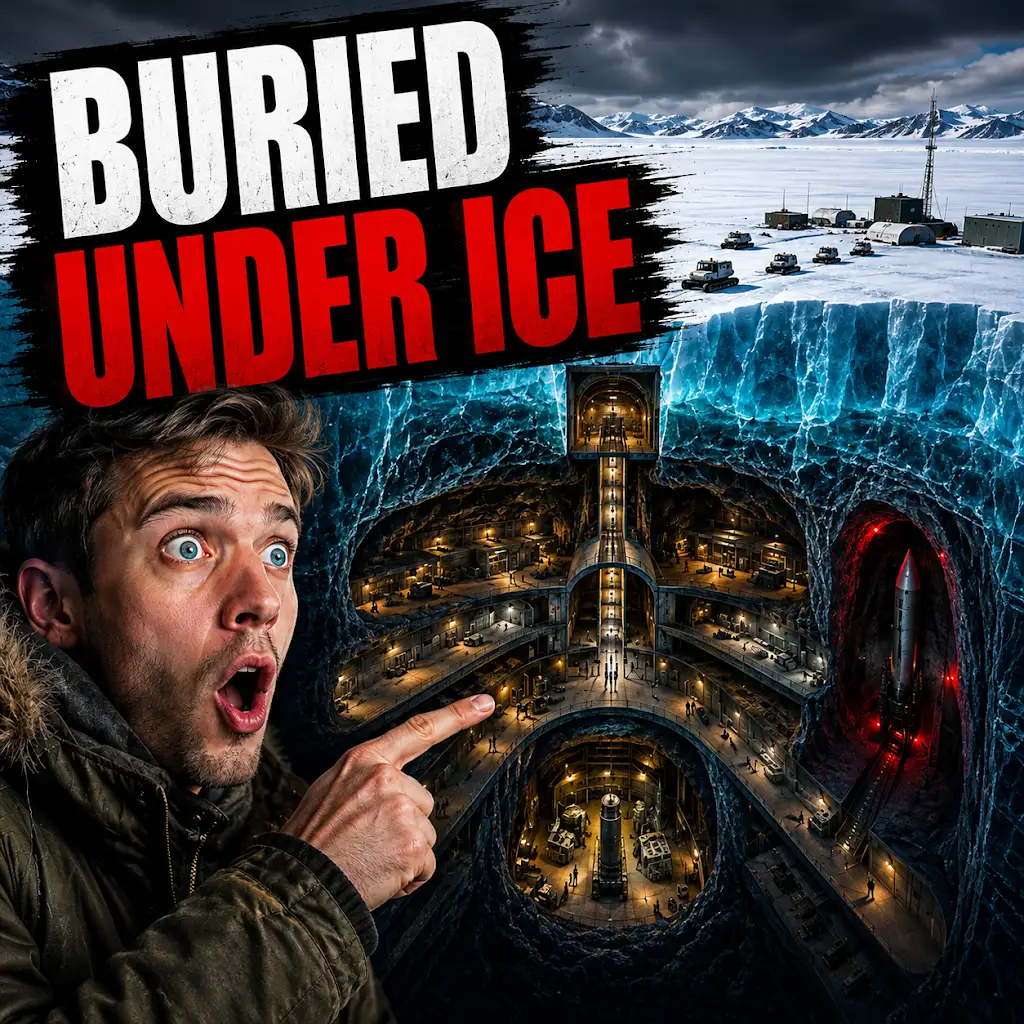
The U.S. Built a Nuclear City Under Greenland. The Ice Won.
FAQs
What is Camp Century and where is it located?
Camp Century was a military base built under the ice in northwestern Greenland during the Cold War. It was located approximately 150 miles from the coast, beneath the ice sheet.
What is tunnel deformation and how does it relate to Camp Century?
Tunnel deformation refers to the changes in the shape and structure of tunnels, often caused by pressure from the surrounding ice. In the case of Camp Century, the ice sheet above the tunnels has been melting, causing the tunnels to deform and potentially collapse.
What are the potential environmental concerns associated with the Camp Century tunnel deformation?
The melting ice and potential collapse of the tunnels at Camp Century could release hazardous materials, including radioactive waste and diesel fuel, into the surrounding environment. This could have serious implications for the local ecosystem and wildlife.
What is being done to address the issue of tunnel deformation at Camp Century?
Efforts are being made to monitor the situation and assess the potential risks associated with the tunnel deformation. Additionally, discussions are ongoing between the Danish and Greenlandic governments, as well as the United States, to address the environmental and security concerns related to Camp Century.
What are the long-term implications of the Camp Century tunnel deformation?
The long-term implications of the tunnel deformation at Camp Century are still being studied and assessed. However, it is clear that the situation highlights the potential environmental and geopolitical challenges associated with abandoned military infrastructure in remote and environmentally sensitive areas.