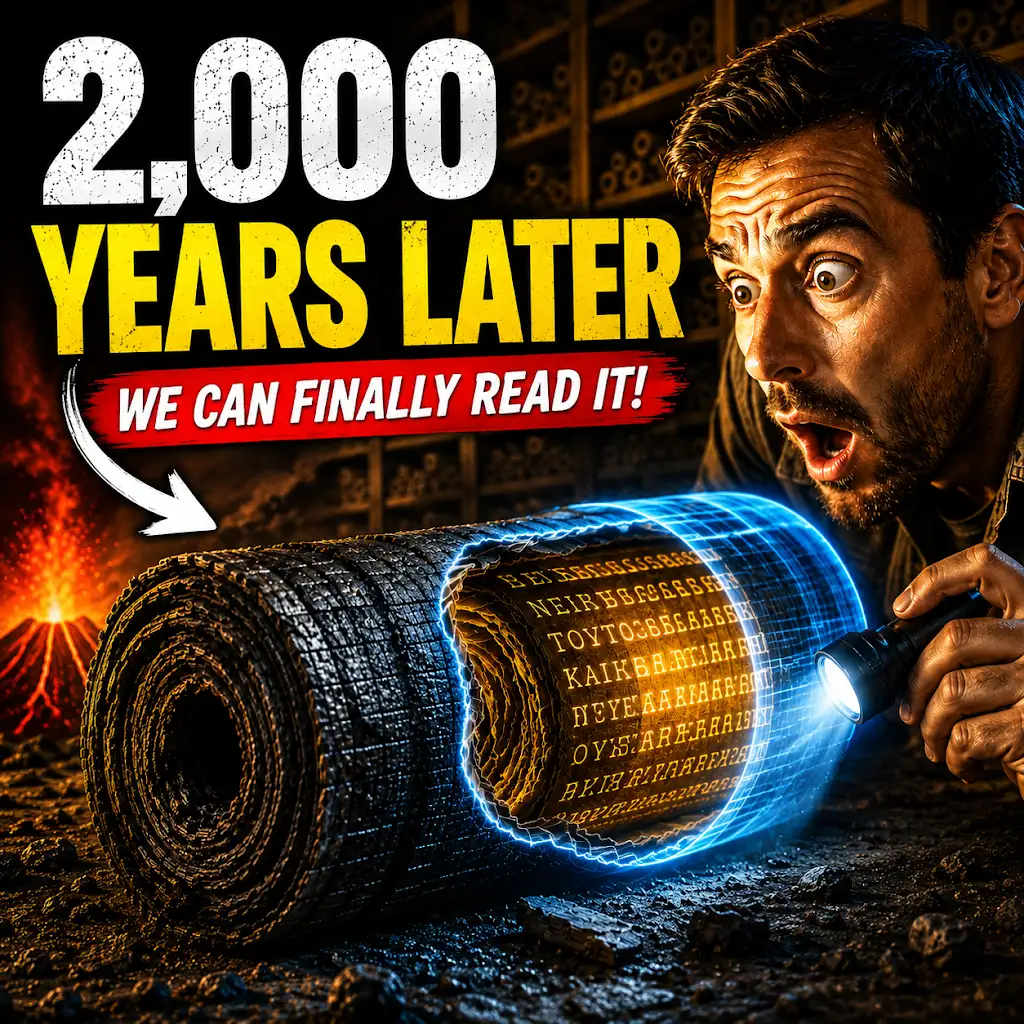
The whispers of antiquity, once locked away in the char of volcanic ash, are slowly but surely being coaxed back into the light. The story of the carbonized papyrus scrolls from Herculaneum, a Roman town tragically entombed by the eruption of Mount Vesuvius in 79 AD, is a testament to both the destructive power of nature and the enduring resilience of human knowledge. These brittle, blackened fragments, rescued from the volcanic embrace that preserved them for millennia, represent a unique window into the intellectual and cultural landscape of the ancient world. Unlike their more famous counterparts from Pompeii, which suffered a less intense pyroclastic surge, the papyri of Herculaneum were subjected to a more prolonged and intense heat, carbonizing them into what appears at first glance to be an unreadable lump. Yet, these charred remnants hold within them the potential to revolutionize our understanding of classical literature, philosophy, and daily life.
The Unforeseen Wrath of a Dormant Giant
Mount Vesuvius, a seemingly benevolent presence overlooking the Bay of Naples, had long been a part of the landscape for the inhabitants of its fertile slopes. For centuries, it had slumbered, its volcanic nature a distant memory or perhaps an unknown threat. The Roman Empire, in its imperial glory, had established thriving settlements in its shadow, none more prosperous than the elegant seaside town of Herculaneum. Life here was one of luxury and leisure, with villas adorned with intricate mosaics and frescoes, evidence of a sophisticated and affluent populace. However, on that fateful day in 79 AD, the earth began to tremble. Initial tremors, perhaps dismissed as common occurrences in the geologically active region, escalated into a terrifying prelude to disaster.
A City Engulfed: The Pyroclastic Surge
The eruption of Vesuvius was not a single, explosive event, but a series of catastrophic phases. While Pompeii was primarily buried by falling pumice and ash, Herculaneum faced a more immediate and devastating onslaught. A massive pyroclastic surge, a superheated, fast-moving cloud of volcanic gas, ash, and rock fragments, swept down the mountainside with unimaginable speed and force. This surge, reaching temperatures exceeding 500 degrees Celsius, incinerated everything in its path. Buildings were instantly vaporized, and organic materials, including the priceless papyrus scrolls, were subjected to intense heat, transforming them into their current carbonized state. The sheer ferocity of this surge meant that Herculaneum was not merely buried; it was, in essence, cooked. This extreme heat, while destructive, also served a peculiar role in preservation, fusing layers of ash and debris to create a hardened protective shell around the town, safeguarding its contents from further decay for nearly two millennia.
The Rediscovery of a Buried Treasure
For centuries, Herculaneum remained lost, a legend whispered about in historical texts. It was not until the 18th century, during the construction of a new aqueduct, that accidental discoveries began to reveal the buried city. Excavations, initially driven by the desire for treasure and art to adorn royal palaces, gradually uncovered the extent of the disaster and the incredible preservation it had wrought. It was within the remains of a grand villa, later identified as the Villa of the Papyri, that the most significant discoveries were made. Here, in what was believed to be a library, hundreds of papyrus scrolls, blackened and fragile, were found. These were not ordinary documents; they were the literary and philosophical works of the ancient world, preserved by the very force that had destroyed their city. The challenge, however, was immense: how to read what appeared to be nothing more than charcoal.
The Enigma of the Carbonized Scrolls: A Challenge for Science
From Ash to Text: The Initial Astonishment and Despair
The initial discovery of the carbonized scrolls sent waves of excitement through the archaeological and scholarly communities. The prospect of recovering lost texts from classical antiquity was tantalizing. However, this excitement was quickly tempered by the daunting reality of the scrolls’ condition. They were brittle, fused, and appeared utterly unreadable. Attempts at simple unrolling, akin to those made with less damaged papyri, resulted in their disintegration. The carbonization process had made the papyrus incredibly fragile, and any attempt to physically separate the layers risked irreparable damage. This led to a period of immense frustration, with scholars grappling with how to unlock the secrets held within these seemingly impenetrable black cylinders.
The Physics and Chemistry of Preservation and Degradation
The very process that preserved the scrolls also made them so difficult to read. The intense heat of the pyroclastic surge carbonized the organic cellulose fibers of the papyrus, essentially turning them into charcoal. This process, while preventing biological decay and further decomposition, also caused the layers of the scroll to adhere to each other, forming a solid mass. The ink, often made from carbon-based materials like soot or charcoal mixed with a binder, also carbonized, further obscuring any textual information. Understanding the precise chemical and physical changes that occurred during the eruption was crucial for developing methods to safely extract and read the text. Scientists began to study the composition of the papyri, analyzing the molecular structure and the interactions between the papyrus fibers and the ink.
Early Attempts at Decipherment: A Delicate Dance with Destruction
The early attempts to decipher the scrolls were characterized by ingenuity born out of necessity, but also by a significant risk of destruction. One of the first pioneering figures was the Italian priest and archaeologist, Padre Antonio Piaggio, in the mid-18th century. He developed a rudimentary mechanical device that attempted to gently separate the layers of the scroll by slowly unwinding them. While this method yielded some success, allowing for the reading of a few short texts, it was a slow and precarious process. Many scrolls were still lost to disintegration during these attempts. The sheer fragility of the carbonized papyrus meant that any physical manipulation had to be incredibly precise and delicate, a task that was often beyond the technological capabilities of the era. The hope was that by gently unrolling the scroll, the faint imprint of the ink would become visible.
The Dawn of Modern Techniques: Technological Breakthroughs in Reading
The Invisible Ink Revealed: Advanced Imaging Technologies
The limitations of mechanical unrolling spurred the development of non-invasive imaging techniques. The primary challenge was to detect the subtle differences in reflectivity or density between the carbonized papyrus fibers and the carbonized ink. Early attempts involved using various forms of light, but it was the advent of advanced imaging technologies that truly revolutionized the field. X-ray radiography, a technique that uses X-rays to create images of the interior of an object, proved to be a groundbreaking development. By analyzing how the X-rays passed through the papyrus, researchers could detect the faint variations in density that corresponded to the ink. This allowed for the visualization of text without any physical contact, significantly reducing the risk of damage.
The Power of Light: Multispectral and Hyperspectral Imaging
Further advancements in imaging, particularly the use of multispectral and hyperspectral imaging, brought even greater precision. Multispectral imaging captures images in multiple specific wavelength bands of the electromagnetic spectrum, while hyperspectral imaging captures images in hundreds of narrow, contiguous spectral bands. These techniques allow researchers to differentiate between materials based on their unique spectral signatures. The carbonized ink, even though visually similar to the papyrus, might absorb or reflect light differently in specific spectral ranges. By analyzing these subtle spectral differences, researchers could enhance the contrast between the ink and the papyrus, making the text much clearer. This approach is akin to using different colored filters to bring out specific details in a photograph.
Digital Reconstruction and Artificial Intelligence: Unlocking the Layers
The data gathered from advanced imaging techniques is often immense and complex. This is where the power of digital reconstruction and artificial intelligence (AI) comes into play. Sophisticated algorithms are used to process the vast amounts of image data, to enhance contrast, reduce noise, and digitally reconstruct the layers of the papyrus. AI, in particular, has become an indispensable tool. Machine learning models can be trained to recognize patterns of text and to differentiate between genuine ink marks and natural imperfections in the papyrus. This allows for the automated identification and transcription of text, significantly accelerating the decipherment process. These AI models can “learn” what ancient ink looks like on carbonized papyrus, allowing them to identify and reconstruct texts with increasing accuracy. The digital realm provides a safe space to experiment and refine readings without risking the physical integrity of the scrolls.
The Treasures Unearthed: Discoveries from the Villa of the Papyri
A Philosophical Garden: Epicurean Texts and Beyond
The majority of the scrolls recovered from the Villa of the Papyri are believed to belong to the philosophical school of Epicureanism. This is largely due to the identification of Philodemus of Gadara, an Epicurean philosopher and poet, as the probable owner of the villa and the author or collector of many of the texts. The scrolls offer an unprecedented insight into the doctrines and debates of this influential philosophical movement, which emphasized pleasure, tranquility, and the absence of pain as the highest good. Works by Epicurus himself, as well as commentaries and original writings by his followers, are among the discoveries. This has provided scholars with a much richer and more nuanced understanding of Epicurean thought than was previously available.
Rediscovering Lost Literary Masterpieces
Beyond philosophy, the carbonized scrolls hold the promise of rediscovering lost literary masterpieces. Fragments of works by ancient poets, playwrights, and historians, previously known only through mentions in other surviving texts, are slowly being pieced together. The potential to uncover entirely new works, or to find complete versions of texts that are currently only known in fragments, is immense. This could significantly alter our understanding of the literary canon of the classical world and introduce us to new voices and perspectives from antiquity. The dream is to find complete plays, epic poems, or historical accounts that have been lost to time.
Glimpses into Daily Life and Culture
The scrolls are not solely repositories of high-minded philosophy and literature; they also offer invaluable glimpses into the daily life, customs, and beliefs of the ancient world. Personal letters, administrative documents, and even household inventories, if found, could provide a more intimate and relatable portrait of Roman society. These texts offer a vital counterpoint to the grand narratives of history and philosophy, revealing the mundane yet essential aspects of human existence that often go unrecorded in more formal historical accounts. The ability to read even a few lines from a personal letter can bring the past to life in a profound way.
The Future of Carbonized Papyrus Research: Ongoing Challenges and Future Prospects
The Delicate Balance of Preservation and Access
The ongoing research into the carbonized papyrus scrolls is a continuous balancing act between the imperative of preservation and the desire for access. While modern techniques are non-invasive, the scrolls remain incredibly fragile. The scientific community is constantly refining methods to ensure that future generations will also have the opportunity to study these unique artifacts. The long-term stability of the processed papyri is also a concern, and researchers are exploring optimal storage conditions and conservation techniques. The goal is to make the texts accessible for study while ensuring their survival for centuries to come.
Expanding the Scope: Beyond the Villa of the Papyri
While the Villa of the Papyri has been the primary source of these extraordinary carbonized scrolls, the possibility of finding similar discoveries in other buried sites cannot be discounted. The intense heat of volcanic eruptions can carbonize organic materials, and it is conceivable that other Roman settlements, subjected to similar events, may hold their own hidden libraries of charred texts. Ongoing archaeological explorations in the Vesuvius region continue to reveal new insights, and the quest for further carbonized papyri remains an active area of research.
The Continuing Collaboration: Interdisciplinary Approaches
The study of the carbonized papyrus scrolls is a prime example of successful interdisciplinary collaboration. Archaeologists, philologists, historians, physicists, chemists, and computer scientists all play crucial roles in the decipherment and interpretation process. This collaborative spirit is essential for overcoming the complex challenges presented by these ancient documents. The future of this field hinges on continued cooperation, with new generations of scholars building upon the foundational work of their predecessors and employing ever-evolving technological advancements. The ongoing dialogue between these diverse fields ensures that every angle is explored in the quest to understand these irreplaceable historical artifacts.