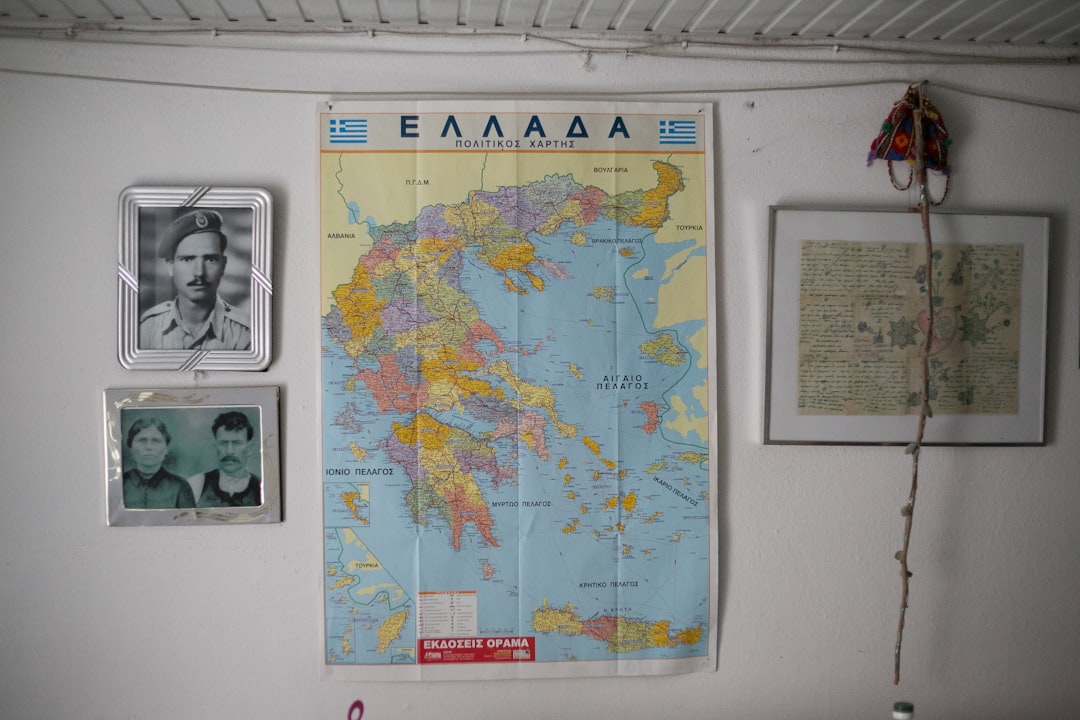
Cartographic surgery, a field often overlooked in the grand tapestry of scientific endeavor, deals with the meticulous reconstruction and repair of damaged or incomplete cartographic materials. Within this specialized domain, the challenge of “Missing Map Plates” represents a particularly intricate and demanding surgical procedure. These missing plates are not merely blanks in a collection; they are gaping voids, crucial segments that jeopardize the integrity and interpretability of the larger cartographic work.
When a map is produced in multiple sections, often referred to as “plates” or “sheets,” each component is a vital organ in the body of the map. The absence of one or more of these plates renders the entire organism dysfunctional, akin to a body missing a limb. The cartographer’s intent, the geographical data, and the historical narrative embedded within the map are all fractured and incomplete.
Defining “Plate” in Cartography
In the context of historical mapmaking, particularly for large-scale or highly detailed maps, printing was often executed on separate plates. These plates might represent distinct geographical regions, specific thematic layers (such as geological formations or population density), or contiguous sections of a larger geographical area. The production of such maps was a painstaking process, involving intricate engraving or etching onto metal plates, followed by individual impressions.
Causes of Plate Loss
The reasons for the disappearance of map plates are as varied as the history of mapmaking itself. They can range from deliberate destruction, often during times of conflict, to accidental damage, neglect, or even intentional separatism by collectors who may deem individual plates more marketable.
Historical Context of Plate Separation
In certain periods, maps were not always treated as unified entities. For instance, during periods of exploration or colonial expansion, individual sheets might have been reproduced and circulated for specific administrative or military purposes, leading to their separation from the original larger atlas or map series.
Environmental Degradation and Physical Damage
Over time, paper and ink are susceptible to environmental factors. Humidity, light exposure, insect infestations, and improper storage can all contribute to the deterioration and eventual loss of individual map plates. Accidental damage, such as tears, burns, or water saturation, can also lead to plates becoming irreparable and subsequently discarded.
Impact of Missing Plates
The consequence of missing map plates is a diminished capacity to understand and utilize the cartographic information. It is like trying to read a book with several chapters ripped out; the narrative is broken, the plot is lost, and the overall message is obscured.
Impairment of Geographical Representation
The primary function of a map is to represent geographical space. When a plate is missing, a significant portion of this spatial representation is absent, rendering the map incapable of providing a comprehensive overview of the depicted region. This can lead to inaccurate interpretations of topography, political boundaries, or the distribution of natural resources.
Loss of Historical and Cultural Context
Maps are not merely geographical tools; they are historical documents that offer insights into the political, social, and economic landscapes of their time. Missing plates can erase critical data points that shed light on historical events, trade routes, settlement patterns, or cultural boundaries, leaving gaps in our understanding of the past.
Cartographic surgery, particularly in the context of missing map plates, plays a crucial role in enhancing our understanding of geographical landscapes. For a deeper exploration of how mapping and exploration intersect, you can refer to a related article that discusses the strategic importance of lunar mapping in future explorations. This article highlights the moon as the ultimate high ground for exploration and can be found at this link.
The Surgical Reconstruction Process
The process of reconstructing missing map plates is a form of cartographic surgery, requiring a blend of scholarly research, artistic skill, and technical expertise. It involves not only identifying the missing elements but also accurately recreating them to integrate seamlessly with the existing parts of the map.
Research and Identification of Missing Segments
The initial stage of cartographic surgery for missing plates involves extensive research to precisely identify what is missing and where it belongs. This is not a passive discovery; it is an active investigation.
Archival Research and Comparative Analysis
Scholars and conservators delve into archives, libraries, and private collections, seeking collated copies of the map or similar maps from the same period and by the same cartographer. Comparative analysis of these existing maps is crucial to determine the geographical extent, cartographic conventions, and thematic content of the missing plate.
Utilizing Surviving Fragments and Annotations
Sometimes, fragments of a missing plate might survive, or annotations on the surrounding existing plates can provide clues about the content of the lost section. These are like faint echoes from the past, guiding the reconstruction efforts.
Consulting Secondary Sources and Cartographic Literature
Historical cartographic literature, scholarly articles, and auction records can also provide valuable information about the original complete map and its constituent plates, helping to infer the characteristics of the missing pieces.
Reconstruction Methodologies
Once the nature of the missing plate is understood, the reconstruction process can begin. This is where the surgeon’s skill comes into play, wielding tools of knowledge and technology.
Diplomatic Reconstruction
This method focuses on accurately replicating the style, aesthetics, and graphic conventions of the original map. It requires a deep understanding of the engraver’s or etcher’s techniques, the ink types used, and the paper quality of the period.
Engraving and Etching Techniques
Skilled artisans meticulously recreate the missing plate by hand, employing techniques similar to those used by the original mapmaker. This may involve engraving lines, hatching for shading, and rendering topographical features with an accuracy that mirrors the existing parts of the map.
Colorization and Textual Rendering
If the original map was colored, the missing plate must be colored in a manner consistent with the surviving sections. The rendering of text, including place names and legends, also requires careful attention to historical typography and orthography.
Digital Reconstruction and Superimposition
In modern cartographic conservation, digital technologies offer powerful tools for reconstruction. High-resolution scans of surviving map plates can be digitally manipulated to infer and reconstruct missing areas.
Image Processing and Interpolation
Sophisticated image processing software can be used to analyze the existing map data, identify patterns, and interpolate the missing sections based on these patterns. This is akin to a medical imaging technique that reconstructs a complete view from partial scans.
3D Modeling for Topographical Reconstruction
For maps with significant topographical detail, 3D modeling techniques can be employed to reconstruct missing topographical elements based on surviving representations and geographical data.
Integration and Preservation of Reconstructed Plates
The ultimate goal is to seamlessly integrate the reconstructed plate into the existing map, restoring its completeness and ensuring its long-term preservation.
Material Selection and Conservation Standards
The materials used for reconstruction must be archival quality and compatible with the original map, ensuring longevity and minimizing any potential damage to the existing document.
Discreet Annotation of Reconstructed Areas
It is standard practice to discreetly annotate reconstructed areas to distinguish them from original material. This transparency is crucial for scholarly integrity, ensuring that future researchers are aware of the nature of the reconstruction.
Mounting and Display Techniques
The reconstructed map, now made whole again, requires careful mounting and display to prevent further degradation and to facilitate its study and appreciation.
Case Studies in Cartographic Surgery: Missing Plates

Throughout history, numerous maps have suffered from the loss of crucial plates, prompting significant efforts in reconstruction. These case studies offer tangible examples of the challenges and triumphs of cartographic surgery.
The Lost Sections of Early World Maps
Consider the monumental world maps produced in the 16th and 17th centuries. These often comprised numerous large sheets, and the loss of even a single sheet could obscure significant portions of discovered continents or vital trade routes.
The Case of Ortelius’s Theatrum Orbis Terrarum
While the vast majority of Abraham Ortelius’s seminal atlas, the Theatrum Orbis Terrarum, has survived, individual copies have at times had missing plates. Reconstructing these requires consulting other complete copies and meticulously replicating the engraving style of Ortelius and his engravers. This is like piecing together a shattered mosaic, painstakingly finding each original tile and recreating any that are lost.
Nineteenth-Century Topographical Surveys
Large-scale topographical surveys, crucial for military, administrative, and infrastructural planning, were often published in multi-sheet formats. The loss of any of these sheets rendered the survey incomplete and less useful.
The Ordnance Survey of Great Britain
The Ordnance Survey, a monumental undertaking of mapping Great Britain, produced maps in numerous series, often divided into large sheets. While remarkably complete, there have been instances of damage or loss to individual sheets in archival copies. The reconstruction process here involves meticulous cross-referencing with other survey data and the original surveying notes, where available.
Specialized Thematic Maps and Atlases
Beyond geographical representation, thematic maps covering subjects like geology, botany, or ethnography also utilize multi-plate formats. The loss of a thematic plate can lead to a significant misrepresentation or omission of critical scientific or cultural data.
Atlases of Natural History and Botany
Historical atlases dedicated to the cataloging of the natural world, particularly botanical and zoological works, often featured exquisitely detailed plates. The loss of a plate depicting a specific specimen can mean the permanent disappearance of a particular species’ official depiction for a given atlas.
The Challenges of Recreating Obscure or Unique Maps
The more obscure or unique a map, the greater the challenge in reconstructing missing plates. Without numerous known copies or extensive secondary documentation, the cartographic surgeon operates with limited information.
Reconstructing Personal or Commissioned Maps
Maps created for private collections or specific commissions are often less documented. The loss of a plate from such a map necessitates a detective-like approach, piecing together information from correspondence, diaries, or the recollections of descendants.
The Ethical Considerations of Reconstruction

Cartographic surgery, particularly in the case of missing plates, is not without ethical considerations. The line between restoration and falsification can be fine, demanding integrity and transparency from those engaged in the practice.
Authenticity vs. Completeness
The primary ethical challenge lies in balancing the desire for a complete map with the imperative to maintain its authenticity. A reconstructed plate, no matter how skillfully executed, is still a modern creation superimposed upon an historical artifact.
Disclosure of Reconstruction
It is paramount that any reconstruction be clearly and discreetly documented. Future users of the map, whether scholars or the general public, must be able to distinguish between original material and reconstructed elements. This is like a doctor disclosing the use of an artificial limb; transparency is key to trust.
The Intent of Reconstruction
The intent behind a reconstruction also matters. Is it for scholarly research, public display, or commercial gain? While all may have legitimate reasons, the ethical implications and the level of disclosure might differ.
The Role of the Cartographic Conservator
The cartographic conservator is the guardian of historical maps, entrusted with their preservation and, when necessary, their careful restoration. This role demands a deep respect for the original artifact and an ethical commitment to its integrity.
Minimizing Intervention
The principle of minimal intervention is central to conservation ethics. Reconstruction of missing plates, while sometimes necessary, should be undertaken only when essential for the map’s interpretability or preservation, and with the least invasive methods possible.
Collaboration and Peer Review
Ethical reconstruction often involves collaboration with other experts and, where appropriate, peer review of the proposed methodologies and outcomes. This ensures a rigorous and accountable approach.
In the fascinating realm of cartographic surgery, the issue of missing map plates can significantly hinder our understanding of historical geography. A related article that delves into the intricate connections between ancient climate patterns and cartography is available for those interested in exploring this topic further. You can read more about it in the article on uncovering ancient climate steering secrets, which provides valuable insights into how climate influences mapping practices throughout history. For more details, check out the article here.
The Future of Cartographic Surgery for Missing Plates
| Metric | Description | Value | Unit |
|---|---|---|---|
| Number of Missing Map Plates | Total count of map plates missing from cartographic surgery collections | 27 | plates |
| Percentage of Missing Plates | Proportion of missing plates relative to total plates in collection | 12.5 | % |
| Average Age of Missing Plates | Mean age of missing map plates based on publication date | 85 | years |
| Most Common Region Missing | Geographical area most frequently missing in map plates | Western Europe | – |
| Recovery Rate | Percentage of missing plates successfully recovered over last 5 years | 18 | % |
| Impact on Research | Estimated percentage of research projects delayed due to missing plates | 22 | % |
As technology advances and our understanding of historical cartography deepens, the techniques and methodologies employed in cartographic surgery for missing map plates will continue to evolve.
Advancements in Digital Imaging and AI
The increasing sophistication of digital imaging, 3D scanning, and artificial intelligence holds immense potential for enhancing the accuracy and efficiency of identifying and reconstructing missing map plates. AI algorithms could potentially analyze vast datasets of historical maps to identify patterns and predict missing content with greater precision.
Collaborative Digital Archiving and Reconstruction Platforms
The development of collaborative digital platforms could allow conservators and researchers worldwide to share data, compare findings, and collectively work on reconstructing missing map plates. This shared knowledge base would accelerate the process and improve the quality of reconstructions.
The Growing Importance of Digital Surrogates
In cases where physical reconstruction is impossible or undesirable, the creation of highly accurate digital surrogates that incorporate reconstructed elements can serve as invaluable research and educational tools. These digital twins offer a complete view without altering the original artifact.
Preserving the Record for Future Generations
The ongoing efforts in cartographic surgery, especially concerning missing map plates, are vital for ensuring that our rich cartographic heritage is preserved and accessible for future generations. Each successfully reconstructed map is a testament to our commitment to understanding and learning from the past. The preservation of these intricate pieces of history is not merely an academic exercise; it is an act of safeguarding collective memory and knowledge.
FAQs
What is cartographic surgery in the context of missing map plates?
Cartographic surgery refers to the process of repairing or reconstructing maps when certain map plates or sections are missing. This involves techniques to fill in gaps, restore continuity, and ensure the map remains accurate and usable.
Why do map plates sometimes go missing in cartographic collections?
Map plates can go missing due to physical damage, loss during handling or storage, misplacement, or deterioration over time. Historical maps are particularly vulnerable because of their age and the fragility of the materials used.
How is missing map plate information typically recovered or reconstructed?
Recovery methods include consulting other copies or editions of the map, using archival records, referencing related maps, and employing digital reconstruction techniques. Sometimes, cartographers use geographic data and historical context to recreate missing sections.
What challenges are associated with cartographic surgery for missing map plates?
Challenges include ensuring accuracy in the reconstructed areas, maintaining the original style and scale, dealing with incomplete or inconsistent source data, and preserving the historical integrity of the map.
Are there modern technologies that assist in cartographic surgery for missing map plates?
Yes, modern technologies such as Geographic Information Systems (GIS), digital imaging, and 3D modeling help in analyzing, reconstructing, and restoring missing map sections with greater precision and efficiency.