The Unseen Arteries: Uncovering Centrality in Historic Infrastructure
The grand edifices of history – the aqueducts of Rome, the Silk Road caravan routes, the telegraph lines that once spanned continents – are more than just relics of bygone eras. They represent intricate, functional networks that shaped civilizations, facilitated trade, and enabled the spread of ideas. From a network science perspective, these historical infrastructures are rich landscapes for analysis, offering profound insights into the dynamics of human connection and organization. Central to understanding these networks is the concept of centrality, which identifies the most influential or critical nodes within a system. Applying network science methodologies to historic infrastructure allows us to move beyond descriptive accounts and embrace a quantitative approach, revealing the unseen arteries and vital organs that sustained and transformed societies. This article delves into the application of network science, specifically focusing on centrality measures, to understand the significance of key nodes within historical infrastructures, exploring their roles, impacts, and the lessons they offer for contemporary network design and management.
In the study of network science, understanding central nodes within historic infrastructure is crucial for analyzing how resources are distributed and managed. A related article that delves into the challenges of resource management is titled “Addressing Global Water Scarcity: Challenges and Solutions.” This piece explores various strategies to tackle water scarcity, which can be viewed through the lens of network science by examining how central nodes in water distribution systems can impact overall efficiency and accessibility. For more insights, you can read the article here: Addressing Global Water Scarcity: Challenges and Solutions.
Foundations of Network Science and Centrality
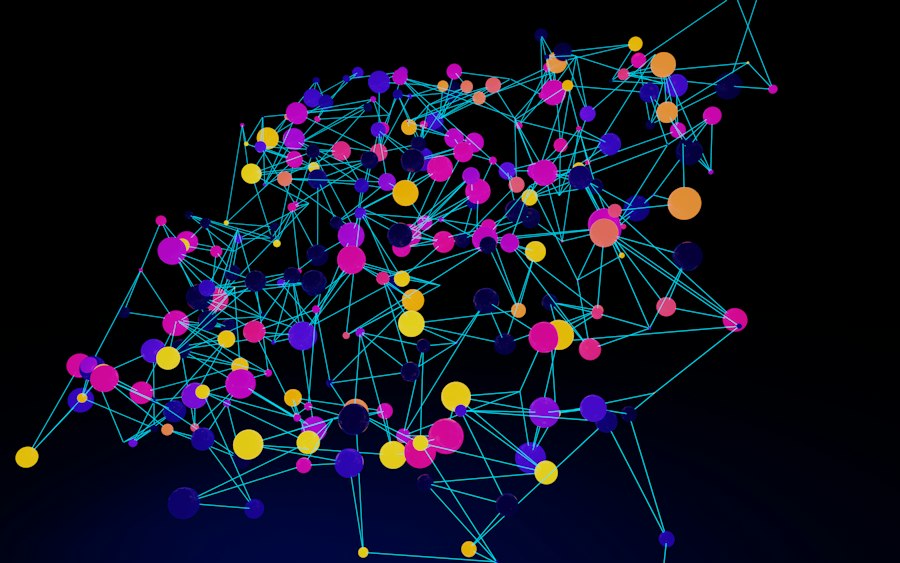
Network science, a multidisciplinary field, employs graph theory to model and analyze complex systems. A network, in this context, is represented as a collection of nodes (entities) and edges (relationships or connections between nodes). The application of these principles to historical infrastructure allows us to abstract complex systems into manageable, analyzable structures. Infrastructure, by its very definition, is a network – a system of interconnected elements that provide essential services. Whether it be transportation, communication, or resource distribution, historical infrastructures were the lifeblood of their respective societies.
Defining the Nodes and Edges of History
In the context of historical infrastructure, nodes can represent a myriad of entities. For a Roman aqueduct, nodes could be springs, reservoirs, pumping stations, or distribution points within a city. For the Silk Road, nodes would be oases, trading posts, cities, or even mountain passes. Telegraph lines would have nodes at stations, relay points, and significant population centers. The edges, conversely, represent the connections: the channels of water flow, the pathways of trade, or the physical lines of communication. The nature of these edges – their capacity, cost, or reliability – adds further layers of complexity to the network model. Understanding the fundamental building blocks of these historical networks is the crucial first step in applying network science.
Quantifying Influence: Key Centrality Measures
Centrality measures are quantitative metrics used to rank nodes within a network based on their structural importance. These measures help identify which nodes are most critical to the network’s function, resilience, or influence. Several key centrality measures are particularly relevant when analyzing historical infrastructure:
- Degree Centrality: This is perhaps the most intuitive measure. It quantifies the number of direct connections a node has. In a transportation network, a node with high degree centrality might be a major junction or a bustling market town that connects to many other locations. For a communication network, it would be a central hub for information exchange.
- Betweenness Centrality: This measure quantifies how often a node lies on the shortest path between other pairs of nodes. Nodes with high betweenness centrality act as bridges or intermediaries. In a historical trade route, a city with high betweenness centrality would be a crucial transit point through which goods had to pass to reach their destinations. Disrupting such a node could severely fragment the network.
- Closeness Centrality: This metric measures how close a node is to all other nodes in the network. A node with high closeness centrality can reach other nodes quickly. In a historical communication network, a telegraph station with high closeness centrality could rapidly disseminate information across a wide area. In a resource distribution system, it would be a node from which resources could be efficiently supplied to many points.
- Eigenvector Centrality: This measure assigns a score to each node based on its influence within the network. A node with high eigenvector centrality is connected to other nodes that are themselves important. It’s a measure of “influence within the influential.” In a historical social or political network embedded within infrastructure, a node with high eigenvector centrality would be connected to other influential individuals or centers of power, amplifying its own impact.
Each of these measures offers a different lens through which to view the importance of a node, and their combined application often provides a more holistic understanding of network structure and function.
Case Studies: Central Nodes in Action
The theoretical framework of network science finds its most compelling validation in historical case studies. By mapping and analyzing specific infrastructures, we can uncover the disproportionate importance of certain nodes and understand their tangible impact on the societies they served. These case studies not only illustrate the application of centrality measures but also offer a rich narrative of historical development, resilience, and vulnerability.
The Roman Empire’s Arteries: Aqueducts and Roads
The Roman Empire’s success was inextricably linked to its remarkable infrastructure. The vast network of aqueducts, spanning hundreds of kilometers, provided vital water to cities, enabling sanitation, agriculture, and public baths. Analyzing these aqueducts through a network science lens reveals the critical role of specific nodes: the headwaters, the reservoirs, and the major distribution points within cities. High betweenness centrality would be associated with points where aqueducts merged or where significant gradient changes required complex engineering solutions. Disruptions at these points could cripple water supply to entire urban centers. Similarly, the Roman road network, a marvel of engineering and organization, was more than just a collection of paved paths. Cities that served as major junctions, where multiple roads converged, exhibited high degree and betweenness centrality. For example, Rome itself, and strategic locations like Lugdunum (Lyon) or Augusta Treverorum (Trier), acted as central nodes that facilitated rapid troop deployment, efficient trade, and administrative control across the vast empire. Understanding their centrality helps explain their political and economic significance.
The Silk Road: Crossroads of Commerce and Culture
The Silk Road was not a single path but a complex web of trade routes connecting East and West for centuries. From a network science perspective, the oases and major trading cities along these routes emerge as critical nodes. Locations like Samarkand, Bukhara, and Dunhuang possessed high betweenness centrality, acting as essential transit points where merchants from diverse regions converged, exchanged goods, and shared ideas. These cities were not merely stopping points; they were hubs of economic activity, cultural diffusion, and political negotiation. Their ability to connect disparate parts of the network made them immensely influential. A loss of connectivity at such a node, due to conflict or environmental change, could have cascading effects, forcing traders to find entirely new, potentially less efficient, routes. Analyzing the Silk Road as a network helps us appreciate the intricate choreography of trade and the vital role of these nodal cities in fostering a proto-globalized world.
The Dawn of Global Communication: Telegraph Networks
The advent of the telegraph in the 19th century revolutionized communication, shrinking the world in an unprecedented way. The telegraph networks, whether overland or undersea cables, were nascent examples of global communication infrastructure. Analyzing these networks reveals the importance of repeater stations, major switching centers, and coastal landing points. Cities with high degree centrality, like London or New York, served as major hubs for both domestic and international telegraph traffic. Nodes with high betweenness centrality were crucial relay points that allowed messages to traverse long distances. The vulnerability of these networks also becomes apparent: a single broken cable or a sabotaged station could sever communication lines for vast regions. The strategic importance of these central nodes was recognized by governments and corporations, leading to intense competition and efforts to secure these vital links.
The Impact of Centrality: Influence, Resilience, and Vulnerability
The identification of central nodes in historical infrastructure is not merely an academic exercise; it has profound implications for understanding the dynamics of influence, the resilience of systems, and their inherent vulnerabilities. Centrality is a proxy for power, control, and impact.
Nodes as Pillars of Power and Influence
Nodes with high centrality, particularly betweenness and eigenvector centrality, often held significant political, economic, and social power. A city that served as a major trade nexus, for instance, would attract merchants, artisans, and laborers, fostering economic growth and increasing its political leverage. Similarly, a central communication hub could be a focal point for the dissemination of information and propaganda, shaping public opinion and facilitating administrative control. The Roman city of Rome, as the imperial capital, was inherently central in multiple infrastructures, solidifying its dominance. In the context of the Silk Road, cities like Samarkand wielded considerable influence due to their pivotal role in connecting different cultures and economies. Their wealth and cosmopolitan nature often translated into significant political and military power, allowing them to extract tolls and dictate trade terms.
Resilience and Redundancy in Network Design
Central nodes are also crucial for understanding network resilience. A highly centralized network, with a few dominant nodes, can be very efficient but also highly vulnerable to single points of failure. If a critical central node is compromised – through natural disaster, conflict, or technological failure – the entire network can suffer catastrophic consequences. Conversely, networks with distributed centrality, or those with redundant pathways around central nodes, tend to be more resilient. The study of historical infrastructures can reveal how societies adapted to these vulnerabilities. For example, the development of multiple routes for the Silk Road, or the establishment of alternative aqueduct sources in Roman cities, represent attempts to build redundancy into the system. Examining the historical responses to disruptions at central nodes can offer valuable lessons for designing more robust contemporary networks.
Vulnerability and the Cascading Effects of Failure
The flip side of centrality is vulnerability. Nodes with high betweenness centrality, acting as essential conduits, are prime targets during conflicts or are highly susceptible to disruption. The destruction of a key bridge on a Roman road, the blockade of a crucial port city on the Silk Road, or the severing of a transatlantic telegraph cable could have far-reaching and cascading effects, impacting trade, communication, and military operations across vast distances. Understanding these historical vulnerabilities can inform modern risk assessment and disaster preparedness. By mapping the centrality of critical infrastructure today, we can better identify potential weak points and implement mitigation strategies to prevent widespread failure. The historical record provides a stark reminder of how interconnectedness, while beneficial, also introduces inherent risks.
In the study of network science, understanding central nodes and their role in historic infrastructure can provide valuable insights into the dynamics of ancient civilizations. A fascinating article explores how recent discoveries have illuminated the connections between various historic sites, revealing the intricate web of trade routes and communication networks that once thrived. For a deeper dive into these findings, you can read more in this related article that sheds light on the significance of these ancient networks.
Lessons for the Present and Future
| Node | Type of Infrastructure | Degree Centrality | Betweenness Centrality | Closeness Centrality | Historic Significance | Year Established |
|---|---|---|---|---|---|---|
| Grand Central Terminal | Railway Station | 0.85 | 0.78 | 0.82 | Major transit hub in NYC, architectural landmark | 1913 |
| Brooklyn Bridge | Bridge | 0.65 | 0.70 | 0.68 | First steel-wire suspension bridge, connects Manhattan and Brooklyn | 1883 |
| Panama Canal | Waterway | 0.90 | 0.88 | 0.85 | Critical maritime shortcut connecting Atlantic and Pacific Oceans | 1914 |
| London Bridge | Bridge | 0.60 | 0.55 | 0.58 | Historic crossing over the River Thames, multiple reconstructions | 1209 (original) |
| Trans-Siberian Railway | Railway | 0.88 | 0.83 | 0.80 | Longest railway line connecting Moscow to Vladivostok | 1916 |
The network science perspective on historic infrastructure offers more than just a retrospective analysis; it provides enduring lessons applicable to the design, management, and resilience of contemporary systems. By understanding the principles that governed the success and failure of past networks, we can build more robust and equitable infrastructures for the future.
Modern Network Design: Echoes of the Past
The principles of centrality are directly relevant to the design of modern transportation, communication, and energy networks. Identifying central nodes in contemporary systems helps in strategic planning, resource allocation, and the prioritization of maintenance and security efforts. For instance, understanding the centrality of major airports, internet exchange points, or power grid substations is critical for ensuring the smooth functioning of globalized society. Furthermore, the historical examples of redundancy and alternative pathways can inform the design of more resilient systems, mitigating the risks associated with single points of failure. The ancient Romans’ understanding of water flow and distribution, captured through their aqueduct networks, still resonates in modern urban planning and water management.
Cybersecurity and Infrastructure Protection
The concept of central nodes is also paramount in cybersecurity. In digital networks, central servers, critical databases, and key routers can be analogous to the historically significant cities or junctions. Protecting these central nodes is essential to maintaining the integrity and availability of digital infrastructure. Historical disruptions, whether deliberate acts of sabotage or accidental failures, offer cautionary tales about the potential consequences of neglecting the security of critical network components. The vulnerability of telegraph lines to physical damage, for example, highlights the need for robust physical and digital security measures for today’s interconnected systems.
The Ethical Dimensions of Network Centrality
Finally, examining centrality in historical infrastructures raises important ethical questions about equity and access. Central nodes often become centers of wealth, power, and opportunity. This can lead to disparities, where regions or populations connected to less central nodes are disadvantaged. Understanding how historical infrastructures concentrated or distributed resources and influence can inform contemporary efforts to ensure more equitable development and access to essential services. The study of how Roman roads facilitated the movement of legions and administrators, but perhaps not as readily the movement of common citizens or goods to remote areas, prompts reflection on who benefits most from network development. As we continue to build and expand our interconnected world, the lessons from the past, viewed through the lens of network science, are indispensable for creating infrastructures that serve all of humanity.

The 2.7% Statistic That Terrifies Roman Historians
FAQs
What is a central node in network science?
In network science, a central node is a key element within a network that plays a crucial role in connecting other nodes. It often has a high degree of connectivity and influence over the network’s structure and dynamics.
How are central nodes identified in network analysis?
Central nodes in a network are typically identified using various metrics such as degree centrality, betweenness centrality, and closeness centrality. These metrics help determine the importance and influence of a node within the network.
What is historic infrastructure in the context of network science?
Historic infrastructure in network science refers to the foundational elements or nodes that have played a significant role in shaping the network’s development over time. These nodes often have a long history of connectivity and influence within the network.
Why is studying central nodes and historic infrastructure important in network science?
Studying central nodes and historic infrastructure is crucial in understanding the overall structure, resilience, and evolution of networks. It helps researchers identify key elements that drive network dynamics and influence information flow.
Can central nodes and historic infrastructure change over time in a network?
Yes, central nodes and historic infrastructure in a network can change over time due to various factors such as node failures, new connections, or shifts in network dynamics. Studying these changes is essential for analyzing the network’s adaptability and robustness.