
The fertile crescent, a cradle of civilization, nurtured some of humanity’s earliest and most profound inquiries into existence. Among these, the creation myths of Mesopotamia stand as a testament to the human drive to understand origins, the relationship between humanity and the divine, and the very fabric of the cosmos. These ancient narratives, etched onto clay tablets and passed down through generations, offer a fascinating window into the worldview of peoples like the Sumerians, Akkadians, Babylonians, and Assyrians. While distinct in their specifics, these myths share a common thread of cosmic struggle, divine intervention, and the often-precarious position of humankind. Comparing these diverse yet interconnected accounts reveals not only the evolution of religious thought in the region but also the enduring themes that resonate across cultures and time.
The Primordial Soup and the Birth of Gods
At the heart of many Mesopotamian creation narratives lies a concept of primordial, undifferentiated matter from which all existence eventually emerges. This initial state is often depicted as a watery chaos, a void teeming with potential yet devoid of form. The genesis of the gods themselves is intricately linked to this primal element, and their birth often precedes and facilitates the ordering of the cosmos.
The Sumerian Enuma Elish: A Tale of Cosmic Conflict
Perhaps the most famous and comprehensive of the Mesopotamian creation myths is the Babylonian epic, the Enuma Elish. While attributed to Babylonian culture, it draws heavily on earlier Sumerian traditions. The narrative begins with the separation of the primordial waters, Apsu (freshwater) and Tiamat (saltwater), who represent the initial chaotic state. From their mingling, the younger gods emerge. These divine offspring are boisterous and disruptive, disturbing the peace of their elders. Apsu, annoyed by their clamor, plots to destroy them. However, the wise god Ea (or Enki in Sumerian) foresees this and intervenes, slaying Apsu and making his dwelling within the slain god’s body. This act of usurpation sets the stage for further conflict. Tiamat, enraged by the death of her consort, vows revenge. She enlists monstrous beings and appoints the fearsome god Kingu as her champion, giving him the Tablets of Destiny, which confer supreme authority. The gods, terrified of Tiamat’s wrath, despair until the young warrior god Marduk steps forward. He is granted supreme power by the assembly of the gods, armed with potent weapons, and sent to confront Tiamat. Marduk’s battle with Tiamat is depicted as a cataclysmic event, a cosmic storm that shakes the very foundations of existence. He ultimately defeats Tiamat, splitting her corpse in two. One half becomes the sky, the other the earth, thus establishing the ordered cosmos. This epic battle is central to the Enuma Elish, highlighting the necessity of violent upheaval and divine supremacy for the creation of a structured world.
Sumerian Roots: The Myth of Lugalbanda and the Gods
While the Enuma Elish provides a grand narrative, earlier Sumerian traditions offer glimpses into similar themes. For instance, in the myths surrounding the hero Lugalbanda, there are allusions to the divine realm and the origins of cosmic order. While not a full creation epic, these stories often portray the gods as active participants in shaping the world and human destiny. The Sumerian concept of the gods arising from a primordial state is evident, though the specific sequence of events and the emphasis might differ from the more elaborate Babylonian account. The Sumerians often viewed the world as governed by a pantheon of powerful deities, and their interactions, as well as their relationship with the physical environment, were central to their understanding of existence. The idea of cosmic waters as the source of life and divinity is a recurring motif.
Atrahasis: A Focus on Humanity’s Role
Another significant Mesopotamian creation myth is the Atrahasis. While it shares the theme of divine conflict and the origin of the world from primordial elements, its primary focus shifts to the creation and purpose of humanity. The Atrahasis myth details how the lesser gods, tasked with arduous labor in the service of the elder gods, revolted due to their heavy burdens. To appease them, the supreme god Enlil decreed that humanity should be created to bear this load. The creation of man is a pivotal moment, and it is brought about through a combination of divine blood and clay. The god Enki, known for his wisdom and cunning, plays a crucial role in this process. He proposes a solution to the gods’ labor problem: the creation of humans from the blood of a slain god, mixed with the soil. This act of sacrifice and artistry gives birth to humanity, a race destined to serve the gods and toil in their stead. The myth then proceeds to describe the gods’ subsequent attempts to control and even eradicate humanity, particularly through devastating plagues and the Great Flood, highlighting the complex and often fraught relationship between creators and their creations. The emphasis on humanity’s burden and their role as servants of the divine sets the Atrahasis apart, offering a more anthropocentric perspective within the broader Mesopotamian cosmogonies.
In exploring the rich tapestry of Mesopotamian creation stories, one can draw intriguing parallels to various cultural narratives that shape our understanding of civilization’s origins. For a deeper analysis of how historical and economic factors influence modern narratives, consider reading the article on the impact of nearshoring on inflation, which discusses how contemporary economic shifts can reflect historical patterns of trade and cultural exchange. You can find the article here: The Impact of Nearshoring on Inflation.
The Role of Divine Conflict in Shaping Existence
A consistent theme across Mesopotamian creation myths is the concept of creation arising from conflict. The formation of the cosmos is not a gentle unfolding but rather a violent struggle, often involving primordial deities locked in battle. This dramatic genesis reflects a worldview where order is not inherent but must be actively established and maintained through the exertion of divine power.
Tiamat’s Demise and the Ordering of the Cosmos
The Enuma Elish provides the most vivid depiction of this. Tiamat, the monstrous embodiment of primordial chaos and saltwater, is the antagonist. Her defeat by Marduk is not merely the vanquishing of an enemy but the fundamental act that allows for the separation of sky and earth, the establishment of boundaries, and the creation of a habitable world. Marduk’s victory is celebrated by the gods, who then bestow upon him ultimate authority and bestow upon him the title “King of the Gods.” This mythological struggle underscores the belief that the current cosmic order is a consequence of a hard-won victory over a chaotic and destructive force. The very existence of the heavens and the earth, the sun, moon, and stars, are all products of this divine battle. The tablets of destiny, which contain the fates of all beings, are taken from Kingu by Marduk, further signifying the transfer of ultimate power and the establishment of a divinely ordained hierarchy.
The Burden of the Gods and Human Origins
In the Atrahasis epic, the initial conflict is not between primordial beings but between the younger gods and the elder gods, specifically Enlil. The younger gods, tired of the back-breaking labor of digging canals and tending to the gods’ needs, revolt. This divine unrest necessitates a new solution, leading to the creation of humanity. Here, the conflict is one of labor and responsibility, and its resolution leads to the creation of a subservient race to bear the burden. The subsequent conflicts, such as the plagues and the flood, are a testament to the gods’ ongoing struggle to manage and control their creation, demonstrating that even after the initial ordering, a state of flux and potential divine displeasure remains. This highlights a less about cosmic structural creation and more about the management and subjugation of a new race.
The Serpent and the Dragon: Symbolism of Chaos
Throughout Mesopotamian mythology, chaotic forces are often personified as serpents or dragons. Tiamat, in the Enuma Elish, is frequently depicted as a monstrous dragon, her body vast and terrifying. This imagery serves to emphasize the primal, untamed nature of the chaos that preceded creation. The slaying of these draconic entities by the hero god represents the triumph of order and intelligibility over the formless and the incomprehensible. These creatures embody the primal, watery chaos from which the gods emerge. Their monstrous forms and destructive potential serve as a stark contrast to the structured and predictable cosmos that the gods eventually establish. The victory over these creatures is a victory of intellect and divine power over brute, untamed force.
The Creation of Humanity: Purpose and Predicament
The creation of humankind in Mesopotamian myths is not a passive occurrence but a deliberate act by the gods, often driven by specific needs or intentions. The resulting status of humanity is often one of servitude and vulnerability, reflecting a worldview where divine will dictates human existence.
The Tablets of Destiny and Human Labor
In the Enuma Elish, the creation of humanity is directly linked to the aftermath of Marduk’s victory. After defeating Tiamat, Marduk consults with the wise god Ea. Ea suggests that Kingu, Tiamat’s champion who was captured, be sacrificed. His blood is then to be mixed with clay to form humanity. The purpose of this creation, as explained in the myth, is for humanity to bear the yoke of the gods, to perform the arduous tasks that the gods themselves no longer wished to do, such as digging canals and providing sustenance. This highlights a utilitarian view of humanity’s creation – they are made to serve. The act of shedding divine blood for the creation of mortals also imbues humanity with a certain sacredness, albeit a sacredness tied to their labor.
The Role of Enki/Ea in Human Genesis
The god Enki (Sumerian) or Ea (Akkadian/Babylonian), a deity associated with wisdom, magic, and freshwater, consistently plays a crucial role in the creation of humanity. In the Atrahasis myth, it is Enki who devises the plan to create humans from the blood of a slain god and clay, providing a solution to the gods’ labor dispute. His cunning and foresight are instrumental in bringing humanity into existence. However, Enki’s role is not always purely benevolent. While he aids in creation, he also often acts as a protector of humanity against the wrath of other gods, such as Enlil, demonstrating a complex, sometimes ambivalent relationship between this god and his creations. His interventions are often characterized by a degree of trickery and circumvention of divine decrees, suggesting a god who, while ultimately serving the divine order, possesses a degree of empathy for mortals.
The Great Flood: A Test of Divine Patience
The Atrahasis epic, and indeed other Mesopotamian flood narratives like that in the Epic of Gilgamesh, underscore the precariousness of human existence and the volatile nature of divine favor. When humanity becomes too numerous and too noisy, disturbing the sleep of Enlil, the gods decide to send a series of calamities, culminating in the Great Flood. The flood narrative serves as a potent reminder of humanity’s dependence on the gods and their capacity for wrath. Only Atrahasis, warned by Enki, survives to repopulate the earth. This episode illustrates that human creation is not a guarantee of eternal peace or divine approval; rather, humanity must constantly navigate the whims and desires of their divine creators, lest they face annihilation. The flood is not a singular event but the culmination of a series of divine interventions aimed at reducing the human population, reflecting a growing frustration on the part of the gods with their noisy and troublesome creations.
Variations and Similarities: A Mosaic of Belief
Despite the shared cultural milieu, Mesopotamian creation myths exhibit variations in emphasis and detail, reflecting the distinct contributions and evolving beliefs of different city-states and periods. Yet, overarching themes of divine power, cosmic struggle, and the human condition weave through them, creating a rich tapestry of ancient thought.
The Enuma Elish and its Influence
The Enuma Elish stands as a monumental work, its influence extending beyond its immediate cultural context. It provided a foundational narrative for Babylonian religion and was likely used in religious ceremonies. Its detailed account of Marduk’s ascendance to supreme godhead also reflects a particular political and religious climate within Babylonia, where Marduk held a prominent position. The epic’s systematic ordering of the cosmos and its justification for divine authority made it a powerful tool for maintaining social and religious cohesion. Its influence can be seen in subsequent mythologies and even in later theological discussions regarding divine power and cosmic order. The elaborate descriptions of the gods’ roles and the cosmos’s structure offered a comprehensive worldview that resonated for centuries.
Sumerian Precursors and Shared Motifs
While the Enuma Elish is the most complete surviving narrative, earlier Sumerian myths provided the seeds for many of its themes. The Sumerians, the first great civilization of Mesopotamia, had their own complex pantheon and cosmogonic ideas. The concept of primordial waters, the birth of gods from this chaos, and the struggles between divine forces are all present in fragmented Sumerian texts. The Sumerian reverence for deities like Enlil and Enki, whose roles are prominent in the later Babylonian myths, attests to a continuity of religious thought. The Sumerian creation myths, though less detailed, often emphasize the importance of divine order and the relationship between the gods and the natural world. Their narratives often feature divine intervention in the formation of the land and the establishment of cities, reflecting a profound connection to their environment.
The Evolution of Divine Hierarchy
A notable evolution seen across these myths is the shifting emphasis on the divine hierarchy. In earlier Sumerian traditions, various gods held significant power. However, with the rise of Babylon and the prominence of Marduk, the Enuma Elish enshrines him as the supreme deity, the king of the gods. This reflects a process of religious syncretism and political consolidation, where the chief deity of the dominant city-state gained ascendancy within the pantheon. The creation myth thus served not only to explain origins but also to legitimize the existing power structures. The assertion of Marduk’s supreme authority over other gods, who acknowledge his might and bestow upon him their powers, is a clear indication of this hierarchical restructuring.
Mesopotamian creation stories offer fascinating insights into the beliefs and values of ancient civilizations, and they can be further understood in the context of how technology influenced political control in these societies. For a deeper exploration of this relationship, you might find it interesting to read the article on the influence of ancient technology on political control, which discusses how advancements shaped governance and societal structures. This connection highlights the intricate ways in which mythology and practical developments intertwined in shaping the ancient world. You can access the article [here](https://www.realloreandorder.com/the-influence-of-ancient-technology-on-political-control/).
Enduring Legacy: Echoes in Later Thought
| Aspect | Enuma Elish | Eridu Genesis | Atrahasis Epic | Common Themes |
|---|---|---|---|---|
| Origin of the World | World created from the body of Tiamat, a primordial goddess | Creation from the mingling of freshwater (Apsu) and saltwater (Tiamat) | World formed by gods to relieve their labor | Primordial waters as source of creation |
| Primary Deities | Marduk, Tiamat, Apsu | Enki (Ea), Anu, Ninhursag | Enlil, Enki, Mami | Enki/Ea as a key creator god |
| Creation of Humans | Humans created from the blood of the defeated god Kingu | Humans created by gods to serve them | Humans created from clay mixed with the blood of a slain god | Humans created to serve gods or relieve their labor |
| Flood Narrative | Present; Marduk defeats Tiamat and establishes order | Includes a flood sent by gods to destroy humanity | Flood sent by gods due to human overpopulation and noise | Flood as divine punishment |
| Purpose of Creation | Establish order from chaos | Creation of humans to maintain the gods’ temples | Humans created to ease the gods’ workload | Humans serve divine beings |
| Cosmic Order | Order established by Marduk’s victory | Balance between freshwater and saltwater | Gods organize the world and humanity | Order from chaos is a central theme |
The creation myths of Mesopotamia, with their intricate narratives of divine beings, cosmic battles, and the precarious existence of humanity, have left an indelible mark on human intellectual and spiritual history. Their themes and archetypes have resonated through subsequent cultures and continue to inform our understanding of foundational human questions.
Parallels with Biblical Narratives
The echoes of Mesopotamian creation myths are particularly striking when compared to accounts in the Hebrew Bible. The Genesis creation narrative, with its separation of waters (firmament dividing waters above and below), the creation of light and darkness, and the ordering of the cosmos, shares thematic similarities with Babylonian accounts. While the theological underpinnings differ significantly – the biblical narrative emphasizing a singular, omnipotent God and a harmonious creation – the shared motifs suggest a cross-cultural exchange of ideas or a common ancestral pool of ancient Near Eastern cosmogonic traditions. The theme of divine pronouncements bringing order to chaos is a strong parallel. Furthermore, the biblical flood narrative in the Book of Noah bears remarkable resemblance to the Mesopotamian flood myths, particularly in its depiction of divine judgment, a chosen survivor, and the subsequent renewal of humanity and divine covenant.
Archetypal Themes in Storytelling
Beyond specific parallels, Mesopotamian creation myths offer enduring archetypal themes that continue to captivate storytellers and thinkers. The struggle against chaos, the birth of order from conflict, the creation of humanity as a purposeful act, and the complex relationship between creators and their creations are all universal narratives. These stories explore fundamental questions about existence, purpose, and the human place in the grand scheme of things. They provide a framework for understanding not only the origins of the world but also the nature of good and evil, creation and destruction, and the enduring human quest for meaning. The idea of the hero god who battles primordial monsters to establish order is a recurring motif in mythologies worldwide.
The Human Condition and Divine Will
Ultimately, Mesopotamian creation myths offer profound insights into the ancient Mesopotamian understanding of the human condition. They portray a world where divine will is paramount, where human existence is often a precarious dance between divine favor and wrath, and where the purpose of humanity is intricately tied to serving the gods. These narratives, born from a deep desire to comprehend the mysteries of existence, continue to offer a powerful reflection on humanity’s place in the cosmos and the enduring questions that have occupied human minds since the dawn of civilization. The emphasis on human suffering, mortality, and the need for divine intervention underscores a worldview that acknowledged the hardships of life and sought solace and understanding in the divine realm. Their legacy lies not only in their historical significance but in their continued ability to spark contemplation and dialogue about the fundamental aspects of being.
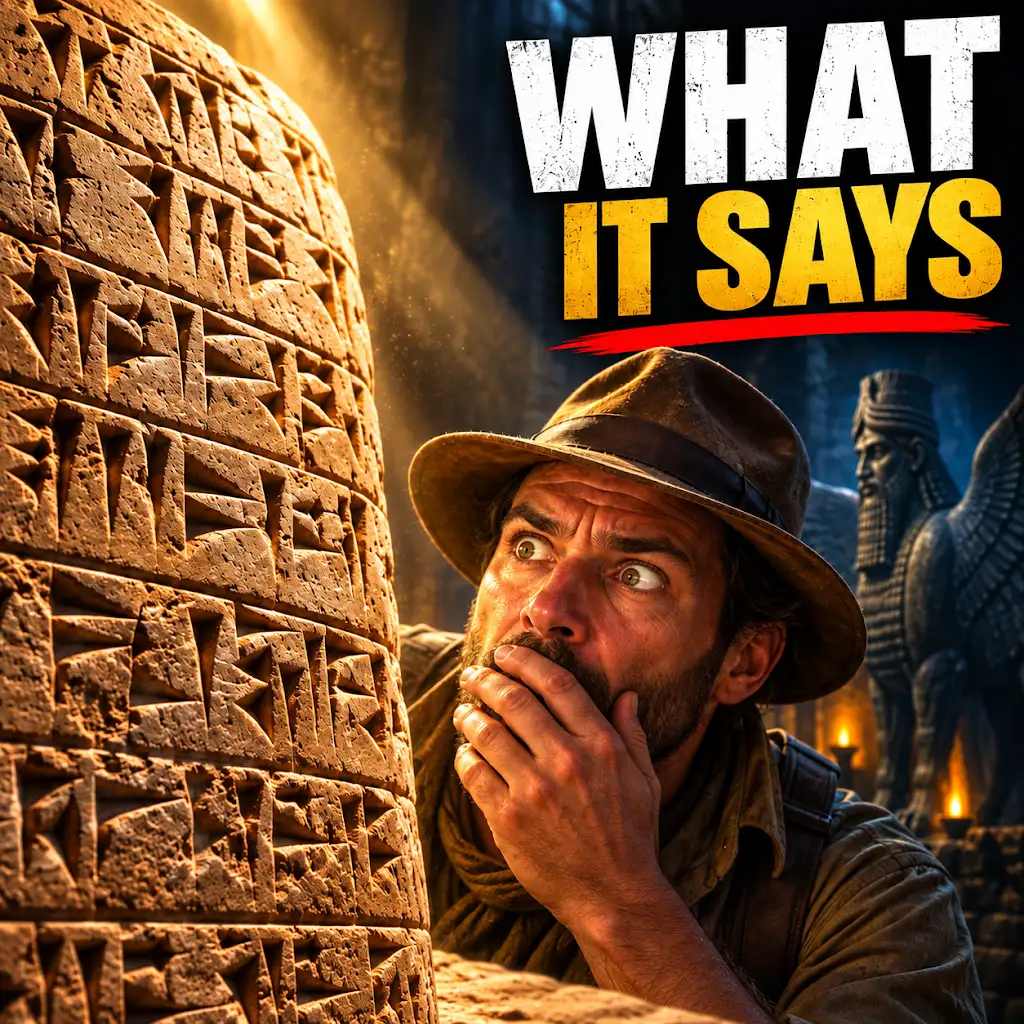
The Anunnaki Origin Story Changes When You Read the Tablets
FAQs
What are Mesopotamian creation stories?
Mesopotamian creation stories are ancient myths and legends that explain how the world and humanity were created according to the beliefs of the people living in the region of Mesopotamia.
How do Mesopotamian creation stories compare to each other?
Mesopotamian creation stories vary in details and characters, but they often share common themes such as the creation of the world by gods, the struggle for power among deities, and the creation of humans to serve the gods.
What are some key Mesopotamian creation stories?
Some key Mesopotamian creation stories include the Enuma Elish, the Atrahasis Epic, and the Epic of Gilgamesh. These stories provide insights into the beliefs and values of ancient Mesopotamian societies.
What gods are featured in Mesopotamian creation stories?
Mesopotamian creation stories often feature a pantheon of gods and goddesses, including prominent deities such as Anu, Enlil, Enki, Inanna, and Marduk. These gods play important roles in the creation and organization of the world.
How do Mesopotamian creation stories influence other cultures and religions?
Mesopotamian creation stories have had a significant impact on other cultures and religions, influencing the creation myths of ancient civilizations such as the Babylonians, Assyrians, and Sumerians. Elements of Mesopotamian creation stories can also be found in the creation myths of later religions, such as Judaism, Christianity, and Islam.