The Enigmatic Creations of the Nazca People: A Tale of Two Techniques
The Nazca culture, flourishing in the arid coastal plains of southern Peru for over a millennium, left behind an indelible legacy etched into the landscape itself. Their most famous creations, the geoglyphs, are immense figures and geometric patterns that can only be fully appreciated from a considerable height. While these “Nazca Lines” are universally recognized, a closer examination reveals a fascinating duality in their execution. Two principal techniques were employed: the “relief” method, which involved removing the dark desert varnish to expose lighter soil beneath, and the “line” method, characterized by the construction of raised earthworks or depressions. Comparing these distinct approaches offers a deeper understanding of the Nazca people’s ingenuity, their relationship with their environment, and the possible functions of these monumental artworks.
The fascinating debate surrounding relief-type versus line-type Nazca figures continues to intrigue researchers and enthusiasts alike, shedding light on the cultural significance and artistic techniques of ancient civilizations. For those interested in exploring related topics, an insightful article titled “The River Engine: Powering the Two Crowns” delves into the intricate relationship between geography and ancient engineering, offering a broader context for understanding the Nazca lines. You can read the article here: The River Engine: Powering the Two Crowns.
Unpacking the Relief Method: Etching into the Earth
The most prevalent and perhaps the most awe-inspiring of the Nazca geoglyphs are those created through the relief technique. This method capitalized on a unique geological feature of the Nazca desert: the presence of a dark, iron oxide-rich layer of desert varnish covering the lighter, underlying soil. The Nazca people, through careful planning and precise execution, removed this dark surface layer in specific areas, thereby creating contrasting designs against the surrounding desert floor. This technique essentially involved scraping away the superficial layer, revealing the pale earth beneath, much like an artist etching a plate. The resulting figures, therefore, are not additions of material but rather subtractive creations, an intentional alteration of the existing landscape.
The Art of Subtraction: Skillful Removal of Desert Varnish
The sheer scale of these relief geoglyphs, some stretching for hundreds of meters, underscores the remarkable organizational capacity and the sophisticated understanding of their environment possessed by the Nazca people. The process of creating these figures would have involved meticulous planning. It is widely believed that they utilized a system of surveying and possibly scaled-down models to transfer their designs from a manageable size to the vast expanse of the desert. The removal of the desert varnish required considerable effort, likely involving simple yet effective tools such as sharpened stones or wooden implements. The precision required to maintain clean lines and coherent forms over such immense distances is truly astonishing. Without the benefit of aerial perspective in their own time, the Nazca must have relied on communal observation and guidance to ensure accuracy.
The “Drawing” with the Earth: Visual Impact and Material Contrast
The visual impact of the relief geoglyphs is directly tied to the stark contrast between the dark desert varnish and the light, exposed soil. This contrast is amplified by the intense sunlight of the desert environment, making the figures stand out dramatically against the arid terrain. The Nazca people effectively used the earth itself as their canvas, manipulating its surface to create enduring imagery. The absence of a raised or depressed element in many of these figures means they are essentially two-dimensional carvings into the ground. This technique, while seemingly straightforward, demands an understanding of how the light and shadow would play across the surface, ensuring the figures were visible from the best vantage points. The durability of this method is also noteworthy; the desert varnish, once removed, does not readily reform, preserving the geoglyphs for millennia.
Examples of Relief Figures: The Iconic Avian and Primate Forms
Among the most celebrated examples of the relief technique are the zoomorphic figures. The hummingbird, with its delicate wings and elongated beak, is a prime specimen, often rendered with incredible detail and grace. The spider, another frequently depicted creature, showcases intricate legwork and a distinctive body shape. The monkey, with its coiled tail, is a testament to their ability to capture the essence of animal forms in grand scale. These are not mere outlines; often, internal details are incorporated, suggesting a profound understanding of the creatures they depicted. The precision with which these outlines were maintained, especially on uneven terrain, speaks volumes about their skill and dedication. The sheer variety of animals represented, from common desert dwellers to more exotic species, hints at a rich symbolic or spiritual world.
Exploring the Line Method: Sculpting the Desert Floor
In contrast to the subtractive nature of the relief geoglyphs, the “line” method, as it is sometimes referred to, involves the active construction of raised earthworks or shallow depressions. While the term “line” might suggest a simplistic approach, these constructions are often as complex and monumental as their relief counterparts. This technique represents a different set of engineering challenges and opportunities, allowing for a distinct aesthetic and potentially different functional considerations. It is important to note that the distinction between “relief” and “line” can sometimes be nuanced, and some geoglyphs might incorporate elements of both. However, the primary characteristic of this method is the deliberate manipulation of the ground’s topography.
Building with the Land: Raised Lines and Depressed Pathways
The construction of raised earthworks involved gathering stones or earth and piling them up to form distinct lines or shapes. These could be simple, straight lines, intricate geometric patterns, or even the outlines of figures. The depression method, conversely, involved excavating shallow trenches or channels. These depressions would then reveal the lighter soil beneath, similar to the relief method, but the primary artistic intention was the creation of the excavated form itself, rather than simply removing an existing layer. The scale of these endeavors would have required significant labor, likely organized through communal efforts. The consistency of the raised lines or the depth of the depressions across vast distances is a testament to their collective endeavors.
The Tactile and Dimensional Dimension: Depth and Height in Geoglyph Creation
The line method introduces a tactile and dimensional aspect to the Nazca geoglyphs that is absent in the purely relief figures. The raised earthworks can be perceived as three-dimensional sculptures on the landscape, possessing a tangible presence. Similarly, the depressed lines create channels that alter the flow of wind and water, potentially playing a role in their longevity or ecological impact. This dimensional quality might have also held symbolic significance, perhaps representing pathways, boundaries, or conduits for spiritual energy. The contrast in this method is not solely between light and dark, but between the raised form and the surrounding ground, or the excavated channel and its earthen walls.
Examples of Linear and Geometric Forms: Trajectories and Abstract Designs
While zoomorphic figures are prominent in both techniques, the line method is particularly associated with the creation of extensive geometric patterns and long, straight lines. These include trapezoids, rectangles, spirals, and zigzags, which often intersect and connect with each other, forming complex networks across the desert. Some of these linear features extend for kilometers, acting as immense runways or pathways. The repetition and order inherent in these geometric designs suggest a different kind of cognitive or organizational impulse compared to the representational zoomorphs. These might have served purposes related to astronomical observation, ritualistic processions, or as markers within a larger territorial framework.
The Interplay of Techniques: Synergy and Distinctions
The existence of both relief and line methods suggests a deliberate choice by the Nazca people, dictated by the desired aesthetic, the intended function, or the specific terrain of a particular area. It is unlikely that these techniques were employed randomly. Instead, they represent a sophisticated understanding of how to manipulate their environment to achieve specific visual and perhaps symbolic outcomes. While some scholars have attempted to strictly categorize individual geoglyphs into one method or the other, it is plausible that some figures might exhibit characteristics of both, demonstrating an evolution or adaptation of techniques over time and across different geographical locations within the Nazca culture’s domain.
Functional Considerations: Ritual, Astronomy, and Practicality
The differing methods may also point to divergent functional purposes. The vast, straight lines created through the line method have long been theorized to have astronomical significance, perhaps acting as calendars or markers for celestial events. The geometric patterns could have served as ritualistic spaces, areas for ceremonial gatherings, or even as navigational aids. The relief figures, with their detailed animal representations, are more commonly associated with religious or shamanistic beliefs, perhaps invoking animal spirits or deities. The stark contrast and visibility of the relief figures might have been paramount for their intended audience or purpose. Conversely, the raised or depressed lines might have been more about the act of passage or demarcation, perceived at ground level or through a different sensory experience.
Artistic Expression and Cultural Significance: A Spectrum of Intent
The choice between carving into the earth or building upon it reflects a spectrum of artistic expression. The relief method, with its delicate control and reliance on natural contrast, might be seen as more akin to fine art, emphasizing precision and subtle manipulation. The line method, involving the monumental act of construction, speaks to a more robust, landscape-altering artistic impulse. Both, however, are deeply rooted in the Nazca culture’s worldview, their spiritual beliefs, and their relationship with the natural world. The sheer labor involved in both techniques indicates a profound cultural investment, suggesting that these geoglyphs held immense importance for the Nazca people, far beyond mere decoration.
Evolution and Regional Variation: A Dynamic Cultural Landscape
It is also possible that the prevalence of one technique over the other varied across different periods within the Nazca culture or across different geographical regions inhabited by them. Earlier manifestations might have favored one method, while later developments saw the adoption or refinement of the other. Regional variations in the availability of materials (e.g., depth of desert varnish, type of soil) could also have influenced the preferred technique. Understanding these potential evolutions and variations adds another layer of complexity to the interpretation of these enigmatic creations. The continuous creation and modification of geoglyphs over centuries suggest a dynamic and evolving cultural landscape.
The fascinating world of Nazca figures continues to intrigue researchers, particularly when examining the differences between relief-type and line-type designs. These ancient geoglyphs, etched into the Peruvian desert, have sparked numerous theories about their purpose and significance. For those interested in exploring similar themes of ancient maps and their interpretations, a related article can be found at this link, which delves into the complexities of historical cartography and the myths surrounding the Piri Reis map. Understanding these connections can shed light on the broader context of ancient civilizations and their artistic expressions.
The Enduring Mystery: Unraveling the Purpose of the Geoglyphs
| Feature | Relief-Type Nazca Figures | Line-Type Nazca Figures |
|---|---|---|
| Definition | Figures created by carving or shaping the ground to create raised or recessed forms. | Figures created by removing surface stones to reveal lighter soil beneath, forming lines. |
| Technique | Excavation and piling of earth to form shapes with depth. | Clearing of dark stones to expose lighter substrate, creating shallow lines. |
| Visibility | Visible from nearby vantage points due to three-dimensional form. | Best viewed from aerial perspectives due to large scale and flat design. |
| Common Subjects | Animals, humans, and geometric shapes with some depth. | Animals, plants, geometric shapes, and complex patterns. |
| Size Range | Typically smaller, ranging from 5 to 30 meters in length. | Often very large, some exceeding 200 meters in length. |
| Preservation | More susceptible to erosion due to raised or recessed surfaces. | Well-preserved due to dry climate and stable ground surface. |
| Estimated Age | Approximately 500 to 1500 years old. | Approximately 500 to 2000 years old. |
| Location | Found in select areas within the Nazca region. | Widespread across the Nazca Desert in southern Peru. |
Despite decades of research, the precise purpose of the Nazca geoglyphs remains a subject of intense debate and speculation. Theories range from astronomical observatories and calendars to ritualistic pathways, water-finding mechanisms, and even landing strips for extraterrestrial visitors (a theory largely dismissed by mainstream archaeology). The comparison between relief and line methods offers clues, but no single answer definitively resolves the mystery. Each technique, with its unique characteristics, might have served a combination of purposes, reflecting the multifaceted nature of Nazca society and belief systems. The enduring enigma is part of their allure, prompting continued inquiry and wonder.
Theories of Astronomical and Calendrical Functionality
The precise alignments of some Nazca Lines with celestial events, particularly solstices and equinoxes, have led many researchers to propose an astronomical function. The long, straight lines of the line method are particularly amenable to such interpretations, acting as sightlines for observing the sun, moon, and stars. The complex geometric patterns might have represented constellations or served as components of a sophisticated solar or lunar calendar. The relief figures, while less directly linked to astronomical phenomena, could have been integrated into these systems, perhaps representing deities associated with the cosmos or serving as markers for specific times of the year. The stark contrast of the relief figures would have made them visible even in low light conditions, potentially aiding in nighttime observations.
Ritualistic Pathways and Sacred Spaces
Another prominent theory posits that the geoglyphs served as ritualistic pathways or sacred spaces. The grand scale of both relief and line figures suggests communal involvement in their creation and use. The line method, with its linear and geometric forms, could have facilitated processions or ceremonies, with participants walking along the depicted paths. The raised earthworks might have delineated sacred areas or provided platforms for religious activities. The relief figures, especially the animal forms, could have been focal points for rituals, invoking the spirits or power of the depicted creatures. The act of walking or moving within these colossal designs may have been a deeply spiritual experience for the Nazca people, connecting them to their deities and the cosmos.
Water Management and Agricultural Significance
Given the arid environment of the Nazca region, some theories suggest that the geoglyphs played a role in water management or agriculture. Certain geometric patterns or linear features could have been designed to channel or collect precious rainwater. The depressions created through the line method might have served as rudimentary irrigation systems or reservoirs. While the direct link between all geoglyphs and water management remains speculative, the Nazca culture’s survival in such a challenging environment undoubtedly depended on their ingenuity in harnessing water resources. The visibility of the relief figures might have served as markers for underground water sources or as symbolic representations of fertility and abundance.
The fascinating world of Nazca figures continues to intrigue researchers, particularly when examining the differences between relief-type and line-type geoglyphs. These ancient designs, etched into the Peruvian desert, offer insights into the culture and beliefs of the Nazca civilization. For those interested in exploring related topics, an insightful article discusses the implications of emergency powers and asset protection, which can be found in this detailed analysis. Understanding these broader themes can enhance our appreciation of how ancient societies, like the Nazca, navigated their own challenges.
Conclusion: A Legacy of Ingenuity and Enduring Questions
The Nazca geoglyphs, whether etched into the earth through the subtractive relief method or sculpted through the additive line method, represent a monumental achievement of human ingenuity and artistic expression. Comparing these two techniques highlights the Nazca people’s diverse skills, their deep understanding of their environment, and the multifaceted nature of their cultural endeavors. While the precise purposes of these enigmatic creations may never be fully deciphered, their existence continues to inspire awe and spark curiosity. The legacy of the Nazca, etched in stone and earth, serves as a powerful reminder of the enduring capacity of humanity to leave its mark upon the world, a testament to their beliefs, their aspirations, and their profound connection to the vast and mysterious landscape they called home. The ongoing study of these geoglyphs, with an appreciation for the distinct approaches employed, promises to yield further insights into this fascinating ancient civilization.
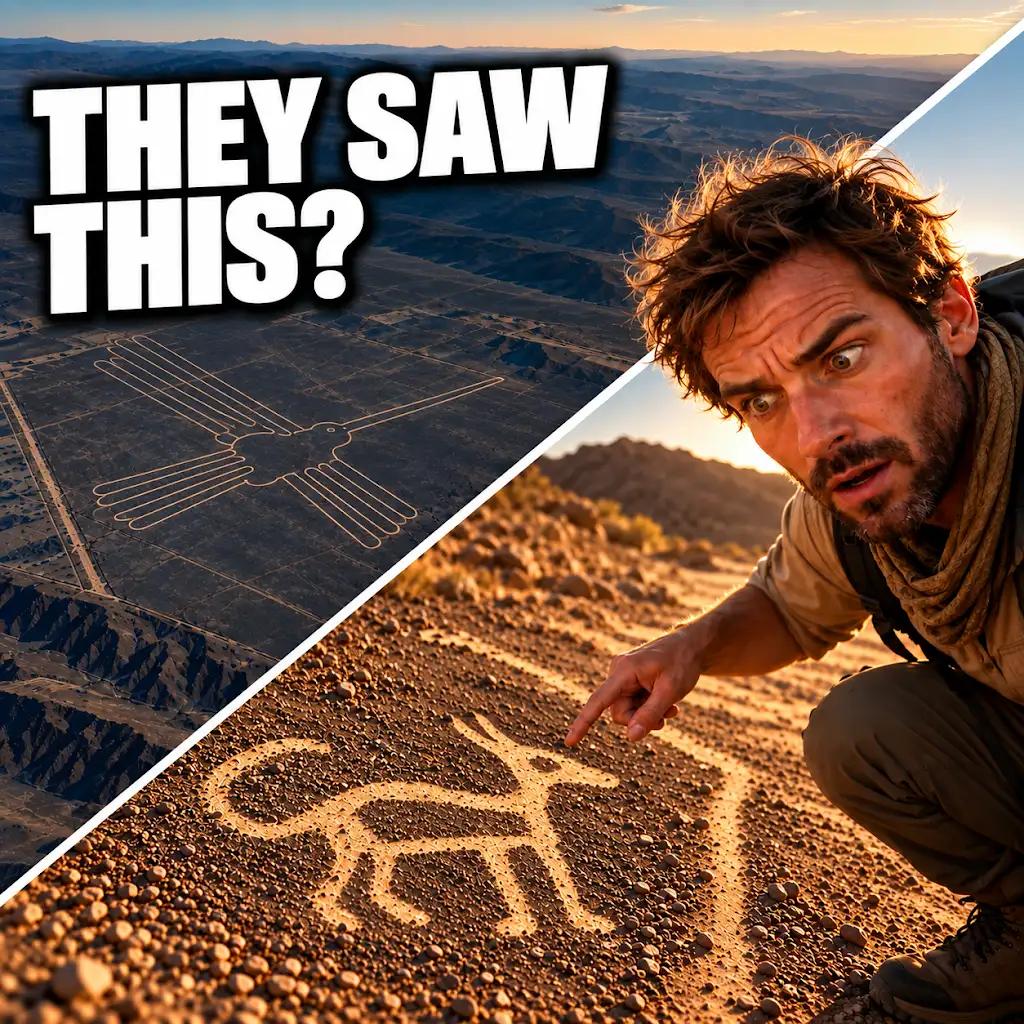
AI Found New Nazca Drawings—Could People See Them from the Ground?
FAQs
What are relief-type Nazca figures?
Relief-type Nazca figures are designs created by removing the surrounding material to make the figures stand out in relief. This technique involves carving the figures into the ground to create a raised effect.
What are line-type Nazca figures?
Line-type Nazca figures are designs created by removing the top layer of the ground to reveal lighter-colored earth underneath. This technique involves creating the figures by drawing lines on the ground to form the shapes.
How are relief-type and line-type Nazca figures different?
Relief-type Nazca figures are raised designs carved into the ground, while line-type Nazca figures are created by drawing lines on the ground. Relief-type figures stand out due to the removal of surrounding material, while line-type figures stand out due to the contrast in color between the top layer and the lighter-colored earth underneath.
What is the significance of Nazca figures?
Nazca figures are large-scale geoglyphs created by the ancient Nazca people in Peru. These figures are believed to have had religious or ceremonial significance, serving as markers for rituals or as offerings to the gods. The purpose and meaning of the figures are still debated among archaeologists and researchers.
How were Nazca figures created?
Nazca figures were created by removing the top layer of the ground to reveal lighter-colored earth underneath, forming line-type figures, or by carving into the ground to create raised relief-type figures. The Nazca people likely used simple tools such as sticks and stones to create these intricate designs, which can only be fully appreciated from above.