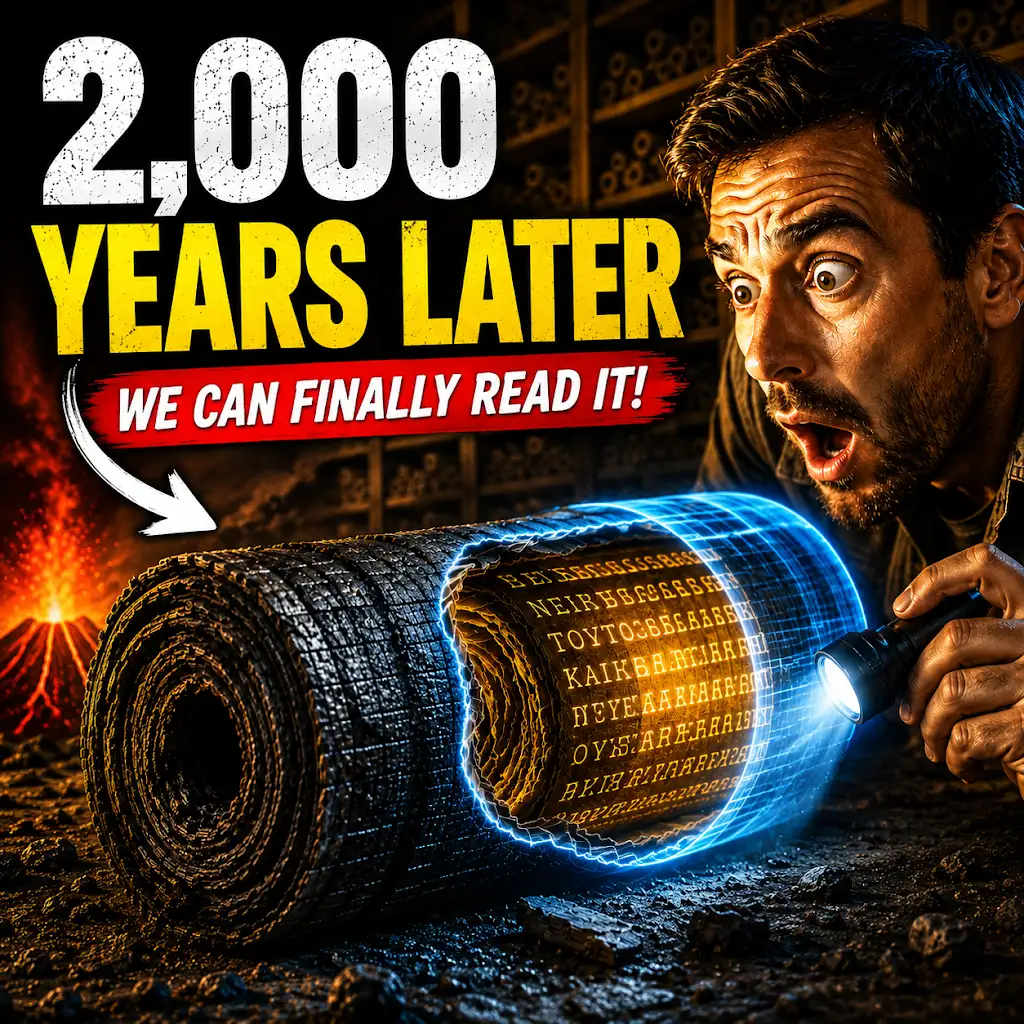
The hushed halls of archaeological research are often filled with the scent of aged parchment and the meticulous work of conservators. Yet, a quiet revolution is unfolding, one that transcends the physical fragility of ancient texts and delves into the realm of the digital. At the heart of this revolution lies Herculaneum, a Roman city buried and preserved by the eruption of Mount Vesuvius in 79 AD. Among its most enigmatic treasures are the Herculaneum Papyri, scrolls carbonized by volcanic ash, which hold the potential to unlock lost knowledge from the ancient world. For centuries, these brittle artifacts have resisted direct decipherment, presenting a formidable challenge to scholars. However, the advent of computational archaeology is breathing new life into these scorched remnants, offering a glimpse into a past previously sealed away.
The story of the Herculaneum Papyri is intrinsically linked to the dramatic fate of the city itself. Unlike Pompeii, which was buried under a thick layer of pumice and ash, Herculaneum experienced a pyroclastic flow, a superheated wave of gas and volcanic debris that flowed down the mountainside. This intense heat, while destructive, had the peculiar effect of carbonizing the papyrus scrolls. Instead of crumbling into dust, they became brittle, black cylinders, fused together by heat and pressure. The discovery of these scrolls began in the mid-18th century, when excavations at the Villa dei Papiri, a sprawling ancient villa believed to belong to the family of Lucius Calpurnius Piso Caesoninus, Julius Caesar’s father-in-law, unearthed thousands of these unique documents.
A Treasure Trove of Lost Literature
The initial discoveries were met with a mixture of awe and frustration. While it was clear that these scrolls contained valuable textual information, their extreme fragility made unrolling and reading them a perilous endeavor. Early attempts at unrolling often resulted in the destruction of the papyrus, leaving scholars with fragments and a growing sense of loss. Nevertheless, the sheer volume of the papyri suggested a substantial collection of philosophical and literary works, the lost masterpieces of antiquity that scholars had long dreamed of recovering.
The Challenge of Carbonization
The primary obstacle to deciphering the Herculaneum Papyri lies in their carbonized state. Unlike ordinary papyri, which are made of organic fibers and degrade over time, these scrolls have undergone a chemical transformation. The ink, typically made from carbon black, has bonded with the papyrus fibers, making it incredibly difficult to distinguish text from the material itself. The scrolls are also extremely brittle, susceptible to breaking at the slightest touch. This physical constraint has historically limited the scope of traditional papyrological methods.
Bridging the Divide: The Dawn of Computational Archaeology
The limitations of conventional methods for studying the Herculaneum Papyri spurred the development of innovative approaches. It was within this context that computational archaeology began to emerge as a powerful tool, offering non-destructive and highly sensitive methods for extracting information from these delicate artifacts. The inherent challenges of the papyri—their physical fragility and the integrated nature of ink and papyrus—made them an ideal testbed for new technologies.
Embracing Non-Destructive Techniques
The core principle of computational archaeology in this context is to avoid any physical intervention that could further damage the scrolls. This has led to the adoption of a range of advanced imaging and sensing techniques, moving beyond the limitations of human eyesight and traditional laboratory equipment. The goal is to create detailed digital representations of the papyri, allowing for analysis without ever touching or altering the original object.
The Role of Imaging Technologies
A significant breakthrough in the study of the Herculaneum Papyri has been the application of advanced imaging technologies. These technologies are designed to reveal subtle differences in the optical properties of the papyrus and the carbonized ink, even when these differences are invisible to the naked eye.
X-ray Computed Tomography (CT)
One of the most impactful techniques employed is X-ray Computed Tomography (CT). CT scans use a series of X-ray images taken from different angles to create a three-dimensional reconstruction of the object. In the case of the Herculaneum Papyri, CT scans can differentiate between the denser carbonized ink and the less dense papyrus material.
Unveiling Hidden Layers
The true power of CT lies in its ability to penetrate the layers of a carbonized scroll without causing any damage. By analyzing variations in X-ray absorption, researchers can identify the presence of ink and, crucially, begin to discern the patterns of letters and words that are fused within the papyrus. This allows for the reconstruction of textual content that would otherwise remain inaccessible.
3D Reconstruction and Virtual Unrolling
The CT data can then be processed to create high-resolution 3D models of the scrolls. This not only provides a detailed visual record but also opens up the possibility of “virtual unrolling.” By digitally manipulating the 3D models, researchers can attempt to separate the layers of papyrus and visualize the text as if it were unrolled, albeit in a digital space. This process is complex and requires sophisticated algorithms to account for the deformations and distortions caused by the volcanic event.
Infrared (IR) and Terahertz (THz) Imaging
Beyond X-rays, other imaging modalities are proving invaluable. Infrared (IR) and Terahertz (THz) imaging techniques exploit different wavelengths of light to reveal subtle contrasts. These methods can detect variations in the chemical composition and physical structure of the papyrus and ink, often providing complementary information to CT scans.
Spectral Signatures of Ink and Papyrus
IR spectroscopy, for instance, can identify the specific spectral signatures of carbon-based inks and the organic compounds present in papyrus. By analyzing the way these materials absorb or reflect light at different IR wavelengths, researchers can enhance the visibility of the text. THz imaging, on the other hand, can penetrate materials that are opaque to visible and IR light and can reveal internal structures and differences in density.
Enhancing Contrast and Readability
The application of IR and THz imaging can significantly enhance the contrast between the ink and the papyrus. This can make faint or partially obscured text more legible in digital reconstructions, aiding in the subsequent stages of decipherment. These techniques are particularly useful for detecting ink that might be present in very thin layers or has partially faded.
The Digital Scriptorium: Extracting Meaning from Pixels
The data generated by these advanced imaging techniques forms the foundation of the computational analysis. This raw data, however, is not immediately interpretable as text. A sophisticated suite of digital tools and algorithms is required to transform pixels and spectral data into meaningful words and sentences. This is where the “scriptorium” of computational archaeology truly comes to life.
Machine Learning and Pattern Recognition
At the forefront of this effort are machine learning algorithms and advanced pattern recognition techniques. These computational tools are trained to identify specific features within the digital data that correspond to ancient script.
Training Algorithms on Known Scripts
Researchers often begin by training machine learning models on known examples of ancient Greek and Latin scripts, including those found on less damaged papyri or inscriptions. This allows the algorithms to learn the characteristic shapes and variations of letters, ligatures, and punctuation.
Identifying Letter Forms
Once trained, these algorithms can scan the digital representations of the Herculaneum Papyri to identify potential letter forms. This is a probabilistic process, where the algorithm assigns a likelihood score to each identified feature being a particular letter.
Distinguishing Characters from Artifacts
A significant challenge is distinguishing actual letterforms from accidental marks, imperfections in the papyrus, or artifacts of the carbonization process. Machine learning excels at this by learning to recognize the consistent patterns that define written characters.
Optical Character Recognition (OCR) for Ancient Texts
While traditional Optical Character Recognition (OCR) is common for modern documents, adapting it for ancient, carbonized texts is a formidable task. The algorithms must be robust enough to handle the variations in script, the degraded quality of the ink, and the unusual distortions present in the Herculaneum Papyri.
Adapting OCR to Degraded and Deformed Scripts
The development of specialized OCR engines for these papyri involves significant adaptation. The algorithms need to be able to recognize letters even when they are incomplete, smudged, or deformed by the heat and pressure of the eruption. This often involves developing new approaches to character segmentation and feature extraction.
Handling Unusual Glyphs and Ligatures
Ancient scripts often feature ligatures (joined letters) and unusual glyphs that are not present in modern alphabets. The OCR systems must be trained to recognize these specific combinations and variations, requiring extensive datasets of annotated ancient text.
Towards Automated Transcription
The ultimate goal of applying OCR to the Herculaneum Papyri is to achieve a level of automated transcription. While human scholars remain essential for interpretation and validation, automated tools can significantly accelerate the process of identifying and transcribing the text, allowing for the analysis of a much larger corpus of material.
Decoding the Lost Voices: From Pixels to Philosophy
The successful application of computational methods leads to the decipherment of texts that have been lost to time for nearly two millennia. This is not merely an academic exercise; it is a profound act of cultural recovery, offering direct access to the thoughts, ideas, and literary achievements of the ancient world.
Recovering Lost Philosophical Works
The Villa dei Papiri, where many of the scrolls were found, is strongly believed to have been the library of Philodemus of Gadara, an Epicurean philosopher. The decipherment of these papyri has already begun to reveal his own writings, as well as works by other philosophers of the Epicurean school.
The Works of Philodemus
Philodemus was a prolific writer, and his philosophical treatises, which cover a wide range of topics including ethics, epistemology, rhetoric, and poetry, are now being brought back to light. These texts offer invaluable insights into the nuances of Epicurean thought and its influence on Roman intellectual life.
New Perspectives on Epicureanism
The newly deciphered texts provide new perspectives on key Epicurean doctrines, offering alternative interpretations and filling in gaps in our understanding of the school’s teachings. This is crucial for a more complete and accurate understanding of ancient philosophy.
Insights into Ancient Intellectual Circles
Beyond Philodemus himself, the papyri offer glimpses into the intellectual circles in which he moved, mentioning other philosophers and poets, and providing context for their ideas and debates.
Expanding the Classical Canon
The potential for recovering lost literary works is immense. Scholars are hopeful that among the carbonized scrolls lie undiscovered poems, plays, and historical accounts that could reshape our understanding of classical literature and history.
Literary Genres and Authors
The systematic application of computational archaeology could lead to the rediscovery of entire literary genres that are currently poorly represented in the surviving classical canon. It also opens the possibility of identifying previously unknown works by famous authors or attributing anonymous works.
Reconstructing Literary Narratives
The ability to virtually unroll and decipher these scrolls allows for the reconstruction of literary narratives that have been lost to fragmentation. This could lead to the recovery of entire books or sections of larger works, providing a more complete picture of ancient storytelling.
The Future of Ancient Texts: A Digital Renaissance
The work on the Herculaneum Papyri represents a paradigm shift in how we approach and preserve ancient textual heritage. Computational archaeology is not just a tool; it is a catalyst for a digital renaissance, promising to unlock a wealth of knowledge that was once deemed irretrievable.
Interdisciplinary Collaboration
The success of this endeavor hinges on continued interdisciplinary collaboration. Archaeologists, papyrologists, computer scientists, and philologists must work hand-in-hand, each bringing their unique expertise to bear on the complex challenges.
Bridging the Gap Between Disciplines
The integration of advanced computational techniques with traditional scholarly methods is crucial. Computer scientists develop the tools, while archaeologists and papyrologists provide the context, expertise in ancient scripts, and the critical interpretation of the results. This synergy ensures that the technology serves the historical and philological inquiry.
Training the Next Generation of Scholars
It is also vital to train the next generation of scholars in these interdisciplinary approaches. A new breed of researchers will need to be proficient in both the humanities and computational sciences to fully exploit the potential of digital archaeology.
The Ethical Considerations of Digital Preservation
As we move towards digital preservation and access, ethical considerations come to the forefront. Ensuring equitable access to these digital resources and respecting the intellectual property of ongoing research are paramount.
Open Access and Knowledge Dissemination
The principles of open access are crucial for democratizing knowledge. Making the digital reconstructions and deciphered texts freely available to researchers worldwide fosters collaboration and accelerates discovery.
Preserving Digital Heritage for Future Generations
Just as we strive to preserve the physical artifacts, we must also consider the long-term preservation of the digital data and the sophisticated tools developed to analyze it. Ensuring that these digital assets remain accessible and usable for future generations is a critical responsibility.
The Herculaneum Papyri, once symbols of lost knowledge and fragile remnants of a buried past, are now at the vanguard of a new era of discovery. Through the relentless ingenuity of computational archaeology, these silent witnesses are finally beginning to speak, offering us an unprecedented dialogue with the ancient world and promising a future where the echoes of history are more vibrant and accessible than ever before.