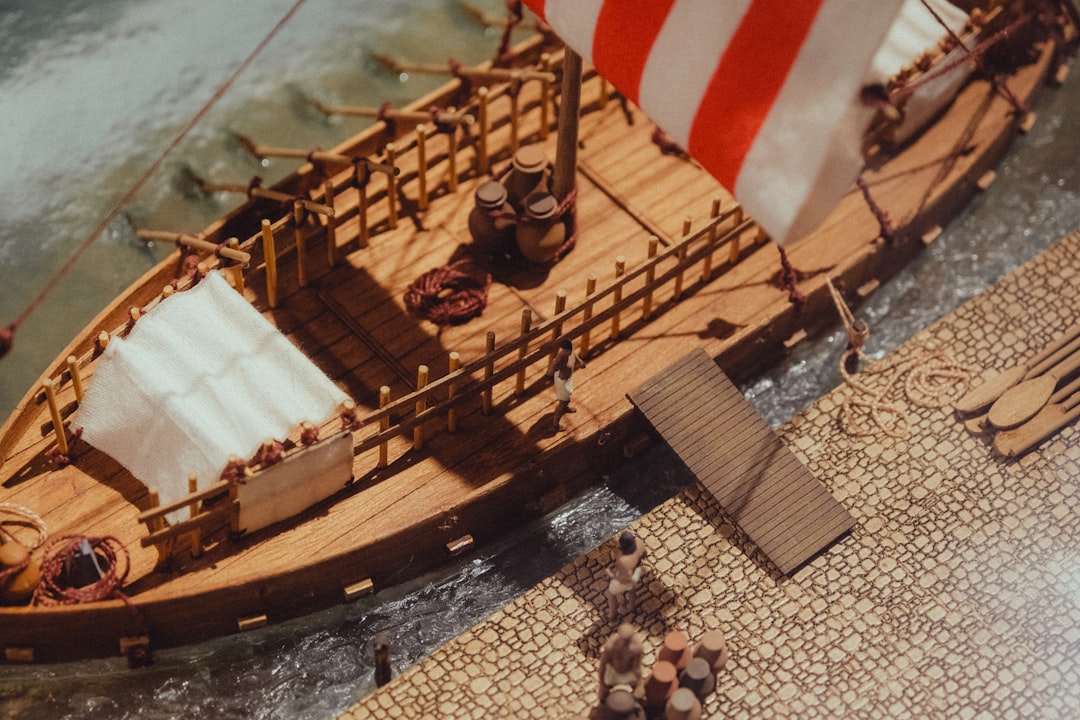
The captivating allure of ancient vessels, their weathered timbers whispering tales of distant voyages and forgotten eras, draws many to the realm of maritime archaeology. Unearthing and preserving these wooden giants, however, is a delicate and intricate dance with time, demanding a sophisticated array of methods and techniques. Dating medieval ships, in particular, presents a unique set of challenges and opportunities, as these vessels mark a pivotal transition in shipbuilding technology, bridging the gap between earlier traditions and the burgeoning age of exploration. The process of scientifically determining the age of a medieval shipwreck is not a singular event, but rather a multifaceted investigation that draws upon the expertise of various disciplines.
Before any timber can be dated, the very existence of the medieval ship must be established. This preliminary stage is crucial, laying the foundation for all subsequent research. It involves a combination of serendipitous discovery and systematic investigation, often driven by historical records or the intuition of experienced mariners and archaeologists.
Serendipitous Encounters and Local Knowledge
Many medieval shipwrecks are brought to light by chance. Fishermen hauls, dredging operations, or unusual seabed formations can all signal the presence of a submerged artifact. In these instances, local knowledge becomes an invaluable resource. Elderly fishermen, coastal communities, and historians with long-standing relationships to the sea often possess anecdotal information about unusual finds or submerged structures that, upon investigation, reveal themselves to be shipwrecks. These oral histories, while not scientific evidence in themselves, can provide vital leads for targeted surveys.
Systematic Surveys: From Reconnaissance to Pinpointing
Systematic surveys are the bedrock of modern shipwreck discovery. These can range from broad-area reconnaissance to highly specific investigations.
Remote Sensing Technologies
The initial phase of a survey often employs remote sensing technologies. Sonar systems, such as side-scan sonar and multibeam echosounders, are used to map the seabed and identify anomalies that might indicate the presence of submerged structures. These technologies can cover vast areas efficiently, identifying potential wreck sites that can then be investigated further. Magnetometers are also crucial. Shipwrecks, especially those with iron components or ballast stones, create magnetic anomalies that these instruments can detect.
Visual Inspection and Geophysical Ground-Truthing
Once potential sites are identified through remote sensing, visual inspection becomes paramount. This often involves the deployment of remotely operated vehicles (ROVs) or autonomous underwater vehicles (AUVs) equipped with high-resolution cameras. These submerged drones can provide detailed imagery of the site, allowing archaeologists to assess the scale and preservation of the wreck. Divers also play a critical role in direct visual inspection, conducting detailed surveys and mapping the extent of the site. Geophysical surveys, such as sub-bottom profiling, can provide insights into the deeper sediment layers, revealing buried timbers or structural elements that may not be visible on the seabed.
The dating of medieval ships is a fascinating topic that sheds light on maritime history and trade practices of the time. Researchers often utilize techniques such as dendrochronology, which analyzes tree rings in timber, to determine the age of wooden vessels. This method, along with carbon dating and historical documentation, helps establish a timeline for ship construction and usage. For a broader perspective on how historical trade practices have evolved and their impact on modern commerce, you can read about Mexico’s growing role in global trade in this article: Mexico’s Growing Role in Global Trade.
Exhuming the Past: Excavation and Documentation Techniques
Once a medieval shipwreck site has been positively identified and its significance assessed, the meticulous process of excavation begins. This is where the dating of the vessel truly commences, as each artifact and structural element becomes a potential chronological marker.
Controlled Excavation: The Layer-by-Layer Revelation
Archaeological excavation of shipwrecks is a slow, deliberate, and highly controlled process. Unlike terrestrial digs, the underwater environment presents unique challenges that demand specialized techniques to minimize disturbance and maximize data recovery.
Site Grid and Stratigraphic Interpretation
Establishing a precise site grid is fundamental. This system of reference points allows for the accurate recording of the location of every artifact and timber fragment. Stratigraphy, the study of the layers of sediment, is critical in understanding the sequence of deposition. For shipwrecks, stratigraphy can reveal how the vessel settled, how it was covered by sediment over time, and the order in which structural elements collapsed.
Artifact Recovery and Preservation
During excavation, artifacts are carefully recovered, cleaned in situ where possible, and then meticulously documented. This documentation includes detailed notes, photographs, and drawings. The preservation of waterlogged organic materials, such as wood and textiles, is an immediate priority. Specialized conservation treatments are applied to prevent degradation once these materials are exposed to air.
Comprehensive Site Documentation
Accurate and thorough documentation is the cornerstone of any archaeological investigation, and for shipwrecks, it takes on an even greater importance due to the ephemeral nature of the underwater environment.
Photogrammetry and 3D Modeling
Modern techniques such as photogrammetry are revolutionizing shipwreck documentation. By taking a series of overlapping photographs from different angles, complex 3D models of the wreck site and individual timbers can be created. These models provide an invaluable record, allowing for detailed analysis and reconstruction of the vessel’s structure long after the excavation has concluded.
In Situ Recording of Structural Elements
Detailed mapping and recording of individual timbers, their joinery, and their relative positions are crucial for understanding the ship’s construction and, by extension, its age. The way timbers are shaped, fastened, and assembled provides vital clues to the shipbuilding techniques employed during a specific period.
The Heart of the Matter: Dendrochronology and Timber Analysis
The most direct and accurate method for dating medieval ships lies within the timbers themselves. Dendrochronology, the science of dating wood by analyzing its growth rings, offers a precise chronological framework. However, this is often complemented by other forms of timber analysis that provide crucial supporting evidence.
Dendrochronology: Unlocking the Secrets of Tree Rings
Dendrochronology is a powerful tool for dating wooden objects, including ship timbers. Trees produce a new growth ring each year, and the width of these rings varies depending on environmental conditions, such as rainfall and temperature. These variations create a unique pattern of wide and narrow rings that can be compared to established regional chronologies.
Cross-Dating and Master Chronologies
The process of dendrochronology involves cross-dating. This means comparing the ring patterns of the ship timbers to a master chronology, which is a well-established sequence of ring patterns from living trees or historical wooden structures of known age in the same region. When a match is found, the tree last ring date provides a terminus post quem, or “date after which,” for the timber. Ideally, the full sequence of rings from the pith to the bark is present, allowing for an absolute felling date.
Limitations and Challenges in Maritime Dendrochronology
The application of dendrochronology to shipwrecks can be challenging. Timbers may have been re-used from older structures, or they might originate from different geographical areas. Furthermore, waterlogged wood can undergo significant deformation, making ring pattern analysis more difficult. The presence of sapwood and bark, which are essential for absolute dating, is often missing in submerged timbers. Despite these challenges, when successful, dendrochronology provides the most robust chronological anchor for dating a medieval vessel.
Timber Species Identification and Provenance Studies
Identifying the species of wood used in the construction of the ship is another important aspect of timber analysis. Different regions and time periods favored specific types of timber for shipbuilding due to availability, durability, and working properties.
Wood Anatomy and Microscopic Examination
Detailed examination of wood anatomy under a microscope can accurately identify the timber species. This involves analyzing the arrangement and structure of the wood cells. This information can help determine the region from which the timber was sourced.
Isotopic Analysis for Provenance
Isotopic analysis, particularly of oxygen and carbon isotopes within the wood, can provide clues about the geographical origin of the timber. By comparing these isotopic signatures to those found in modern and historical wood samples from known locations, archaeologists can often pinpoint the region where the trees were grown. This information can correlate with historical trade routes and shipbuilding centers.
The Supporting Cast: Artifact Analysis and Typological Dating
While dendrochronology offers precise dating, it is not always available or conclusive for every timber. In such cases, the analysis of other artifacts found within the context of the shipwreck plays a crucial role in cross-referencing and supporting the dating of the vessel.
Pottery as a Chronological Indicator
Pottery is a remarkably useful artifact for dating shipwrecks. Different styles, manufacturing techniques, and decorative elements of pottery evolved over time, making them excellent chronological markers.
Ceramic Typologies and Stylistic Evolution
Archaeologists use established ceramic typologies – classifications of pottery based on form, fabric, and decoration – to date their finds. For medieval shipwrecks, specific types of pottery, such as Cistercian ware, glazed jugs, or imported ceramics, can be indicative of particular decades or centuries.
Distribution and Trade Networks of Ceramic Finds
The distribution patterns of specific pottery types can also offer dating evidence. For example, if a particular type of pottery is only known to have been produced within a specific time frame and is found in significant quantities on a shipwreck, it strongly suggests that the vessel was lost during that period. Evidence of imported ceramics can also point to trade routes and economic activity of the time.
The Significance of Coinage
Coins are among the most sought-after artifacts from shipwrecks. Their value as dating tools is immense, as they often bear the images of rulers and minting dates.
Numismatic Analysis and Date Identification
Numismatic analysis involves the detailed study of coins, including their inscriptions, iconography, and mint marks. Even worn or damaged coins can often yield crucial dating information by identifying the issuing authority and the approximate period of circulation.
Coin Hoards and Their Implication for Shipwrecks
The presence of a coin hoard on a shipwreck can be particularly informative. This suggests that the coins were likely stored on board at the time of the sinking, thus providing a terminus post quem for the vessel’s loss. The most recent coin in a hoard is typically considered the most reliable indicator of the date of loss.
Metalwork and Other Small Finds: A Wealth of Information
Beyond pottery and coins, a wide array of other small finds can contribute to the dating process. These items, often overlooked in initial assessments, can provide vital corroborating evidence.
Weaponry, Tools, and Personal Ornaments
The style and construction of weapons, tools, and personal ornaments can be highly characteristic of specific periods. For example, the evolution of sword hilts, armor styles, or the design of brooches can be precisely dated through comparison with well-documented archaeological finds.
The Context of Finds: Association with Structural Elements
The association of smaller finds with specific structural elements of the ship is also crucial. If a particular type of artifact is consistently found in association with a specific type of construction, it can strengthen the dating of both elements.
The dating of medieval ships is a fascinating topic that sheds light on maritime history and the evolution of naval technology. Researchers utilize various methods, including dendrochronology and radiocarbon dating, to accurately determine the age of these vessels. For those interested in exploring how ancient civilizations navigated and constructed their ships, a related article discusses intriguing discoveries in Antarctica that reveal secrets from a pre-Ice Age era. You can read more about these findings and their implications for our understanding of ancient maritime practices by visiting this link: Antarctica Pre-Ice Age Secrets.
Reconstruction and Interpretation: Synthesizing the Evidence
| Method | Description |
|---|---|
| Dendrochronology | Examining the tree rings in the ship’s timber to determine the age of the wood. |
| Radiocarbon dating | Using the decay of carbon-14 in organic material to estimate the age of the ship. |
| Stratigraphy | Studying the layers of sediment around the ship to establish a chronological sequence. |
| Historical records | Consulting historical documents and records to find references to the ship’s construction or use. |
The ultimate goal of dating a medieval ship is not merely to assign a number to its demise but to understand its place in history. This involves synthesizing all the gathered evidence into a coherent narrative.
Cross-Correlating Multiple Dating Methods
The strength of dating a medieval shipwreck lies in the corroboration of multiple dating methods. When dendrochronology, pottery analysis, coin dating, and the stylistic analysis of other artifacts all point to a similar timeframe, the confidence in the dating is significantly enhanced.
Reconciling Discrepancies and Addressing Ambiguities
It is rare for all dating methods to align perfectly. Discrepancies can arise from various factors, such as the reuse of materials, long periods of service for certain artifacts, or the limitations of specific dating techniques. Archaeologists must approach these ambiguities with careful consideration, weighing the reliability of each piece of evidence and seeking the most plausible interpretation.
Understanding Shipbuilding Traditions and Technological Evolution
Dating a medieval ship allows archaeologists to place it within the broader context of shipbuilding traditions and technological evolution. Medieval shipbuilding was a period of significant innovation, and understanding the specific dating of a vessel helps chart the progression of hull design, rigging, and hull construction techniques.
Identifying Regional Styles and Influences
The dating of a shipwreck can reveal regional variations in shipbuilding practices. If a vessel exhibits characteristics of a particular regional style, its precise dating can help establish when those styles were prevalent and how they might have influenced or been influenced by other shipbuilding centers.
The Ship’s Role in Trade and Warfare
Ultimately, understanding the dating of a medieval ship allows for a deeper appreciation of its role in the historical landscape. Was it a merchant vessel plying established trade routes? A warship engaged in conflict? Or perhaps a vessel on a specific mission of exploration or diplomacy? The chronological placement of the ship provides the framework for answering these vital questions, illuminating the lives and activities of people from centuries past. The meticulous application of these methods and techniques allows us to move beyond speculation and into the realm of scientific understanding, truly dating medieval ships and, in doing so, bringing a forgotten chapter of maritime history back to life.

How Trees Became History’s Calendar
FAQs
1. How are medieval ships dated?
Medieval ships are dated using a combination of historical records, archaeological evidence, and scientific dating techniques such as dendrochronology (tree-ring dating) and radiocarbon dating.
2. What role do historical records play in dating medieval ships?
Historical records, such as ship logs, accounts of voyages, and official documents, provide valuable information about the construction, use, and eventual fate of medieval ships. These records help historians and archaeologists establish a timeline for the ship’s existence.
3. What is dendrochronology and how is it used to date medieval ships?
Dendrochronology is the scientific method of dating based on the analysis of patterns of tree rings. By examining the growth rings in the timbers used to build a ship, researchers can determine the age of the wood and establish a precise date for the ship’s construction.
4. How does radiocarbon dating contribute to dating medieval ships?
Radiocarbon dating is a technique used to determine the age of organic materials based on the decay of radioactive carbon isotopes. By analyzing samples of wood, rope, or other organic materials from a shipwreck, scientists can estimate the age of the ship and its components.
5. What other archaeological evidence is used to date medieval ships?
In addition to dendrochronology and radiocarbon dating, archaeologists also consider other artifacts found at the shipwreck site, such as pottery, coins, and other cultural remains, to establish a more comprehensive understanding of the ship’s historical context and age.