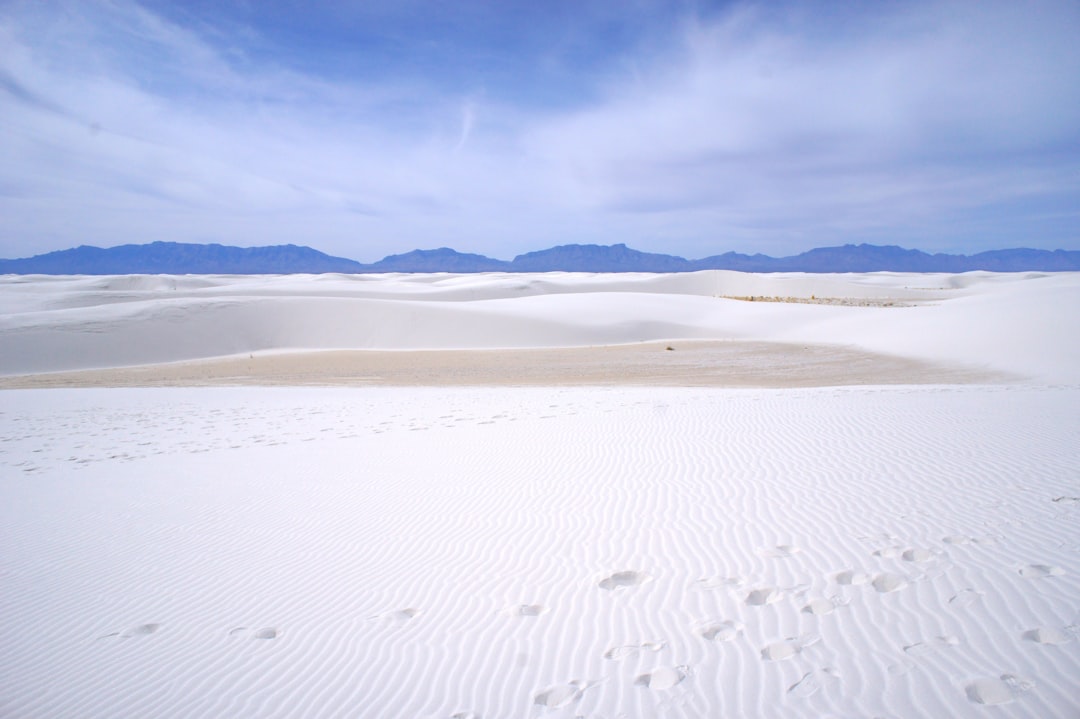
The White Sands Footprints, a collection of fossilized human tracks discovered in New Mexico’s White Sands National Park, have ignited a vigorous scientific debate, challenging established timelines of human migration into the Americas. These enigmatic imprints, first brought to widespread scientific attention in the early 2020s, represent a potential paradigm shift, forcing researchers to re-evaluate long-held theories about when and how humans first populated the Western Hemisphere. The controversy stems from the dating of these footprints, which, if accurate, places humans in North America thousands of years earlier than previously accepted. This article will delve into the scientific intricacies, the evidence presented by proponents, the criticisms raised by skeptics, and the ongoing efforts to resolve this captivating prehistoric puzzle.
The story of the White Sands footprints’ scientific prominence begins with their discovery in a region known for its ancient geological layers. While local Indigenous peoples have long known of the tracks, it was the systematic scientific investigation that brought them into the global scientific spotlight. Geologists and archaeologists, drawn by the potential for significant paleoenvironmental and paleontological findings, began carefully excavating and studying the site. The footprints, preserved in layers of fine sediment, offered a rare glimpse into the lives of ancient peoples.
The Role of Radiocarbon Dating
The crucial element that thrust the White Sands footprints into controversy was their dating. Researchers employed radiocarbon dating, a standard method for determining the age of organic materials. This technique relies on the decay of carbon-14, a radioactive isotope of carbon, which has a known half-life. By measuring the amount of remaining carbon-14 in organic samples associated with the footprints, scientists can estimate when the organism died.
Dating the Footprints: The Seed and Pollen Evidence
Two primary sources of organic material were used to date the White Sands footprints:
- Seeds: Ancient seeds of the Ruppia cirrhosa plant, a type of aquatic vegetation, were found embedded within the layers of sediment containing the footprints. These seeds were carefully collected and subjected to radiocarbon dating. The results from these seed samples yielded ages ranging from approximately 21,000 to 23,000 years before the present. This age range significantly predates the generally accepted timeframe for human arrival in the Americas, which is typically placed around 13,000 to 16,000 years ago, associated with the Clovis culture.
- Pollen: In addition to seeds, samples of pollen from the same stratigraphic layers were also analyzed. While pollen dating can be more complex and less precise than radiocarbon dating of seeds, the findings were consistent with the age indicated by the seeds, further strengthening the argument for an early human presence.
The Implications for Paleoamerican Migration Models
The potential antiquity of the White Sands footprints has profound implications for prevailing models of human migration into the Americas. For decades, the dominant theory has been the “Clovis First” model, which posits that the first widespread human inhabitants of North America were the Clovis people, characterized by their distinctive fluted stone projectile points. The Clovis culture is dated to approximately 13,000 to 12,700 years ago. These people are thought to have migrated from Siberia into North America across the Bering Land Bridge, which was exposed during the last glacial period.
The dating of the White Sands footprints, if it holds, would necessitate a significant revision of this model. It would imply that humans were present in North America during the Last Glacial Maximum, a period when large ice sheets covered much of the continent, potentially blocking land routes. This would lend greater credence to alternative migration theories, such as:
- Coastal Migration Route: The idea that early humans traveled along the Pacific coast, using boats to navigate ice-free corridors, thus bypassing terrestrial ice barriers.
- Earlier Land Bridge Crossings: The possibility that humans crossed the Bering Land Bridge at an earlier period, before the peak of glaciation, when the land bridge was more accessible and potentially supported life.
- Multiple Migrations: The concept that human populations migrated into the Americas in several waves over a long period, rather than a single, relatively recent event.
The scientific controversy surrounding the footprints found at White Sands has sparked significant debate among researchers regarding the age and implications of these ancient tracks. For those interested in exploring another fascinating archaeological topic, the revival of the ancient Assyrian aqueduct of Jerwan offers insights into how ancient engineering marvels continue to influence modern infrastructure. You can read more about this intriguing project in the article available at Reviving the Ancient Assyrian Aqueduct of Jerwan.
Skepticism and Scientific Scrutiny: Questioning the Evidence
The sensational nature of the White Sands footprint dating immediately drew the attention of scientists from various disciplines, prompting rigorous scrutiny and skepticism. While the initial findings were published in prestigious peer-reviewed journals, the scientific community is inherently cautious when faced with evidence that challenges established paradigms. Critics raised several critical points regarding the methodology, the interpretation of the dating results, and the potential for contamination or misinterpretation of the geological context.
The Challenge of Dating Sedimentary Layers
Dating geological strata, especially those containing organic material, is not always straightforward. Several factors can influence the accuracy of radiocarbon dates, and it is these potential pitfalls that form the basis of much of the skepticism surrounding the White Sands footprints.
Potential for “Old Carbon” Contamination
One of the primary concerns is the possibility of “old carbon” contamination. This phenomenon occurs when older, geologically derived carbon is incorporated into younger organic materials. In the case of the White Sands footprints, the area is known for its geological formations that contain ancient carbon.
- Marine Reservoir Effect: If the Ruppia cirrhosa plants were growing in water that had a connection to older marine carbon reservoirs, their tissues could absorb this older carbon. This would lead to a radiocarbon age that is artificially older than the actual age of the plant. Scientists must meticulously account for such effects, and critics argue that the extent of this effect at White Sands might not have been fully appreciated or corrected for in the original dating.
- Recycled Organic Matter: The possibility exists that the seeds found within the footprint layers were not contemporary with the footprints themselves but were instead washed in from older sediments. This would mean the dated material is older than the event it’s meant to date.
Geological Context and Stratigraphy Concerns
The interpretation of the geological context in which the footprints were found is another area of contention. Scientists rely on stratigraphy – the study of rock layers and their sequence – to understand the relative ages of different geological events and deposits.
Layering and Redeposition Issues
Critics have questioned the precise stratigraphic relationships between the footprint layers and the dated seed layers.
- Disruption of Layers: Was it possible that the layers containing the seeds were disturbed or mixed with older material before or after the footprints were made? The dynamic nature of lacustrine (lake) and aeolian (wind-blown) environments, like those at White Sands, can lead to the redeposition of sediments and organic matter, complicating precise age determinations.
- Association with Footprints: The critical question is the direct association between the dated seeds and the footprints. Were the seeds truly trapped in the same depositional event that preserved the footprints, or were they present in the sediment before or after the tracks were made and subsequently consolidated? Establishing this direct link is paramount for accurate dating.
Alternative Dating Methods and Their Limitations
While radiocarbon dating is a powerful tool, its application to the White Sands footprints has led to calls for independent verification using other dating techniques. However, many alternative methods also have their limitations.
Luminescence Dating and Its Challenges
Luminescence dating techniques, such as optically stimulated luminescence (OSL) and thermoluminescence (TL), can date sediments by measuring the energy absorbed from natural radiation. These methods are particularly useful for dating sediments that do not contain organic material.
- Sediment Grain Size: For OSL dating, the size of the sediment grains analyzed is crucial. Different grain sizes can have different histories of burial and exposure to sunlight, potentially leading to discrepancies in dating.
- Radiation Environment: Accurately assessing the annual radiation dose received by the sediment grains is essential for luminescence dating. This requires detailed knowledge of the local geological environment, including uranium, thorium, and potassium content, which can be difficult to ascertain with absolute certainty.
Uranium-Series Dating and Its Application
Uranium-series dating is typically used for dating carbonate materials, such as speleothems (cave formations) or shells. While not directly applicable to the sediment layers containing the footprints, it might be used to date any carbonate-rich materials found in association, providing a potential cross-check. However, the suitability of such materials in the White Sands context for reliable uranium-series dating needs careful evaluation.
Re-evaluating the Evidence: Proponents’ Counterarguments and New Research

Despite the criticisms, the original researchers and a growing number of supporting scientists remain steadfast in their interpretation of the White Sands footprints. They have presented further analyses and defended their methodologies, while also initiating new research to bolster their claims and address the concerns raised by skeptics.
Defending the Radiocarbon Dating Methodology
The proponents of the early human presence argue that their radiocarbon dating protocols were robust and accounted for potential sources of error.
Addressing Old Carbon Concerns
- Quality Control and Sample Selection: They emphasize that meticulous care was taken in selecting samples that were directly associated with the footprints. Samples suspected of contamination were often excluded from analysis. The use of multiple seeds from the same layer, yielding consistent dates, is presented as evidence against widespread contamination.
- Calibration Curves: Radiocarbon dates are calibrated using established calibration curves that account for variations in atmospheric carbon-14 levels over time. The accuracy of these curves is continually refined, and the researchers have utilized the most up-to-date calibrations.
Independent Verification and New Datasets
To counter the skepticism, proponents have actively sought independent verification and have embarked on further research to gather more data.
Collaboration and New Excavations
- Expanding the Site: New excavations at White Sands have been undertaken to uncover more footprints and to collect additional samples for dating. The hope is that by studying a larger sample of footprints and associated sediments, a more comprehensive picture will emerge.
- Interdisciplinary Collaboration: Researchers from different institutions and with diverse expertise are now collaborating on the project, bringing fresh perspectives and methodologies to bear on the problem. This interdisciplinary approach is crucial for addressing the complex geological and archaeological questions involved.
Exploring Other Dating Possibilities
While radiocarbon dating of seeds remains a primary focus, researchers are also exploring the feasibility of applying other dating techniques to different materials found at the site.
Dating Fossilized Animal Tracks
The presence of fossilized animal tracks alongside human footprints provides a valuable opportunity for cross-dating. If animal tracks of known or independently datable ages are found in the same stratigraphic layers as the human footprints, this can provide corroborating evidence. For example, if tracks of extinct megafauna, whose extinction dates are relatively well-established, are found in association, it could help constrain the age of the human footprints.
Geochemical Analysis of Sediments
Advanced geochemical analysis of the sediments themselves might offer clues about their age and depositional environment. Isotopes of oxygen, carbon, and other elements within the sediment particles could reveal information about past climate conditions and water sources, which can be correlated with regional paleoclimatic records.
The Broader Scientific and Archaeological Context
The debate surrounding the White Sands footprints is not occurring in a vacuum. It is intrinsically linked to ongoing discoveries and evolving theories in paleoarchaeology worldwide. The implications of accepting the early dates for the White Sands footprints extend far beyond North America.
Revisiting Other Early American Sites
If the White Sands evidence is ultimately accepted, it will inevitably lead to a re-evaluation of other archaeological sites in the Americas that have been previously dismissed or debated due to their purported antiquity.
Monte Verde and Other Pre-Clovis Sites
- Monte Verde, Chile: This well-established South American site provides strong evidence for human presence in the Americas around 14,500 years ago, predating Clovis. If White Sands is indeed older, it strengthens the argument that humans were in the Americas long before the Clovis period.
- Meadowcroft Rockshelter, USA: This site in Pennsylvania has yielded artifacts suggesting human occupation as early as 16,000 to 19,000 years ago, but its interpretation has been a subject of debate. The White Sands findings could provide a crucial context for re-examining such sites.
- Paisley Caves, Oregon: These caves have produced coprolites (fossilized feces) with DNA evidence indicating human presence around 14,300 years ago. The possibility of even earlier occupation suggested by White Sands would necessitate a broader look at these early human dispersals.
Theories of Human Dispersal Out of Africa
The timing of human migration into the Americas is a critical piece of the larger puzzle of Homo sapiens’ global dispersal. Understanding how and when humans colonized the Americas informs our understanding of their capacity for long-distance travel and adaptation to diverse environments.
- Global Migration Patterns: The colonization of the Americas is often seen as one of the last major peopling events in human history. If this event occurred significantly earlier than previously thought, it would reshape our understanding of the pace and routes of human expansion across continents.
- Technological and Cognitive Capabilities: An earlier arrival would suggest that early humans possessed sophisticated navigational skills, seafaring capabilities, and the cognitive flexibility to adapt to novel and challenging environments much earlier than currently assumed by some models.
The scientific controversy surrounding the footprints found at White Sands has sparked considerable debate among researchers regarding the timeline of human activity in North America. This discussion is not isolated, as it parallels other significant scientific inquiries, such as the implications of resource extraction on lunar missions. For a deeper understanding of how these explorations might impact our future, you can read more about it in this insightful article on China’s lunar resource extraction strategy here.
The Path Forward: Resolution and Future Implications
| Year | Study | Findings |
|---|---|---|
| 2019 | First Study | Claimed human footprints were 23,000 years old |
| 2021 | Second Study | Challenged the dating of the footprints, suggesting they were much younger |
| 2022 | Third Study | Proposed a new dating method, supporting the original claim of the footprints’ age |
The White Sands footprint controversy is far from settled. The scientific process, characterized by rigorous testing, open debate, and the pursuit of verifiable evidence, will ultimately determine the fate of these extraordinary findings.
The Importance of Consensus and Replication
True scientific resolution often requires a convergence of evidence from multiple independent studies and researchers.
Peer Review and Replication Studies
- Further Peer-Reviewed Publications: The debate will continue to play out in peer-reviewed scientific journals, where new data, analyses, and interpretations will be presented and critiqued.
- Independent Replication: The ultimate test for the White Sands footprint dating will be its ability to be replicated by independent research teams using varied methodologies. If multiple research groups, employing different dating techniques and analytical approaches, arrive at similar age estimates, it will significantly strengthen the case for an early human presence.
The Role of New Technologies and Methodologies
Advancements in dating technologies and analytical techniques will undoubtedly play a crucial role in resolving this debate.
High-Precision Dating Techniques
- Accelerator Mass Spectrometry (AMS) Radiocarbon Dating: While already used, further refinements in AMS techniques allow for the dating of smaller samples with greater precision, potentially reducing the risk of contamination.
- New Isotope Analysis: Emerging isotopic analysis techniques might offer novel ways to assess the origin and age of materials found at the site.
The Enduring Significance of the White Sands Footprints
Regardless of the final conclusion, the White Sands footprints have already had a profound impact on paleoarchaeology. They have served as a powerful catalyst for re-examination, debate, and innovation within the field.
Inspiring New Research Avenues
- Focus on Marginal Environments: The discovery highlights the importance of studying human presence in what were previously considered marginal or difficult-to-access environments during glacial periods.
- Interdisciplinary Approaches: The controversy underscores the necessity of interdisciplinary collaboration, where geologists, archaeologists, geneticists, climatologists, and other specialists work together to unravel complex prehistoric puzzles.
The White Sands footprints stand as a testament to the dynamic and often surprising nature of scientific discovery. While the debate continues, the pursuit of understanding these ancient imprints is pushing the boundaries of our knowledge about humanity’s journey across the globe, reminding us that the story of our past is still being written, one track at a time. The ultimate resolution of this scientific controversy will undoubtedly reshape our understanding of when humans first arrived in the Americas and the remarkable resilience and adaptability of our ancient ancestors.

These Footprints Could Rewrite the Story of the First Americans
FAQs
What is the White Sands footprints scientific controversy?
The White Sands footprints scientific controversy refers to the debate surrounding the age and origins of human footprints found at White Sands National Park in New Mexico.
What are the key points of contention in the controversy?
The main points of contention revolve around the dating of the footprints and whether they were made by humans or another species. Some scientists argue that the footprints are evidence of human presence in North America much earlier than previously thought, while others believe the footprints may have been made by a different species or are not as old as claimed.
What evidence has been presented to support the different viewpoints?
Supporters of the early human presence theory point to radiocarbon dating and other geological evidence to argue for the age of the footprints. Those who dispute the human origin of the footprints cite alternative explanations for their formation and question the reliability of the dating methods used.
What are the implications of the controversy?
The controversy has implications for our understanding of human migration and settlement in North America, as well as the broader field of archaeology and anthropology. If the footprints are indeed evidence of early human presence, it could reshape our understanding of prehistoric human movements.
What are the next steps in resolving the controversy?
To resolve the controversy, further research and analysis will be necessary, including additional dating methods and thorough examination of the geological context of the footprints. Collaboration between different scientific disciplines and open dialogue among researchers will also be crucial in reaching a consensus.