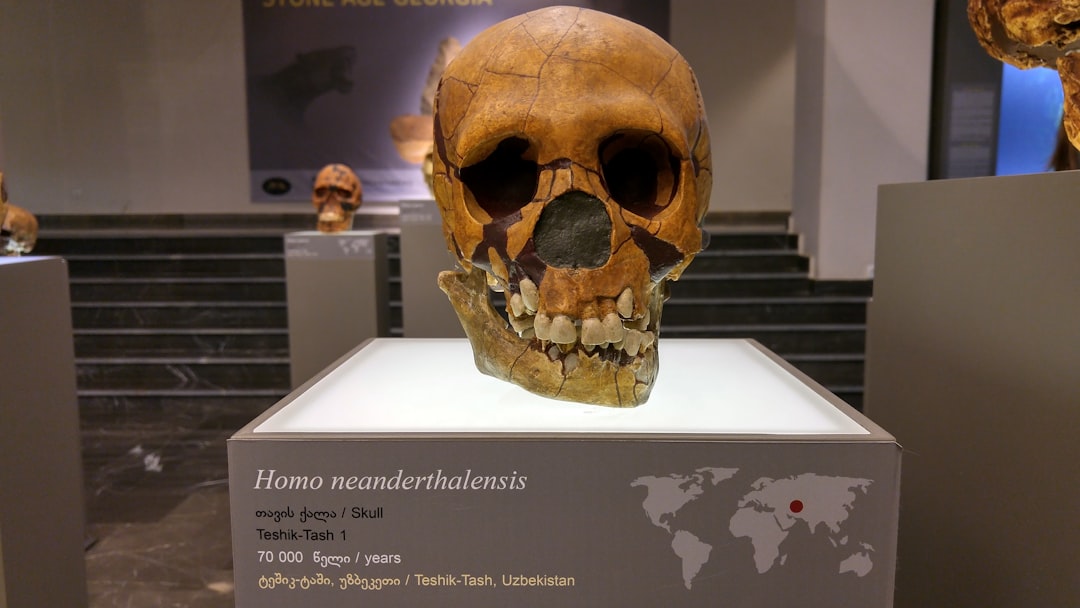
Debunking Ancient Science: Lies About Human Origins
The human story, a narrative woven through millennia, is often embellished and misinterpreted through the lens of ancient beliefs. While these early attempts to understand our place in the cosmos hold historical significance, many of them present demonstrably inaccurate accounts of human origins, masquerading as scientific fact. This examination will delve into some of these persistent “lies” – not out of disrespect, but to clarify the scientific consensus with factual evidence and to understand how such narratives have persisted.
For many ancient cultures, the answer to “where did we come from?” was a supernatural one. These creation myths, rich in symbolism and cultural meaning, were often the prevailing explanations for existence.
Mesopotamia: The Primordial Gods and the Creation of Humanity
The Mesopotamian civilizations, with their complex pantheons, offered intricate cosmologies. The Enuma Elish, a Babylonian creation epic, describes the god Marduk slaying the sea monster Tiamat and using her body to form the heavens and the earth. Humanity, according to this narrative, was created from the blood of a rebellious god.
- The Scientific Counterpoint: While a compelling story exploring themes of order emerging from chaos, this account lacks any empirical basis. Archaeological and anthropological evidence points towards a gradual evolutionary process, not a divine decree or the literal blood of a god. The genetic diversity and fossil record stand in stark contrast to this mythological origin.
- The Purpose of the Myth: It is crucial to understand that the Enuma Elish served a distinct purpose within its society. It legitimized Marduk’s supreme status and provided a framework for understanding the natural world and humanity’s role within it. Attributing literal scientific truth to it misinterprets its cultural and theological function.
Ancient Egypt: The Sun God Ra and the Creation of Mankind
Egyptian mythology often centers on the sun god Ra. Various accounts describe Ra creating humans from his tears, sweat, or even by speaking them into existence from the primordial waters of Nun. Sometimes, other deities like Atum or Ptah are credited with the act of creation.
- The Scientific Counterpoint: The notion of humans originating from the tears or pronouncements of a cosmic deity is a theological assertion, not a scientific hypothesis. Modern biological understanding, grounded in genetics and evolutionary biology, cannot find any correspondence with these narratives.
- The Socio-Political Context: Egyptian creation myths often served to reinforce the divine right of the pharaohs, who were seen as intermediaries or even direct descendants of the gods. The narrative provided a sense of divine order and purpose to their society, not a literal biological explanation.
Norse Mythology: The Giant Ymir and the First Humans
In Norse mythology, the universe began with a void, Ginnungagap, where fire and ice met. From this, the primordial giant Ymir was formed. Odin and his brothers are said to have slain Ymir and used his body to create the world. The first humans, Ask and Embla, were fashioned from an ash and an elm tree, respectively, by the gods.
- The Scientific Counterpoint: The idea of humans being formed from trees lacks any biological or anthropological support. The evolutionary journey from early hominins to Homo sapiens involves a complex interplay of genetic mutation, natural selection, and environmental adaptation, far removed from arboreal origins.
- The Allegory of Nature: Norse mythology, much like other ancient cosmologies, uses natural elements and beings as metaphors for fundamental forces and concepts. The story of Ymir’s creation and destruction can be interpreted as an allegory for the cyclical nature of existence and the formation of the world from primal forces.
In exploring the complexities of ancient science and its implications on human origins, one can find intriguing discussions in various articles that delve into the intersection of history and modern understanding. For instance, the article on navigating the South China Sea presents challenges and opportunities that can be linked to ancient maritime practices and their influence on human migration and cultural exchanges. To read more about these fascinating connections, you can visit the article here: Navigating the South China Sea: Challenges and Opportunities.
The Static Universe: An Unchanging World and Static Humanity
A common thread in many ancient worldviews was the concept of a relatively static universe, where the heavens and the Earth were unchanging, and humanity’s place within it was fixed from the beginning. This antithesis to the modern understanding of a dynamic, evolving cosmos has significant implications for how human origins were perceived.
Ancient Greek Philosophy: The Unmoved Mover and the Fixed Forms
Philosophers like Plato, with his theory of Forms, posited an eternal, unchanging realm of perfect archetypes. This extended to the understanding of life itself, suggesting that species, and by extension humanity, were fundamentally static creations. Aristotle, while more empirical, still viewed species as fixed categories, not subject to evolutionary change over vast timescales.
- The Scientific Counterpoint: The geological record and the fossil evidence unequivocally demonstrate that life on Earth has undergone profound transformation over billions of years. Species have emerged, diversified, and gone extinct. The concept of an “Unmoved Mover” as a literal creator of static forms does not align with the observable evidence of biological change.
- The Quest for Order: Ancient Greek philosophers were deeply concerned with establishing order and understanding the underlying principles of existence. Their models, while abstract, were an attempt to reconcile observation with rational thought. The focus on unchanging Forms was a way of seeking eternal truths in a world of flux.
Indigenous Australian Beliefs: The Dreamtime and Ancestral Beings
Many Indigenous Australian cultures speak of the “Dreamtime” or “The Dreaming,” a creative period when ancestral spirit beings shaped the land and all living things. While these narratives convey a profound connection to the land and a cyclical understanding of time, they are often interpreted by outsiders as a literal, unbroken continuity from creation to the present, implying a static human form.
- The Scientific Counterpoint: While the Dreamtime encompasses a creation period, it also describes the ongoing processes of life. The scientific understanding of human evolution, with its gradual changes in morphology and behavior, is not contradictory to the spiritual significance of the Dreamtime. The error lies in taking the spiritual accounts as literal biological timelines.
- The Spiritual and Ecological Framework: The Dreamtime provides a comprehensive spiritual, social, and ecological framework for Indigenous Australian peoples. It emphasizes interconnectedness, responsibility, and a profound understanding of their environment. Viewing it solely as a literal origin story misses its deeper, multifaceted purpose.
Humans as the Pinnacle: A World Centered on Human Exceptionalism

Many ancient narratives place humanity at the apex of creation, often as the sole sentient beings or as beings specially crafted by deities for a particular purpose. This anthropocentric view underpins many of the incorrect “lies” about our origins.
Abrahamic Religions: God’s Special Creation
Judaism, Christianity, and Islam all describe humanity being created in the image of God, implying a unique and privileged status. The Genesis account, for instance, details the creation of Adam and Eve as the first humans, imbued with divine essence.
- The Scientific Counterpoint: The concept of humans being the singular, divinely crafted pinnacle of creation is not supported by the fossil record or comparative biology. The discovery of numerous hominin species, sharing common ancestry with modern humans, demonstrates a gradual evolutionary path. Our genetic similarity to other primates also challenges the notion of our unique creation separate from all other life.
- Theological and Moral Frameworks: These religious narratives serve as foundational texts for vast ethical and moral systems. Their focus is on humanity’s relationship with the divine, our responsibilities, and our spiritual destiny. They are primarily theological pronouncements, not scientific treatises on biological lineage.
Ancient Mesoamerican Civilizations: Maize and Divine Intervention
In many Mesoamerican creation myths, such as those found in the Popol Vuh of the Maya, humans are created from maize. The gods attempt to create humans from mud and wood, but these early attempts are imperfect and destroyed. Finally, humans are made from maize dough, signifying their vital connection to this staple crop.
- The Scientific Counterpoint: The biological reality of human origins does not involve being fashioned from maize. While maize played a crucial role in the development of Mesoamerican societies and cultures, the creation stories are allegorical, highlighting the importance of sustenance and the gods’ ultimate success in crafting beings capable of worship and understanding.
- The Cultural Significance of Maize: Maize was not merely food; it was a sacred plant deeply intertwined with Mesoamerican cosmology, rituals, and social structures. The creation myth reflects this profound cultural significance, linking human existence directly to this life-giving grain.
The Purpose of the Lie: Understanding the Function of Ancient Narratives
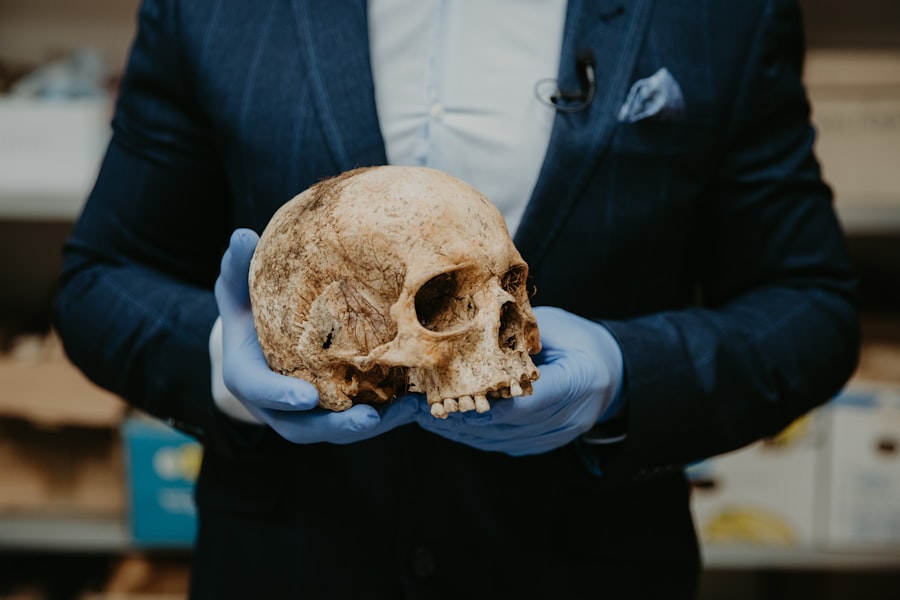
It is crucial to reiterate that these “lies” are not malicious falsehoods designed to deceive. Rather, they are explanations born from the limitations of ancient knowledge, the need for meaning, and the cultural and societal contexts in which they arose.
Filling the Knowledge Gaps: Explaining the Unexplained
In the absence of scientific methodology and understanding, ancient peoples relied on observable phenomena and their imaginations to explain the world. The origins of human life, the movements of celestial bodies, and the forces of nature were all mysteries that demanded explanation.
- The Power of Storytelling: Narrative is a fundamental human tool for making sense of the world and transmitting knowledge. Creation myths and early cosmologies were effective ways of imparting cultural values, social norms, and a sense of belonging.
- The Limits of Observation: Without advanced scientific instruments and rigorous experimentation, the deep history of life and the vastness of the cosmos remained largely inaccessible. Ancient explanations reflect the best understanding possible with the tools and knowledge available.
Reinforcing Social and Political Structures
Many ancient origin stories served a clear socio-political function. They provided a divinely sanctioned order, legitimized leadership, and defined the roles of individuals and groups within society.
- Divine Right of Kings: As seen in Egyptian and Mesopotamian examples, origin myths often reinforced the authority of rulers, positioning them as divinely appointed or descended. This helped maintain social stability and hierarchical structures.
- Cultural Identity and Unity: Shared origin stories fostered a sense of collective identity and unity within a community or civilization. They provided a common narrative that bound people together and reinforced their shared history and destiny.
The Enduring Power of Myth and Symbolism
Despite their scientific inaccuracies, ancient origin narratives continue to hold power and relevance. Their enduring appeal lies in their profound exploration of universal themes: the search for meaning, the desire to understand our place in the universe, and the fundamental questions of existence.
- The Archetypal Nature of Myths: Many ancient myths tap into archetypal human experiences and emotions, making them resonate across cultures and time. They speak to our innate need for purpose and connection.
- Cultural Heritage and Wisdom: While not scientifically accurate, these narratives are invaluable cultural heritage. They offer insights into the beliefs, values, and worldviews of past societies and represent early steps in humanity’s ongoing quest for knowledge and understanding.
Many theories about human origins have been shaped by ancient science, often leading to misconceptions that persist today. A fascinating exploration of this topic can be found in an article that discusses the conspiracy surrounding ancient inventions and the technological advancements that have been overlooked throughout history. This article sheds light on how these hidden truths may alter our understanding of human development. To read more about these intriguing ideas, check out the article on ancient inventions.
The Evolutionary Imperative: The Scientific Consensus on Human Origins
| Claim | Refutation |
|---|---|
| Ancient humans were more advanced than modern humans | Archaeological evidence shows that ancient humans had limited technology compared to modern humans |
| Ancient civilizations had knowledge of advanced scientific concepts | There is no evidence to support this claim, and it is likely a result of misinterpretation of ancient texts |
| Ancient humans were genetically engineered by extraterrestrial beings | There is no scientific evidence to support this claim, and it is considered a pseudoscientific theory |
| Ancient humans had access to advanced medical knowledge | While ancient civilizations had some medical knowledge, it was not as advanced as modern medical practices |
The scientific understanding of human origins is a product of centuries of rigorous investigation, employing diverse disciplines such as paleontology, genetics, anthropology, and archaeology. This consensus is not a static dogma but a continually refined body of knowledge.
The Fossil Record: A Chronicle of Change
The discovery and analysis of fossil hominins have provided an indisputable record of human evolution. From early australopithecines like Lucy, demonstrating bipedalism, to the various Homo species, the fossil record charts a clear trajectory of increasing brain size, tool use, and anatomical changes.
- Key Hominin Discoveries: Sites in East and South Africa have yielded crucial fossils that fill in the evolutionary gaps. The Laetoli footprints, the Taung Child, and the Turkana Boy are just a few examples of evidence that paint a detailed picture of our ancestors’ physical development.
- Dating Techniques: Radiometric dating methods, such as potassium-argon and carbon-14 dating, allow scientists to accurately determine the age of fossils and the geological strata in which they are found, providing a chronological framework for evolutionary events.
Genetics: Tracing Our Ancestral Threads
The advent of molecular genetics has revolutionized our understanding of human origins, providing powerful evidence for common ancestry and migration patterns.
- Mitochondrial DNA: Studies of mitochondrial DNA, inherited maternally, have allowed scientists to trace the lineage of humans back to a common female ancestor, often referred to as “Mitochondrial Eve,” who lived in Africa.
- Nuclear DNA and Population Genetics: Analysis of nuclear DNA reveals our relationships with other primates, confirming our close evolutionary ties with chimpanzees and bonobos. Population genetics studies also map the migration of Homo sapiens out of Africa and across the globe, a testament to our species’ adaptive capabilities.
The Out of Africa Theory: A Global Migration
The prevailing scientific model for the dispersal of modern humans is the “Out of Africa” theory. This posits that Homo sapiens evolved in Africa and then migrated to other parts of the world, eventually replacing earlier hominin species like Neanderthals and Homo erectus.
- Evidence from Genetics and Fossils: Genetic evidence, including the low genetic diversity outside of Africa and the presence of specific gene variants in African populations, strongly supports this theory. Fossil discoveries in Asia and Europe provide evidence of these migrations and interactions with archaic human groups.
- Interbreeding with Archaic Humans: Recent genetic discoveries have revealed that early Homo sapiens populations interbred with Neanderthals and Denisovans. This has resulted in small percentages of Neanderthal and Denisovan DNA found in the genomes of modern non-African populations, offering a more nuanced understanding of our evolutionary history.
In conclusion, while ancient narratives about human origins are important for understanding human history and cultural development, they are demonstrably inaccurate from a scientific perspective. The scientific consensus, built on empirical evidence and rigorous analysis, offers a far more complex, fascinating, and factually grounded account of our journey from early hominins to the diverse species we are today. Recognizing the distinction between myth and science is not an act of dismissal, but rather an essential step in appreciating both the cultural richness of the past and the empirical power of scientific inquiry.
FAQs
What is the article “Ancient Science Lies About Human Origins” about?
The article discusses how ancient scientific theories and beliefs about human origins have been debunked or proven inaccurate by modern scientific discoveries and evidence.
What are some examples of ancient scientific beliefs about human origins that have been proven wrong?
Some examples include the belief that humans originated from a single pair or that the Earth is the center of the universe. These beliefs have been disproven by evidence from fields such as genetics, anthropology, and astronomy.
How has modern science contributed to our understanding of human origins?
Modern science has provided evidence through fields such as genetics, archaeology, and anthropology that have helped to piece together a more accurate understanding of human origins and evolution.
Why is it important to reevaluate ancient scientific beliefs about human origins?
It is important to reevaluate these beliefs in order to ensure that our understanding of human origins is based on accurate and evidence-based information, rather than outdated or disproven theories.
What are some key takeaways from the article “Ancient Science Lies About Human Origins”?
Some key takeaways include the importance of relying on modern scientific evidence and the need to critically evaluate and update our understanding of human origins based on new discoveries and advancements in scientific knowledge.