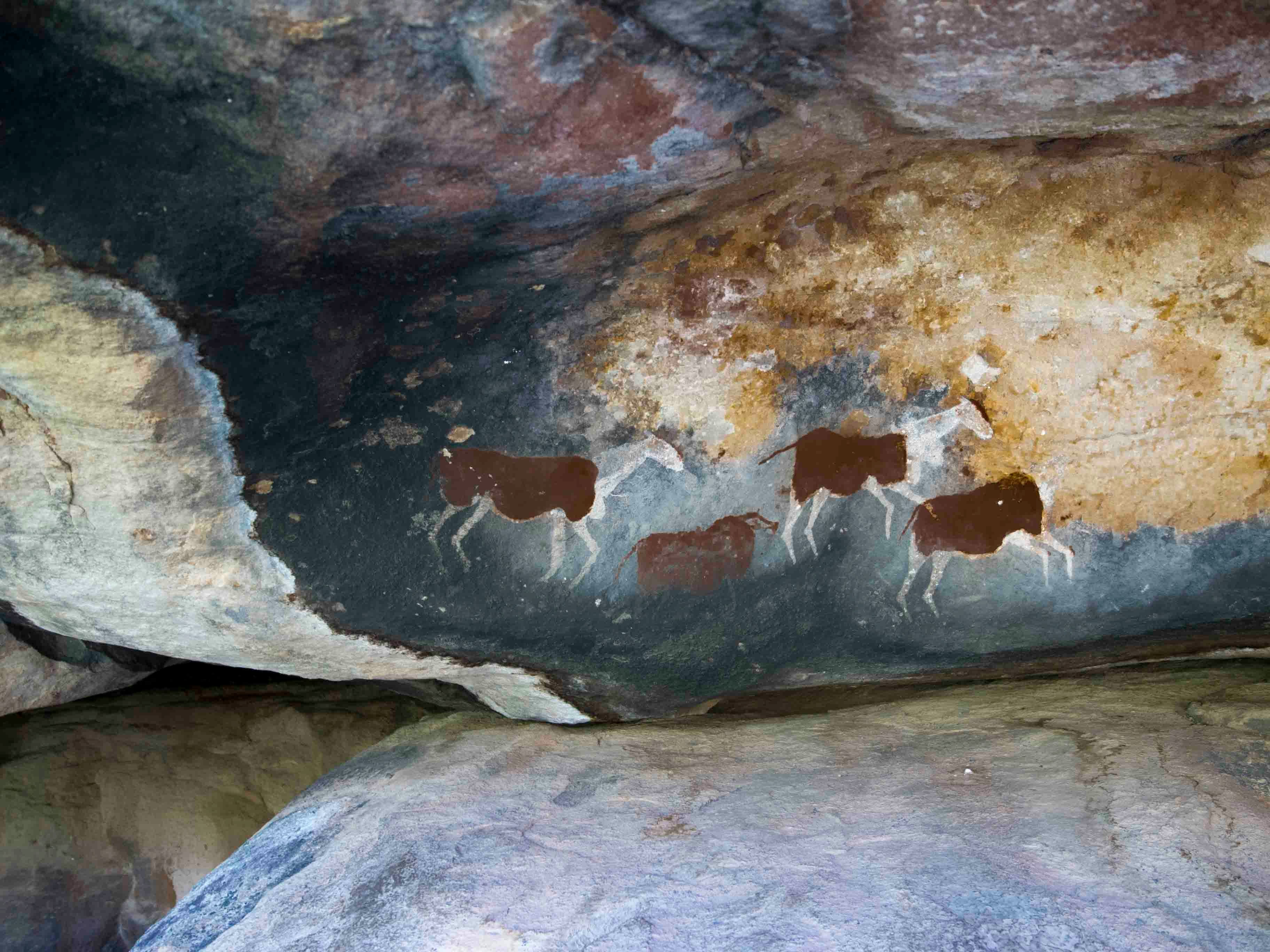
The vast, seemingly immutable expanse of the Sahara Desert holds within its sandy embrace a rich tapestry of human history, etched not in stone monuments, but in the pigment and incisions adorning its rock faces. For millennia, artists have left their indelible marks, creating a visual chronicle that is only now beginning to be truly deciphered. This ancient art, a silent testament to bygone eras, offers profound insights into the lives, beliefs, and environments of prehistoric peoples, revealing a Sahara far removed from the arid wasteland we perceive today.
The notion of a verdant Sahara, a lush savannah teeming with life, was once confined to conjecture. However, recent discoveries have provided irrefutable evidence, directly linked to the very rock art that adorns the desert’s escarpments. The interpretation of these ancient canvases is central to understanding climate shifts and their impact on human populations.
Sudanese Landscapes of Abundance
In Sudan’s Atbai Desert, a remarkable collection of 4,000-year-old rock art is painting a vivid picture of a dramatically different Sahara. These carefully crafted images are not merely decorative; they are vital ecological records. Depictions of cattle, the cornerstone of pastoral economies, are abundant. Yet, it is the inclusion of savannah fauna – graceful giraffes, mighty elephants, and other creatures now absent from the arid landscape – that lends the strongest support to the “Green Sahara” theory. These are the animals of grasslands and scrublands, of ephemeral rivers and abundant water sources.
- Faunal Assemblages as Climate Indicators: The presence of specific animal species in the rock art serves as a powerful proxy for past climate conditions. The juxtaposition of domesticates like cattle with wild megafauna strongly suggests a habitat that could support both. The careful rendering of these animals, often in dynamic poses, indicates a deep familiarity and likely dependence on these ecosystems by the artists.
- The Role of Cattle in Pastoral Societies: The frequent depiction of cattle is not surprising, given their central role in the development of pastoralist societies. These images likely served multiple purposes: as markers of clan identity, as prayers for fertility and prosperity, or as records of significant events related to herd management. Their integration with wild animals further emphasizes the interconnectedness of human and natural worlds in this ancient period.
Libyan Lakes and Their Artistic Legacy
The Sahara’s past abundance of water is further substantiated by discoveries in Libya. Here, the application of advanced technology has unlocked secrets hidden beneath the sands, revealing the existence of ancient lake beds that directly correlate with prehistoric rock art. Hyperspectral imaging, when combined with sophisticated AI algorithms, has the remarkable ability to map hydrated minerals deep underground. These mineral signatures are clues to the former presence of substantial bodies of water, some as deep as 15 meters. The discovery links these paleolake beds to rock paintings dating back as far as 7,000 years, creating a compelling narrative of human presence in landscapes nourished by lakes and rivers.
- Subterranean Hydrology and Human Settlement: The identification of extensive underground paleolake beds offers a crucial explanation for the viability of human settlement in prehistoric Saharan regions. These water sources would have supported not only human populations but also the flora and fauna that subsequently found their way onto the rock art panels. The integration of geological and archaeological data is proving to be a powerful approach to reconstructing past environments.
- Dating through Environmental Correlation: By dating the geological formations of the paleolake beds and correlating them with the stylistic periods of nearby rock art, researchers can establish firmer chronological frameworks. This interdisciplinary approach allows for a more robust understanding of when and where humans lived in relation to these vital water resources.
Sahara rock art has captivated researchers and enthusiasts alike, revealing insights into the ancient cultures that once thrived in this arid region. For those interested in understanding the broader implications of historical artifacts and their preservation, an insightful article can be found here: Protecting Your 401k in an Economic Collapse. This piece discusses the importance of safeguarding valuable assets, much like how we must protect our cultural heritage, including the invaluable rock art of the Sahara.
Unraveling the Chronology: A Deeper Dive into Saharan Art History
The task of dating Saharan rock art is notoriously complex. Layers of paint, erosion, and the inherent difficulty of obtaining precise radiocarbon dates from rock surfaces present significant challenges. However, recent advancements in dating methodologies and analytical techniques are beginning to provide a more nuanced and accurate understanding of the temporal evolution of Saharan artistic traditions, pushing back established timelines and revealing a more dynamic history of human creativity.
The Dawn of Saharan Art: Emerging Chronologies
Central Saharan rock art chronologies are being dramatically reshaped by new research. Previously, the emergence of sophisticated Saharan art was often placed in later periods. However, current estimates, supported by refined dating methods, now suggest its genesis as far back as 5,000 BCE. This radical recalibration alters our understanding of the antiquity and sophistication of early Saharan cultures.
- Micro-Laminar Analysis of Desert Varnish: A key breakthrough has come from the micro-laminar analysis of desert varnish. This naturally occurring patina that forms on rock surfaces can, under microscopic examination, reveal superimposed layers of pigment or incisions. By analyzing the stratigraphy of these layers, researchers can deduce which artistic elements are older and which are more recent, providing a relative chronology.
- Deep Learning for Layer Correlation: The application of deep learning algorithms in conjunction with high-resolution imagery is proving invaluable. These AI systems can meticulously correlate different layers of art, identify tool marks, and even recognize subtle stylistic shifts that might escape the human eye. This computational power allows for the objective analysis of vast datasets, leading to more confident chronological assignments.
The Multi-Phase Reality of Libyan Engravings
In Libya’s Al-Hasawna Mountains, rock engravings dating back approximately 10,000 years are providing unprecedented insights into the multi-phased nature of Saharan prehistoric art. These ancient works are not the product of a single artistic tradition but represent distinct phases of cultural development, each with its unique stylistic characteristics and thematic concerns.
- The Round Head Style: This early phase is characterized by the depiction of human figures with rounded heads, often without discernible facial features. These stylized representations offer a glimpse into the earliest attempts at pictographic communication.
- The Buffalo, Camel, and Horse Horizons: Subsequent phases, identified by the distinct depictions of buffalo, camels, and horses, reveal evolving relationships between humans and animals. The introduction of domesticated animals like camels and horses signals significant technological and economic shifts, including the development of more efficient transportation and the expansion of pastoral networks. The presence of these animals also provides crucial insights into the changing environmental conditions that could support such fauna.
Cultural Osmosis: Saharan Art’s Influence on Global Canvases

The Sahara was not an isolated cultural island. Evidence suggests a remarkable degree of interaction and influence between its inhabitants and neighboring civilizations, most notably ancient Egypt. The rock art of the Sahara provides compelling stylistic and thematic links, suggesting that the roots of Egyptian artistic traditions may run deeper and be more broadly African than previously understood.
The Eastern Sahara’s Neolithic Legacy
Neolithic rock drawings found in the eastern Sahara, predating Egyptian dynastic art by as much as 1,000 years, are of particular interest. These ancient works exhibit stylistic similarities to early Egyptian art, pointing to a shared cultural heritage and a period of significant artistic cross-pollination. This challenges the traditional view of Egyptian art as an autonomous development, instead highlighting its integration within a broader African artistic landscape.
- Stylistic Parallels and Shared Motifs: Researchers have identified striking parallels in how figures are depicted, the compositional arrangements, and the recurring motifs. The use of similar color palettes, the representation of animals, and the depiction of certain human activities in the Saharan drawings bear a remarkable resemblance to early Egyptian iconography. This suggests a period of intensive cultural exchange and shared artistic vocabulary around 6,000–5,500 BC.
- The ‘African’ Roots of Egyptian Art: This discovery pushes back the timeline for African cultural influence on Egyptian art, suggesting that these influences were deeply embedded in the Neolithc period. It reframes our understanding of the origins of Egyptian civilization and its artistic expression, emphasizing its connections to the wider continent.
The Far-Reaching Threads of Trade and Exchange
The Sahara’s role as a conduit for trade and exchange networks is further illuminated by the scientific analysis of the pigments used in its rock art. The discovery of trace amounts of lapis lazuli, a precious blue stone, within these ancient paints is particularly significant. Lapis lazuli, primarily sourced from the Badakhshan region of modern-day Afghanistan, indicates trade routes that stretched across vast distances, connecting Saharan communities with distant lands centuries earlier than previously believed.
- Lapis Lazuli: A Marker of Ancient Connectivity: The presence of lapis lazuli in Saharan rock art is a powerful indicator of extensive prehistoric trade networks. It suggests that Saharan peoples were not isolated but actively engaged in long-distance exchange, acquiring valuable materials from regions as far afield as Central Asia. This challenges previous timelines for such intercontinental connectivity, pushing back the established dates by a notable margin.
- Reshaping Prehistoric Timelines: The implications of these findings are far-reaching, demanding a reassessment of our understanding of prehistoric human mobility, technological diffusion, and the development of complex trade systems. It highlights the Sahara not just as a geographical barrier but as a facilitator of connections between diverse cultures.
Modern Technologies Unlocking Ancient Secrets
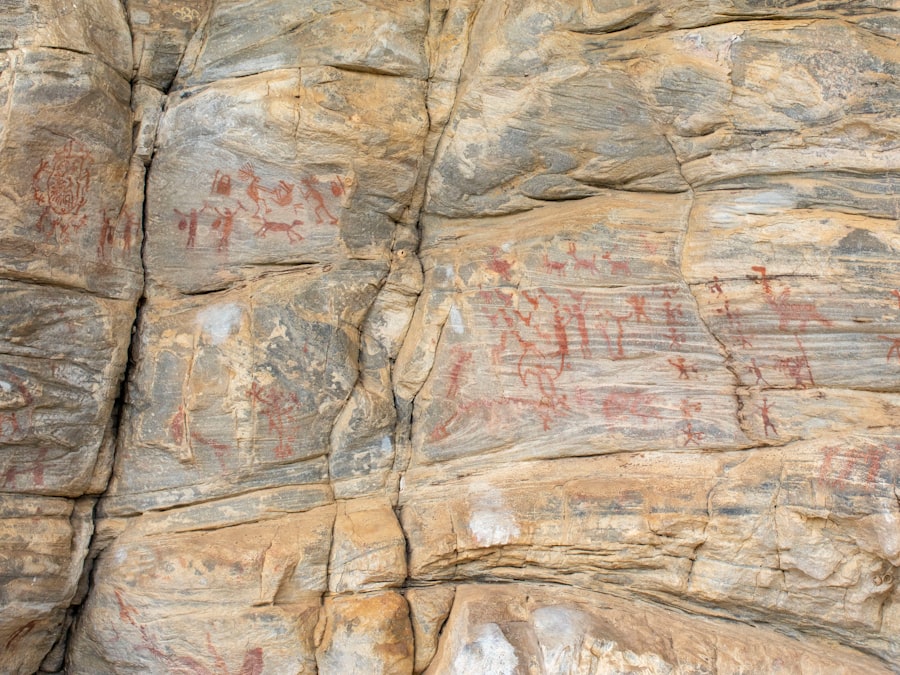
The sheer scale and often remote locations of Saharan rock art sites present immense challenges for archaeological research and conservation. However, the advent of cutting-edge technologies is revolutionizing our ability to locate, document, and analyze these invaluable cultural treasures, pushing the boundaries of archaeological discovery deeper than ever before.
AI-Driven Subterranean Discoveries
In the vast and often featureless Ténéré region of the Sahara, the application of synthetic aperture radar (SAR) and ground-penetrating radar (GPR) has yielded astonishing results. These non-invasive imaging techniques have successfully identified subterranean structures with an impressive 92% accuracy. These buried features are not isolated anomalies; they show a discernible link to rock art dispersal patterns, suggesting that the placement of art was often related to the presence of hidden settlements or activity centers.
- Mapping Unseen Habitats: SAR and GPR allow archaeologists to “see” beneath the surface, revealing archaeological features that would otherwise remain undiscovered due to millennia of sand accumulation. This technology has the potential to uncover entire ancient landscapes, including dwellings, burial sites, and perhaps even entire villages.
- Connecting Art to Lifestyle: The correlation between identified subterranean structures and the distribution of rock art is a critical breakthrough. It suggests that rock art was not randomly placed but strategically located in relation to human habitation and activity. This provides invaluable context for interpreting the meaning and purpose of the art itself, pushing back estimated timelines for organized human presence and artistic activity in these regions.
Crowdsourcing Conservation for Endangered Heritage
The urgency of preserving Saharan rock art is paramount. These fragile cultural assets are under constant threat from natural erosion, climate change, and the cumulative impact of past human activities, including less-than-ideal archaeological exploration. recognizing this, global collaboration is at the forefront of conservation efforts.
- TARA and the British Museum Initiative: Organizations like the Trust for African Rock Art (TARA), in partnership with institutions such as the British Museum, have launched ambitious crowdsourcing campaigns. These initiatives aim to engage a global audience in the critical task of saving threatened rock art sites. By digitizing and making accessible vast archival collections, they foster wider scientific engagement and public awareness.
- Open-Access Databases for Global Study: A significant achievement of these collaborative efforts is the transfer of tens of thousands of archival images to open-access databases. This democratization of knowledge allows researchers worldwide to study these crucial records, contributing to a more comprehensive understanding of Saharan prehistory without the need for extensive fieldwork.
The Imperative of Digital Documentation
The majority of Saharan rock art uncovered to date is in a state of ongoing degradation. The inexorable march of time, coupled with the harsh realities of environmental shifts, renders much of this heritage increasingly vulnerable. This compels an urgent response focused on meticulous digital documentation.
- High-Resolution 3D Scanning: The application of high-resolution 3D scanning technology is becoming indispensable. This process captures every subtle nuance of the rock surface, including the texture, depth of incisions, and the application of pigments. These detailed digital models provide a precise snapshot of the art as it exists now, allowing for future comparative studies and analysis.
- Digital Archiving for Future Generations: The creation of comprehensive digital archives is not merely an academic exercise; it is a vital act of preservation. These digital surrogates ensure that the information contained within these threatened artworks will not be lost, even if the physical sites succumb to the forces of nature. This safeguarding of cultural heritage is a responsibility to future generations.
The fascinating world of Sahara rock art offers a glimpse into the lives and beliefs of ancient civilizations, revealing their connection to the environment and each other. For those interested in exploring how historical narratives shape our understanding of modern challenges, a related article discusses the role of innovation in addressing contemporary issues, such as lunar defense strategies. You can read more about this intriguing topic in the article on lunar defense.
Reassessing Pastoral Horizons: A Shifting Understanding of Saharan Life
| Region | Number of rock art sites | Age of rock art |
|---|---|---|
| Tassili n’Ajjer, Algeria | over 15,000 | 6,000-2,000 years old |
| Ennedi Plateau, Chad | over 800 | 7,000-2,000 years old |
| Fezzan, Libya | over 1,000 | 12,000-1,000 years old |
The interpretation of Saharan rock art is an ongoing process, with new discoveries frequently leading to the reassessment of established theories. One such re-evaluation concerns the dating and thematic significance of certain animal depictions, particularly those associated with the pastoral horizon.
Elephants and Rhinos: Not Always Ancient
Recent studies have shed new light on engravings that depict elephants and rhinos. Previously, these formidable creatures were often assumed to belong to the earliest phases of Saharan rock art, reflecting a primeval landscape. However, current research firmly places these engravings within the pastoral horizon, approximately 5,000 years before the present (BP).
- The Pastoral Horizon Reimagined: This recalibration challenges earlier assumptions, suggesting that the relationship between humans and these large animals persisted well into the period when pastoralism was a dominant way of life. It implies that these megafauna co-existed with herding communities, perhaps as targets for hunting, or as part of the wider ecosystem that supported livestock.
- Cattle Pastures and Ecological Linkages: The confirmation of elephants and rhinos within the pastoral horizon underscores the richness and diversity of the Sahara’s past ecosystems. It highlights the role of cattle pastures as central components of these environments, supporting not only domestic animals but also a significant array of wild fauna. This interconnectedness is a recurring theme in the interpretation of Saharan rock art, revealing a dynamic interplay between human activities and the natural world.
In conclusion, the deciphering of Sahara’s ancient rock art is a monumental undertaking, one that is constantly being rewritten by new discoveries and technological advancements. From the echoes of a verdant past to the intricate chronologies of artistic expression and the far-reaching networks of ancient trade, these etched and painted narratives are piecing together the story of a profoundly different Sahara. They speak of human ingenuity, deep ecological understanding, and an enduring artistic impulse that has, against all odds, survived the test of millennia, offering us a unique window into the soul of a lost world. The ongoing efforts to document, preserve, and interpret this endangered heritage are not just archaeological endeavors; they are acts of cultural stewardship, ensuring that the silent voices of our ancestors continue to resonate for generations to come.

The Sahara Won’t Stay a Desert Forever
FAQs
What is Sahara rock art?
Sahara rock art refers to the prehistoric and historic carvings and paintings found in the Sahara Desert region. These artworks are found on rock surfaces and depict various subjects such as animals, humans, and geometric designs.
Where is Sahara rock art found?
Sahara rock art can be found in various countries across the Sahara Desert region, including Algeria, Libya, Niger, Chad, Mali, and Egypt. The art is located in rock shelters, caves, and open-air sites.
What is the significance of Sahara rock art?
Sahara rock art provides valuable insights into the lives, beliefs, and practices of the people who inhabited the region in ancient times. It offers a glimpse into their cultural, social, and spiritual activities, as well as their interactions with the environment.
How old is Sahara rock art?
Sahara rock art dates back to different periods, with some artworks estimated to be thousands of years old. The art spans from the prehistoric era to more recent historical periods, reflecting the continuity and evolution of artistic expression in the region.
What are the main themes depicted in Sahara rock art?
The main themes depicted in Sahara rock art include hunting scenes, domesticated and wild animals, human figures, rituals, and abstract geometric designs. These themes provide valuable information about the daily lives and belief systems of the people who created the art.