
The chilling whispers of a forgotten Cold War endeavor have finally been brought into the stark light of public scrutiny. For decades, the United States Army’s Project Iceworm, a clandestine operation to house nuclear missiles beneath the Greenland ice sheet, existed as a specter in the shadows of history. Now, declassified documents have peeled back the icy veil, revealing the audacious, and ultimately doomed, ambition that once aimed to position America’s ultimate deterrent within a seemingly impregnable fortress of ice. This revelation offers a fascinating, and at times unsettling, glimpse into the strategic calculus and technological hubris that defined the era of nuclear brinkmanship.
The mid-1950s marked a critical juncture in the Cold War. The Soviet Union’s burgeoning nuclear arsenal and its developing intercontinental ballistic missile (ICBM) capabilities presented a new and existential threat to the United States. Traditional bomber-based nuclear delivery systems, while potent, were becoming increasingly vulnerable to Soviet air defenses. The imperative for a more survivable and rapidly deployable nuclear force was paramount. This strategic necessity became the fertile ground upon which Project Iceworm germinated.
The Spectre of Soviet ICBMs and the Need for Survivability
The rapid advancement of Soviet ICBM technology, culminating in the launch of Sputnik in 1957, signaled a paradigm shift. Suddenly, the vast oceans separating the two superpowers no longer offered the same degree of protection. The prospect of Soviet missiles reaching American soil within minutes of launch loomed large in the minds of military planners. This fear fueled a desperate search for ways to harden America’s nuclear deterrent against a surprise first strike.
The Dawn of Mobile and Concealed Deterrence
Traditional fixed missile silos, while offering a degree of protection, were still vulnerable to direct attack. The idea of mobile missile platforms, capable of relocating and thus denying the enemy a clear targeting solution, gained traction. However, the sheer size and immobility of early nuclear missiles presented significant logistical challenges for such a concept. This is where the seemingly insurmountable obstacle of Greenland’s ice sheet began to present itself as a paradoxical solution.
Declassified US Army Project Iceworm, which aimed to establish a network of nuclear missile bases beneath the Greenland ice sheet, has intrigued historians and military analysts alike. This project not only highlights the lengths to which the U.S. government went during the Cold War but also raises questions about the environmental and geological implications of such undertakings. For those interested in exploring how ancient structures like Stonehenge might also hold secrets related to sound and acoustics, a fascinating article can be found here: Unraveling the Mystery of Stonehenge’s Acoustic Properties.
Stationing Missiles in the Unlikeliest of Places: The Concept of “Camp Century”
The concept that ultimately defined Project Iceworm was both brilliant in its audacity and terrifying in its potential consequences. The idea was to construct a vast, self-sufficient military base beneath the Greenland ice sheet, where American Jupiter intermediate-range ballistic missiles (IRBMs) could be housed, concealed, and protected from Soviet attack. This subterranean city, designated “Camp Century,” was envisioned as a forward-operating base that could significantly shorten the flight time of missiles targeting Soviet industrial centers.
The Ingenuity of Sub-Ice Construction
Building a base within a dynamic, kilometers-thick layer of ice presented a monumental engineering challenge. The chosen method involved excavating a network of tunnels using a combination of methods, including the “plowing” technique. This involved dragging enormous steel blades through the ice, creating trenches that would then be widened and roofed over. The excavated ice was then used to construct the outer walls and roofs of the tunnels and modules, providing a natural insulation and a formidable barrier.
A Self-Sufficient Arctic Metropolis
Camp Century was designed to be a self-sustaining environment. Power was to be generated by a small nuclear reactor, the PM-2A, which would also provide heat for the base. Living quarters, workshops, and storage facilities were all to be housed within these ice tunnels, creating a remarkably integrated and secure environment. The psychological aspect of such a secluded and fortified base was also a consideration, intended to project an image of unshakeable resolve.
The “Growler” Concept: Mobile Missile Launchers
A crucial element of Project Iceworm was the “Growler” concept. This involved developing a system of mobile missile launchers that could traverse the ice tunnels. The idea was that the missiles would not be permanently siloed but rather housed within these mobile carriers, allowing for greater flexibility and making it more difficult for the Soviets to target specific launch points. The tunnels themselves would serve as the “launch corridor,” with the missiles being brought to the surface at designated points for firing.
The Technological Hurdles and the Unforeseen Dangers
While the ambition of Project Iceworm was undeniable, the execution was fraught with technical difficulties and overlooked environmental factors. The sheer scale of the undertaking and the unforgiving nature of the Arctic environment proved to be formidable adversaries, ultimately contributing to the project’s demise.
The Challenges of the Arctic Environment
Operating a sophisticated military base in the heart of Greenland’s ice sheet presented a host of unique challenges. Extreme cold, constant darkness for half the year, and the inherent instability of ice were all factors that had to be contended with. The constant movement and expansion of the ice sheet posed a significant threat to the structural integrity of the tunnels and modules.
The Perils of a Nuclear Reactor in Ice
The inclusion of a nuclear reactor within the ice base, while providing power and heat, also introduced a new layer of risk. The potential for a reactor malfunction or an accident within the ice environment was a terrifying prospect, with the possibility of contaminating the ice sheet and the surrounding environment with radioactive materials. Safety protocols were undoubtedly stringent, but the inherent dangers remained.
The “Shrinking” Base: Ice Sheet Dynamics and Structural Integrity
One of the most significant and ultimately insurmountable challenges was the dynamic nature of the Greenland ice sheet. The ice is not static; it flows and shifts, exerting immense pressure. What was intended as a stable subterranean fortress was, in reality, a structure constantly battling the relentless creep of glacial ice. This led to the tunnels and modules experiencing deformation, requiring continuous maintenance and reinforcement. The base was, in essence, shrinking and buckling under the immense weight and movement of the ice.
Declassified Documents: Unveiling the Truth
The recent declassification of documents related to Project Iceworm has provided a crucial window into the project’s history, its objectives, and its eventual abandonment. These documents, sourced from various archives, reveal the extent of the planning, the technological innovations attempted, and the growing awareness of the project’s inherent flaws.
The “Project Thule” Connection and Early Explorations
Initial explorations and feasibility studies for a base in Greenland were conducted under the broader umbrella of “Project Thule,” which also involved establishing an airbase in the region. The idea of a missile site beneath the ice emerged as a more radical and ambitious extension of these early endeavors. Declassified reports detail the initial geological surveys and the engineering assessments that were conducted to gauge the viability of constructing such a base.
Correspondence and Design Specifications: A Glimpse into the Minds of Planners
The declassified materials include a wealth of correspondence between military officials, engineers, and scientists. These documents offer invaluable insights into the decision-making processes, the technological debates, and the evolving understanding of the project’s challenges. Design specifications for the tunnels, the mobile missile launchers, and the nuclear reactor provide a detailed technical account of the ambitious engineering involved.
The Growing Concerns and the Decision to Abort
As the project progressed, so too did the awareness of its inherent limitations. Declassified reports begin to document growing concerns about the structural integrity of the base, the escalating costs, and the environmental risks associated with housing nuclear missiles in such a fragile and dynamic environment. Ultimately, these concerns, coupled with the development of more stable and cost-effective missile systems, led to the decision to terminate Project Iceworm.
The declassified US Army Project Iceworm, which aimed to establish a network of nuclear missile bases beneath the Greenland ice sheet, has sparked interest in various military and environmental studies. A related article explores ancient water management systems that highlight the ingenuity of past civilizations in adapting to their environments. This connection between historical and modern engineering practices can be seen in the way both projects address the challenges posed by their respective landscapes. For more insights on innovative water management techniques, you can read the article here.
The Legacy of Project Iceworm: A Cautionary Tale
| Location | Greenland |
|---|---|
| Project Name | Project Iceworm |
| Duration | 1959-1967 |
| Purpose | Build a network of mobile nuclear missile launch sites |
| Declassified | 1995 |
Project Iceworm, despite its eventual failure, stands as a testament to the extreme lengths to which nations would go during the Cold War to secure their strategic advantage. While the vision of nuclear missiles hidden beneath the Arctic ice was audacious, its story serves as a potent reminder of the complex interplay between strategic ambition, technological innovation, and the unyielding power of nature.
The Evolution of Nuclear Deterrence Strategies
The lessons learned from Project Iceworm, particularly regarding the challenges of subterranean missile deployment and the vulnerabilities of fixed installations in extreme environments, undoubtedly informed subsequent developments in nuclear deterrence. The emphasis shifted towards more mobile and survivable platforms, as well as the development of different missile technologies.
Environmental Considerations in Military Planning
The environmental risks associated with Project Iceworm, though perhaps not fully appreciated at the time, foreshadowed the increasing importance of environmental impact assessments in all large-scale military projects. The potential for long-term contamination from a failed nuclear operation within the ice served as a stark warning.
The Enduring Allure of Grand, Secretive Projects
The revelation of Project Iceworm taps into a deep-seated fascination with clandestine military operations and ambitious, almost science-fiction-like, endeavors. It highlights the lengths to which governments will go in pursuit of perceived national security, often shrouded in secrecy. The declassification process itself underscores the ongoing effort to reconcile the historical record with public accountability. Project Iceworm, once a hushed secret, now stands as a declassified chapter, a stark reminder of the Cold War’s icy grip on human ingenuity and its potential for both extraordinary achievement and profound peril.
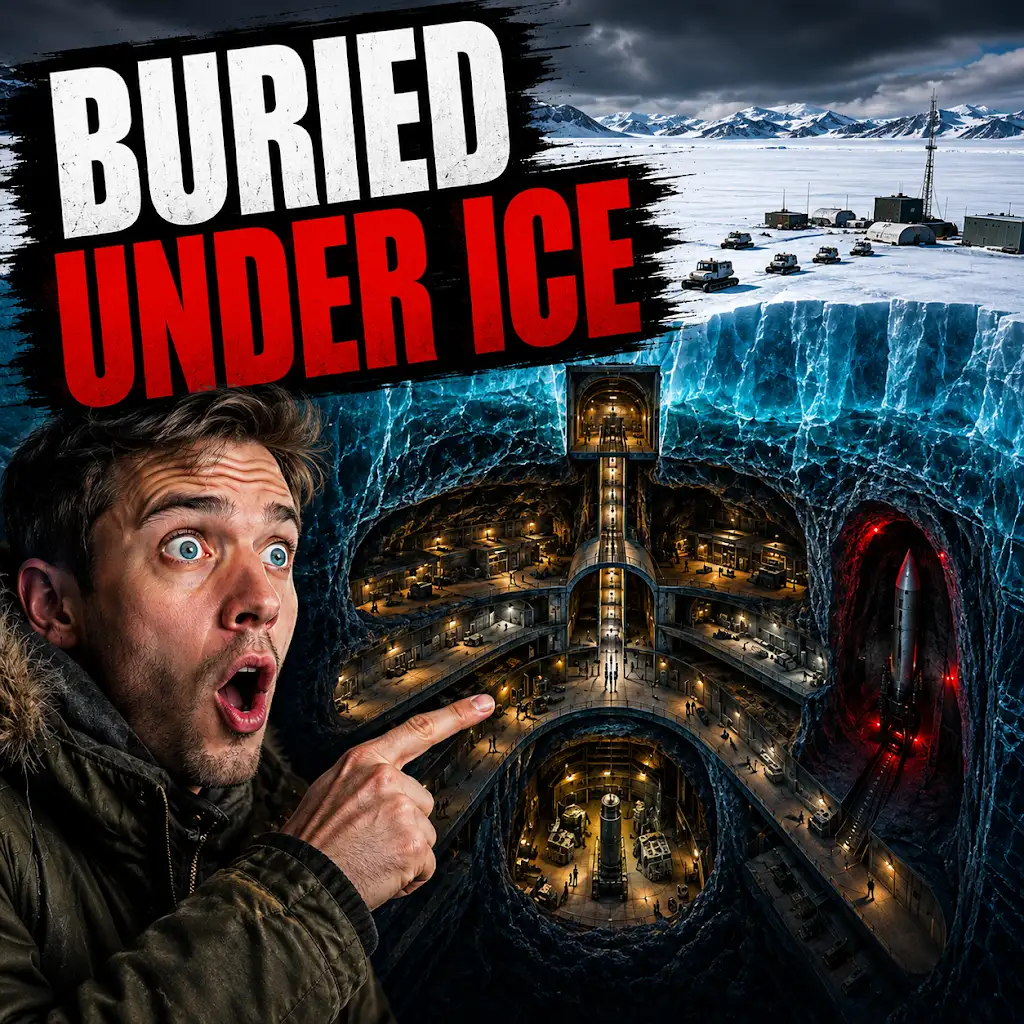
The U.S. Built a Nuclear City Under Greenland. The Ice Won.
FAQs
What was Project Iceworm?
Project Iceworm was a top-secret United States Army program during the Cold War that aimed to build a network of mobile nuclear missile launch sites under the Greenland ice sheet.
When did Project Iceworm take place?
Project Iceworm was active from 1960 to 1966, during the height of the Cold War.
Why was Project Iceworm declassified?
Project Iceworm was declassified in 1997, as the environmental impact of the abandoned project became a concern. The U.S. government also wanted to provide transparency about its Cold War activities.
What was the environmental impact of Project Iceworm?
The abandoned Project Iceworm resulted in the release of toxic waste and pollutants into the environment, raising concerns about the long-term impact on the surrounding ecosystem.
What was the ultimate fate of Project Iceworm?
Project Iceworm was ultimately abandoned in 1966 due to technical difficulties and the unstable nature of the ice sheet. The project was never completed, and the missile launch sites were left buried under the ice.