The Invisible Ink of the Ancient World
The silent sentinels of the desert, the rocks, hold stories etched not in human script but in a slow, geological masterpiece. For millennia, these narratives have been overlooked, a subtle sheen on the surface of boulders and cliff faces, dismissed as mere discoloration. This phenomenon, known as desert varnish, is far more than a cosmetic addition to arid landscapes. It is a complex biogeochemical film, a testament to the persistent forces of nature, and a treasure trove of information for those who know how to read its intricate layers. This remarkable coating, often appearing as dark, reddish-brown or blackish streaks and patches, is a product of eons of interaction between rock, atmosphere, and microbial life. Unlocking the secrets held within desert varnish is akin to deciphering an ancient manuscript written by the very earth, offering unparalleled insights into past climates, environmental conditions, and even the presence of early human activity.
The formation of desert varnish is a slow and deliberate process, a gradual accumulation of elemental and organic matter. It begins with the weathering of the underlying rock, a process that releases minerals and ions. These are then transported by wind and water, eventually depositing onto the rock surface. However, the key to varnish formation lies in the role of microscopic organisms, particularly bacteria and fungi. These extremophiles, thriving in harsh desert environments, play a crucial role in binding and concentrating the deposited materials. They contribute organic matter, create a matrix for mineral precipitation, and facilitate the oxidation of iron and manganese, the very elements that give desert varnish its characteristic dark hue. The rate of formation is incredibly slow, often measured in millimeters per thousand years, making each layer a precise chronological marker. This sluggish pace, however, is precisely what makes desert varnish such a valuable tool for geochronologists and archaeologists.
Desert varnish, a fascinating geological phenomenon found on rock surfaces in arid environments, has been the subject of various studies aimed at understanding its formation and dating. For those interested in exploring related topics, an intriguing article titled “The Militarization of the Moon’s South Pole” discusses the implications of extraterrestrial geology and how similar processes might occur on celestial bodies. You can read the article here: The Militarization of the Moon’s South Pole.
Unraveling the Alchemy of Formation
The creation of desert varnish is a fascinating interplay of physical, chemical, and biological processes, a testament to the resilience and ingenuity of life in extreme environments. It is not a single, monolithic entity, but rather a layered composite, each stratum contributing to the overall narrative of the rock’s history. Understanding these formation pathways is crucial to accurately interpreting the data contained within.
The Foundation: Rock Weathering and Atmospheric Deposition
The genesis of desert varnish begins with the fundamental breakdown of the rock surface. Wind erosion, a constant sculptor of desert landscapes, dislodges fine mineral particles from exposed rocks. Similarly, infrequent but powerful rainfall events can wash minerals from higher elevations down onto the surfaces of stationary boulders. Dust storms, a common feature of arid regions, are particularly significant contributors, transporting a cocktail of minerals, including clays, silicates, and metallic elements like iron and manganese, from distant sources. These atmospheric aerosols settle onto the rock surface, forming a thin, often imperceptible, initial layer.
The Microbial Architects: The Role of Biota
The true magic of desert varnish formation, however, is orchestrated by the unseen legions of microbes that inhabit the desert. Specialized bacteria, particularly those belonging to the genera Bacillus, Arthrobacter, and Pseudomonas, as well as cyanobacteria and fungi, are instrumental in this process. These microorganisms colonize the nascent mineral layer, utilizing the scant moisture and nutrients available. They excrete organic compounds, forming a sticky extracellular polymeric substance (EPS) matrix. This matrix acts as a scaffold, trapping further mineral particles and facilitating their adherence to the rock. More importantly, these microbes are adept at manipulating the oxidation states of metals. They catalyze the oxidation of soluble ferrous iron (Fe2+) and manganous manganese (Mn2+) into insoluble ferric iron (Fe3+) and manganic manganese (Mn3+/Mn4+), respectively. These oxidized metal ions then precipitate out of solution, staining the organic matrix and forming the dark, characteristic coatings of the varnish.
The Slow Accumulation: Layer by Layer Chronology
The continuous deposition of atmospheric dust and the ongoing activity of microbial communities lead to the slow, incremental build-up of desert varnish. Each dust event, each cycle of wetting and drying, each microbial generation contributes to a new layer. This layered structure is key to dating the varnish. Over time, distinct bands can form, reflecting variations in environmental conditions. For instance, periods of increased rainfall might lead to thicker layers or the incorporation of different mineral assemblages, while prolonged droughts could result in thinner, less developed varnish. The absence of varnish on certain rock surfaces can also provide valuable information, indicating areas that are less exposed to windborne dust or that have experienced greater physical erosion. The slow accumulation rate, often estimated to be between 0.1 to 0.8 millimeters per thousand years, means that even thin layers can represent significant periods of time, making desert varnish a remarkable natural archive.
Dating the Earth’s Slow Artistry: Methods and Innovations

The slow, painstaking nature of desert varnish formation, while fascinating from a geological perspective, presents a significant challenge for dating. Unlike sedimentary rocks with distinct layers that can be dated using radiometric techniques, varnish is a thin, often diffuse coating. However, scientific ingenuity has devised several methods to overcome this hurdle, allowing researchers to assign ages to these ancient rock coatings and, by extension, the geological and archaeological events they represent.
Radiometric Techniques: The Gold Standard with Caveats
Several radiometric dating techniques have been adapted and applied to desert varnish, with varying degrees of success. One of the most promising methods is Accelerator Mass Spectrometry (AMS) radiocarbon dating (¹⁴C). This technique measures the concentration of carbon-14 isotopes within the organic component of the varnish. Since organic matter in the varnish is derived from the atmospheric carbon dioxide at the time of its incorporation, the remaining ¹⁴C can be used to estimate the age of the varnish layer. However, this method is limited by the effective half-life of carbon-14, typically providing reliable dates for materials up to around 50,000 years old. Furthermore, contamination from younger organic materials, such as rootlets or modern dust, can skew results, requiring meticulous sample preparation and analysis.
Another important radiometric method is potassium-argon (K-Ar) dating, or more commonly, its refined version, argon-argon (⁴⁰Ar/³⁹Ar) dating. This technique relies on the decay of radioactive potassium-40 (⁴⁰K) into argon-40 (⁴⁰Ar). While varnish itself does not contain significant amounts of potassium, it can be dated indirectly by analyzing minerals within the underlying rock that are co-deposited with the varnish. This method is particularly useful for dating older varnish formations, extending beyond the range of radiocarbon dating. However, the effectiveness of K-Ar and ⁴⁰Ar/³⁹Ar dating is dependent on the presence of suitable potassium-bearing minerals and the absence of argon loss or gain from the sample.
Luminescence Dating: Unlocking Trapped Energy
Luminescence dating techniques, such as optically stimulated luminescence (OSL) and thermoluminescence (TL), offer alternative approaches to dating desert varnish, particularly when radiometric methods are not applicable or yield ambiguous results. These methods are based on the principle that minerals within the varnish and the underlying rock can accumulate trapped electrons over time due to background radiation. When exposed to light (OSL) or heat (TL), these trapped electrons are released, emitting photons of light in the process. The intensity of this emitted light is proportional to the total radiation dose received by the sample since its last “zeroing event” – usually a significant exposure to sunlight or heat. By measuring the natural dose rate of the surrounding environment, researchers can calculate the time elapsed since the varnish formed. Luminescence dating is particularly valuable for dating varnish formations ranging from a few hundred years to several hundred thousand years old and is less susceptible to organic contamination issues than radiocarbon dating.
Paleomagnetic Dating: A Record of Earth’s Wandering Poles
The Earth’s magnetic field has undergone significant changes throughout geological history, including reversals in polarity. These magnetic signals are often imprinted in the iron-bearing minerals within desert varnish. Paleomagnetic dating involves comparing the magnetic orientation of the minerals in the varnish to known patterns of Earth’s magnetic field reversals over time. By identifying characteristic magnetic signatures, researchers can correlate the varnish layer to specific geological periods. This method is particularly useful for dating older varnish formations and can provide a valuable cross-check for other dating techniques. However, the accuracy of paleomagnetic dating depends on the stability of the magnetic signal in the varnish and the availability of well-established paleomagnetic records.
Morphological and Environmental Proxies: Qualitative Insights
Beyond direct dating techniques, the morphology and elemental composition of desert varnish can provide qualitative insights into its age and the environmental conditions under which it formed. For instance, older varnish layers tend to be thicker, darker, and more uniform in color compared to younger, thinner, and often patchy varnish. The presence of specific minerals, such as clays or sulfates, can indicate periods of higher or lower humidity, respectively. Furthermore, the degree of surface etching and weathering of the underlying rock can also offer clues to the age of the varnish. While these methods do not provide precise numerical ages, they can be invaluable for relative dating and for reconstructing past environmental conditions.
Voices from the Past: Desert Varnish in Archaeology and Paleoenvironmental Reconstruction
The ability to date desert varnish has opened up new avenues of research, allowing scientists to glean unprecedented information about ancient human activities and past climates. The subtle sheen on rocks can, in fact, be a powerful tool for understanding the human story and the environmental shifts that shaped it.
Rock Art Secrets: Dating Petroglyphs and Pictographs
One of the most exciting applications of desert varnish dating is in the realm of archaeology, specifically in the study of rock art. Petroglyphs, designs carved or pecked into rock surfaces, and pictographs, paintings made with natural pigments, are often found in arid regions where desert varnish can form. Over time, desert varnish can accumulate over these ancient artworks, either partially obscuring them or forming a protective layer. By dating the varnish that directly covers the rock art, archaeologists can establish a minimum age for the artwork. For example, if varnish found over a petroglyph is dated to 8,000 years old, it means the carving must be at least that old. This technique has been instrumental in recalibrating the timelines of ancient cultures and understanding the antiquity of human artistic expression. It allows for a more robust chronology for the creation and use of sacred sites and artistic traditions.
Tracing Human Habitation: Evidence of Past Presence
Beyond rock art, desert varnish can also provide indirect evidence of past human presence. When humans occupied a site, they often disturbed the rock surfaces, either through the creation of shelters, hearths, or the preparation of tools. These disturbances can create fresh rock surfaces where desert varnish formation is initially inhibited. However, as human activity wanes and the rock surfaces are exposed to the elements again, varnish begins to form. By examining the presence, absence, and thickness of desert varnish in relation to archaeological features, researchers can infer the timing and duration of human occupation. For instance, a pristine, unvarnished rock face adjacent to an archaeological site might indicate recent disturbance, while an area with well-developed varnish could suggest a longer period of abandonment.
Climate Chronicles: Reconstructing Past Environmental Conditions
The layered nature of desert varnish makes it a remarkable archive of past climate change. Variations in the mineral composition, thickness, and even the isotopic signatures within different varnish layers can reflect changes in rainfall patterns, dust flux, and atmospheric composition over time. For instance, the presence of certain clay minerals might indicate periods of higher moisture availability, while an increase in the concentration of soluble salts could suggest prolonged drought. Analyzing the isotopic ratios of elements like oxygen and carbon within the varnish can provide further clues about past temperatures and humidity levels. These paleoenvironmental reconstructions are crucial for understanding long-term climate trends, evaluating the impact of climate change on ecosystems, and informing future climate modeling efforts. The varnish acts as a continuous, albeit slow, recorder of these environmental shifts.
The Impact of Soil and Vegetation: Understanding Landscape Dynamics
Desert varnish can also shed light on changes in soil development and vegetation cover. The composition of the varnish is influenced by the types of minerals available, which in turn are related to the underlying geology and the stability of soils. Changes in vegetation can affect soil erosion rates and the transport of dust, both of which impact varnish formation. By studying the varnish in conjunction with other paleoenvironmental indicators, researchers can piece together a more comprehensive picture of how landscapes have evolved over time, including periods of desertification or increased plant growth. This understanding is vital for effective land management and conservation strategies in arid and semi-arid regions.
Desert varnish, a fascinating geological phenomenon, has intrigued researchers for years due to its unique formation and dating challenges. Recent studies have shed light on the methods used to date this enigmatic coating, providing insights into its age and the environmental conditions that contribute to its development. For a deeper understanding of the interplay between geological processes and historical timelines, you can explore a related article that discusses the intricate relationship between natural formations and their significance in understanding Earth’s history at this link.
Challenges and Future Frontiers in Varnish Research
| Metric | Description | Typical Range | Units |
|---|---|---|---|
| Varnish Thickness | Thickness of the desert varnish layer on rock surfaces | 5 – 100 | Micrometers (µm) |
| Manganese Concentration | Percentage of manganese oxide in varnish | 5 – 20 | Weight % |
| Iron Concentration | Percentage of iron oxide in varnish | 10 – 30 | Weight % |
| Age Estimation | Estimated age of varnish formation based on accumulation rates | 100 – 10,000+ | Years |
| Accumulation Rate | Rate at which varnish accumulates on rock surfaces | 0.1 – 1.0 | Micrometers per 1000 years |
| Carbonate Content | Percentage of carbonate minerals in varnish | 1 – 5 | Weight % |
| Radiocarbon Dating Range | Applicable age range for radiocarbon dating of varnish organic components | Up to 50,000 | Years Before Present (BP) |
Despite the remarkable progress made in understanding and utilizing desert varnish, several challenges remain, and exciting new avenues of research are emerging. The inherent complexities of varnish formation, coupled with the demanding nature of fieldwork in remote desert environments, continue to push the boundaries of scientific exploration.
Addressing Contamination and Calibration Issues
One of the persistent challenges in dating desert varnish is the potential for contamination. Younger organic materials can infiltrate older varnish layers, leading to erroneously young radiocarbon dates. Similarly, geological processes can alter the isotopic composition of minerals
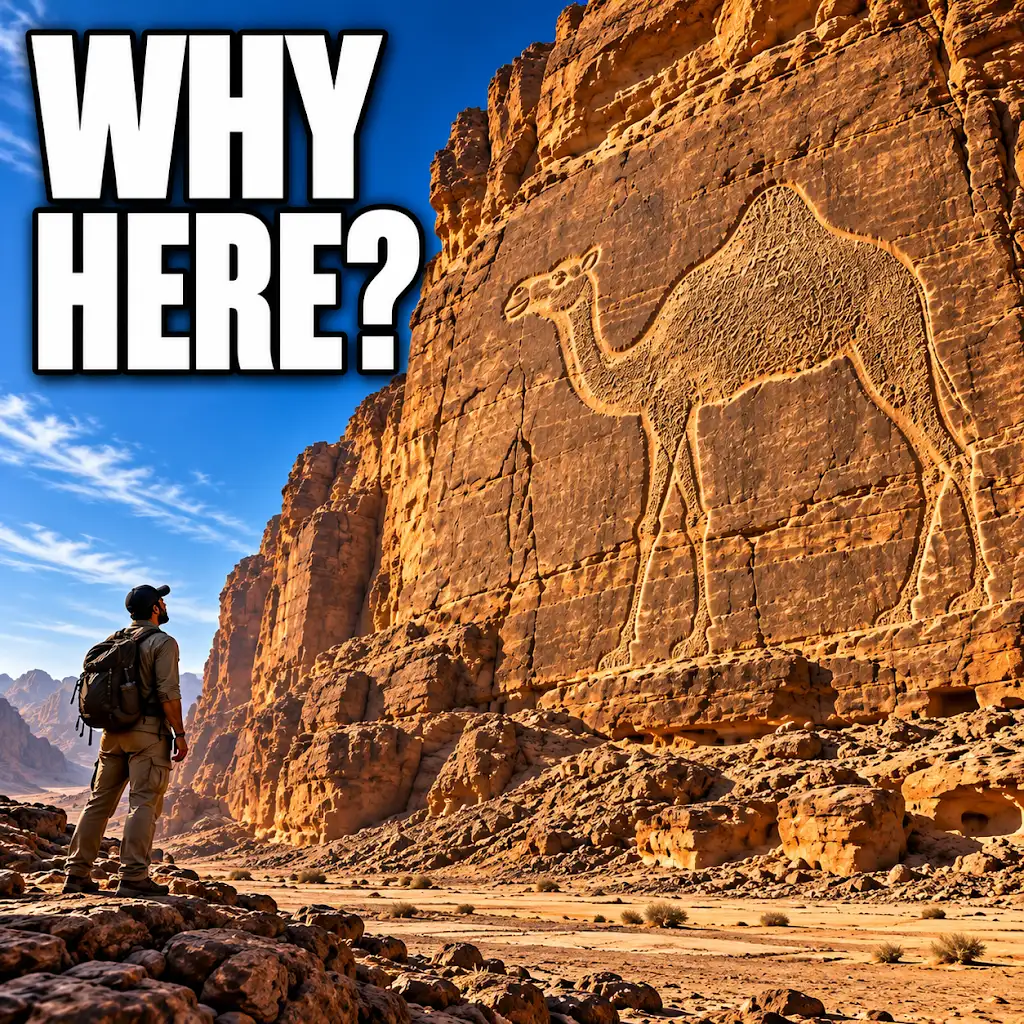
Why Were Giant Camels Carved Above the Desert?
FAQs
What is desert varnish dating?
Desert varnish dating is a method used by archaeologists and geologists to estimate the age of rock surfaces by analyzing the accumulation of manganese and iron oxides on the surface over time.
How does desert varnish form?
Desert varnish forms through a slow process where minerals like manganese and iron are gradually deposited on the surface of rocks due to the interaction of moisture, minerals, and microorganisms over thousands of years.
What can desert varnish dating reveal about a rock surface?
By studying desert varnish, researchers can determine the approximate age of a rock surface, identify periods of exposure or burial, and sometimes even infer environmental conditions in the past.
What are the limitations of desert varnish dating?
One limitation of desert varnish dating is that the rate of varnish formation can vary depending on factors like climate, rock type, and the presence of microorganisms, making it challenging to establish precise dates. Additionally, human activity or natural disturbances can alter the varnish, affecting dating accuracy.
How is desert varnish dating used in archaeological research?
Desert varnish dating is often used in archaeological research to estimate the age of petroglyphs, rock art, and other rock surfaces where traditional dating methods like radiocarbon dating are not applicable. It provides valuable insights into the timeline of human activity in specific areas.