
The legend of Jesse James is etched into the annals of American folklore, a romanticized figure of defiance against perceived injustice. For decades, stories of his daring robberies and narrow escapes have captivated the public imagination. Yet, perhaps the most enduring mystery surrounding him is his ultimate fate. Did the notorious outlaw truly meet his end at the hands of a traitor, or did he, against all odds, live to see old age, shedding his infamous persona and disappearing into anonymity? This article delves into the historical record and popular theories to explore the question of whether Jesse James lived to be an old man.
The Official Account of Jesse James’s Demise
The prevailing narrative, the one most commonly accepted by historians, is that Jesse James was shot and killed on April 3, 1882, in St. Joseph, Missouri. The man credited with this act was Robert Ford, a member of the James-Younger Gang who had turned informant. The story, as it unfolded, paints a picture of betrayal and a swift end for the outlaw.
The Setting: A St. Joseph Home
Jesse James, along with his wife Zerelda and their two children, had been living under the assumed name “Mr. Thomas” in St. Joseph. The family had relocated there following a series of close calls and mounting pressure from law enforcement. The house, located at 1401 Clay Street, was a modest dwelling, a far cry from the opulent estates of some of his contemporaries. It was within these unassuming walls that the fateful encounter was said to have taken place. Jesse, reportedly frustrated by a dusty picture frame, decided to clean his revolver. It was at this moment, while reaching up to dust the picture, that he was allegedly shot in the back of the head by Robert Ford.
The Assassin: Robert Ford’s Treachery
Robert Ford, often referred to as the “Impatient Boy” or “The Dirty Little Coward” in ballads, was a relatively young member of the gang. His motivations for killing Jesse James are generally understood to be a combination of seeking a pardon from the authorities and a desire for the substantial reward money offered for Jesse’s capture, dead or alive. He had joined the James-Younger Gang with his brother, Charley Ford, and had been part of their operations. However, as the law closed in, the Ford brothers saw an opportunity to secure their own freedom by eliminating their leader.
The Aftermath: A Public Spectacle
Following the shooting, Robert Ford promptly surrendered to the authorities in St. Joseph. The body, identified as Jesse James, was put on public display in a coffin. Thousands of people are said to have flocked to see the deceased outlaw, their morbid curiosity fueled by years of sensationalized newspaper accounts. The funeral followed, and Jesse James was reportedly buried in an unmarked grave on the family farm in Kearney, Missouri. This official account, corroborated by witness testimonies and legal proceedings, has long been considered the definitive end of Jesse James’s life.
The question of whether Jesse James lived to be an old man has intrigued historians and enthusiasts alike, often leading to various theories and speculations about his life after the notorious outlaw days. For those interested in exploring the broader context of historical figures and their legacies, a related article discusses the implications of Russia’s role in the new moon race, highlighting how the past continues to shape our understanding of ambition and exploration. You can read more about this fascinating topic in the article found here: Russia’s Role in the New Moon Race.
Challenging the Official Narrative: The Persistent Rumors of Survival

Despite the seemingly conclusive evidence of Jesse James’s death in 1882, whispers and theories suggesting his survival have persisted for over a century. These alternative accounts are fueled by a variety of factors, including lingering questions about the identification of the body, inconsistencies in witness statements, and the romantic allure of an outlaw who might have outsmarted his pursuers.
The “Body” on Display: Doubts and Discrepancies
One of the primary points of contention in the survival theories revolves around the identification of the body displayed in St. Joseph. Skeptics argue that the body was badly decomposed by the time it was viewed, making positive identification extremely difficult. Furthermore, some accounts suggest that the body was missing certain distinguishing marks that Jesse James was known to possess, such as scars or tattoos. The haste with which the body was displayed and buried also raises questions for some, suggesting a possible rush to close the case.
The “New Jesse” in Oklahoma
Perhaps the most prominent survival theory centers on an individual named J. Frank Dalton. Dalton, who lived in Oklahoma and claimed to be Jesse James, maintained this identity until his death in 1951 at the age of 101. His claims were supported by a variety of individuals who testified to his authenticity, including former gang associates and even Jesse James’s own mother, Zerelda. Dalton provided detailed accounts of James’s life and exploits that only someone with intimate knowledge could possess. He described his “escape” from St. Joseph as a carefully orchestrated deception, where a look-alike was substituted for the real Jesse James. This look-alike, he claimed, was a man who owed him a favor and was willing to sacrifice his life to protect Jesse.
Other Alleged Sightings and Alias
Beyond the J. Frank Dalton claims, numerous other individuals have come forward over the years, or been identified by others, as possibly being Jesse James living under a new identity. These theories often point to individuals who lived secluded lives, avoiding the spotlight and rarely engaging with strangers. The motive for such a drastic change in lifestyle would, of course, be the desire to escape the notoriety and the constant threat of capture and imprisonment. The romanticized image of Jesse James, the folk hero, lends itself well to the idea that he could have simply faded away, a master of disguise and deception, even in his later years.
Examining the Evidence for Survival

The survival theories, while compelling to many, must be weighed against the established historical record. To assess their validity, it is necessary to scrutinize the evidence presented by proponents of these alternative narratives. This involves looking at the credibility of witnesses, the consistency of their accounts, and any physical or documentary evidence that might support their claims.
The J. Frank Dalton Case: A Closer Look
The claims of J. Frank Dalton warrant a detailed examination. His supporters pointed to his remarkable age, claiming he was born in 1847, making him the right age to be Jesse James. They also highlighted his purported ability to recall specific details of Jesse James’s life, including intimate family matters and historical events that were not widely known. Furthermore, Zerelda James, Jesse’s mother, reportedly recognized Dalton as her son. This endorsement from his mother, if true and verifiable, would be a powerful piece of evidence. However, it is important to note that Zerelda was aging and potentially in frail health, and her claims have also been subject to scrutiny. The lack of conclusive genealogical or forensic evidence to definitively link Dalton to Jesse James remains a significant hurdle for his supporters.
The Role of Zerelda James
Jesse James’s mother, Zerelda Cole James Samuel, played a complex role in the aftermath of his alleged death. She was a formidable woman who consistently maintained that her son was not dead. She publicly supported the idea that Jesse had escaped the assassination attempt and was living under a new identity. Her unwavering conviction, passed down through generations, has contributed significantly to the enduring mystery. However, her motivations could be complex, perhaps driven by maternal love, a desire to protect her family’s legacy, or even a belief in the legends that were already growing around her son. Her word, while historically significant, is not definitive proof.
DNA Testing and Forensic Science: The Modern Approach
In more recent times, the advent of DNA technology has offered the possibility of definitively settling the question of Jesse James’s identity. In 2000, the History Channel, in conjunction with scientists, conducted DNA testing on alleged relatives of Jesse James and on skeletal remains purportedly belonging to him, including those exhumed from the Kearney, Missouri cemetery. The results of these tests, while complex, generally supported the conclusion that the man buried in Kearney was indeed Jesse James. However, even these scientific findings have been met with some skepticism from those who remain committed to the survival theories, raising questions about the chain of custody of the samples or the interpretation of the results.
Why the Legend Persists: The Cultural Impact of Jesse James
The enduring fascination with Jesse James, and the persistent question of his lifespan, speaks volumes about his place in American culture. He has transcended the realm of a mere outlaw to become a potent symbol, interpreted and reinterpreted by each new generation.
The Romantic Outlaw Archetype
Jesse James embodies the archetype of the romantic outlaw, a figure who rebels against authority and champions the common man, however flawed that perception might be. He is often portrayed as a noble thief, redistributing wealth from the rich to the poor, a Robin Hood figure in the Wild West. This romanticized image, perpetuated by dime novels, films, and music, has allowed for the narrative of his survival to take root. The idea that such a charismatic and defiant figure could be so easily extinguished by a coward’s bullet is, for some, less appealing than the notion that he lived to fight another day, or at least to live out his days in peace.
The American Frontier Mythos
The story of Jesse James is deeply intertwined with the mythos of the American frontier. It is a narrative of rugged individualism, lawlessness, and the struggle for survival in a vast and untamed land. In this context, Jesse James represents the ultimate survivor, a man who defied the odds and outmaneuvered the forces of civilization. The idea of him living to old age fits neatly into this narrative of a legendary figure who could not be contained by conventional means, even in death. His story is a testament to the enduring power of the frontier spirit, where heroes and villains alike could disappear into the landscape and live out their days in legend.
The Appeal of the Unsolved Mystery
Ultimately, the enduring question of Jesse James’s lifespan may simply be a testament to the enduring appeal of an unsolved mystery. Human beings are drawn to enigmas, to questions without definitive answers. The possibility that Jesse James might have lived to be an old man, free from the shackles of his past, offers a tantalizing alternative to the grim reality of his alleged assassination. This uncertainty allows for continued speculation, debate, and the perpetuation of his legend, ensuring that Jesse James remains a captivating figure in American history and folklore, regardless of the precise circumstances of his death.
The legendary outlaw Jesse James has long been a subject of fascination, with many wondering if he lived to be an old man or met an untimely end. His life and exploits have inspired numerous articles and discussions, including one that explores the broader implications of historical figures and their legacies. For those interested in how narratives shape our understanding of the past, you might find this article on the future of space warfare intriguing, as it delves into how stories evolve over time and influence our perceptions. You can read more about it here.
Conclusion: The Verdict on Jesse James’s Lifespan
| Metric | Data |
|---|---|
| Full Name | Jesse Woodson James |
| Birth Date | September 5, 1847 |
| Death Date | April 3, 1882 |
| Age at Death | 34 years old |
| Did Jesse James live to be an old man? | No |
After weighing the historical accounts, the persistent survival theories, and the cultural impact of Jesse James, the prevailing conclusion among historians remains that Jesse James died on April 3, 1882, at the hands of Robert Ford. The official record, supported by contemporary accounts, legal proceedings, and modern forensic analysis, presents a strong case for his demise at that time and place.
However, the persistence of the survival theories, particularly the J. Frank Dalton narrative and the unwavering belief of Jesse’s mother, Zerelda, highlights the power of legend and the human desire for a more extraordinary ending to a remarkable life. While the evidence supporting these theories is largely circumstantial and lacks definitive proof, they continue to fuel debate and contribute to the enduring mystique of Jesse James.
Ultimately, whether Jesse James lived to be an old man or met his end in a St. Joseph boarding house, his story has become a cornerstone of American folklore. The ambiguity, the tantalizing “what ifs,” ensure that the legend of Jesse James will continue to be explored, debated, and retold for generations to come, a testament to the enduring power of the outlaw hero in the American imagination. The question of his lifespan, while perhaps definitively answered by history, will likely remain a fertile ground for storytelling and conjecture, a lasting legacy of the man who became more than just an outlaw.
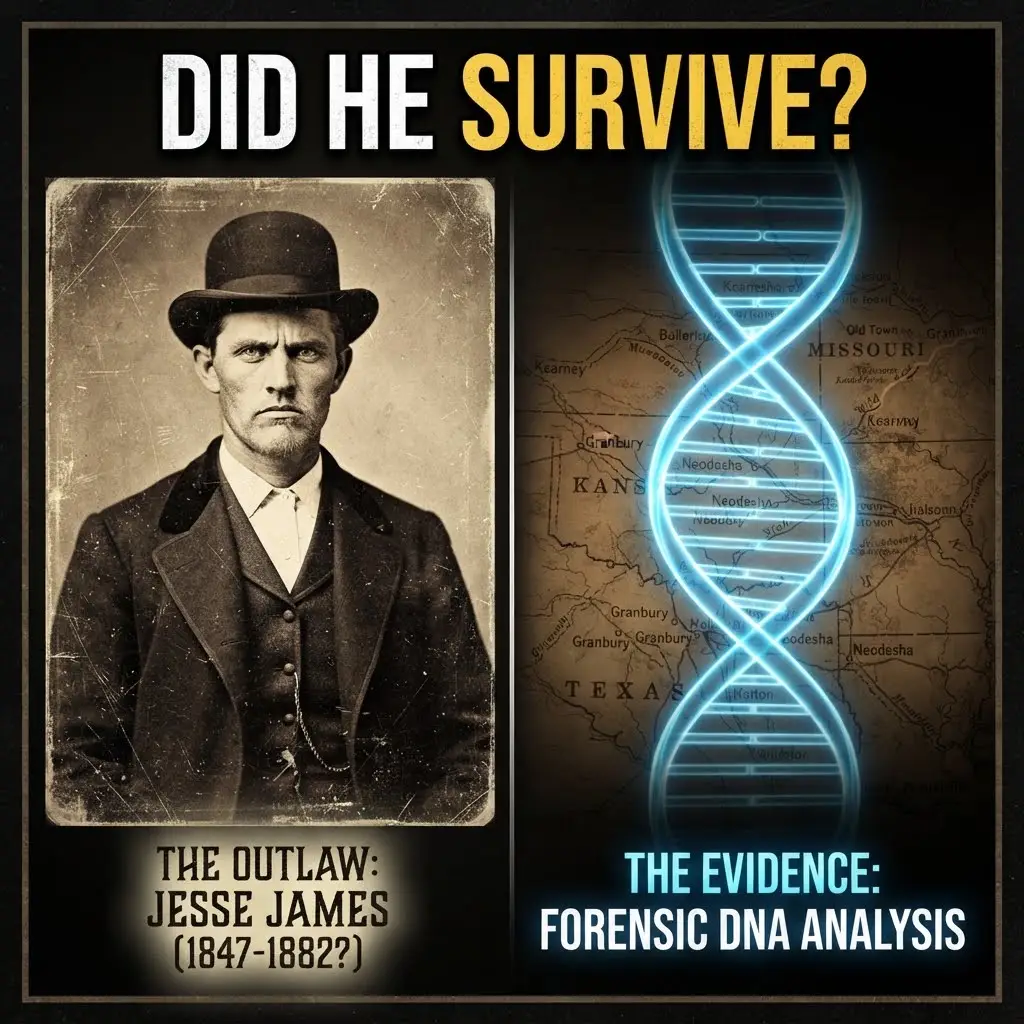
The Jesse James DNA Myth: Why Are There 3 Graves?
FAQs
1. Was Jesse James a famous outlaw?
Yes, Jesse James was a notorious American outlaw who gained fame during the Wild West era for his bank and train robberies.
2. How did Jesse James die?
Jesse James was shot and killed by Robert Ford, a member of his own gang, on April 3, 1882, in St. Joseph, Missouri.
3. Did Jesse James live to be an old man?
No, Jesse James did not live to be an old man. He was only 34 years old when he was killed.
4. What was Jesse James known for besides being an outlaw?
Aside from his criminal activities, Jesse James was also known for being a Confederate guerrilla during the Civil War and for his Robin Hood-like image among some people.
5. Are there any conspiracy theories surrounding Jesse James’s death?
Yes, there are conspiracy theories that suggest Jesse James faked his own death and lived to be an old man under a different identity. However, most historians believe he was indeed killed in 1882.