The tantalizing question of whether Native Americans and Greenland Vikings ever made contact has long captured the imagination of historians and archaeologists alike. For centuries, this enigma has been pieced together through sagas, archaeological discoveries, and the careful analysis of historical records. The prevailing narrative suggests that Norse explorers, sailing from Iceland and Greenland, reached the shores of North America around the turn of the first millennium CE, establishing settlements and interacting with the indigenous populations they encountered. However, the precise nature and extent of these interactions remain subjects of ongoing research and debate. Understanding this potential cultural exchange requires delving into the historical context of Viking exploration, the archaeological evidence left behind, and the interpretation of both written and material records.
Evidence from Norse Sagas
The primary textual sources that speak to Viking voyages to the west are the Icelandic sagas, particularly the Saga of Erik the Red and the Saga of the Greenlanders. These epic tales, written down centuries after the events they describe, recount the voyages of Leif Erikson and his contemporaries to lands they called Helluland, Markland, and Vinland. While often blending historical accounts with mythological elements, these sagas provide crucial details about the geography of these new lands, the resources they offered, and the people who inhabited them.
The Voyages to Vinland
The sagas describe Leif Erikson’s journey from Greenland to a new land, which he named Vinland. The exact location of Vinland is still a matter of scholarly discussion, but it is widely believed to have been somewhere along the North American coast, likely in what is now Newfoundland, Canada. The sagas detail the discovery of grapes, hence the name Vinland, and the establishment of a settlement. They also mention encounters with the indigenous peoples, whom the Norse referred to as “Skraelings.” These encounters are depicted as often fraught with tension and conflict, but also with instances of trade. The Saga of Erik the Red, for example, recounts a skirmish where the Norse, using superior weaponry, drove off a larger force of Skraelings. The Saga of the Greenlanders, on the other hand, offers a more detailed account of interactions, including descriptions of trading goods and even the abduction of a few Skraelings by the Norse. The consistency in the geographical descriptions and the mention of indigenous peoples across these sagas lends them a degree of historical credibility, despite the literary embellishments. The sagas provide a narrative framework for understanding the potential for contact, painting a picture of intrepid explorers venturing into unknown territories and encountering peoples already living there.
Interpreting the Sagas’ Accounts
It is crucial to approach the sagas with a critical eye. They were not written as objective historical accounts but as literary works, intended to entertain and preserve cultural memory. The language is often poetic, and the events are sometimes dramatized. Therefore, extracting factual information requires careful interpretation and corroboration with other evidence. The term “Skraeling,” for instance, is a pejorative term used by the Norse, and its specific meaning and application to particular Native American groups are not definitively known. However, the consistent description of encounters with indigenous peoples across different saga narratives suggests that these encounters were a significant aspect of the Norse experience in Vinland. The sagas offer invaluable insights into the Norse perception of these interactions, even if they do not provide an unbiased perspective of the Native American experience. They highlight the Norse understanding of the indigenous populations as distinct and often formidable groups, contributing to the ongoing debate about the depth and nature of their relationship.
The interactions between Native Americans and Greenland Vikings have long fascinated historians and archaeologists, shedding light on the complexities of cultural exchanges in the North Atlantic. For those interested in exploring related topics, an intriguing article titled “Uncovering the Mysteries of Archaeoacoustics” delves into how sound and acoustics can provide insights into ancient civilizations and their interactions. You can read more about this fascinating subject by following this link: Uncovering the Mysteries of Archaeoacoustics.
Archaeological Footprints in North America

The textual evidence from the sagas is complemented and often corroborated by archaeological findings. For decades, the possibility of a Norse presence in North America remained speculative, relying solely on the sagas. However, in the 1960s, a groundbreaking discovery at L’Anse aux Meadows in Newfoundland, Canada, provided irrefutable proof of a Norse settlement. This site, now a UNESCO World Heritage site, has become a cornerstone in understanding the Viking presence in the New World.
L’Anse aux Meadows: A Norse Settlement
The excavations at L’Anse aux Meadows revealed the remains of Norse-style buildings, including longhouses, workshops, and storage sheds, dating to around 1000 CE. These structures, built using timber and turf in a manner consistent with Norse construction techniques from Greenland and Iceland, provided tangible evidence of a European presence. Artifacts unearthed at the site further solidified the Norse identity of the settlement. These included iron rivets, a bronze cloak pin, a spindle whorl, and a stone lamp, all of which are characteristic of Norse culture. The presence of these artifacts, particularly iron working tools and the evidence of smelting, indicates that this was not just a temporary campsite but a settlement where the Norse lived, worked, and repaired their ships. The layout of the settlement, with its distinct buildings and their arrangement, suggests a planned community rather than an accidental landing. The L’Anse aux Meadows site serves as a powerful testament to the historical accounts found in the sagas, confirming that the Norse did indeed reach North America.
Evidence of Indigenous Presence and Interaction
Beyond the Norse structures, the L’Anse aux Meadows site also yielded evidence of interaction with indigenous peoples. While the primary construction and artifacts are unequivocally Norse, there have been findings that suggest contact. For instance, some artifacts found at the site have been interpreted as potentially of indigenous origin, though their attribution can be challenging and is subject to ongoing debate. More significant are the findings that suggest the Norse were utilizing local resources that would have been available through indigenous knowledge and trade. The evidence of woodworking and shipbuilding at L’Anse aux Meadows, for example, implies the use of local timber. The sagas themselves mention trade with the Skraelings, with the Norse offering red cloth in exchange for furs. While direct archaeological evidence of such specific trade transactions at L’Anse aux Meadows is elusive, the broader context of the settlement implies a need for local resources and potentially, local cooperation or conflict. The ongoing analysis of pollen and plant remains at the site is also shedding light on the environment the Norse encountered and the resources they exploited, which would have been known to the indigenous populations. The presence of worked bone and stone tools, though less refined than Norse ironwork, could also indicate either indigenous presence or trade of such items.
Debates on the Extent and Nature of Contact
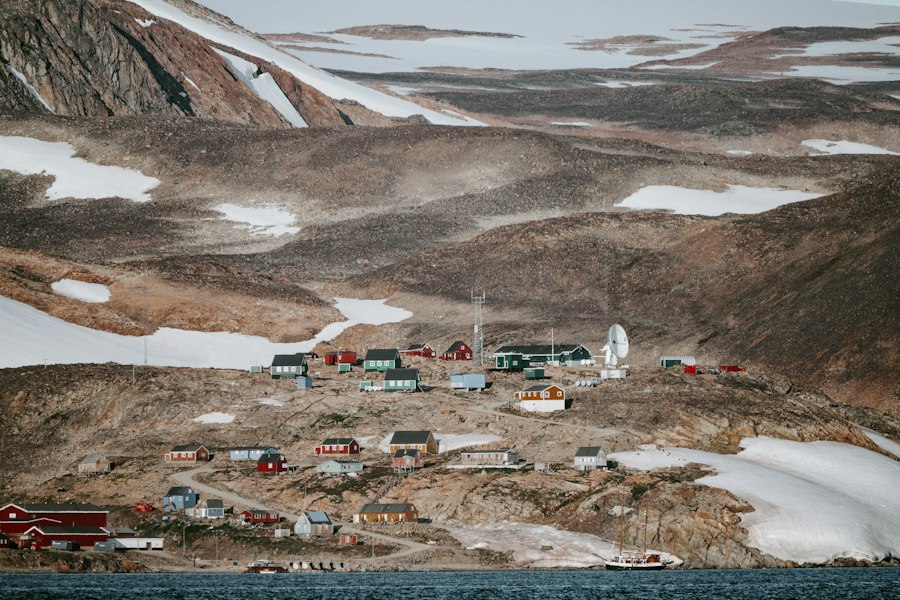
While L’Anse aux Meadows confirms a Norse presence, the extent and nature of their interactions with Native Americans remain a subject of intense scholarly debate. The sagas mention conflicts and trade, but the archaeological record is more ambiguous. This ambiguity fuels ongoing discussions about how frequently and how deeply the two cultures intertwined.
The “Skraeling” Encounters: Conflict or Coexistence?
The sagas present a narrative where interactions with the indigenous inhabitants, the Skraelings, were often characterized by violence. The accounts of skirmishes and battles suggest that the Norse viewed the Skraelings as a potential threat and that there were instances of hostility. However, the sagas also allude to periods of trade and even, in some interpretations, curiosity. The fact that the Norse established a settlement, however temporary, implies that they did not face overwhelming, continuous opposition that would have made their presence untenable. This suggests a more complex relationship than purely hostile encounters. It is possible that interactions varied geographically and temporally. In some areas, the Norse may have encountered more aggressive indigenous groups, while in others, more peaceful interactions, including trade, may have occurred. The limited duration of the Norse settlement at L’Anse aux Meadows has led some scholars to suggest that ongoing conflict with the indigenous population may have contributed to its abandonment. Conversely, other theories propose that the settlement was primarily a base for exploration and resource gathering, and its abandonment was due to logistical challenges or a desire to return to Greenland.
Tracing Other Potential Norse Sites and Artifacts
Beyond L’Anse aux Meadows, archaeologists have investigated numerous other sites across North America for evidence of Norse activity. While no other site has yielded as definitive proof of a settlement as L’Anse aux Meadows, several locations have produced intriguing artifacts that have been tentatively linked to the Norse. These include stone tools, metal objects, and other anomalies that defy easy explanation within purely indigenous contexts. However, the provenance of many of these artifacts remains debated, with some scholars arguing for indigenous origins or misinterpretations of the evidence. The discovery of artifacts like the Maine Penny, a 10th-century Norse coin found in Maine, further fuels speculation about broader Norse exploration and interaction. While the exact circumstances of its presence are unknown, it suggests a possible wider reach than previously confirmed. The challenge lies in distinguishing between genuine Norse artifacts and indigenous items that might bear superficial resemblances or have been influenced by contact. The lack of extensive, widespread Norse settlements outside of L’Anse aux Meadows suggests that any interactions were likely limited in scope and duration, perhaps consisting of exploratory voyages and temporary resource camps rather than large-scale colonization.
Linguistic and Biological Clues
The examination of linguistic patterns and biological markers offers another avenue for exploring potential contact between Native Americans and Greenland Vikings. While written records are scarce and archaeological evidence can be ambiguous, the subtle traces left in language and biology can provide complementary insights.
Examining Loanwords and Linguistic Influences
Linguists analyze loanwords – words borrowed from one language into another – as potential indicators of cultural contact. In this context, scholars have searched for Norse loanwords in indigenous languages of North America and vice versa. While direct evidence of extensive Norse loanwords in Algonquian or other indigenous languages spoken in areas where Norse might have traveled is limited, some scholars have proposed tentative connections. For example, certain terms describing navigation or specific flora and fauna have been suggested as potential Norse borrowings. However, establishing these connections is extremely challenging. Indigenous languages have their own independent development, and distinguishing between genuine borrowings and coincidental similarities or independent invention requires rigorous comparative linguistic analysis and a deep understanding of the specific language families involved. Similarly, the search for indigenous loanwords in Old Norse is also ongoing, though less widely discussed. The limited nature of the Norse presence likely meant that any linguistic exchange was either subtle, short-lived, or occurred within specific communities or trade networks, making its detection difficult.
Genetic Studies and Population Movements
Genetic studies offer a powerful tool for tracing population movements and interconnections. By analyzing DNA from both ancient and modern individuals, researchers can identify shared ancestry and patterns of migration. In recent years, genetic studies have begun to shed light on the possibility of Norse admixture in Native American populations and vice versa. While the evidence for significant Norse genetic contribution to mainstream Native American populations is not widespread, some studies have pointed to intriguing anomalies in specific groups, particularly in Greenland. Genetic studies of Greenlandic Inuit populations have revealed a significant Norse genetic component, a direct result of the centuries of Norse settlement in Greenland. When considering the potential for contact further west, the genetic landscape becomes more complex. Some genetic studies have looked for evidence of Norse ancestry in indigenous populations of North America, but the results have been largely inconclusive or have pointed to very limited, localized admixture, if any. The scarcity of widespread Norse genetic markers in indigenous North American populations suggests that large-scale interbreeding did not occur, or that any such admixture was confined to very small, specific interactions that have since been diluted.
The interactions between Native Americans and the Vikings of Greenland have long fascinated historians, as they explore the complexities of cultural exchange and conflict in the North Atlantic. Recent studies suggest that these encounters may have involved trade, cooperation, and even competition for resources. For those interested in delving deeper into the nuances of historical interactions and their implications, a related article provides valuable insights into the broader context of cross-cultural exchanges. You can read more about this intriguing topic in the article on trading with the enemy.
Reconstructing the Narrative of Interaction
| Metric | Details |
|---|---|
| Time Period of Interaction | Approx. 10th to 15th century |
| Groups Involved | Greenland Vikings (Norse settlers) and Indigenous peoples of North America (likely ancestors of Native Americans, such as the Thule or Dorset cultures) |
| Evidence of Contact | Archaeological finds such as Norse artifacts in Newfoundland (L’Anse aux Meadows), possible trade goods, and Norse sagas describing encounters with “Skrælings” |
| Nature of Interaction | Trade, occasional conflict, and cultural exchange |
| Distance Between Groups | Approx. 1,000 km (Greenland to Newfoundland) |
| Duration of Norse Presence in Greenland | Circa 985 AD to 1450 AD |
| Impact on Native Populations | Limited direct impact; interactions were sporadic and localized |
| Historical Records | Norse sagas such as the Saga of Erik the Red and the Greenlanders’ Saga |
Synthesizing the available evidence from sagas, archaeology, linguistics, and genetics allows for a more nuanced reconstruction of the historical narrative of potential contact between Native Americans and Greenland Vikings. It is a story pieced together from fragments, with significant gaps and ongoing debates, but one that continues to evolve with new discoveries and analytical approaches.
The Scope and Duration of Norse Exploration
The current consensus among historians and archaeologists is that the Norse presence in North America was relatively brief and geographically limited. L’Anse aux Meadows represents the most substantial evidence of a settlement, likely a base for exploration, resource gathering (timber, furs), and potentially as a staging point for further voyages. The duration of this settlement is estimated to have been no more than a few decades, possibly less. The reasons for its abandonment are likely multifaceted, including logistical challenges of maintaining supply lines from Greenland, conflicts with indigenous populations, and the inherent difficulties of establishing a permanent colony in a new and challenging environment. While the sagas speak of repeated voyages and attempts to establish settlements, the archaeological record outside of L’Anse aux Meadows is sparse, suggesting that these efforts were largely unsuccessful or short-lived. The vastness of North America and the presence of well-established indigenous societies would have presented significant obstacles to any large-scale Norse colonization. Therefore, it is more accurate to view the Norse in North America as explorers and temporary visitors rather than colonizers in the way Europeans would later engage with the continent.
The Legacy of Encounter: A Dialogue Through Time
The encounter between Native Americans and Greenland Vikings, however limited, represents a pivotal moment in the history of transatlantic interaction. It predates Columbus by nearly five centuries and challenges traditional Eurocentric narratives of discovery. While the direct impact of this encounter on the development of either culture may have been minimal in the long term, its historical significance is profound. The sagas serve as a testament to the adventurous spirit of the Norse and their ability to navigate vast oceans. The archaeological discoveries provide tangible proof of their daring voyages. For Native American societies, the encounter with the Norse, though likely brief and perhaps localized, represents one of the earliest documented interactions with Europeans. Understanding this history requires acknowledging the limitations of our current knowledge and remaining open to new interpretations and discoveries. The ongoing research, from further archaeological excavations to advancements in genetic analysis and linguistic studies, continues to refine our understanding of this fascinating chapter in human history. The legacy of this encounter is not just in the historical records, but in the enduring questions it poses about human exploration, cultural exchange, and the interconnectedness of human societies across continents and across millennia. It is a dialogue that continues to unfold, offering glimpses into a shared past that is both intriguing and instructive.

The Viking “Bison” Myth That Was Just Debunked
FAQs
1. Did Native Americans and Greenland Vikings have any interactions?
Yes, there is evidence to suggest that Native Americans and Greenland Vikings did have some interactions. Archaeological findings, such as artifacts and genetic studies, indicate that there was contact between the two groups.
2. How did the interactions between Native Americans and Greenland Vikings occur?
The interactions between Native Americans and Greenland Vikings likely occurred through trade, exploration, and possibly conflict. It is believed that the Vikings may have traded with Native American groups for resources such as furs and ivory.
3. What impact did the interactions between Native Americans and Greenland Vikings have?
The interactions between Native Americans and Greenland Vikings may have had cultural, social, and economic impacts on both groups. These interactions could have influenced aspects of daily life, technology, and trade practices for both Native Americans and Vikings.
4. Are there any specific archaeological findings that support interactions between Native Americans and Greenland Vikings?
Yes, there have been archaeological findings in places like Newfoundland, Canada, that suggest contact between Native Americans and Greenland Vikings. These findings include artifacts such as Viking-style objects and evidence of Norse settlements in areas where Native American populations lived.
5. How do researchers study the interactions between Native Americans and Greenland Vikings?
Researchers study the interactions between Native Americans and Greenland Vikings through a combination of archaeological evidence, genetic studies, historical accounts, and cultural analysis. By examining these various sources of information, researchers can piece together a more comprehensive understanding of the interactions between these two groups.