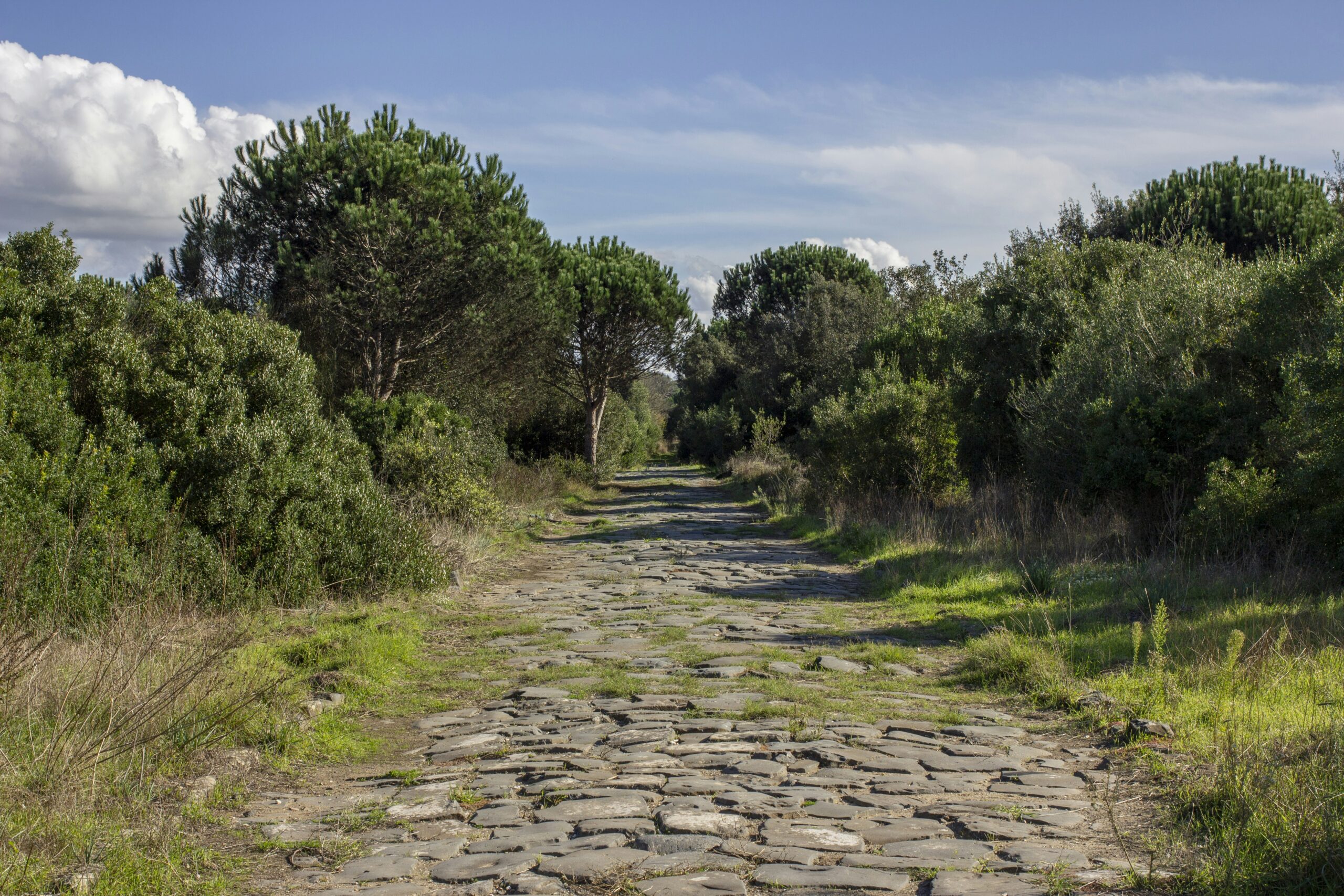
The Myth of Unwavering Straightness
The popular image of Roman roads is one of unwavering, arrow-straight lines cutting across the landscape. This perception is not entirely unfounded; many Roman roads, particularly those in flatter terrain, do exhibit remarkable straightness. The Romans were masters of engineering, and their desire for efficiency and speed in military movements and trade undoubtedly influenced their road-building. Straight lines are the shortest distance between two points, a fundamental geometric principle that held significant appeal for a pragmatic and expansionist empire. However, to assert that all Roman roads were rigidly straight, irrespective of the challenges presented by the natural environment, is an oversimplification that overlooks the nuanced and adaptive nature of Roman engineering. The reality is far more complex, involving a sophisticated understanding of geography, an assessment of resources, and a pragmatic approach to achieving their objectives.
The very concept of “straight” needs careful consideration. While an engineer might strive for a geometrically perfect line, the practicalities of construction often necessitate deviations. Furthermore, the “straightness” observed today might be a result of the passage of time and subsequent erosion, natural processes that can obscure the original intent or subtle curves. The enduring legacy of Roman roads lies not solely in their straightness, but in their durability, their strategic placement, and their ability to connect disparate parts of the empire. Understanding their routes requires delving beyond the superficial appearance and exploring the underlying engineering principles and the environmental factors that shaped their construction.
The construction of straight Roman roads is a fascinating topic that highlights the engineering prowess of ancient Rome, often leading to discussions about how these roads interacted with the natural terrain. For a deeper understanding of how historical developments, including infrastructure, have shaped modern geopolitical landscapes, you might find the article on proxy wars insightful. It explores the complexities of global power struggles and their historical roots, which can provide context for the significance of Roman engineering in the broader narrative of civilization. You can read more about it here: The Rise of Proxy Wars: A Global Power Struggle.
Strategic Imperatives Guiding Roman Roads
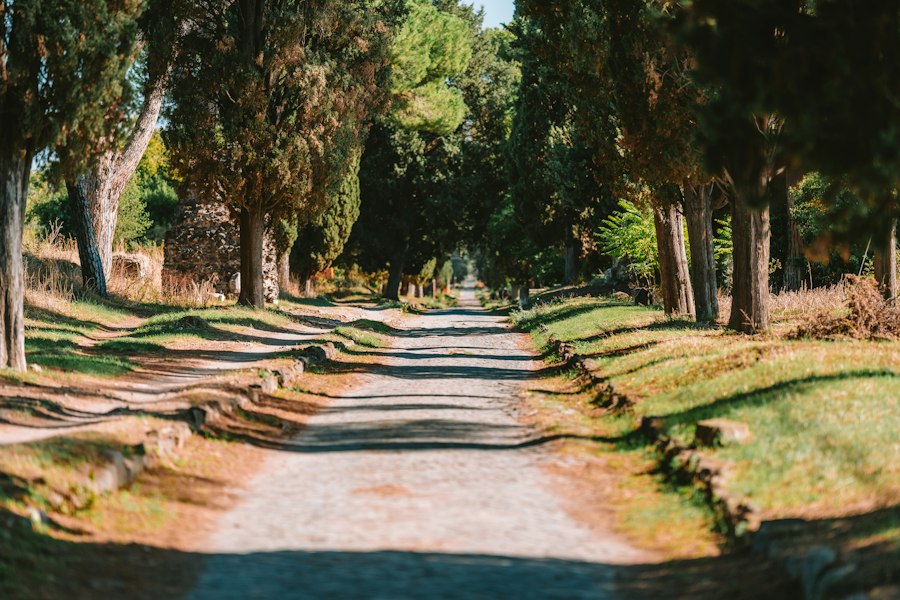
The primary impetus behind the construction of Roman roads was undeniably strategic. The Roman army, the backbone of the empire’s power and expansion, relied heavily on efficient movement. Roads facilitated the rapid deployment of legions, the swift transport of supplies, and the effective communication of orders across vast distances. This strategic imperative significantly influenced the routes chosen, often prioritizing speed and accessibility over strict adherence to geographical features.
Military Mobility and Timely Deployment
The Roman military machine was a marvel of organization and logistics. The ability to move large numbers of troops and their equipment quickly was paramount to maintaining control over conquered territories and responding to threats. Straight roads offered the most direct and fastest routes, minimizing travel time and conserving the energy of marching soldiers. Imagine a legion facing a sudden uprising on the frontier; a direct, well-maintained road would allow them to reach the trouble spot significantly faster than navigating winding valleys or treacherous mountain passes. This speed was not merely about convenience; it was a critical factor in military success, allowing Romans to outmaneuver enemies and project power effectively. The construction of roads like the Via Appia, famously dubbed “Regina Viarum” (Queen of Roads), exemplified this commitment to military mobility, connecting Rome to Brindisi, a vital port for military operations in the East.
Facilitating Trade and Economic Integration
Beyond military concerns, Roman roads played a crucial role in fostering economic prosperity. They opened up new avenues for trade, allowing goods to flow more freely between different regions of the empire. Merchants could transport their wares more reliably and at a lower cost, stimulating local economies and integrating them into the broader Roman commercial network. This economic interdependence also served a strategic purpose, binding disparate regions to Rome through shared interests and dependencies. The Silk Road, though not entirely Roman, demonstrates the principle of how major arteries of communication can foster economic growth and cultural exchange. Roman roads, on a more localized but equally impactful scale, achieved similar results within the empire’s vast domain, connecting agricultural heartlands to urban centers and resource-rich areas to manufacturing hubs.
Administrative Control and Communication Networks
The administrative machinery of the Roman Empire also benefited immensely from its road network. Roads allowed for the efficient collection of taxes, the swift delivery of official decrees, and the maintenance of law and order. Communication between Rome and its far-flung provinces was vital for effective governance, and the road system, coupled with relay stations and couriers, formed the backbone of this imperial communication network. The cursus publicus, the imperial postal and transport service, relied entirely on this infrastructure to function, ensuring that vital information reached its destination promptly. This administrative efficiency was not just about bureaucracy; it was about maintaining the integrity and cohesion of a vast and diverse empire.
The Unyielding Power of Terrain
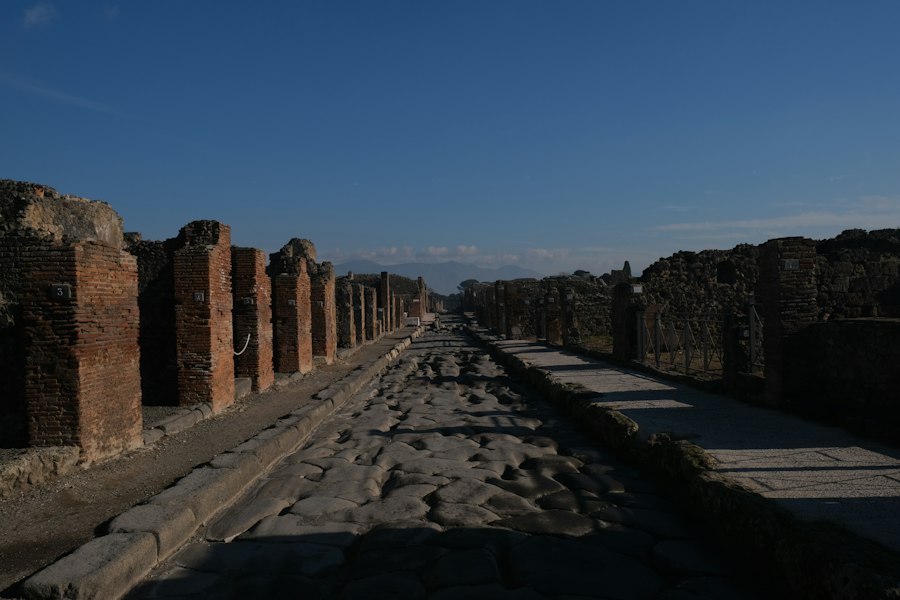
While strategic objectives often favored straightness, the physical landscape presented undeniable and often insurmountable obstacles. Roman engineers, while innovative, were also practical. They understood the limitations of their tools and materials, and they recognized that forcing a road through impossible terrain would be inefficient, costly, and ultimately unsustainable. Therefore, the terrain often dictated the route, leading to curves, detours, and compromises.
Navigating Mountainous Regions
Mountain ranges posed the most significant challenges to Roman road builders. Building a truly straight road through the Alps or the Apennines would have required immense feats of excavation, bridge construction, and tunneling that were often beyond the scope of their capabilities or the economic viability of the project. Instead, Roman engineers adeptly followed the contours of the land, utilizing natural valleys, saddles, and passes to ascend and descend mountain ranges. The construction of the Via Egnatia in the Balkans, for instance, involved following existing routes and adapting them to the mountainous terrain, incorporating steep gradients and hairpin turns where necessary. The goal was not necessarily a straight line, but a traversable path that could be used by legions, carts, and travelers.
Crossing Rivers and Waterways
Rivers and other bodies of water presented another significant hurdle. While the Romans were skilled bridge builders, constructing a bridge over every major river would have been prohibitively expensive and time-consuming. Consequently, roads often followed riverbanks to find natural crossing points, fords, or areas where a bridge was feasible. In some cases, ferries were employed to transport travelers and goods across wider waterways. The route of a Roman road might snake along a river valley for miles before finding a suitable place to cross, or it might simply follow the river, utilizing it as a natural boundary or communication line in itself.
Adapting to Marshland and Forests
Marshy areas and dense forests also required careful consideration. Building directly through wetlands would have been an engineering nightmare, leading to unstable foundations and constant maintenance issues. Roman roads in such areas often skirted the edges of marshes, or they were built on raised causeways constructed with timber and earth to provide a stable surface above the waterlogged ground. Similarly, in heavily forested regions, roads might follow clearings or natural breaks in the vegetation, rather than attempting to cut a straight path through dense woodland, which would have been labor-intensive and difficult to maintain. The principle was to create a functional and durable route, even if it meant deviating from an ideal straight line.
Engineering Prowess and Pragmatic Solutions
The Romans were not simply brute-force builders; they were ingenious engineers who employed a range of techniques to overcome geographical challenges. Their roads were not monolithic structures but carefully designed systems that integrated various construction methods and materials. The “straightness” often observed is a testament to their precision in flatter areas, but their ability to adapt in more challenging environments showcases their true engineering genius.
The Art of Surveying and Alignment
Before any earth was moved, Roman surveyors, known as gromatici, meticulously planned the routes. They used instruments like the groma (a cross-staff with plumb bobs) to establish straight lines and right angles. However, this did not mean an inflexible adherence to a single straight line. The groma was also used to establish alignments that might follow a series of connected straight segments, creating a piecewise linear path that approximated a desired course while accounting for terrain. These segments were often surprisingly long and straight, especially in open country, giving rise to the enduring myth. The surveyors were skilled in sighting distant landmarks and using them to maintain a general direction, but they were also trained to recognize when a deviation was necessary.
Foundation and Drainage Techniques
A key to the longevity of Roman roads was their sophisticated understanding of foundations and drainage. Even on seemingly straight routes, significant effort was invested in ensuring the roadbed was stable and water could drain away effectively. Roads were typically built in layers, with a base of large stones, followed by smaller stones, gravel, and finally a compacted surface of sand or clay. This layered construction provided excellent load-bearing capacity and allowed water to percolate through, preventing waterlogging and frost damage. Drainage ditches were often dug along the sides of the roads to channel water away from the roadbed. These techniques were essential for durability, regardless of whether the road was straight or curved.
Bridges, Viaducts, and Tunnels
When faced with natural barriers like rivers or ravines, Roman engineers employed impressive feats of construction. They built numerous bridges, ranging from simple wooden structures to elaborate stone arches that are still standing today. Viaducts, elevated road sections supported by arches, were used to cross valleys and maintain a more level gradient. In mountainous regions, tunnels were occasionally constructed, though these were rare due to the immense difficulty and cost involved. The Pont du Gard in France, a magnificent aqueduct that also served as a bridge, showcases the Romans’ ability to combine multiple functions into their infrastructure projects, often in ways that facilitated road networks. These monumental constructions, while impressive, were not always part of a single straight line but were integrated into the overall route.
The construction of straight Roman roads has long fascinated historians and archaeologists, particularly regarding how they navigated the diverse terrains of ancient landscapes. While many believe that these roads were built in a straight line regardless of the natural features, recent studies suggest that the Romans did consider the topography to some extent. For a deeper exploration of how ancient civilizations approached engineering challenges, you might find this article on lost scientific knowledge intriguing. It discusses various aspects of ancient technology and can be found here.
Tracing the Echoes of the Past: Modern Exploration
| Metric | Description | Value/Observation |
|---|---|---|
| Average Road Straightness | Percentage of Roman road length that is straight | Approximately 70-80% |
| Terrain Adaptation | Degree to which roads deviated to accommodate terrain features | Moderate; roads often went straight but adjusted for major obstacles |
| Elevation Change | Average gradient Roman roads maintained to ease travel | Typically less than 10% gradient |
| Engineering Techniques | Methods used to maintain straightness over terrain | Cuttings, embankments, bridges, and tunnels |
| Road Construction Speed | Time taken to build roads considering terrain challenges | Varied; straight routes reduced construction time but terrain required adjustments |
| Examples of Straight Roads | Famous Roman roads known for straightness | Via Appia, Via Augusta |
| Deviation Causes | Reasons for roads not being perfectly straight | Natural obstacles, property boundaries, water sources |
Modern archaeology and historical research continue to shed light on the intricate routes of Roman roads. By combining textual evidence, archaeological finds, and advanced mapping technologies, scholars are able to reconstruct these ancient pathways with increasing accuracy, revealing the pragmatic decisions that shaped their courses.
Archaeological Evidence and Ground Truthing
Archaeological excavations remain a primary method for identifying and mapping Roman roads. The characteristic construction techniques – the layered rubble base, the specific types of stone used, the presence of drainage ditches – provide tangible evidence of Roman presence. When these features are found in a linear pattern, particularly in areas where historical accounts suggest a road should be, it strongly indicates a Roman route. Aerial photography and remote sensing techniques have also proven invaluable, revealing subtle earthworks and crop marks that are invisible from the ground, often highlighting the remnants of former tracks.
Textual Sources and Historical Accounts
Ancient texts, from military itineraries to historical chronicles, often provide invaluable clues about the existence and general direction of Roman roads. While these sources may not always offer precise mile-by-mile details, they can corroborate archaeological findings and help scholars piece together the broader network. The Antonine Itinerary, for instance, is a detailed list of routes and distances within the Roman Empire, providing a framework for understanding the intended paths of major roads. These documents, when cross-referenced with physical evidence, offer a richer and more complete picture of Roman transportation.
Geographical Information Systems (GIS) and Digital Reconstruction
In recent decades, Geographic Information Systems (GIS) have revolutionized the study of Roman roads. By overlaying historical maps, archaeological data, and modern topographical information, researchers can create detailed digital models of ancient routes. GIS allows for the analysis of gradients, distances, and potential obstacles, helping to explain why a road might have taken a particular course. This technology enables scholars to test hypotheses about Roman road alignments and to identify previously unknown sections of the network by looking for patterns that align with known Roman construction methods and strategic priorities. The ability to visualize the proposed routes against the actual terrain provides a powerful tool for understanding the engineering decisions made by the Romans.
The Enduring Legacy of Adaptability
The Roman road network stands as a testament to the empire’s organizational prowess and engineering ingenuity. While the popular imagination often fixates on an idealized straightness, the reality is a more nuanced story of adaptation and pragmatism. Roman roads did not always follow the terrain in a rigid, unyielding manner, nor did they blindly prioritize straightness over functionality. Instead, they were carefully planned and executed pathways that balanced strategic imperatives with the undeniable influence of the natural landscape.
The success of the Roman road system lay in its ability to connect disparate regions efficiently and durably. When the terrain allowed, straight lines were favored for their speed and simplicity. However, when faced with mountains, rivers, or challenging soil conditions, Roman engineers demonstrated remarkable flexibility, devising innovative solutions that allowed them to construct traversable and long-lasting routes. The exploration of these routes, through archaeology, historical texts, and modern technology, reveals a sophisticated understanding of geography and a pragmatic approach to engineering that allowed Rome to build and maintain an empire. The “straightness” we often perceive is but one facet of a much larger and more complex story of how the Romans conquered and connected their world, a story shaped by both ambition and the earth itself. The enduring roads, whether perfectly straight or gracefully curved, are a powerful reminder of their ability to shape the land to their will, while simultaneously respecting its inherent limitations.
The 2.7% Statistic That Terrifies Roman Historians
FAQs
1. Did straight Roman roads always follow the terrain?
No, straight Roman roads did not always follow the terrain. While Roman engineers tried to build roads in a straight line whenever possible for efficiency, they also made use of bridges, tunnels, and other engineering techniques to navigate challenging terrain.
2. How did Roman engineers deal with hilly or mountainous terrain when constructing roads?
Roman engineers used various methods to navigate hilly or mountainous terrain when constructing roads. They built bridges, viaducts, and tunnels to maintain a straight path whenever possible. In some cases, they would also create switchbacks or winding roads to make the ascent or descent more manageable.
3. Were Roman roads always perfectly straight?
While Roman roads are often associated with straight paths, they were not always perfectly straight. Roman engineers would adjust the road’s alignment to accommodate the natural landscape, such as avoiding steep inclines or navigating around obstacles like rivers or marshes.
4. Why did Roman engineers prefer straight roads?
Roman engineers preferred straight roads because they allowed for faster travel and efficient communication between different parts of the empire. Straight roads also facilitated the movement of troops, goods, and information, which was crucial for the Roman Empire’s administration and military operations.
5. Did Roman roads have a standardized width regardless of the terrain?
Yes, Roman roads generally had a standardized width of about 15-20 feet (4.5-6 meters) regardless of the terrain. This width was wide enough to accommodate two-way traffic and allow for the passage of carts, wagons, and military units. In hilly or mountainous areas, the road might be narrower in some sections to navigate the terrain more effectively.