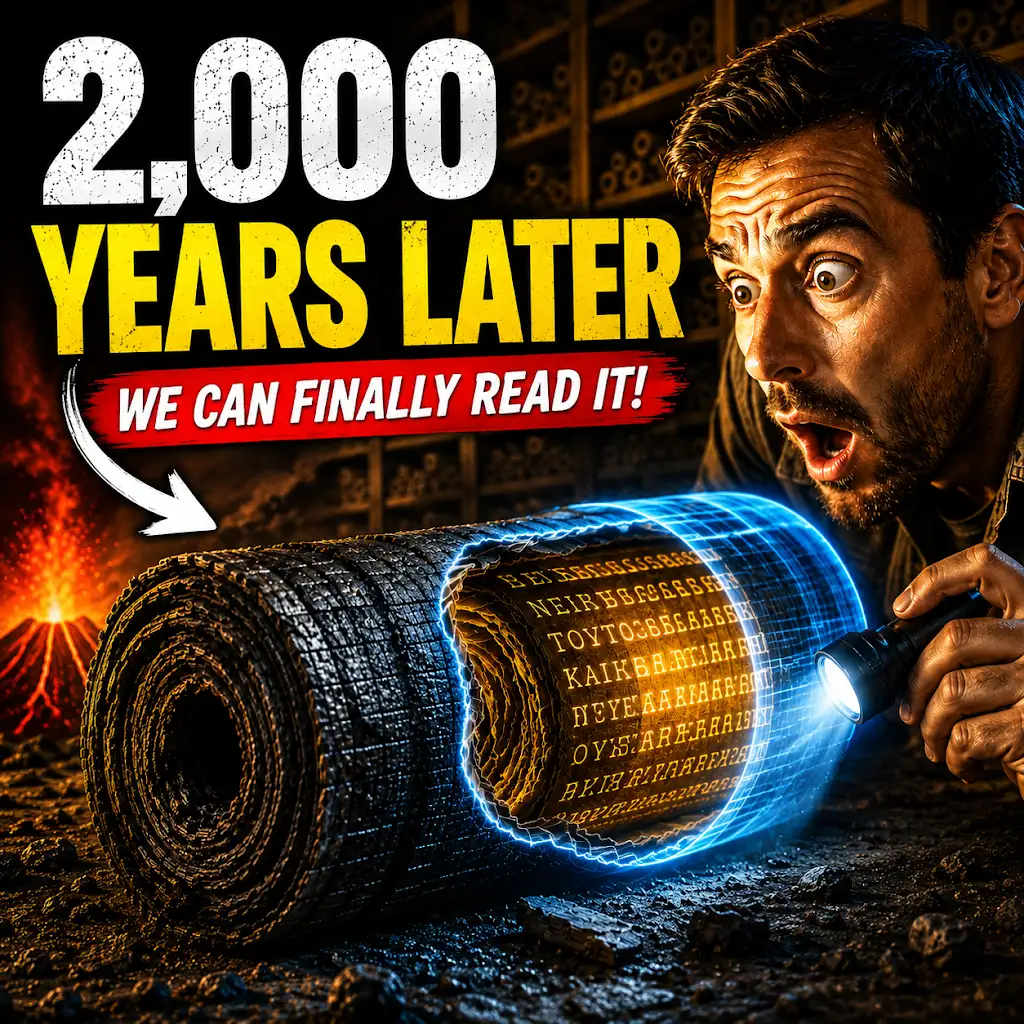
Digital archaeology is an emerging field that utilizes cutting-edge digital technologies to uncover, analyze, and preserve ancient artifacts, documents, and structures. One of its most fascinating applications lies in the realm of ancient scrolls, fragile remnants of human history that often crumble to dust or remain undecipherable due to age and damage. Through innovative digital techniques, archaeologists are now able to breathe new life into these invaluable sources, unlocking their secrets and making them accessible to a global audience.
Ancient scrolls, whether made from papyrus, parchment, or other organic materials, are inherently susceptible to the ravages of time. Their fragility poses a significant hurdle for traditional preservation and study methods.
The Fragility of Organic Materials
The very materials that once allowed for the transmission of knowledge are also their greatest enemies.
- Papyrus: Made from the pith of the papyrus plant, papyrus is prone to flaking, tearing, and insect damage. Its fibers can become brittle, making any physical handling a high-risk endeavor.
- Parchment and Vellum: These materials, derived from animal skins, are more durable than papyrus but still susceptible to moisture, mold, and degradation of the ink. They can warp, crease, and their surface can become abraded over time.
- Bamboo and Silk Scrolls: While less common in some regions, these materials also face unique preservation challenges, including susceptibility to humidity, temperature fluctuations, and pests.
The Scars of Time and History
Beyond natural decay, scrolls often bear the marks of human intervention and historical events.
- Fire and Water Damage: Many ancient texts have been lost or severely damaged in fires or floods, leaving behind charred fragments or water-stained, illegible remnants.
- Ink Fading and Obscurity: The inks used by ancient scribes, often made from natural pigments, can fade over centuries, rendering the text invisible or incredibly difficult to discern.
- Physical Fragmentation: The simple act of being rolled, unrolled, and transported can lead to scrolls breaking into numerous pieces, making reconstruction a monumental task.
- Deliberate Erasure and Redaction: In some cases, texts were deliberately altered or erased for political, religious, or social reasons, presenting a complex puzzle for archaeologists attempting to recover the original content.
The Ethical Imperative of Preservation
The desire to study these ancient texts must be balanced with the absolute need to preserve them for future generations.
- Minimizing Physical Intervention: Traditional methods of unrolling and handling often exacerbate damage. The goal is to develop techniques that require as little direct physical contact as possible.
- Preventing Further Deterioration: Once a scroll is accessed, it needs to be protected from environmental factors that can accelerate its decay. This includes controlling humidity, temperature, and light exposure.
- Ensuring Accessibility for Research: While preservation is paramount, the ultimate purpose of these artifacts is to be studied. Digital archaeology aims to make these texts accessible for scholarly analysis without compromising their physical integrity.
The Digital Awakening: Tools and Technologies in Digital Archaeology
Digital archaeology employs a suite of sophisticated tools to overcome the limitations of traditional methods, offering new ways to see, interpret, and preserve ancient written materials.
Imaging Technologies: Seeing the Unseen
Advanced imaging techniques are at the forefront of deciphering damaged and faded texts.
- Multispectral Imaging (MSI): This technology captures images of an object in various parts of the electromagnetic spectrum, beyond what the human eye can perceive. Different inks and writing materials reflect and absorb light differently across various wavelengths. By analyzing these spectral signatures, MSI can reveal faded or erased text that is invisible in normal light.
- Infrared Reflectography: Particularly effective for revealing dark inks on dark backgrounds or faded inks, as infrared light can penetrate deeper layers.
- Ultraviolet Fluorescence: Can highlight specific types of inks or show alterations made to the surface of the scroll.
- X-ray Imaging: While less commonly used for scrolls due to the potential for damage, in specific circumstances, X-rays can reveal underlying layers of text or indicate the composition of inks. This is more applicable to inscriptions on harder materials but can be adapted for very specific scroll-related challenges.
- High-Resolution Photography: Even standard high-resolution photography, when combined with advanced lighting techniques, can capture minute details of the scroll’s surface, fiber structure, and ink placement.
3D Scanning and Modeling: Reconstructing the Physical Form
Creating digital replicas allows for virtual manipulation and analysis.
- Photogrammetry: This technique uses overlapping photographs taken from multiple angles to create a three-dimensional model of an object. For scrolls, it can be used to capture the curvature and texture of even fragmented pieces, aiding in their virtual reassembly.
- Laser Scanning: Offers precise measurements and geometric data, creating highly accurate digital representations of scroll fragments or even partially unrolled scrolls. This allows for detailed study of the physical state of the artifact without direct handling.
- Virtual Unrolling: For tightly rolled scrolls that cannot be physically unrolled, 3D scanning and modeling can create a digital simulation of the unrolling process, revealing hidden text without risking damage to the original. This involves complex algorithms that interpret the curvature and strain of the rolled material.
Computational Analysis: Unlocking Meaning with Algorithms
Once digitized, the data can be subjected to powerful analytical tools.
- Optical Character Recognition (OCR) for Ancient Texts: Developing OCR algorithms that can recognize ancient scripts, including variations in letterforms, ligatures, and scribal abbreviations, is a significant challenge. Machine learning plays a crucial role in training these algorithms on vast datasets of ancient texts.
- AI-Powered Text Reconstruction: Artificial intelligence can be used to predict missing words or phrases based on grammatical structures, vocabulary, and contextual information from other known texts. This is particularly valuable for fragmented scrolls.
- Data Visualization and Mapping: Digital tools allow for the visualization of textual data, such as word frequencies, thematic clusters, and the geographical distribution of textual content, providing new insights into ancient societies.
The Dead Sea Scrolls: A Digital Renaissance
The discovery of the Dead Sea Scrolls in the mid-20th century presented a monumental challenge and opportunity for both archaeology and textual scholarship. These ancient manuscripts, some dating back to the 3rd century BCE, were found in a precarious state of preservation, often in thousands of fragments. Digital archaeology has played a transformative role in their study.
From Fragments to Full Texts: The Qumran Corpus
The sheer volume and fragmentation of the Dead Sea Scrolls necessitated innovative approaches.
- Initial Preservation Efforts: Early efforts focused on careful physical preservation and piecing together fragments, a painstaking process that took decades.
- The Role of Photography: High-quality photography was essential from the outset, allowing scholars to study the texts without constant handling of the fragile originals.
- The Dawn of Digital Imaging: As digital imaging technology advanced, the Dead Sea Scrolls became a prime candidate for its application.
- Multispectral Imaging Applications: The Dead Sea Scrolls Digital Library has extensively utilized multispectral imaging to reveal text that was previously invisible. This has been crucial for deciphering charred fragments and faded inks.
- High-Resolution Imaging: The project has produced incredibly detailed, high-resolution images of every fragment, allowing scholars worldwide to examine them remotely.
Virtual Reconstruction and Assembly
The digital realm has enabled unprecedented efforts in reassembling the scrolls.
- The “Scroll-o-Matic” Project: Researchers have developed computational tools that analyze the shape, size, and textual content of fragments to identify potential matches. This “virtual” assembly allows for rapid exploration of possible connections that would be impossible through manual means.
- AI in Fragment Matching: Machine learning algorithms are being trained to recognize patterns in handwriting, ink degradation, and even the physical edges of fragments to aid in their digital reconstruction.
- 3D Modeling of Rolled Scrolls: While many Dead Sea Scrolls are too fragile to unroll completely, 3D scanning techniques are being explored to create virtual representations of their rolled form, potentially revealing text on the interior surfaces.
Global Accessibility and Collaborative Research
The digitization of the Dead Sea Scrolls has democratized access to these vital texts.
- Online Databases and Archives: The Dead Sea Scrolls Digital Library provides an open-access platform where researchers, students, and the general public can view and study the digitized fragments.
- Facilitating International Collaboration: Researchers from across the globe can now collaborate on the study of these texts, sharing insights and contributing to a deeper understanding of the scrolls’ content and context.
- New Interpretations and Discoveries: The enhanced accessibility and analytical power offered by digital tools have led to new scholarly interpretations and discoveries about the religious, social, and historical landscape of ancient Judea.
Case Studies: Unveiling Hidden Histories
Beyond the Dead Sea Scrolls, digital archaeology is revolutionizing the study of ancient scrolls in various cultural contexts.
The Herculaneum Papyri: A Fiery Revelation
The volcanic eruption of Mount Vesuvius in 79 AD not only preserved the city of Herculaneum but also carbonized thousands of papyrus scrolls, sealing them within the volcanic ash.
The Challenge of Carbonized Scrolls
These scrolls presented a unique and formidable challenge for preservation and decipherment.
- Extreme Brittleness: The carbonization process made the papyri incredibly brittle, often disintegrating at the slightest touch. Traditional unrolling methods were impossible.
- Ink Fading: The intense heat also caused the ink to fade or become indistinguishable from the carbonized papyrus itself.
Digital Solutions for Burnt Manuscripts
Innovative digital techniques have been developed to tackle this specific problem.
- X-ray Microtomography: This advanced scanning technique allows researchers to create detailed 3D images of the scrolls without physically altering them. By analyzing subtle differences in density, the computer can differentiate between the carbonized papyrus and the ink.
- Computational Decipherment Algorithms: Sophisticated algorithms are employed to “read” the faint ink traces revealed by X-ray imaging. These algorithms can identify patterns in the text, even when the characters are barely visible.
- Virtual Unrolling and Text Recovery: Researchers are developing methods to virtually unroll the carbonized scrolls, much like peeling an onion, layer by layer, to reveal the text within. This allows for the reconstruction of entire words and sentences from the carbonized remnants.
- The “Vesuvius Challenge”: This initiative, employing machine learning and computational analysis, aims to decipher these burnt scrolls, offering a glimpse into the lost libraries of ancient Roman villas.
Ancient Chinese Scrolls: Silk and Bamboo Under the Digital Microscope
Ancient China boasts a rich tradition of scroll painting and calligraphy, often on silk or bamboo. Digital archaeology is helping to preserve and understand these delicate artworks and texts.
The Nature of Chinese Scrolls
The materials and construction of these scrolls present specific preservation needs.
- Silk’s Vulnerability: Silk is susceptible to humidity, mold, and insect damage. Its fibers can degrade, leading to tearing and color fading.
- Bamboo’s Brittleness: Bamboo slips, often used for important documents, can become brittle and break.
- The Art of the Scroll Mount: The intricate mounting of Chinese scrolls, which involves silk borders and protective coverings, is itself a part of the cultural heritage and requires careful preservation and study.
Digital Applications in Chinese Scroll Studies
Digital technologies offer new avenues for analyzing these cultural treasures.
- High-Resolution Imaging of Silk: Detailed imaging can reveal the weave of the silk, the brushstrokes of the artist or calligrapher, and even hidden details in paintings that might have faded over time.
- 3D Scanning of Bamboo Slips: This allows for the accurate reconstruction of fragmented bamboo texts and the study of their original arrangement.
- Digital Restoration of Faded Pigments: Advanced imaging and software can help digitally restore faded colors in ancient silk paintings, allowing for a clearer understanding of the artist’s original intent.
- Metadata and Archival Databases: Digitizing the vast collections of ancient Chinese scrolls allows for the creation of comprehensive databases, making them accessible to a wider audience and facilitating comparative studies.
The Future of Digital Archaeology and Ancient Scrolls
The field of digital archaeology for ancient scrolls is continuously evolving, promising even more groundbreaking discoveries and deeper insights into our past.
Advancements in AI and Machine Learning
The integration of artificial intelligence will become even more pervasive.
- Predictive Text Reconstruction: AI models will become more sophisticated in predicting missing words and phrases, even in highly fragmented or damaged texts, based on an ever-growing corpus of ancient writings.
- Automated Script Identification and Translation: AI could potentially automate the identification of unknown scripts and even provide initial translations, accelerating the research process.
- Virtual Scribe Analysis: AI could analyze the nuances of individual scribal hands, helping to attribute texts and understand the transmission of knowledge from one scribe to another.
Enhanced Imaging and Sensing Technologies
New imaging and sensing technologies will continue to push the boundaries of what is visible.
- Hyperspectral Imaging at Higher Resolutions: Further development in hyperspectral imaging will allow for the detection of even fainter ink residues and more precise identification of ink composition.
- Terahertz Imaging: This emerging technology has the potential to penetrate materials without causing damage, offering new possibilities for non-destructive analysis of scrolls, especially those with multiple layers or hidden inscriptions.
- Quantum Sensing: While still in its nascent stages, quantum sensing holds the promise of highly sensitive detection of minute chemical changes in materials, which could be invaluable for identifying degradation processes and ink compositions.
Virtual and Augmented Reality in the Study of Scrolls
Immersive technologies will transform how we interact with ancient texts.
- Virtual Reality Museum Experiences: Imagine virtually walking through an ancient library, picking up digital replicas of scrolls, and unrolling them to read their contents in a simulated historical environment.
- Augmented Reality for Fieldwork: During archaeological excavations, AR could overlay digital reconstructions of scrolls onto their physical locations, providing immediate contextual information to researchers on-site.
- Collaborative VR Environments: Researchers could meet in virtual spaces to examine and discuss digitized scrolls, fostering a more interactive and dynamic approach to scholarly collaboration.
Ethical Considerations and Data Preservation
As digital archaeology advances, so too do the ethical considerations surrounding data access and long-term preservation.
- Digital Stewardship and Archiving: Ensuring the long-term accessibility and integrity of digitized ancient texts requires robust digital archiving strategies and the development of sustainable digital preservation models.
- Open Access and Intellectual Property: Striking a balance between open access to digitized materials for research and the intellectual property rights of institutions and researchers will remain a crucial discussion.
- The Digital Divide: Efforts must be made to ensure that the benefits of digital archaeology are accessible to institutions and researchers globally, regardless of their technological resources.
Conclusion: A New Chapter for Ancient Voices
Digital archaeology has fundamentally reshaped our ability to engage with ancient scrolls. What were once fragile, inaccessible remnants are now vibrant digital artifacts, speaking to us across millennia. The ongoing integration of advanced imaging, computational analysis, and emerging technologies like AI and VR promises to unlock even deeper layers of understanding. These digital tools not only allow us to decipher faded ink and reconstruct shattered fragments but also to connect with the minds and voices of our ancestors in ways previously unimaginable. The future of ancient scrolls is not just in preservation; it is in their digital rebirth, ensuring that their stories continue to resonate and inform our present and future.