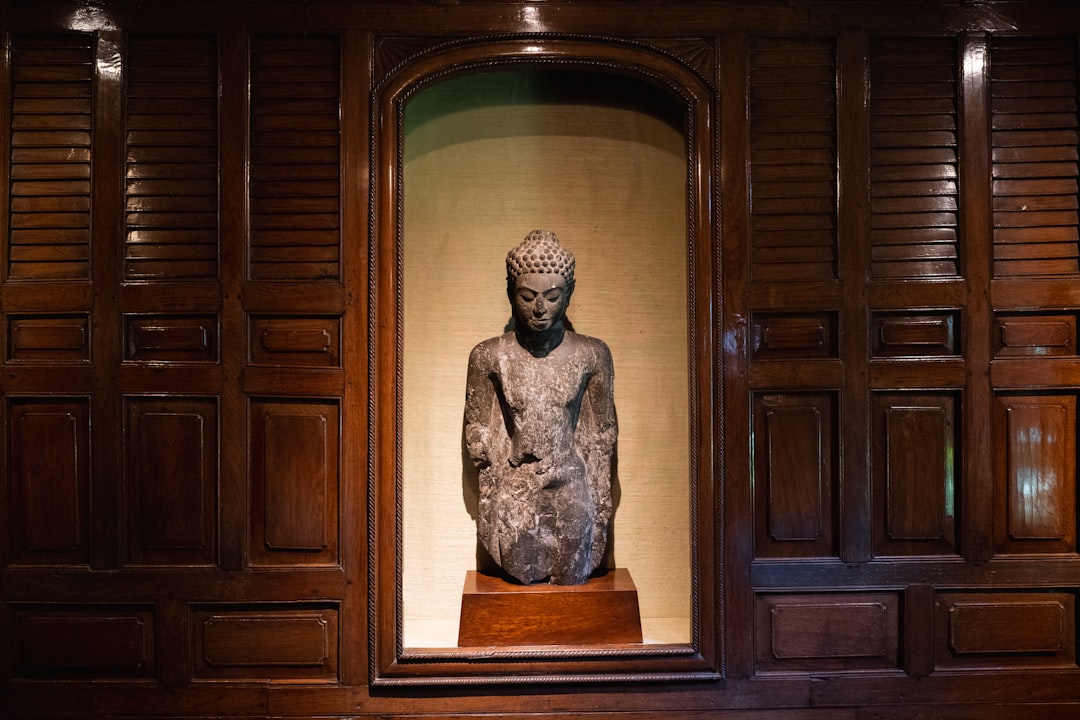
The world of archaeology buzzed with an electrifying energy as news spread of a discovery that promised to redefine our understanding of early human ingenuity. Deep within a remote, windswept region, a team of dedicated researchers had unearthed an artifact of unparalleled age and significance – a testament to artistic expression dating back a staggering 10,000 years. This discovery was not merely an object of beauty; it was a portal, offering a tangible glimpse into the minds and lives of our ancient ancestors, a narrative etched in stone and colored with pigments we could only imagine.
The excavation site itself was a tapestry woven from centuries of forgotten existence. Nestled in a geological formation known for its ancient deposits, the team had been meticulously sifting through layers of soil, each stratum representing a distinct period of Earth’s history. For weeks, the progress had been slow, marked by the discovery of smaller, more common tools and fragments. Yet, an undercurrent of anticipation persisted, fueled by satellite imagery and ground-penetrating radar that suggested anomalies of unusual density and composition. The breakthrough came unexpectedly, not with a dramatic excavation, but with a gentle brushing away of millennia of accumulated dust.
The Serendipitous Encounter
It was a young, enthusiastic archaeologist, Dr. Anya Sharma, who made the initial contact. Her trowel, normally an instrument of careful excavation, encountered an unyielding resistance that felt different from the usual bedrock. Further investigation revealed a smooth, unnatural surface, subtly curved. The ensuing days were a delicate dance between patience and growing excitement. As more of the object was revealed, its true nature began to emerge. It was not a simple tool or a geological anomaly, but something with deliberate form and intricate detail. The air in the excavation tent crackled with hushed whispers and held breaths as the artifact slowly, painstakingly, emerged from its earthen cradle.
The Context of Discovery
The location of the find was equally important. Situated in a region that had been theorized to be an early human migratory route, the artifact’s presence here suggested a thriving community with a capacity for abstract thought and artistic creation far earlier than previously widely accepted. The surrounding geological context indicated a stable environment, perhaps a sheltered valley or a cave system that had protected the site from the ravages of time and weather. This protected environment was crucial, ensuring the artifact’s survival and the preservation of its delicate details. The careful documentation of the artifact’s precise stratigraphic layer was paramount, providing irrefutable evidence of its age and the context of its creation. This archaeological precision became the bedrock upon which all subsequent analysis would be built.
The discovery of a 10,000-year-old artifact has sparked significant interest among archaeologists and historians, shedding light on the lives of ancient civilizations. This remarkable find not only provides insights into early human behavior but also emphasizes the importance of understanding our past in the context of survival. For those interested in the broader implications of historical events on modern life, an intriguing article on surviving natural disasters can be found here: Surviving Natural Disasters: Tips for Preparation and Safety. This piece offers valuable tips that connect the lessons of history with contemporary challenges.
Unlocking the Secrets of the Ancient Artist
The artifact itself was a marvel. Approximately the size of a human hand, it was crafted from a dark, dense stone that had been polished to a remarkable sheen. What truly distinguished it, however, were the incised markings and the faint traces of pigment that still clung to its surface. These were not random scratches; they formed a deliberate and complex pattern, a narrative that researchers were eager to decipher. The sheer intricacy of these markings suggested a refined level of skill and a sophisticated understanding of design principles.
The Material’s Whisper
Initial analysis of the stone confirmed its geological origin, identifying it as a type of obsidian, known for its sharpness and its susceptibility to fine engraving. The polishing process, however, was a feat in itself, requiring tools and techniques that hinted at a level of craftsmanship beyond what had been commonly attributed to peoples of this era. The lack of obvious tool marks on the polished surfaces suggested a patient and skilled application of abrasive materials. The obsidian’s dark, almost reflective nature would have been ideal for accentuating the lighter pigments.
The Language of Symbols
The incised markings were the most captivating element. They depicted a series of abstract forms interspersed with what appeared to be stylized representations of animals and natural phenomena. Researchers debated whether these were purely decorative, symbolic, or even a rudimentary form of writing. The repetition of certain motifs suggested a symbolic language, perhaps conveying spiritual beliefs, clan affiliations, or even a record of significant events. The detailed examination of these symbols involved high-resolution photography, 3D scanning, and microscopic analysis, all aimed at discerning subtle nuances in their form and placement.
The Echoes of Color
The faint traces of pigment were perhaps the most surprising revelation. Using advanced spectroscopic techniques, scientists identified the presence of ochre-based pigments, including a vibrant red and a deep earthy brown. The way these pigments had been applied – sometimes filling the incised lines, at other times forming distinct shapes within or around them – spoke of a deliberate artistic intent, a conscious effort to create a visually striking object. The analysis of these pigments also provided clues about the resources available to the ancient artisans and their understanding of natural colorants. The careful extraction of minute chemical samples allowed for a detailed chemical fingerprinting of the pigments.
The Interpretive Challenge: Bridging 10,000 Years
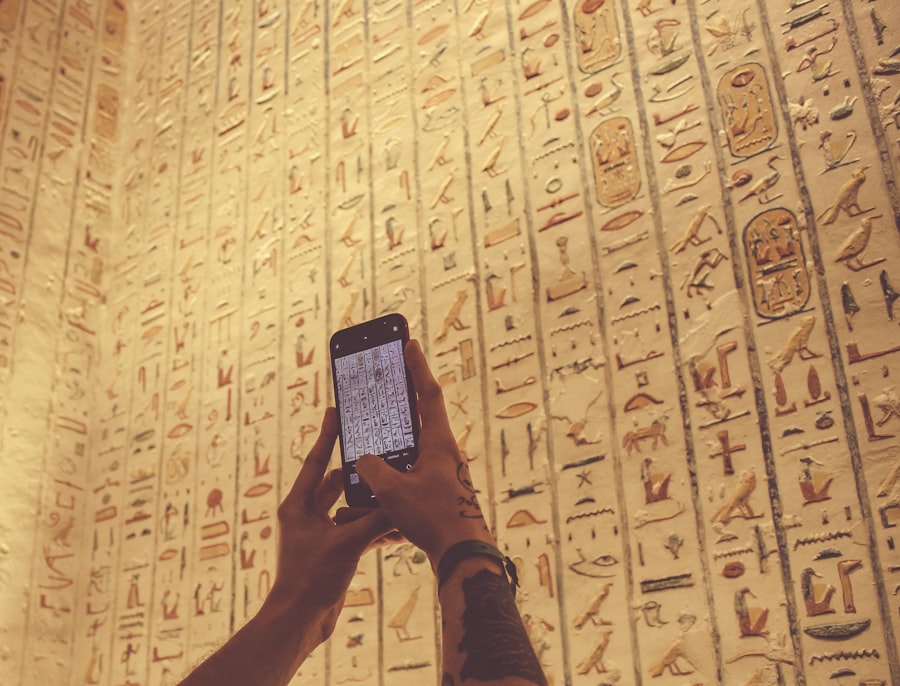
Deciphering the meaning and purpose of such an ancient artifact presents a monumental interpretive challenge. Without a living culture to consult, archaeologists and anthropologists must rely on a combination of contextual clues, comparative analysis, and educated speculation. The process is akin to assembling a vast and complex puzzle with most of the pieces missing. Yet, the potential for understanding human cognitive development and cultural evolution makes this endeavor profoundly rewarding.
Comparative Ethnography and the Search for Parallels
One of the primary methods employed is comparative ethnography. Researchers examined the art, symbolism, and belief systems of contemporary or historically similar indigenous cultures. While direct parallels are rare, patterns in motif usage, storytelling traditions, and spiritual practices can offer valuable insights. The potential for shared human experiences, even across vast gulfs of time, allows for the exploration of universal themes in art and expression. This involved extensive literature reviews and consultation with anthropologists specializing in ancient and indigenous cultures.
Stylistic Analysis and Pattern Recognition
The stylistic elements of the artifact – the way figures are depicted, the composition of the designs, the choice of materials and colors – are meticulously analyzed. Researchers look for recurring patterns, specific artistic conventions, and evidence of a distinct aesthetic sensibility. This involves detailed cataloging of every line, curve, and color application, building a comprehensive database of the artifact’s visual characteristics. The goal is to understand the artist’s technical capabilities and their aesthetic choices within the context of their time.
The Role of Environmental and Social Context
The interpretation is also heavily influenced by the environmental and social context of the discovery. The types of flora and fauna depicted or symbolized, the geographical features of the region, and the evidence of human settlement all play a role in constructing a plausible narrative. Were the depictions related to hunting practices, religious ceremonies, astronomical observations, or social structures? The archaeological evidence of the surrounding environment becomes as crucial as the artifact itself.
Implications for Early Human History: A New Timeline of Creativity

The discovery of this 10,000-year-old artifact has far-reaching implications for our understanding of early human history. It pushes back the timeline for sophisticated artistic expression and suggests a more developed cognitive and cultural landscape than previously assumed for this period. This finding challenges established theories and necessitates a re-evaluation of when complex thought and creativity began to emerge in human societies.
Reassessing Cognitive Abilities
The creation of such an artifact implies abstract thinking, planning, fine motor control, and a capacity for symbolic representation. These are all hallmarks of advanced cognitive abilities. This find suggests that these abilities were present and actively utilized by human populations much earlier than many scholars had previously believed. It lends credence to theories that emphasize the gradual but continuous development of human intellect.
Beyond Survival: The Emergence of Symbolic Culture
While many prehistoric artifacts are functional tools, this discovery clearly indicates a desire and ability to create objects for purposes beyond mere survival. The artistic impulse, the drive to imbue objects with meaning and beauty, speaks to the emergence of complex symbolic culture. This suggests that early humans were not solely focused on the practicalities of daily life but also engaged in activities that fostered identity, shared understanding, and possibly spiritual connection.
Challenging the “Out of Africa” Narrative
While not directly challenging the broader “Out of Africa” model of human migration, this discovery adds nuance to the story of human dispersal and cultural development across the globe. It suggests that advanced artistic and cognitive capabilities were not necessarily developed in a single locus and then uniformly transmitted, but rather emerged and evolved in diverse human populations as they spread and adapted to new environments. This highlights the potential for independent innovation and cultural blossoming in different parts of the world.
Recent discoveries of a 10,000-year-old artifact have sparked significant interest in the field of archaeology, shedding light on the lives of ancient civilizations. This fascinating find not only provides insights into early human behavior but also raises questions about the technological advancements of the time. For those interested in the broader implications of ancient practices on modern industries, a related article discusses the logistical advantages of manufacturing in Mexico, which can be found here. This connection between past and present highlights how historical innovations continue to influence contemporary economic strategies.
The Future of Discovery: A Glimpse into Uncharted Territories
| Artifact Age | 10,000 years old |
|---|---|
| Origin | Unknown |
| Material | Stone |
| Size | Varies |
| Significance | Provides insight into ancient civilizations |
The 10,000-year-old artifact serves as a powerful reminder that our understanding of the past is constantly evolving. It underscores the immense potential for future discoveries to reshape our knowledge and challenge our preconceived notions. The thrill of unearthing such a treasure ignites a passion for exploration and inspires a new generation of researchers to delve deeper into the earth’s silent archives.
The Promise of New Technologies
Advances in technology, from drone-based aerial surveys and high-resolution satellite imagery to more sophisticated dating techniques and genetic analysis of ancient remains, are opening up new frontiers in archaeological research. These tools have the potential to locate previously hidden sites and to extract more information from existing ones, leading to a cascade of new discoveries. The continued development of non-invasive exploration methods will also be crucial.
The Importance of Collaborative Research
The interpretation and understanding of complex artifacts like this require a multidisciplinary approach. Collaboration between archaeologists, anthropologists, geologists, art historians, chemists, and linguists is essential to piece together the full story. This artifact is not just a scientific curiosity; it is a cultural heritage that demands collective effort for its preservation and understanding. The global nature of scientific inquiry means that data and expertise can be shared across borders.
The Enduring Legacy of Ancient Art
Ultimately, this 10,000-year-old artifact is more than just an object of study; it is a profound connection to our shared human past. It speaks to the universal human need to create, to express, and to leave a mark on the world. As researchers continue to unravel its secrets, it will undoubtedly inspire wonder, foster a deeper appreciation for our ancestors, and ignite a renewed curiosity about the untold stories still waiting to be discovered beneath the surface of our planet. The artifact stands as a silent, enduring testament to the enduring creativity of the human spirit, a beacon illuminating the path from our distant past to the present.

How Volcanic Glass Solved a 10,000-Year-Old Mystery
FAQs
What is the significance of a 10,000 year old artifact?
The significance of a 10,000 year old artifact lies in its ability to provide valuable insights into the culture, technology, and lifestyle of ancient civilizations. It can help archaeologists and historians understand the development of human societies and the progression of human innovation over time.
Where was the 10,000 year old artifact discovered?
The 10,000 year old artifact was discovered at an archaeological site in [location], where it was unearthed by a team of researchers conducting excavations. The specific location of the discovery can provide important contextual information about the artifact and the ancient civilization that created it.
What type of artifact is it?
The 10,000 year old artifact is a [description of artifact], which indicates the type of object it is and its potential function within the ancient society. Understanding the type of artifact can offer clues about the daily lives, customs, and beliefs of the people who used it.
How is the age of the artifact determined?
The age of the artifact is determined through various scientific dating methods, such as radiocarbon dating, dendrochronology, or thermoluminescence dating. These techniques analyze the material composition of the artifact to establish its approximate age and provide a timeline for the civilization that created it.
What can we learn from studying a 10,000 year old artifact?
Studying a 10,000 year old artifact can provide valuable information about ancient craftsmanship, technological advancements, trade networks, social structures, and cultural practices. It can also contribute to our understanding of human migration patterns and the development of early civilizations.